
Choosing a premium speaker begins with deciding what the system must accomplish.
This selection spans imposing floorstanders, compact monitors, an active desktop speaker, wireless spatial-audio hardware and soundbars designed to simplify immersive TV sound.
It also includes design-led statement pieces whose scale and presentation matter as much as their place in an audio system. The products differ too widely for a simple ranking to tell the whole story. Yamaha’s MS101-4 integrates amplification and practical inputs, while the JBL Studio 698 uses a large three-way floorstanding design. Mission and Kerr Acoustic address more compact installations, whereas Sony, Sonos and Bang & Olufsen approach spatial sound through streamlined, integrated products. Most of the supplied material consists of launch reporting and manufacturer descriptions rather than comparative reviews. The recommendations below therefore concentrate on documented design, format support, installation options and intended use, while identifying where performance claims have not been independently established.

1. Yamaha launches new MS101-4 Desktop speakers
The compact Yamaha MS101-4 active speaker combines a protected four-inch driver with front-mounted controls and multiple professional connection options.
The Yamaha MS101-4 is a compact, full-range bass-reflex active speaker intended for desktop and professional applications.
Its four-inch driver is powered by a fanless Class D amplifier rated at 30 watts, with 20 watts stated as continuous output.
Line and microphone inputs, a front combo input, a rear quarter-inch TRS line output and a three-eighth-inch microphone-stand mount give it considerably more installation flexibility than a basic powered desktop speaker. Front-mounted power, volume and tone controls keep routine adjustments accessible.
Best for: Flexible desktop and small professional setups
- Built-in fanless Class D amplification
- Line, microphone and front combo inputs
- Microphone-stand mounting point
- Front volume and tone controls
Verdict: The MS101-4 stands out as a practical self-powered speaker for users who value accessible controls, varied inputs and straightforward mounting options.

2. JBL Studio 698: Three-way classic speaker system
The JBL Studio 698 uses twin eight-inch woofers, a dedicated six-inch midrange driver and a horn-loaded compression tweeter in a substantial floorstanding cabinet.
The JBL Studio 698 is the largest model described in the Studio 6 range, pairing two eight-inch woofers with a six-inch midrange driver in a three-way configuration.
Its PolyPlas composite cones use polymer layers around a cellulose base, while concentric membrane rings are intended to improve resistance to deformation.
High frequencies come from a one-inch compression tweeter mounted in JBL’s rectangular HDI horn for wide, even dispersion. A damped 36-kilogram cabinet with rounded edges completes a substantial design suited to listeners who have the room for a full-scale floorstanding system.
Best for: Large-scale stereo and movie systems
- Three-way configuration with twin eight-inch woofers
- One-inch compression tweeter in an HDI horn
- Rigid PolyPlas composite cones
- Heavy, damped cabinet with rounded edges
Verdict: The Studio 698 is the most conventional full-range floorstander here, combining substantial bass hardware with horn-loaded high-frequency dispersion.
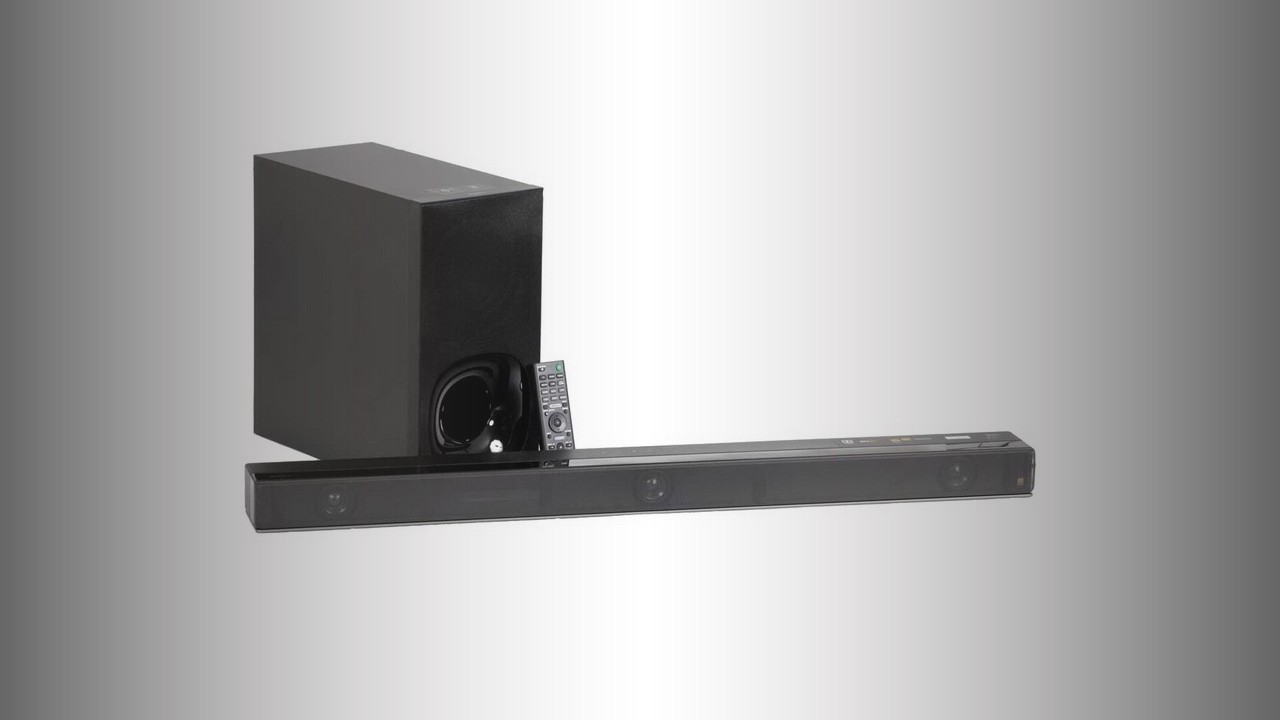
3. Sony HT-ZF9: Powerful soundbar with Vertical Surround Engine
Sony’s three-channel HT-ZF9 soundbar uses Vertical Surround Engine processing to create virtual Dolby Atmos and DTS:X effects from forward-facing speakers.
Sony’s HT-ZF9 takes a virtual approach to immersive cinema sound.
It is a 3.1-channel soundbar with three forward-facing speakers and no top-mounted drivers, using Vertical Surround Engine processing to reproduce Dolby Atmos and DTS:X material without in-ceiling or upward-firing speakers.
S-Force Pro Front Surround expands the front sound field, while touch-sensitive controls on the cabinet cover power, volume, input selection and network functions. This is a convenience-led alternative to a room filled with separate surround speakers, although its height effects are created through processing rather than dedicated overhead channels.
Best for: Streamlined TV systems requiring virtual immersive sound
- Dolby Atmos and DTS:X support
- Virtual height effects without top-mounted speakers
- Three forward-facing channels
- Touch-sensitive cabinet controls
Verdict: The HT-ZF9 suits viewers who prioritize broad format support and a compact installation over discrete overhead or in-ceiling speakers.
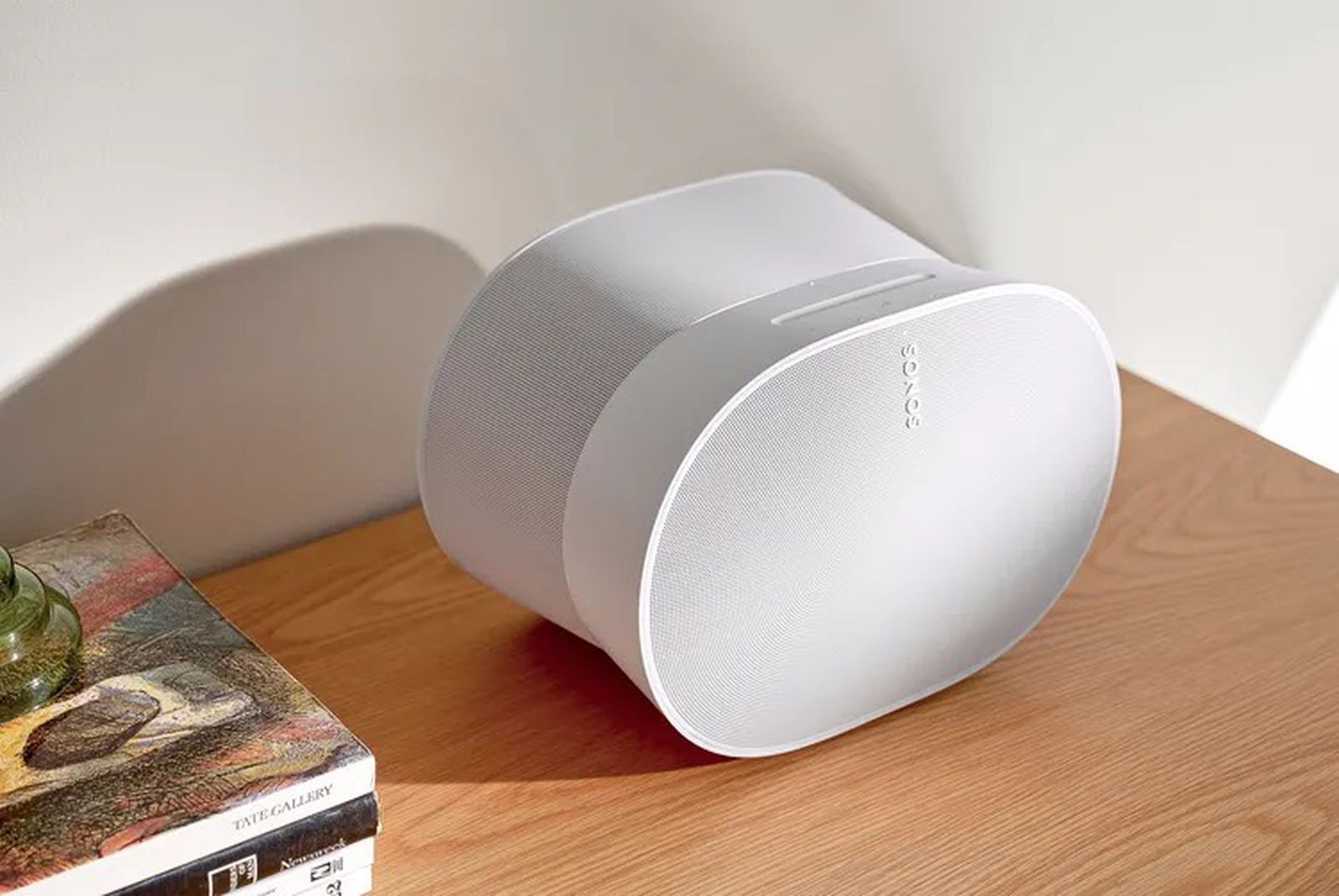
4. Sonos Era 300 will support 3D audio from Apple Music
The Sonos Era 300 is a wireless spatial-audio speaker with support for Dolby Atmos music from Apple Music and Amazon Music.
The Sonos Era 300 is a wireless audio system built around spatial music playback.
The supplied report confirms Dolby Atmos track support from Apple Music alongside previously announced spatial-audio compatibility with Amazon Music.
That makes it relevant to listeners whose music libraries and subscriptions increasingly include immersive mixes. The source also distinguishes the wider Sonos approach: Arc uses upward-facing drivers for height channels, while Beam forms those channels virtually through digital signal processing and forward-facing drivers.
Best for: Wireless listening to Dolby Atmos music
- Dolby Atmos playback from Apple Music
- Spatial-audio support from Amazon Music
- Wireless audio-system format
- Part of a broader Sonos spatial-audio range
Verdict: The Era 300 is the focused choice in this selection for Sonos users seeking spatial music from major supported streaming services.
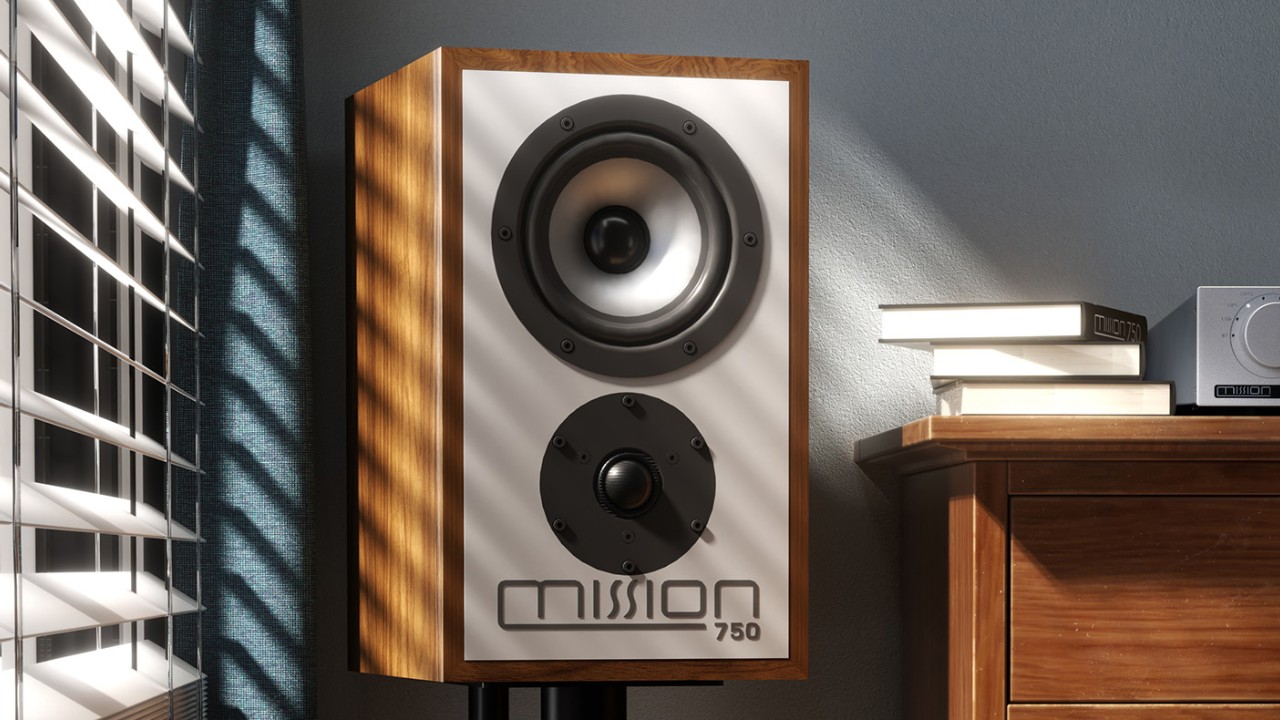
5. Mission 750: Modern two-way speaker with a retro design
The compact Mission 750 revisits the brand’s early visual identity with a white baffle, retro logo and signature inverted driver arrangement.
Mission’s 750 is a compact two-way monitor that adapts the visual language of the larger 700 and 770 to a smaller cabinet measuring 355 by 216 by 270 millimetres.
Its retro-influenced design includes a white front, the traditional Mission logo and the company’s characteristic inverted driver arrangement.
Mission calls this Inverted Driver Geometry and says it is intended to improve stereo imaging and coherence. The midrange and bass driver uses a mineral-infused polypropylene cone, while the treble unit has a lightweight, damped microfibre dome.
Best for: Compact stereo systems with retro styling
- Compact two-way monitor format
- Distinctive inverted driver arrangement
- Mineral-infused polypropylene cone
- Lightweight damped microfibre tweeter dome
Verdict: The Mission 750 combines manageable dimensions and recognisable heritage styling with a contemporary two-way driver design.

6. Bose 901: Classic speaker reimagined
The reimagined Bose 901 draws on the pentagonal form and room-reflection philosophy associated with the original nine-driver speaker.
This reimagining of the Bose 901 is primarily a design and heritage story rather than a documented technical evaluation.
The original 901 used nine four-inch full-range drivers, with one facing forward and eight angled backward to make extensive use of room reflections, all housed in a distinctive pentagonal enclosure.
Bose’s collaboration with Kith creative director Ronnie Fieg is described as retaining the essence of that model while introducing contemporary design elements and materials. The source does not provide enough technical detail to judge how closely the new version follows the original acoustic system.
Best for: Collectors drawn to audio heritage and design
- Revisits the distinctive Bose 901 heritage
- Contemporary materials and design treatment
- Collaboration with Kith creative director Ronnie Fieg
Verdict: The reimagined 901 is compelling as an interpretation of a historically unusual speaker, but the supplied information is insufficient for a performance-based recommendation.
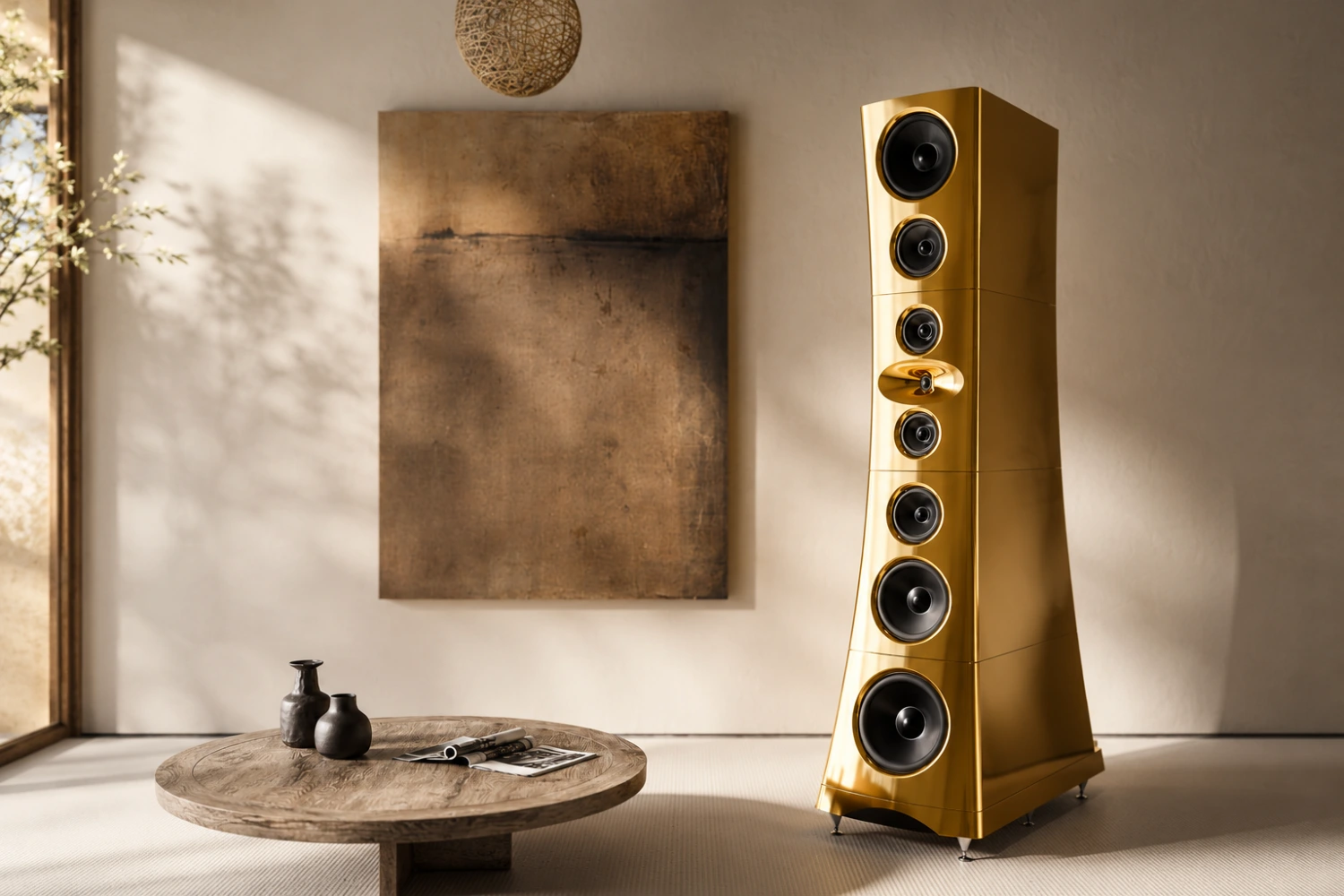
7. YG Acoustics Titan: The $1 Million Flagship Speaker Built for Ultimate Audiophile Perfection
The towering YG Acoustics Titan arranges seven drivers symmetrically and supplements them with a purpose-designed subwoofer.
YG Acoustics positions Titan as its most ambitious loudspeaker, and its physical scale supports that description: the system stands more than two metres tall and uses a symmetrical arrangement of seven drivers with a specially designed subwoofer.
The company also highlights a proprietary grid tweeter and an extended development process informed by acoustic and vibration measurement, simulation technology and research into auditory perception.
Titan is plainly intended as a no-compromise flagship, although the supplied material reports the manufacturer’s engineering case rather than independent listening or measurement results.
Best for: Cost-no-object flagship installations
- More than two metres tall
- Symmetrical seven-driver arrangement
- Specially designed subwoofer
- Proprietary grid tweeter
Verdict: Titan is an extreme statement system whose scale and engineering ambition are clear, though its reported performance claims still require independent assessment.

8. Bang & Olufsen Beosound Premiere: $4,900 Sculptural Soundbar With 3D Audio and Wide Stage Technology
Bang & Olufsen’s aluminium Beosound Premiere combines a sculptural soundbar enclosure with patent-pending Wide Stage Technology.
The Beosound Premiere treats the soundbar as a prominent interior object rather than equipment intended to disappear beneath a television.
Bang & Olufsen describes a three-dimensional listening experience supported by its patent-pending Wide Stage Technology.
The enclosure is crafted from pure aluminium through collaboration between the company’s design team and Factory 5 in Struer, Denmark. Its strongest documented distinction is the combination of sculptural metalwork and proprietary sound-stage processing, although the supplied excerpt does not detail connectivity, channel configuration or independent performance findings.
Best for: Design-led premium TV installations
- Patent-pending Wide Stage Technology
- Pure-aluminium construction
- Sculptural three-dimensional form
- Designed as a prominent visual centrepiece
Verdict: The Beosound Premiere is the design statement of the group, pairing elaborate aluminium construction with a proprietary approach to widening the sound stage.

9. Sonos win in patent litigation to cost Google $32.5 million
The Sonos and Google patent dispute concerns smart-speaker technology but does not evaluate a specific speaker system.
This source concerns a patent judgment rather than a speaker or a product recommendation.
It reports that a San Francisco jury found certain Google products infringed one Sonos smart-speaker patent and ordered compensation based on the number of affected devices.
The dispute may be relevant background for readers following smart-speaker technology and intellectual property, but it provides no specifications, compatibility information or listening evidence from which to assess a speaker purchase.
Best for: Industry and smart-speaker patent context
Verdict: This litigation report offers useful industry context but should not influence a buying decision without separate product-level evidence.
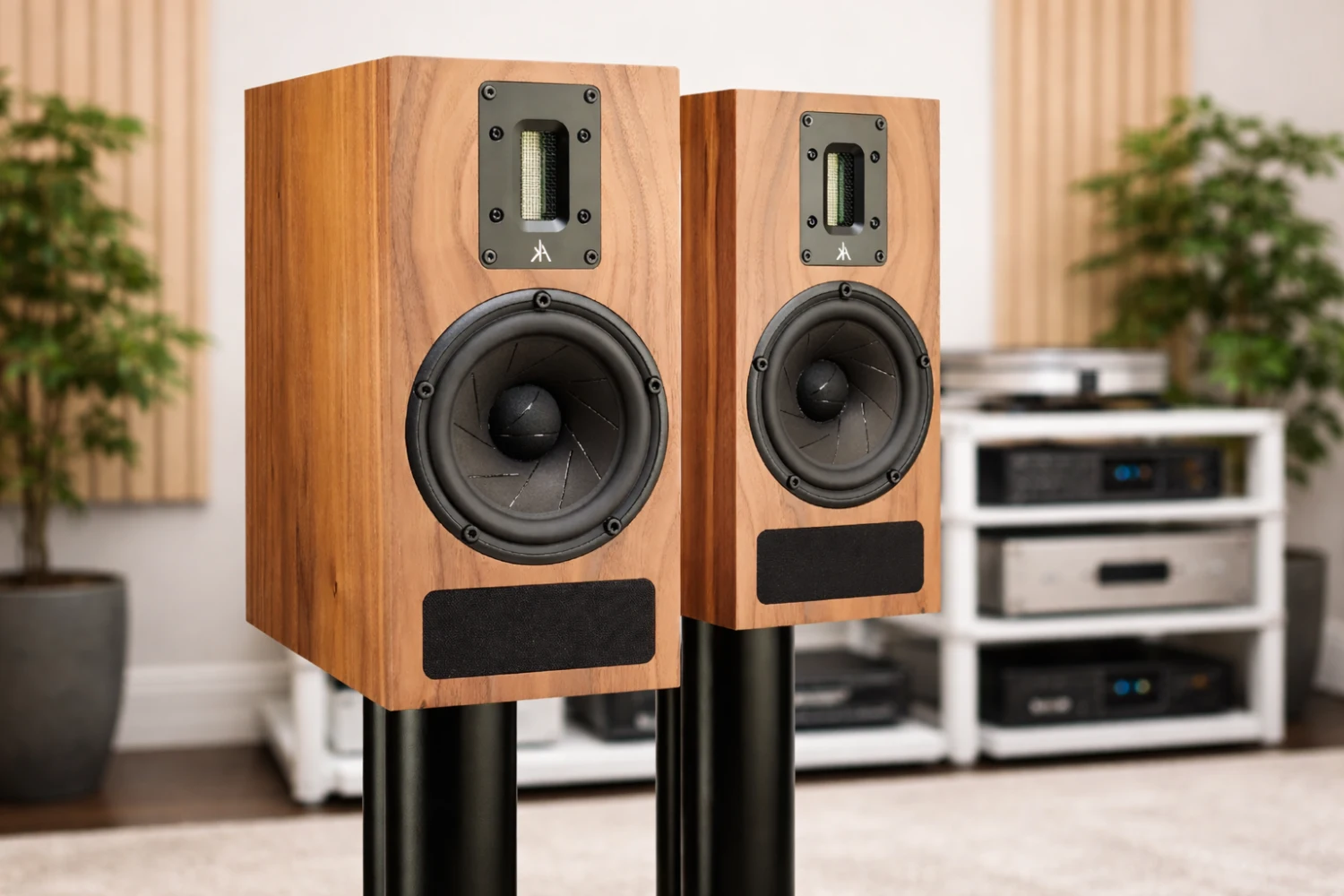
10. Kerr Acoustic K400: Pro Studio DNA Refined for High-End Home Listening
The compact Kerr Acoustic K400 combines a Scan-Speak mid-bass driver, true ribbon tweeter and transmission-line loading in a reinforced plywood enclosure.
Kerr Acoustic describes the K400 as its most home-friendly professional monitor, using a compact two-way format intended for demanding domestic and studio users.
The 341 by 164 by 310 millimetre Baltic birch plywood enclosure is internally reinforced and contains a 150-millimetre Scan-Speak mid-bass driver, a 45-millimetre true ribbon tweeter and Kerr Acoustic’s transmission-line technology.
Beyond conventional stand placement, the K400 can be mounted on a wall or ceiling for integration into wider surround systems. The designers specify a frequency range of 39 Hz to 45 kHz, but the supplied material does not include independent measurements.
Best for: Compact high-end monitoring and flexible surround installations
- Compact reinforced birch-plywood enclosure
- True ribbon tweeter
- In-house transmission-line design
- Stand, wall or ceiling placement options
Verdict: The K400 offers the clearest blend of professional-monitor construction, compact dimensions and adaptable installation in this selection.
Frequently asked questions
Should I choose an active speaker or a separate speaker system?
An active model such as the Yamaha MS101-4 includes amplification, reducing the number of separate components required.
Before choosing any other speaker, confirm whether it needs an external amplifier and check that the amplifier, source connections and intended playback level are suitable for the system.
How should room size affect speaker choice?
Consider cabinet size, listening distance and placement before focusing on driver count.
The 36-kilogram JBL Studio 698 and more-than-two-metre YG Acoustics Titan demand considerably more physical space than compact models such as the Mission 750 or Kerr Acoustic K400.
Leave room for safe positioning and follow the manufacturer’s placement guidance.
Are virtual Dolby Atmos soundbars equivalent to speakers with dedicated height drivers?
They use different methods.
The Sony HT-ZF9 creates height effects through processing and three forward-facing speakers, while the supplied Sonos material notes that Arc uses upward-facing drivers and Beam forms height channels virtually.
Room shape, seating position and installation constraints can influence which approach is more practical.
What should I verify before buying a wireless or spatial-audio speaker?
Check that the speaker supports the specific service, format and source device you intend to use.
The Sonos Era 300 material explicitly confirms Dolby Atmos music from Apple Music and Amazon Music, but support for one service or format should not be assumed to cover every platform or connection method.
How to Choose the Right Speaker for Your System
Start with the listening purpose.
A desktop or small professional setup benefits from the Yamaha MS101-4’s built-in amplification, input flexibility and accessible controls.
For conventional room-filling stereo, the three-way JBL Studio 698 offers a substantially different proposition, while the Mission 750 and Kerr Acoustic K400 provide more compact cabinet formats. The K400 also deserves attention where wall or ceiling installation is important. Spatial audio requires a separate decision about convenience and presentation. Sony’s HT-ZF9 uses virtual processing to avoid dedicated height speakers, the Sonos Era 300 focuses on wireless Dolby Atmos music, and the Beosound Premiere places sculptural design at the centre of a premium TV installation. None should be treated as interchangeable simply because each refers to three-dimensional sound. Finally, separate documented features from manufacturer claims. Driver layouts, cabinet dimensions, inputs, mounting points and named format support are useful shortlisting criteria, but they do not replace an audition or independent measurements. Check room compatibility, amplification requirements, service support and installation needs before committing, particularly with unusually large, expensive or design-led products.



Sound Off
0Join the discussion if you have something to add.