
The best amplifier here is not simply the model with the highest output rating.
System compatibility, source support, speaker-driving ability, control flexibility and the strength of the available product-specific evidence all influence the ranking.
That approach favors amplifiers capable of anchoring a complete stereo system without overlooking focused designs that solve a narrower problem exceptionally well. Most of the choices are integrated amplifiers, but the supplied field also includes a line-level preamplifier and a specialist phono amplifier. Those products are ranked according to their usefulness within their intended systems rather than treated as direct substitutes for an integrated amplifier. They require additional amplification or supporting equipment, which limits their suitability as universal recommendations. The top positions combine broad functionality with clearly documented engineering or extended review coverage. Products covered primarily through launch information are assessed from their confirmed designs and features, not unverified listening impressions. Output figures should also be read as one part of the decision: room size, speaker demands, source requirements and preferred system layout remain equally important.
1. Hegel H200
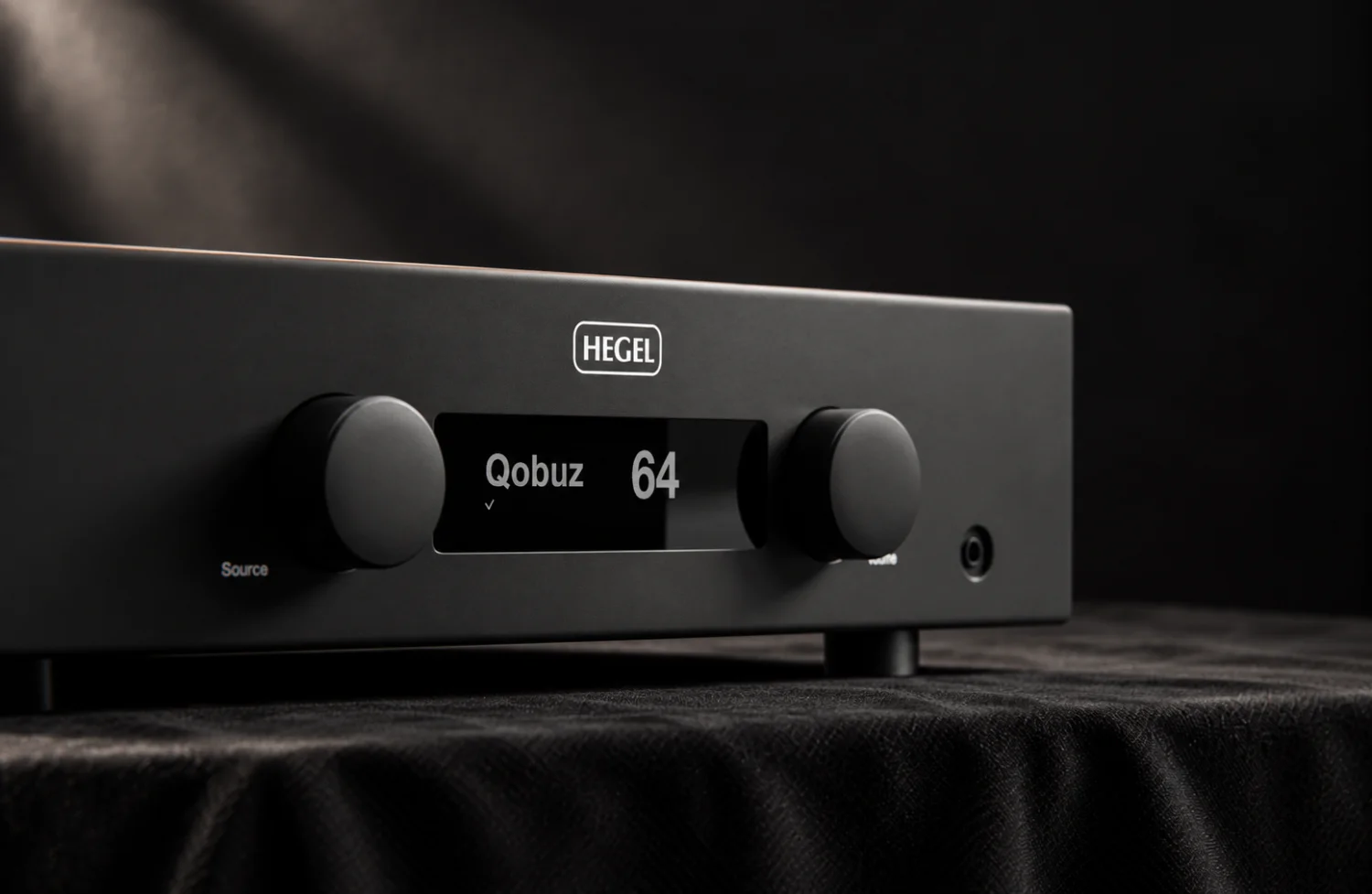
The Hegel H200 uses a curved minimalist front panel with two rotary controls and a central information display.
The Hegel H200 takes first place because it brings together serious amplification and practical source handling without allowing secondary features to define the product.
Its Class AB amplifier is rated at 150 watts per channel into 8 ohms, while digital conversion, network streaming and vinyl support make it suitable as the center of a streamlined but performance-led system.
Hegel’s SoundEngine 2 feed-forward technology is also central to the documented design. Its restrained interface is an advantage for listeners who want essential information rather than album artwork, virtual meters or a visually dominant touchscreen. That same minimalism is a limitation for anyone seeking a rich on-device streaming interface or the broadest possible wireless checklist, but the balance of power, integration and focus makes the H200 the strongest all-round recommendation in this group.
Best for: A performance-focused system built around one capable amplifier
- 150-watt-per-channel Class AB amplification into 8 ohms
- Combines digital conversion, network streaming and vinyl support
- SoundEngine 2 feed-forward design
- Minimalist interface keeps operation focused
Verdict: The Hegel H200 is the most convincing overall system hub here, combining substantial amplification with carefully selected digital, network and vinyl functions.

2. Arcam A15
The Arcam A15 combines the Radia series’ black surfaces, frosted front panel and subtle yellow detailing.
The Arcam A15 earns its position through balance rather than one attention-grabbing specification.
It occupies the middle of the original Radia range and supports a varied system with three RCA inputs, a moving-magnet phono stage, two coaxial digital inputs, one optical input, preamplifier outputs and Bluetooth 5.2 with aptX Adaptive.
That selection accommodates vinyl, conventional digital sources, wireless playback and future system expansion. The source review also provides a stronger real-world foundation than a launch announcement, covering several weeks of use and installation in different rooms. Its solid 10-kilogram construction and understated Radia styling reinforce the sense of a conventional full-size amplifier built for long-term use. The rear-panel overhang can make cable connection fiddly in poor light, but it is a minor ergonomic issue in an otherwise well-rounded design.
Best for: Listeners seeking a balanced full-size integrated amplifier
- Useful combination of analog, digital and moving-magnet phono inputs
- Bluetooth 5.2 with aptX Adaptive
- Preamplifier outputs support future system changes
- Solid construction and restrained Radia styling
Verdict: The Arcam A15 is a persuasive middle-ground choice with the connectivity, construction and flexibility needed for a varied home hi-fi system.
3. Accuphase E-6000
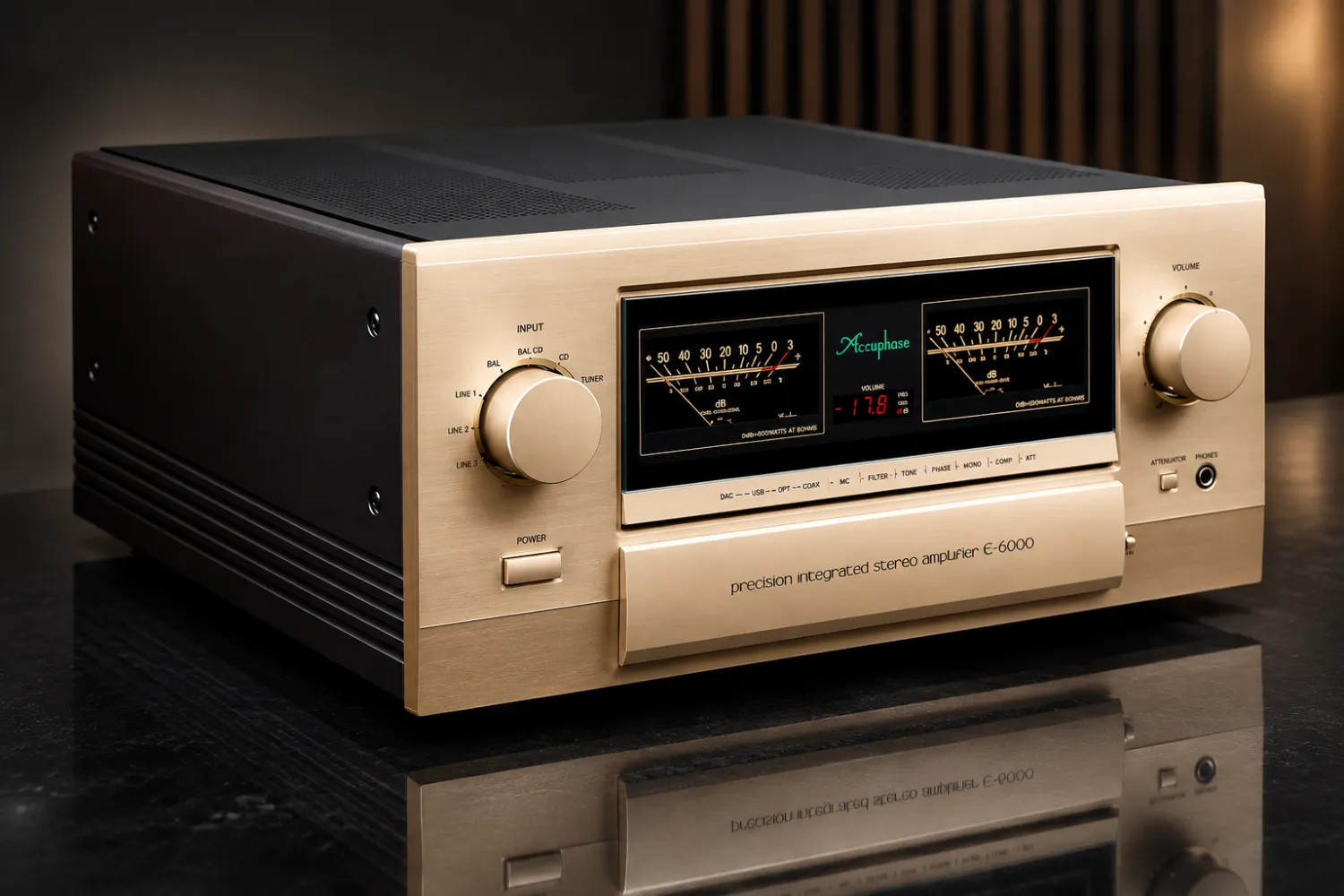
The Accuphase E-6000 is a flagship Class AB integrated amplifier with two slots for optional input modules.
The Accuphase E-6000 is the most ambitious conventional integrated amplifier in the ranking.
This flagship Class AB model is rated at 260 watts per channel into 8 ohms and uses six parallel push-pull transistor pairs per channel.
Accuphase has also revised the output stage, enlarged the power supply and updated the volume-control circuitry relative to the preceding E-5000. Two expansion slots allow digital and phono capabilities to be added according to the owner’s source requirements. Separate preamplifier outputs and power-amplifier inputs provide further flexibility, including the option to use its amplification sections independently. It ranks below the first two because the supplied coverage is announcement-led rather than an extended listening review, and some source functionality depends on optional modules, but its documented engineering makes it the clear choice for demanding high-end installations.
Best for: High-end systems with demanding speakers and configurable sources
- Rated at 260 watts per channel into 8 ohms
- Six parallel push-pull transistor pairs are used per channel
- Two expansion slots accept optional source modules
- Separate preamplifier outputs and power-amplifier inputs
Verdict: The Accuphase E-6000 is the heavyweight choice for buyers who prioritize speaker-driving capacity, modular inputs and separates-style flexibility.

4. Hegel H95
The Hegel H95 features the brand’s familiar curved front, central OLED display and two large control knobs.
The Hegel H95 offers a more accessible route into Hegel’s network-integrated approach.
It combines amplification, an internal DAC, streaming support and SoundEngine 2 technology in a substantial chassis weighing approximately 10.6 kilograms.
Analog and digital inputs cover core source requirements, while a variable RCA output gives the amplifier additional system flexibility. Its physical design is characteristically restrained, with a curved front panel, two large controls and a central OLED display. The supplied remote is functional rather than luxurious, and listeners with especially demanding speakers may prefer the greater output capability of the H200. For a compact network amplifier that retains Hegel’s focused interface and established design philosophy, however, the H95 remains a coherent proposition.
Best for: A compact Hegel-based system with digital and network sources
- Integrated DAC and network streaming support
- SoundEngine 2 technology
- Analog and digital connectivity in one component
- Variable output adds system flexibility
Verdict: The Hegel H95 is a focused network integrated amplifier for listeners who want Hegel’s core architecture without moving to the larger H200.
5. Onkyo Muse Y-50G
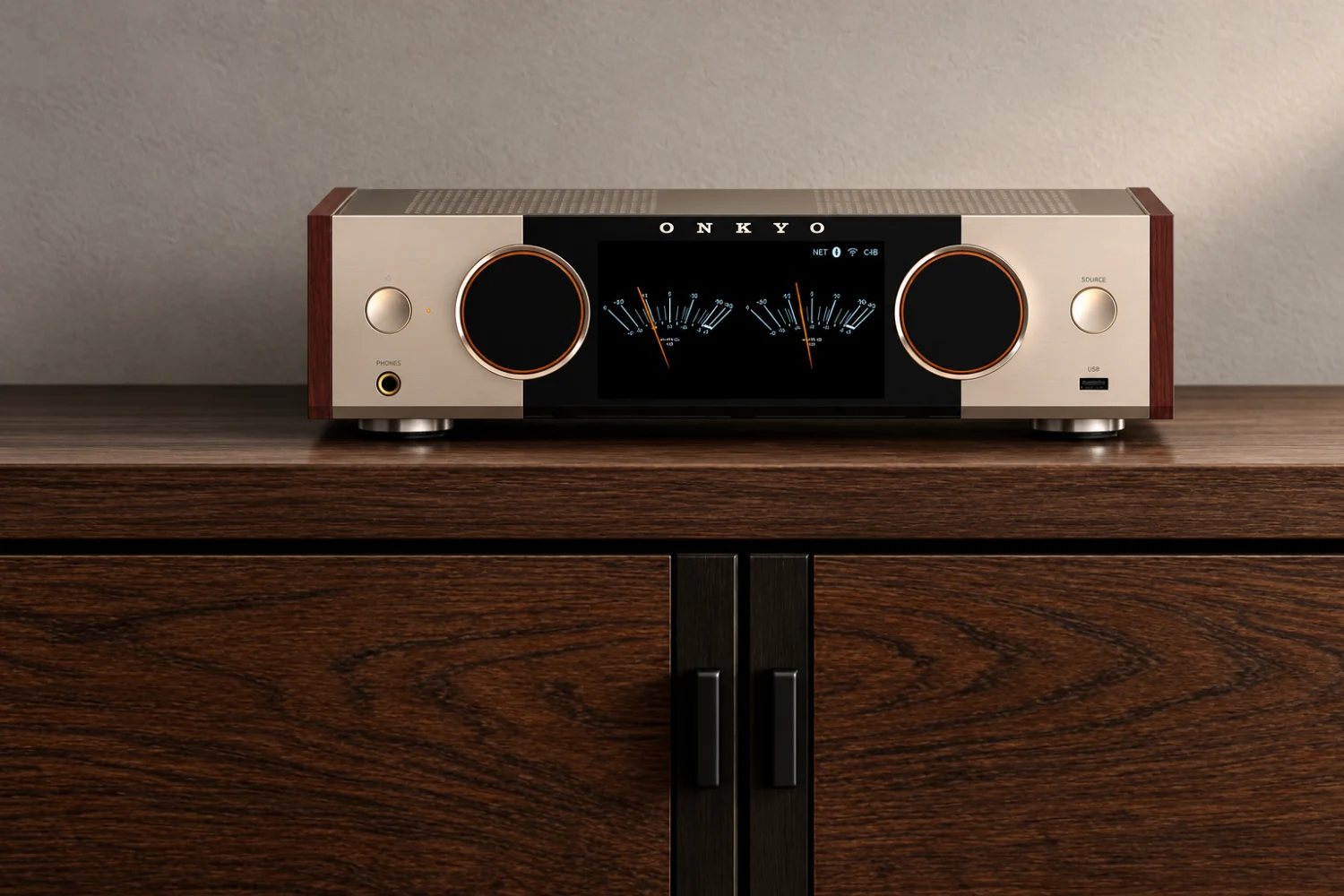
The Onkyo Muse Y-50G pairs walnut side panels and a Champagne Gold faceplate with virtual VU meters.
The Onkyo Muse Y-50G has the broadest confirmed feature set in the ranking.
This network integrated amplifier combines 250-watt Class D amplification with built-in streaming, television integration, room equalization and support for both moving-magnet and moving-coil cartridges.
It is designed to consolidate functions that would traditionally have required several separate components. Its Bordeaux walnut side panels, Champagne Gold faceplate and virtual VU meters draw on earlier Onkyo Integra components, but the underlying architecture is contemporary rather than a simple retro exercise. A 350-millimeter-wide chassis also makes it relatively compact for its stated scope. Because the supplied source documents its launch rather than a comparative listening evaluation, its ranking reflects the strength of the confirmed proposition rather than a claim of proven sonic superiority.
Best for: A feature-rich single-box system with vinyl and television sources
- 250-watt Class D amplification
- Built-in streaming, room equalization and television integration
- Supports moving-magnet and moving-coil cartridges
- Relatively compact 350-millimeter chassis
Verdict: The Onkyo Muse Y-50G is the most comprehensively equipped all-in-one amplifier here, although its placement is necessarily based on documented design rather than extended review evidence.

6. Argon Audio SA1 MK2
The compact Argon Audio SA1 MK2 uses a clean front panel intended to remain unobtrusive in a living space.
The Argon Audio SA1 MK2 addresses a different priority from the full-size models above it: fitting useful stereo amplification into a genuinely compact enclosure.
HDMI ARC makes it especially relevant to television-centered living rooms, while Bluetooth, digital and analog inputs and a moving-magnet phono stage allow it to support a wider system than its size might suggest.
Straightforward controls and a proper remote reduce dependence on applications or hidden menus. Its discreet Scandinavian-influenced appearance should also integrate more easily into shared spaces than a large equipment rack. Buyers with difficult speakers or large rooms should still compare its amplification requirements carefully against the more substantial designs in this ranking, but its combination of size and connectivity is unusually practical.
Best for: Compact living-room systems shared between music, television and vinyl
- Genuinely compact enclosure
- HDMI ARC supports television-based systems
- Bluetooth, digital, analog and moving-magnet phono connectivity
- Includes a conventional remote control
Verdict: The Argon Audio SA1 MK2 is the strongest space-saving option for listeners who want practical hi-fi connectivity without a full-size chassis.

7. ARCAM A25+
The ARCAM A25+ retains the Radia family’s minimalist black-and-yellow visual identity.
The ARCAM A25+ sits at the top of the refreshed conventional Radia integrated-amplifier range.
Its documented updates include revised circuitry, upgraded components, enhanced power management and a more advanced Bluetooth platform.
As one of the two larger Plus models, it also gains HDMI eARC, giving it a more direct role in systems where a television is an important source. The A25+ is potentially the more capable ARCAM choice in this ranking, but the supplied article introduces three Radia Plus amplifiers together rather than providing a model-specific listening review. That narrower evidence base keeps it below the established A15 despite its higher position in ARCAM’s hierarchy. It is nevertheless the logical Radia option for buyers who want the top conventional model and require HDMI eARC.
Best for: Radia buyers who need HDMI eARC and the range’s top conventional model
- Top model in the conventional Radia Plus integrated range
- Revised circuitry and upgraded components
- Enhanced power supply and power management
- HDMI eARC and a more advanced Bluetooth platform
Verdict: The ARCAM A25+ is the most complete conventional Radia Plus amplifier, but fuller model-specific evaluation is needed before ranking it above the established A15.
8. Yamaha A-S301
The Yamaha A-S301 represents the ranking’s traditional value-focused integrated-amplifier option.
The Yamaha A-S301 is the value-oriented conventional amplifier in this field.
Its output is described as approximately 60 watts per channel into 8 ohms, placing it below the high-powered models but giving it a sensible role with bookshelf speakers or efficient floorstanders at moderate listening levels.
The source characterizes its presentation as neutral and composed, with clear midrange reproduction and controlled bass for its class. It does not attempt to match the network integration, room correction or high output ratings found further up the ranking. Instead, its appeal lies in providing the fundamentals of integrated amplification without turning features into the main attraction. The available evidence comes from a broader amplifier roundup rather than a dedicated review, so the recommendation is deliberately limited to the strengths explicitly documented there.
Best for: Straightforward, value-conscious stereo systems
- Approximately 60 watts per channel into 8 ohms
- Neutral and controlled presentation according to the supplied assessment
- Clear midrange performance for its class
- Suited to efficient speakers and moderate listening levels
Verdict: The Yamaha A-S301 is a sensible fundamentals-first amplifier for efficient speakers, provided advanced network features and very high output are not priorities.

9. HoloAudio Serene KTE
The HoloAudio Serene KTE is a dedicated line preamplifier built for use with separate power amplification.
The HoloAudio Serene KTE is not an integrated amplifier and cannot drive passive speakers by itself.
It is a high-end line preamplifier intended to control sources and feed a separate power amplifier.
Within that role, its fully balanced architecture, relay-controlled volume system and discrete amplifier modules demonstrate a focused approach to preserving the incoming signal. The supplied assessment emphasizes transparency, openness and a lack of obvious tonal imposition. Those qualities make the Serene KTE a compelling specialist choice for a separates system, but its requirement for external power amplification prevents it from competing directly with the integrated models above. Its low position therefore reflects narrower applicability rather than a judgment that it is less accomplished at its intended task.
Best for: High-end separates systems requiring a dedicated balanced preamplifier
- Fully balanced architecture
- Relay-controlled volume system
- Discrete amplifier modules
- Designed for a transparent, low-imposition preamplifier role
Verdict: The HoloAudio Serene KTE is a highly focused preamplifier for separates enthusiasts, not a one-box replacement for an integrated amplifier.
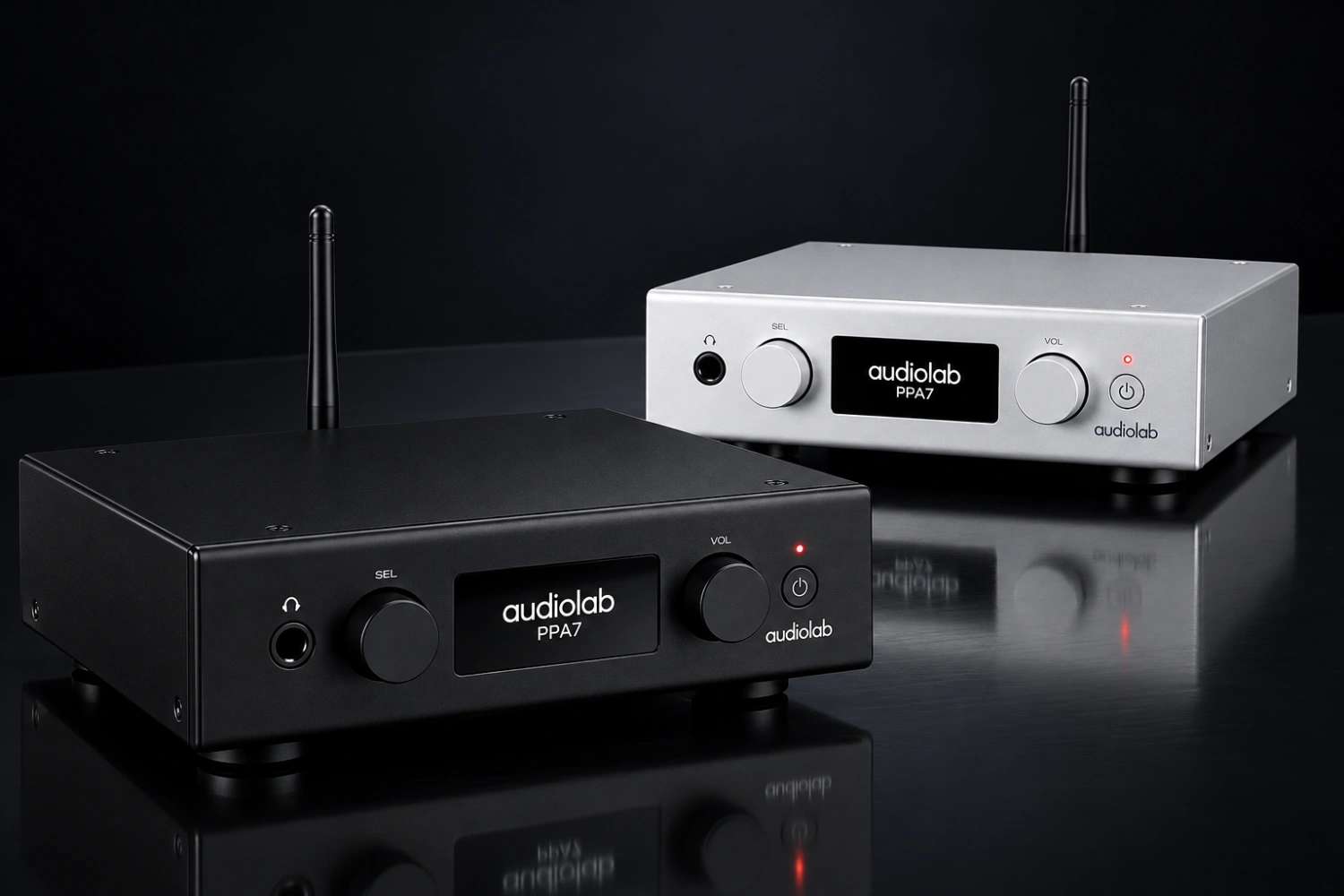
10. Audiolab PPA7
The compact Audiolab PPA7 combines phono amplification with headphone, Bluetooth and USB-C recording functions.
The Audiolab PPA7 is the most specialized product in the ranking.
Its primary function is phono amplification, with separate stereo RCA inputs for moving-magnet and moving-coil cartridges.
Cartridge matching includes two moving-magnet capacitance settings and two moving-coil load options, providing defined alternatives rather than continuous adjustment. Its usefulness extends beyond a conventional phono stage through an integrated headphone amplifier, Bluetooth transmission, USB-C recording and a variable line output. That output allows connection to active speakers or directly to a power amplifier, but the PPA7 still does not provide speaker-level amplification. It is last only because its application is limited to vinyl-centered systems; within that niche, it is an unusually versatile control and archiving hub.
Best for: Vinyl systems needing cartridge flexibility, headphones or digital archiving
- Separate moving-magnet and moving-coil inputs
- Selectable cartridge-matching options
- Headphone amplification and Bluetooth transmission
- USB-C recording and a variable line output
Verdict: The Audiolab PPA7 is a versatile phono hub rather than a general-purpose speaker amplifier, making it valuable but narrowly applicable.


Sound Off
0Join the discussion if you have something to add.