

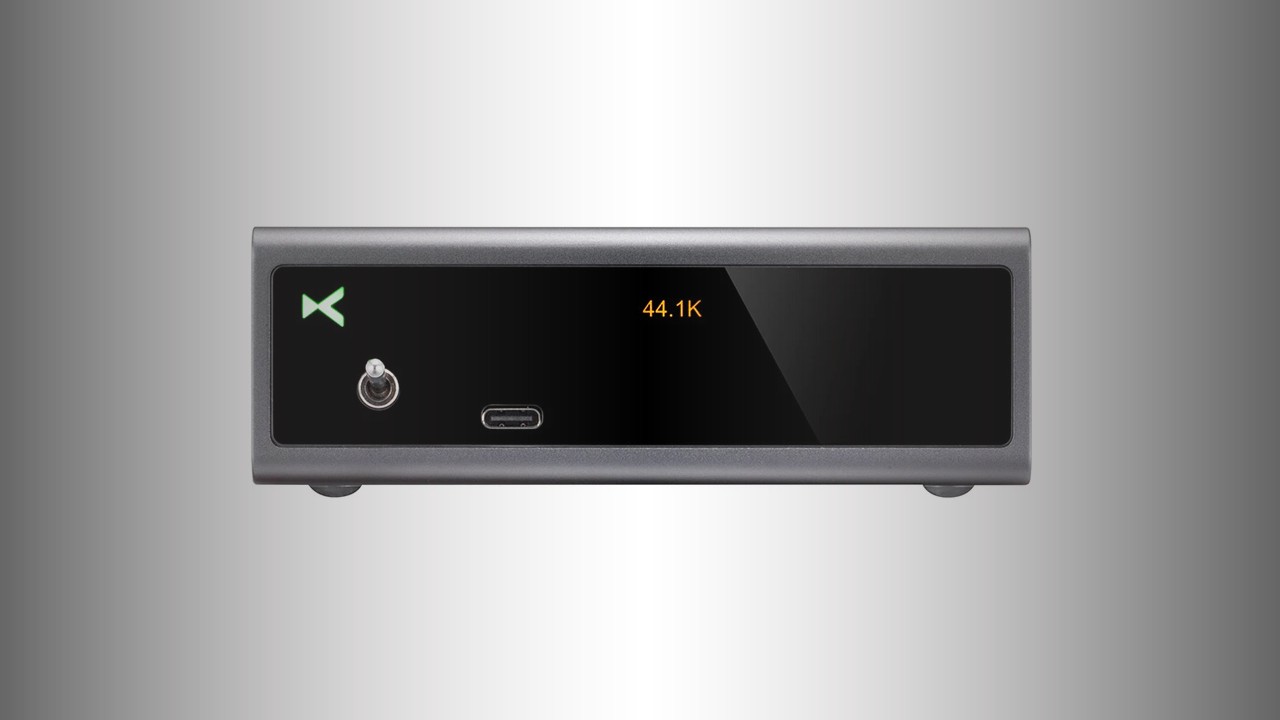
The xDuoo MU-601 is a small USB DAC aimed at listeners who want a straightforward way to improve digital-to-analog conversion from a computer or compatible USB source. Rather than building its identity around elaborate extras, it concentrates on a few core engineering choices that matter in everyday digital audio: a dedicated ESS DAC stage, an XMOS USB interface, support for high-resolution formats, and a rear-panel switch that lets the user choose between USB 1.0 and USB 2.0 operation. At $129, it sits in an accessible part of the market while still using components commonly associated with serious hi-fi products.
A focused approach to USB audio
The MU-601 is best understood as a purpose-built USB DAC. Its job is to receive a digital audio stream over USB and convert it into an analog signal for the rest of a hi-fi chain. That apparent simplicity is part of the attraction. Many modern audio systems are assembled around laptops, desktops, small music servers, or other USB-capable sources, and not every listener needs a DAC loaded with wireless features, multiple digital inputs, or complex menus.
By keeping the product concept narrow, xDuoo gives the MU-601 a clear role: it is designed for users who want a compact external conversion stage with support for modern high-resolution audio formats. For desktop systems, secondary listening spaces, or minimalist digital setups, this kind of single-purpose component can be easier to place, easier to understand, and easier to integrate than a larger multi-input DAC.
ES9018K2M conversion at the core
At the conversion stage, the MU-601 uses the ES9018K2M DAC chip. This ESS Technology chip has appeared in many hi-fi audio devices, and its inclusion is one of the most important details in the MU-601’s design. The DAC chip is responsible for turning the incoming digital data into an analog signal, so its performance characteristics are central to the unit’s purpose.
The source information highlights the ES9018K2M for its high signal-to-noise ratio and very low THD+N levels. In practical terms, those figures relate to how cleanly the DAC can perform its conversion task, with low added noise and low distortion. While specifications alone do not define an entire product, they indicate that xDuoo has chosen a conversion platform with established hi-fi credentials rather than relying on a generic or unspecified DAC solution.
For a prospective owner, this matters because the DAC stage is not an accessory feature here; it is the heart of the device. The MU-601’s appeal rests partly on the idea that a compact and affordable unit can still be based on a dedicated audio-grade conversion chip.
XMOS USB interface for modern digital sources
The USB interface is another important design choice. The MU-601 uses an XMOS XU208 USB interface, described as supporting efficient asynchronous signal transfer while helping reduce jitter. In a USB DAC, the interface is responsible for receiving the data stream from the source and passing it to the conversion stage in a controlled way.
Asynchronous USB operation is valued because it allows the DAC’s timing architecture to play a more active role in managing the data flow, instead of depending entirely on the timing behavior of the source device. The goal is to support stable digital transfer and reduce timing-related errors before conversion. The use of an XMOS solution therefore gives the MU-601 a more serious digital front end than its compact form might suggest.
This is particularly relevant for users who rely on computers as primary music sources. Computers are versatile, but they are not built solely for audio. A dedicated USB interface inside the DAC helps create a cleaner, more audio-focused bridge between the computer and the analog playback system.
High-resolution PCM and DSD support
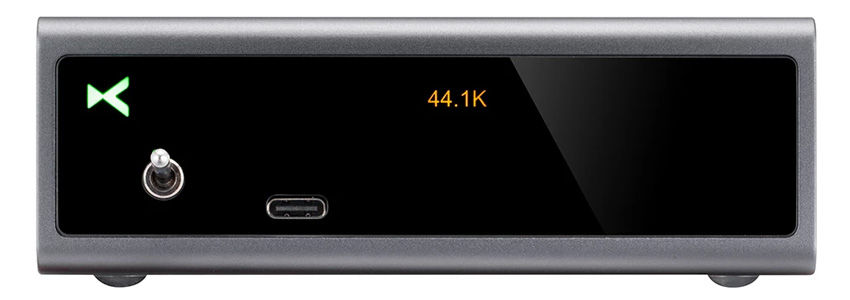
The MU-601 supports PCM audio up to 32-bit/384 kHz and DSD up to DSD256. These figures cover a wide range of currently available high-resolution audio material and playback software capabilities. For listeners with a library of high-resolution files, or for those using software that can output beyond standard CD resolution, the MU-601 provides format headroom that should be sufficient for many modern digital audio use cases.
The value of this support is not that every listener must own 32-bit/384 kHz or DSD256 music. Rather, it means the DAC is not limited to basic-resolution playback. It can accommodate common hi-res PCM files and more demanding DSD content without requiring the user to downsample simply because the DAC cannot accept the original format.
That flexibility can also be useful over time. A compact DAC may be purchased for a modest desktop system today, then remain useful as a music library or playback software evolves. Format support alone does not guarantee performance, but it can make a product easier to live with in a changing digital environment.
Selectable USB 1.0 and USB 2.0 modes
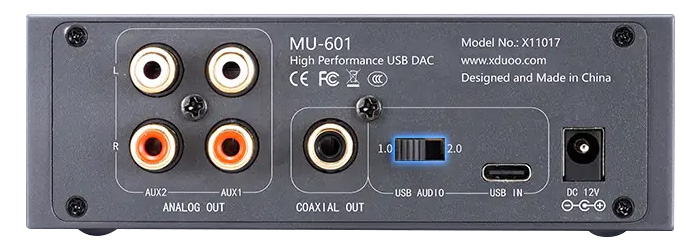
One of the MU-601’s more practical details is its rear-panel switch for selecting USB device mode: USB 1.0 or USB 2.0. This is a small feature, but it addresses a real-world issue in digital audio: compatibility. Not every source device, operating system, or playback environment behaves the same way with USB audio hardware.
USB 2.0 mode is important for high-resolution playback because it supports the bandwidth and capabilities required for more demanding audio streams. USB 1.0 mode, meanwhile, can be useful when working with devices or systems that have more limited driver or class-compliance support. The ability to select between the two gives the MU-601 a degree of adaptability that is not always present in simple USB DACs.
For prospective owners, this switch may reduce frustration. Instead of treating compatibility as an all-or-nothing matter, the MU-601 provides a hardware-level option that can help it work with a wider range of paired devices. That is especially valuable for users who move between computers, older machines, compact digital transports, or different operating systems.
Compact, affordable, and efficient by design
The MU-601 is described as small, affordable, and efficient. Those three qualities help define its place in a system. A compact USB DAC can sit comfortably on a desk, near a laptop, or beside a small amplifier without demanding the space of a full-width component. For listeners building a clean desktop audio setup, physical simplicity is often as important as technical capability.
Its $129 price also positions it as an accessible entry into dedicated external DAC hardware. That does not mean it should be treated as a substitute for every more elaborate DAC, but it does make the MU-601 relevant to listeners who want a cost-conscious upgrade from basic computer audio outputs or who need a secondary DAC for another system.
Efficiency, in this context, should be understood as part of the product’s straightforward mission. The MU-601 does not appear to be trying to be a network streamer, preamplifier, headphone amplifier, or all-in-one control center. Its documented feature set points instead toward a lean device built to perform one central task.
System matching and likely use cases
The MU-601 will make the most sense in systems where USB is the primary digital connection. A desktop listener using a computer as a source is an obvious candidate, as is someone feeding a compact amplifier or powered speaker system from a USB-capable device. It may also suit users who already have an analog amplification path and simply need a dedicated DAC between their digital source and the rest of the setup.
Its support for high-resolution PCM and DSD makes it a logical match for software-based playback, where users can manage local files and output bit-perfect or high-resolution streams where supported by their system. The selectable USB mode broadens the range of possible pairings, particularly for listeners who value plug-in flexibility across more than one source.
Because the documented information focuses on USB conversion, the MU-601 is not presented as a multi-input digital hub. Users who need coaxial, optical, Bluetooth, network streaming, volume control, or a broad range of analog output options should look carefully at their system requirements before assuming this is the right component. The MU-601’s strength is its focus, but that same focus means it is best matched to a clearly USB-centered setup.
Conclusion
The xDuoo MU-601 is attractive because it keeps its priorities clear. It combines an ES9018K2M DAC chip, an XMOS XU208 USB interface, support for PCM up to 32-bit/384 kHz and DSD256, and a useful USB 1.0/2.0 mode switch in a compact $129 package. Its strongest documented qualities are not flashy extras, but sensible engineering choices aimed at reliable USB audio conversion and broad compatibility. It is best suited to listeners who want a small, affordable, dedicated USB DAC for a computer-based or otherwise USB-focused hi-fi system, especially where high-resolution file support and simple integration matter more than all-in-one functionality.


Join the discussion
Share your thoughts, listening impressions or product experience.