
Headphones differ as much in purpose as they do in design.
An open-back planar model intended for monitoring has little in common with a noise-cancelling true-wireless earphone, while a multi-driver in-ear monitor introduces its own questions about fit, source matching and cable connections.
This selection reflects that breadth rather than treating every model as interchangeable. The Klipsch HP-3 and Audio-Technica ATH-ADX7000 emphasize spacious listening through semi-open or open-back construction. Audeze’s MM-520 and LCD-1 bring planar-magnetic technology to professional and home applications, while the Cambridge Audio Melomania P100 focuses on wireless convenience, active noise cancellation and unusually long quoted battery life. The wired in-ear choices range from the configurable TRN Bax Pro to the elaborate Tigerism Dragonfly and more accessible hybrid KZ ZSN PRO X. One entry requires a clear qualification: the Sonos article concerns speculation rather than an announced, specified product. It is included to preserve the supplied ranking, but it cannot be treated as a buying recommendation. The remaining choices should be compared by format, intended environment, connection type and practical ownership requirements before sound-related claims enter the decision.

1. Klipsch HP-3: Full-size headphones for the most demanding audiophiles
Klipsch HP-3 full-size headphones with carved wooden earcups and metal-mesh semi-open backs.
The Klipsch HP-3 combines Heritage-series styling with a semi-open, full-size design.
Its earcups are carved from natural wood, with ebony, walnut and oak identified as options, while metal mesh and openings in the cups contribute to the semi-open construction.
Custom BioDynamic dynamic drivers use diaphragms made from biocellulose and inorganic fiber, and the frameless driver design is intended to maximize radiating area. The source describes an extended sound picture, focused and deep bass, relatively low weight and a comfortable fit, while high sensitivity is intended to make amplifier selection less restrictive. Memory foam is used in the ear pads, reinforcing the HP-3’s focus on long-form home listening as well as presentation.
Best for: Home listeners seeking a luxurious semi-open dynamic headphone
- Natural-wood earcups
- Comfort-oriented memory foam
- High-sensitivity design
- Spacious semi-open presentation
Verdict: The HP-3 is a design-conscious Heritage model that pairs natural materials and comfortable construction with an expansive semi-open approach.
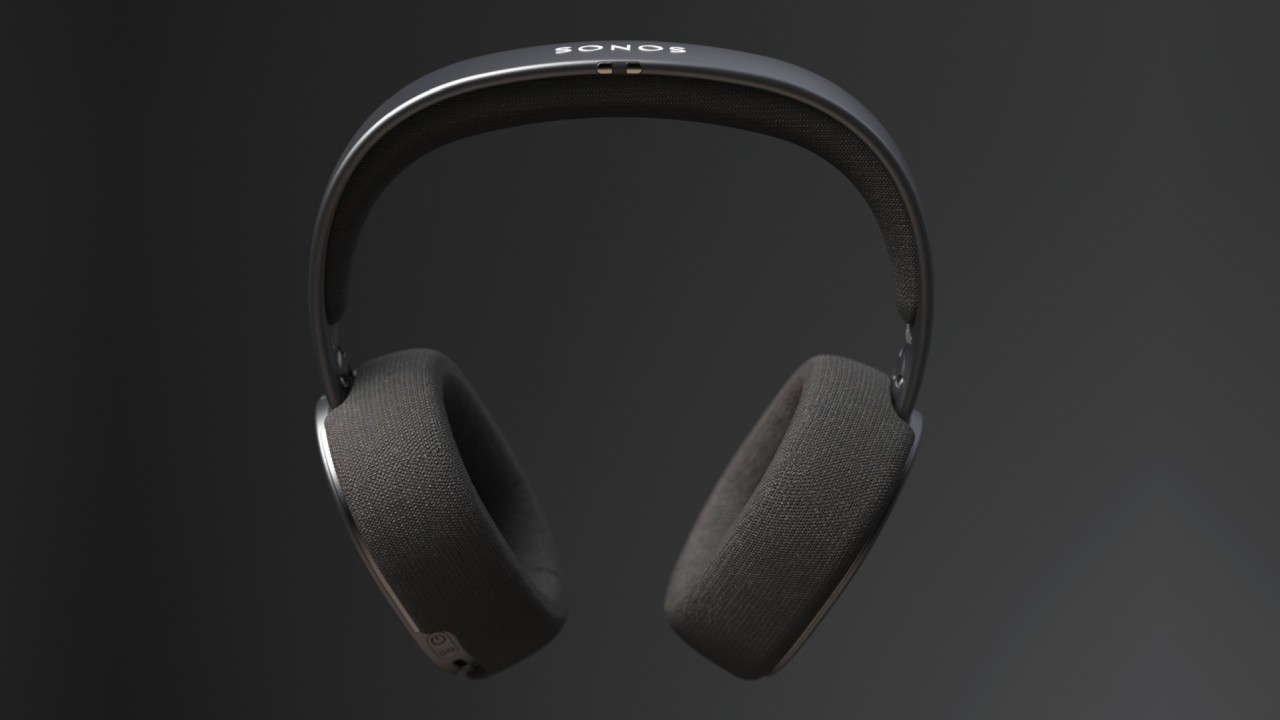
2. Rumor: Sonos set to launch headphones within the next six months
Sonos branding associated with an unconfirmed report about the company potentially entering the headphone market.
This is not a finished headphone recommendation but a report about speculation surrounding Sonos entering the category.
The source connects remarks about a forthcoming product category with earlier reports concerning the company’s first branded headphones, but it provides no confirmed headphone name, specifications, design, features or performance findings.
Sonos’s acquisition of Mayht is mentioned as part of the surrounding context, yet it does not establish what a possible headphone would offer. Buyers should therefore treat this entry as industry background and avoid making a purchase decision based on it.
Best for: Industry watchers rather than current headphone buyers
Verdict: With no confirmed product or specifications in the supplied report, the rumored Sonos headphones belong on a watchlist rather than a shortlist.

3. Melomania P100: Wireless over-ear headphones from Cambridge Audio
Cambridge Audio Melomania P100 wireless over-ear headphones with active noise cancellation and replaceable ear cushions.
The Melomania P100 is Cambridge Audio’s first wireless over-ear model and one of the most practical all-rounders in this selection.
Its quoted playing time reaches 100 hours with noise cancellation switched off, while both the battery and ear cushions can be replaced by the user.
The audio platform combines 40 mm drivers with three-layer Mylar diaphragms and Class AB amplification. Bluetooth 5.3, Snapdragon Sound, aptX Lossless, aptX Adaptive, SBC, AAC and multipoint connectivity give it broad wireless flexibility, while active noise cancellation makes it better suited to changing environments than the open-back models here.
Best for: Wireless listeners prioritizing battery life and serviceable parts
- Up to 100 hours without noise cancellation
- User-replaceable battery and ear cushions
- Active noise cancellation
- Bluetooth multipoint and broad codec support
Verdict: The Melomania P100 stands out for combining modern wireless support and noise cancellation with replaceable wear components and extensive quoted endurance.

4. Audio-Technica ATH-ADX7000: $3,500 Flagship True Open-Air Headphones With HXDT Driver Technology
Audio-Technica ATH-ADX7000 flagship open-air headphones featuring the company’s HXDT dynamic-driver technology.
Audio-Technica positions the ATH-ADX7000 as the flagship of its ADX open-air line.
Designed and manufactured in Japan, it uses the company’s patented High-Concentricity X-Transfer Dynamic Transducer technology, abbreviated HXDT.
The controlled molding and alignment process is intended to improve manufacturing precision from individual components through final driver integration. Its fully open housing allows air to move through the driver enclosure, reducing internal pressure and resonance. Audio-Technica says this arrangement produces clear, natural and spacious reproduction without added coloration, while specialized drivers are intended to retain deep bass despite the open-back architecture. Those are manufacturer claims rather than independent measurements in the supplied material, but they clearly define the model’s purpose.
Best for: Dedicated open-back listening in a quiet room
- Fully open-air construction
- Patented HXDT driver technology
- Designed and manufactured in Japan
- Engineered to reduce internal pressure and resonance
Verdict: The ATH-ADX7000 is a specialized flagship for listeners who value an uncompromising open-air dynamic design and precision-focused construction.

5. Tigerism Dragonfly: In-ear headphones with a hand-applied faceplate with gold plating
Tigerism Dragonfly in-ear monitor with a 904L steel body and hand-applied gold-plated silver faceplate.
The Tigerism Dragonfly is an elaborate wired in-ear monitor built from 904L steel, with a pure-silver faceplate finished with hand-applied gold plating.
Internally, the listed configuration comprises 16 balanced-armature emitters, using Knowles drivers for high and mid-high frequencies alongside Sonion units for mid-low frequencies and bass.
The source describes a clear, vibrant and balanced presentation with expansive staging, accurate imaging, managed reverberation and lush vocals. A six-core single-crystal silver cable is included and is intended to reduce signal loss and interference. With a listed impedance of 7 ohms and sensitivity of 98 dB at 100 mV, source compatibility deserves attention despite the claim that it can work with a range of devices.
Best for: Wired-IEM enthusiasts seeking complex multi-driver engineering
- Sixteen balanced-armature emitters
- Durable 904L steel construction
- Hand-applied gold-plated faceplate
- Six-core single-crystal silver cable
Verdict: The Dragonfly combines an unusually elaborate balanced-armature array with premium metalwork and a specialist silver cable.

6. TRN Bax Pro: Flagship hybrids built on three types of emitters
TRN Bax Pro hybrid in-ear monitors with dynamic, balanced-armature and electrostatic drivers plus a modular cable.
The TRN Bax Pro uses three driver technologies within each wired earpiece: a 10 mm beryllium-diaphragm dynamic driver with a dual-magnetic system, two Knowles balanced-armature drivers and two Sonion electrostatic drivers.
Three two-position switches allow the user to alter the frequency-response profile, giving the model a degree of tuning flexibility absent from fixed-signature designs.
Its detachable monocrystalline copper cable has a modular connector system with 2.5 mm, 3.5 mm and 4.4 mm terminations. Listed sensitivity is 114 dB and nominal impedance is 32 ohms.
Best for: Wired listeners who want adjustable tuning and connection options
- Three complementary driver types
- Switch-adjustable frequency response
- Detachable monocrystalline copper cable
- Modular 2.5 mm, 3.5 mm and 4.4 mm plugs
Verdict: The Bax Pro’s strongest distinction is its configurable hybrid architecture, supported by tuning switches and a versatile modular cable.
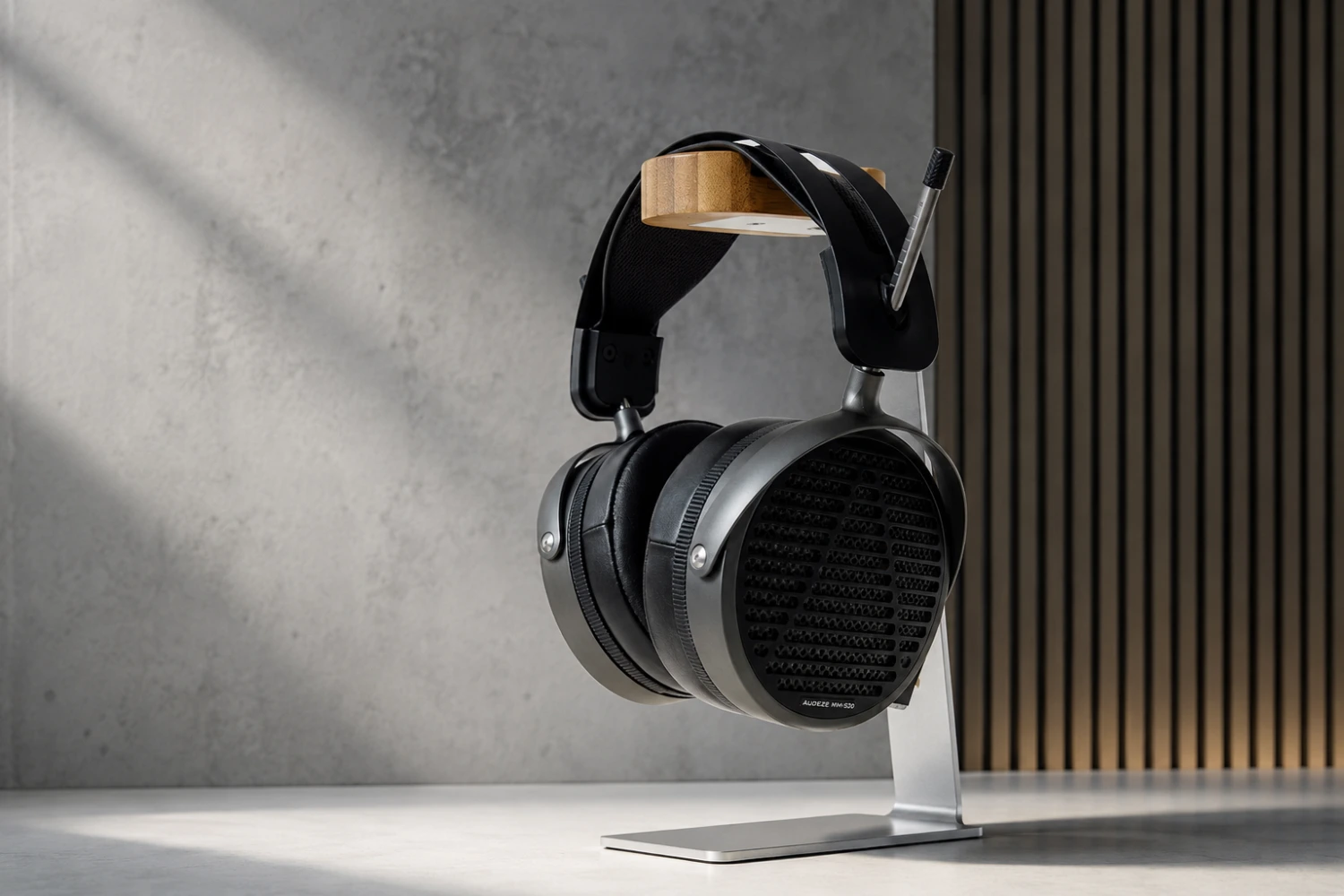
7. Audeze MM-520 Review: Studio Precision With Serious Planar Bass
Audeze MM-520 open-back planar-magnetic headphones designed for professional monitoring and serious home listening.
The Audeze MM-520 sits at the top of the company’s MM family, which applies established planar-magnetic technology to the needs of producers, engineers and musicians.
It is an open-back professional monitor, but the reviewed combination of deep bass, smoothness and Audeze’s familiar planar presentation also makes it relevant to serious home listeners.
SLAM acoustic technology is intended to improve low-frequency behavior while retaining the speed and control associated with a planar driver. The source’s extended-listening assessment also stresses that the MM-520 has a personality of its own rather than functioning merely as an MM-500 with extra bass.
Best for: Producers and home listeners wanting open-back planar bass
- Planar-magnetic driver technology
- Professional monitoring focus
- Strong low-frequency emphasis
- SLAM acoustic technology
Verdict: The MM-520 brings a distinct low-frequency emphasis to Audeze’s professional open-back formula without being characterized as a simple revision of the MM-500.

8. Audeze LCD-1: Light, compact, but still top-end
Audeze LCD-1 lightweight foldable open-back headphones with 90 mm planar-magnetic drivers.
The Audeze LCD-1 packages planar-magnetic drivers into an unusually portable open-back format.
It weighs 250 grams, folds for easier transport and uses a custom headband with lambskin-covered foam ear pads.
Its 90 mm planar drivers are listed with a frequency range of 10 Hz to 50 kHz, while the supplied 3.5 mm braided cable uses reversible connectors and includes a 6.3 mm adapter. The source describes its sound as clean, neutral and highly clear, aligning it with musicians, audio engineers and audiophiles who want a less cumbersome planar headphone for home or studio use.
Best for: Professionals seeking a compact open-back planar headphone
- Lightweight 250-gram design
- Foldable open-back construction
- Clean, neutral presentation
- Reversible cable connections
Verdict: The LCD-1 is the portable planar option here, combining a foldable 250-gram design with neutral, professionally oriented reproduction.

9. Edifier Evo Pro: Two-way noise-canceling TWS headphones
Edifier Evo Pro true-wireless earphones with dual dynamic drivers, LDAC and active noise cancellation.
The Edifier Evo Pro is the only fully wireless in-ear model in this selection.
Each earpiece uses two dynamic drivers: a 10 mm unit with a composite diaphragm and a 6 mm titanium-coated driver.
Bluetooth 5.3 is joined by LDAC support, with the source listing signal transmission up to 24-bit/96 kHz and 990 kbps. Active noise cancellation uses three microphones in each earpiece and is rated to reduce outside noise by 45 dB. Battery life is listed at six hours with cancellation active or eight hours without it, increasing to a total of 24 hours with the charging case. An 80 ms game mode is also included.
Best for: Portable listeners wanting noise-cancelling true-wireless earbuds
- Dual dynamic drivers
- LDAC codec support
- Active noise cancellation
- Charging case provides up to 24 hours total
Verdict: The Evo Pro combines dual-driver true-wireless convenience with LDAC, active noise cancellation and a dedicated low-latency mode.

10. KZ ZSN PRO X Hybrid IEMs: Dual-Driver Design, Metal Faceplate and Detachable Cable
KZ ZSN PRO X hybrid in-ear monitors with a zinc-alloy faceplate, resin housing and detachable cable.
The KZ ZSN PRO X is a budget-oriented wired in-ear monitor built around a two-driver hybrid system.
A 10 mm dynamic driver handles low and middle frequencies, while a 30095 balanced-armature unit is dedicated to treble.
KZ says its revised magnetic-gap design allows greater diaphragm excursion, with the aim of reducing parasitic losses and improving efficiency, bass strength and clarity. The combination is intended to sound more energetic and spacious than a comparable single-driver arrangement. A zinc-alloy outer faceplate gives the resin-based housing a more substantial industrial appearance, while the detachable cable improves practicality compared with a permanently attached lead.
Best for: Value-focused buyers exploring wired hybrid IEMs
- Dynamic and balanced-armature hybrid design
- Detachable cable
- Zinc-alloy faceplate
- Budget-friendly positioning
Verdict: The ZSN PRO X offers a straightforward entry into hybrid IEMs, pairing separate bass-mid and treble drivers with a detachable cable and metal faceplate.
Quick comparison
The clearest distinctions are format and intended setting.
The Klipsch, Audio-Technica and Audeze models favor open or semi-open listening, while the Cambridge Audio and Edifier options add wireless operation and active noise cancellation.
Tigerism, TRN and KZ offer wired in-ear alternatives with very different levels of driver complexity. The Sonos entry has no confirmed product specifications and should not be compared as a purchasable model.
| Product | Best for | Verdict |
|---|---|---|
| Klipsch HP-3 | Comfortable semi-open home listening | A Heritage-styled dynamic headphone distinguished by natural wood, high sensitivity and a spacious semi-open design. |
| Unconfirmed Sonos headphones | Following industry developments | A speculative report with no confirmed product, features or performance evidence. |
| Cambridge Audio Melomania P100 | Long-lasting wireless over-ear use | A noise-cancelling over-ear model with extensive codec support, multipoint connectivity and replaceable wear components. |
| Audio-Technica ATH-ADX7000 | Flagship open-air listening | A Japan-made open-back dynamic design centered on Audio-Technica’s precision-oriented HXDT technology. |
| Tigerism Dragonfly | Premium multi-armature wired listening | A 16-balanced-armature IEM combining specialist driver allocation with elaborate steel and precious-metal construction. |
| TRN Bax Pro | Configurable hybrid IEM listening | A three-technology hybrid with tuning switches and modular balanced and unbalanced cable terminations. |
| Audeze MM-520 | Studio monitoring with substantial planar bass | An open-back professional planar model with a distinct low-frequency focus and SLAM acoustic technology. |
| Audeze LCD-1 | Lightweight professional planar use | A 250-gram foldable open-back headphone that makes planar technology more portable. |
| Edifier Evo Pro | Noise-cancelling true-wireless use | A compact dual-driver option with LDAC, active noise cancellation and a charging case. |
| KZ ZSN PRO X | Affordable hybrid-IEM entry | A budget-oriented dynamic and balanced-armature hybrid with a detachable cable and metal faceplate. |
Frequently asked questions
Should I choose open-back, semi-open or noise-cancelling headphones?
Choose open-back models such as the ATH-ADX7000, MM-520 or LCD-1 for quiet-room listening where spacious presentation matters more than isolation.
The semi-open Klipsch HP-3 offers some protection from external noise according to the source, but it remains primarily a home-listening design.
Wireless noise-cancelling models such as the Melomania P100 or Evo Pro are more practical around environmental sound.
Are wireless headphones the most practical choice for long sessions?
That depends on the setting.
The Melomania P100 has a quoted maximum of 100 hours with noise cancellation disabled and allows the user to replace its battery and ear cushions, making it particularly ownership-friendly.
Wired headphones avoid wireless charging altogether, but open designs may be unsuitable in shared or noisy spaces.
What is the advantage of hybrid or multi-driver in-ear monitors?
Hybrid models divide the frequency range between different driver types.
The KZ ZSN PRO X uses a dynamic driver for lows and mids plus a balanced armature for treble, while the TRN Bax Pro combines dynamic, balanced-armature and electrostatic units.
More drivers do not by themselves guarantee better results, so fit, tuning options and connection requirements should also guide the decision.
Do these headphones require a dedicated amplifier?
Amplification needs cannot be determined from format or price alone.
The Klipsch HP-3 is specifically described as having high sensitivity to simplify amplifier matching, while the TRN Bax Pro lists 32-ohm impedance and 114 dB sensitivity.
Check the requirements of the exact model and the output capability of the intended source before buying, especially with specialist wired headphones.
How to Choose the Right Headphone for Your Listening
Start with the environment rather than the driver technology.
Open-back headphones make the most sense in a quiet, private space, where the Audio-Technica ATH-ADX7000 and Audeze MM-520 offer flagship and professional interpretations of that format.
The lighter, foldable LCD-1 is the more portable planar alternative, while the semi-open Klipsch HP-3 places greater emphasis on natural materials, comfort and Heritage styling. For wireless use, the Cambridge Audio Melomania P100 is the stronger over-ear proposition in the supplied material because it combines active noise cancellation, multipoint connectivity, modern codec support, long quoted endurance and replaceable parts. The Edifier Evo Pro is the compact true-wireless choice, trading over-ear comfort and battery capacity for pocketable convenience, a charging case and an 80 ms game mode. Wired-IEM buyers should decide how much complexity they actually need. The KZ ZSN PRO X provides a simple dual-driver hybrid arrangement and detachable cable, the TRN Bax Pro adds three driver technologies, tuning switches and modular plugs, and the Tigerism Dragonfly moves to a 16-balanced-armature configuration with elaborate materials. Fit remains fundamental with any in-ear model, regardless of driver count. Finally, separate confirmed products from speculation. The Sonos report contains no product specifications or verified performance information, so it should not influence an immediate purchase. For every available model, confirm connection compatibility, isolation needs, replaceable components and amplification requirements before treating sound-related claims as decisive.



Sound Off
0Join the discussion if you have something to add.