
A dedicated music streamer can add network playback to an established hi-fi system, but the category now covers far more than simple network bridges.
Some models include a DAC and preamplifier, others add headphone and phono stages, and a few are deliberately built without digital-to-analogue conversion for listeners who already own a preferred DAC.
The right choice therefore depends less on the longest specification list than on how the component will fit into your system. Connectivity, control software, streaming-service support, local-library access and the choice between fixed or variable analogue output can all matter as much as headline file compatibility. The selections below range from compact network players to ambitious digital hubs and reference-level transports. We have also included Tidal’s move from MQA to FLAC because format changes can affect streamer compatibility and should be considered alongside the hardware itself.

1. Leak TruStream: A Premium Network Streamer for Modern Audiophile Systems
The Leak TruStream combines the company’s established visual style with ESS-based digital conversion and network playback.
Leak’s first dedicated music streamer combines the brand’s vintage-influenced design language with a high-resolution network platform developed in partnership with Silent Angel.
Digital conversion is handled by an ESS Sabre ES9038Q2M DAC with HyperStream II architecture and Time Domain Jitter Eliminator technology, followed by an actively filtered output stage tuned by Leak.
It is a particularly coherent option for systems already built around the company’s Stereo 130 amplifier or CDT transport, although the source does not limit it to those components.
Best for: Leak systems and listeners who want modern streaming in a retro-styled component
- ESS Sabre ES9038Q2M DAC
- Silent Angel-based streaming platform
- Distinctive vintage-influenced design
Verdict: The TruStream brings dedicated network audio to Leak’s range with a serious DAC implementation and design that complements the brand’s existing electronics.

2. Eversolo DMP-A6 Gen 2: The ultimate high-fidelity streamer
The Eversolo DMP-A6 Gen 2 uses a CNC-machined aluminium enclosure and adds a linear power supply to its multifunction design.
The DMP-A6 Gen 2 combines network streaming, digital-to-analogue conversion and preamplifier functions in one chassis.
Its revisions include a linear power supply designed to reduce noise, while Wake-on-LAN allows a wired-network installation to be activated through the control app.
A seamless CNC-machined aluminium enclosure provides a substantial physical foundation and is intended to shield the audio circuitry from interference.
Best for: Listeners seeking a multifunction network source with app-based system control
- Streamer, DAC and preamplifier functions
- Linear power supply
- Wake-on-LAN app activation
- CNC-machined aluminium chassis
Verdict: The DMP-A6 Gen 2 is a well-equipped digital front end for buyers who want streaming, conversion and volume control in a single component.

3. Cambridge Audio EXN100: Reference Class Network Streamer
The Cambridge Audio EXN100 provides StreamMagic control, an ESS DAC and a broad range of wired and wireless connections.
Cambridge Audio’s EXN100 builds on the CXN100 with an ESS ES9028Q2M SABRE32 DAC and the fourth generation of the company’s StreamMagic platform.
Its unusually broad connectivity includes HDMI eARC, USB, coaxial and optical digital inputs, plus balanced XLR analogue outputs.
Spotify Connect, Tidal Connect, Deezer, Qobuz, Roon Ready, UPnP, internet radio, Chromecast, AirPlay 2 and Bluetooth aptX HD support make it one of the most adaptable service and protocol combinations in this selection.
Best for: Systems that need wide service support and extensive digital connectivity
- Fourth-generation StreamMagic platform
- Extensive streaming and wireless support
- HDMI eARC and multiple digital inputs
- Balanced XLR outputs
Verdict: The EXN100 stands out as a flexible network source for listeners who want one streamer to accommodate televisions, services, local libraries and wireless playback.

4. Tidal says “bye bye” to MQA and here’s what that means for subscribers
Tidal’s format transition replaces MQA streams with FLAC and leaves Dolby Atmos as its supported multichannel option.
This is a service update rather than a hardware recommendation, but it has lasting relevance when choosing a streamer.
Tidal replaced its MQA catalogue with FLAC versions, removing the need for MQA decoding when accessing its high-resolution library.
The service also discontinued 360 Reality Audio while retaining Dolby Atmos as its multichannel format. Buyers should therefore prioritise current FLAC and Tidal compatibility rather than treating MQA support as essential for this service.
Best for: Tidal subscribers checking format compatibility before buying hardware
- FLAC replaces Tidal’s MQA catalogue
- Dolby Atmos remains the service’s multichannel format
Verdict: Tidal’s move to FLAC makes broad open-format support more relevant than MQA decoding for prospective streamer buyers.

5. Lumin T3X: Network player equipped with linear power supply
The Lumin T3X adds a toroidal linear power supply, fibre networking and a second USB-A connection to the established T3 design.
The T3X develops Lumin’s existing T3 platform by replacing its switching supply with a linear power supply built around a substantial toroidal transformer.
It retains dual ES9028Pro SABRE DACs in a dual-mono configuration while adding a second USB-A port.
Buyers can connect it through conventional RJ45 Ethernet or use its fibre-optic network interface for galvanic isolation from electrical network noise.
Best for: Network-audio systems where power-supply design and connection isolation are priorities
- Linear power supply with toroidal transformer
- Fibre-optic and RJ45 network connections
- Dual ES9028Pro DACs in dual-mono operation
- Two USB-A ports
Verdict: The T3X is a focused evolution of Lumin’s network player, distinguished by its linear supply, dual-DAC architecture and fibre networking.
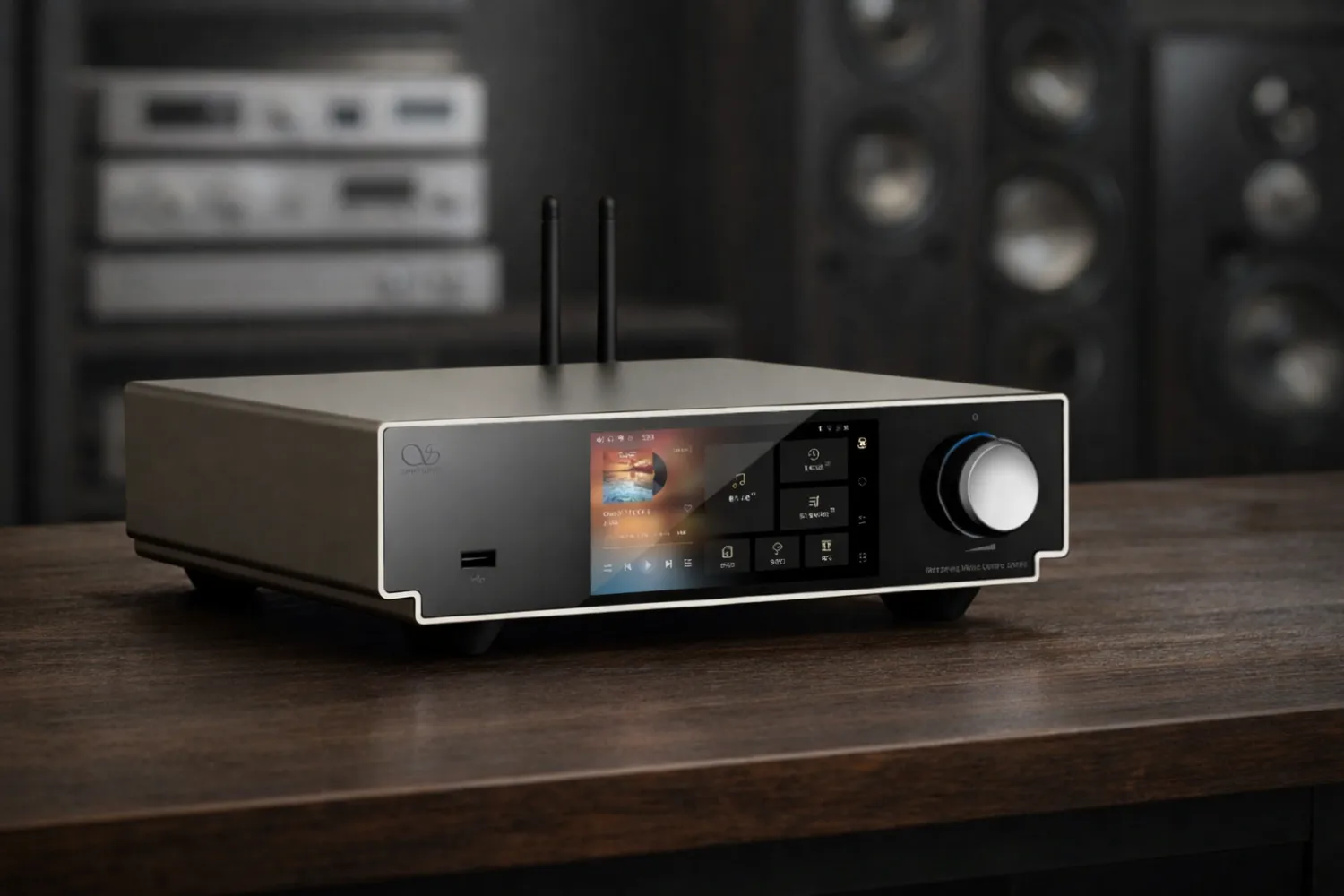
6. Shanling SM90: The streamer that wants to replace everything else
The Shanling SM90 is an Android-based digital hub with dual AKM conversion and a toroidal linear power supply.
Shanling positions the SM90 as more than a network player: it can operate as a DAC, digital pre-stage and network bridge in a compact aluminium chassis.
Its conversion stage uses two AKM AK4493S DACs, supported by OPA1612 op-amps and a linear power supply with a toroidal transformer.
An open Android-based platform permits native Spotify, Tidal, Qobuz, Apple Music and Amazon Music apps to run directly on the unit rather than requiring a closed streaming environment.
Best for: Listeners who want native streaming apps and several digital functions in one chassis
- Streamer, DAC and digital pre-stage functions
- Open Android-based platform
- Native access to major music-service apps
- Dual AKM DACs and linear power supply
Verdict: The SM90 is the consolidation choice here, combining open app access with DAC, pre-stage and network-bridge duties.
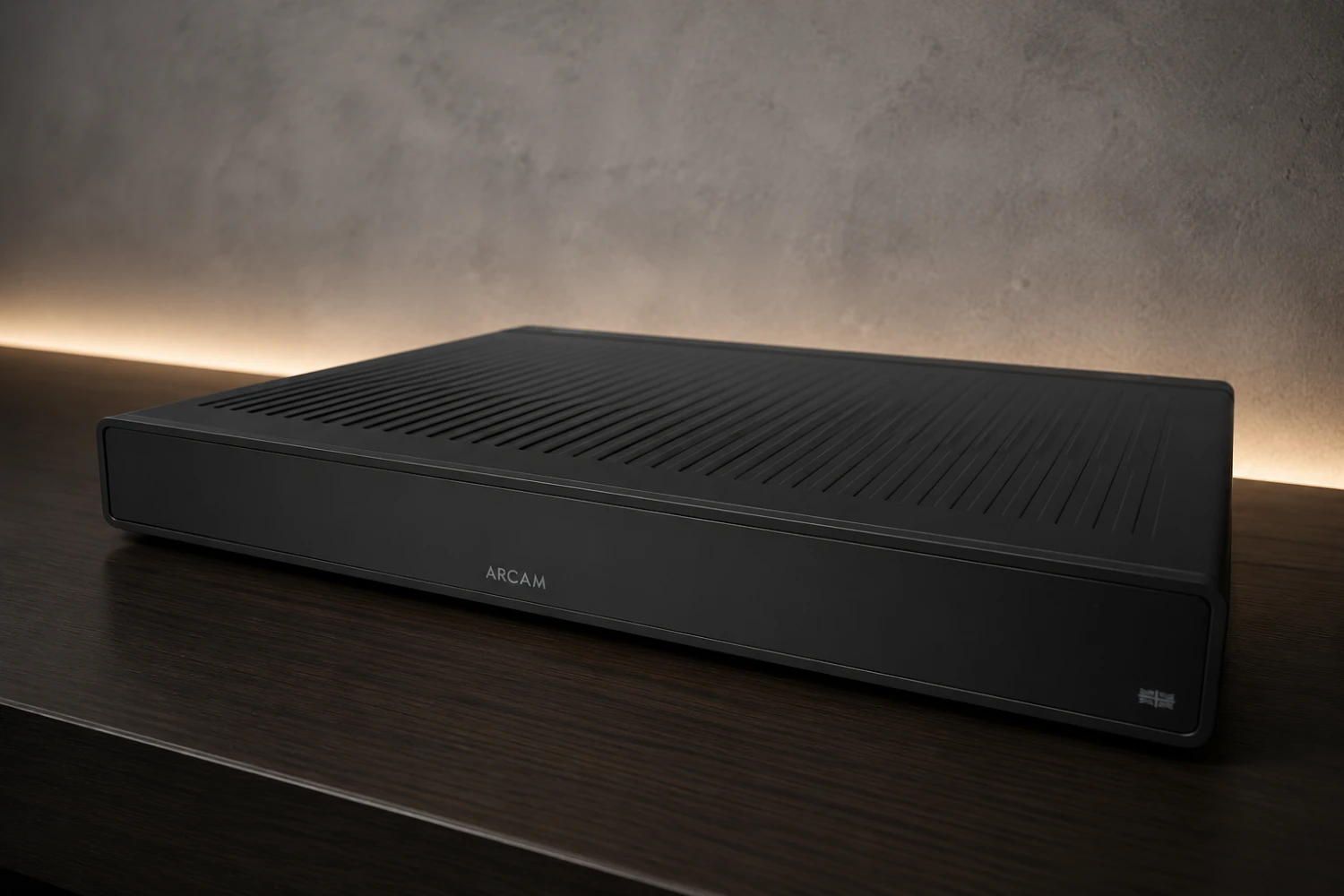
7. Arcam ST5 Review: One of the Best Music Streamers Under $1,000?
The Arcam ST5 uses the Radia series’ matte-black aluminium styling and a slim monochrome front display.
The ST5 is designed as the streaming partner for Arcam’s Radia A5, A15 and A25 integrated amplifiers, although its understated form should also suit mixed-brand systems.
Its thick anodised-aluminium chassis, matte-black finish and uncluttered front panel mirror the rest of the Radia range.
The source review found that it largely succeeded in balancing streaming convenience with serious hi-fi performance after extended listening, making it one of the few entries here supported by a stated listening assessment rather than an announcement alone.
Best for: Arcam Radia owners and buyers who value unobtrusive industrial design
- Designed to partner Arcam Radia amplifiers
- Thick anodised-aluminium chassis
- Broad streaming-platform access
- Clean, understated front-panel design
Verdict: The ST5 is a natural Radia-system partner and a considered option for anyone seeking a dedicated streamer without unnecessary visual clutter.
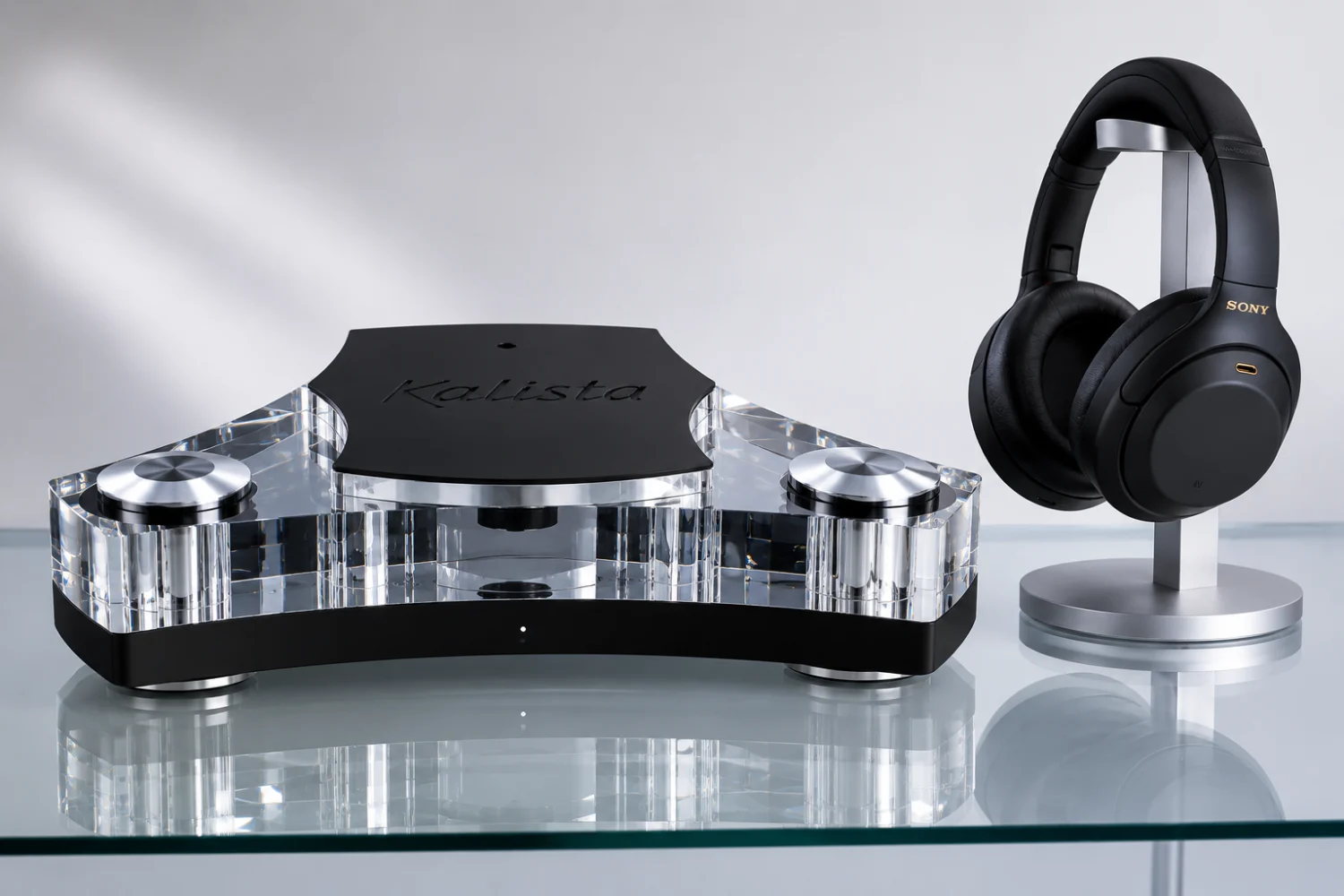
8. Kalista DreamPlay S & DreamPlay SC: French Reference Streamers for High-End Audio
The Kalista DreamPlay S omits digital conversion, while the DreamPlay SC incorporates an onboard DAC.
Kalista offers two distinct approaches to reference-level network playback.
The DreamPlay S is a streaming transport without a digital-to-analogue converter, intended for systems that already have a suitable external DAC.
The DreamPlay SC adds onboard digital conversion for a more self-contained source. Both are handcrafted in France and are described as using advanced power supplies, broad protocol support and the luxury materials associated with the Kalista range.
Best for: Reference systems requiring either a dedicated transport or an integrated streaming DAC
- Choice of transport-only or DAC-equipped model
- Handcrafted in France
- Advanced power-supply design
- Broad protocol support
Verdict: The DreamPlay pairing gives high-end system builders a clear choice between preserving an existing DAC and adopting a complete Kalista digital source.

9. SimAudio Moon Neo 390: Extremely versatile network player
The SimAudio Moon Neo 390 combines MiND2 streaming with DAC, preamplifier, headphone and MM/MC phono functions.
The Moon Neo 390 combines a MiND2 network streamer with a DAC, preamplifier, headphone amplifier and MM/MC phono stage.
It can feed active speakers or an external power amplifier, but it does not contain its own power-amplifier section.
The MiND2 platform supports music from online services, local storage and USB drives, while Roon Ready certification and Bluetooth aptX add further playback routes. Its ability to distribute digital or analogue input signals to two matching wireless modules also gives it a role in compatible multi-zone systems.
Best for: Listeners consolidating digital, vinyl, headphone and preamplifier functions
- DAC, preamplifier, headphone and phono stages
- MiND2 streaming from services, local storage and USB
- Roon Ready and Bluetooth aptX
- Compatible two-zone signal distribution
Verdict: The Moon Neo 390 is the most system-oriented all-rounder in this group, provided it is paired with active speakers or a separate power amplifier.

10. Atoll MS120: A classic network player that gets the job done
The compact Atoll MS120 provides a colour artwork display, anodised-aluminium front panel and front-mounted USB connection.
Part of Atoll’s compact MINI LINE, the MS120 uses the same network platform found in the company’s other player ranges.
It includes a TI Burr-Brown DAC and supports high-resolution files up to 24-bit/192kHz from a local network or USB storage.
Both LAN and Wi-Fi are available, with USB ports on the front and rear. A central colour TFT screen can show album artwork, file information and playback status, while vTuner provides internet-radio access.
Best for: Compact systems using network libraries, USB storage and internet radio
- Compact all-metal construction
- LAN and Wi-Fi networking
- Front and rear USB connections
- Colour display with album artwork
Verdict: The MS120 is a practical compact player with straightforward network, USB and display features rather than an emphasis on system consolidation.
Quick comparison
These entries address different system requirements rather than following a simple hierarchy.
The Cambridge Audio EXN100 emphasises connectivity, the Shanling SM90 and Moon Neo 390 consolidate several components, the Lumin T3X focuses on network and power-supply design, and the Kalista models provide a choice between transport-only and DAC-equipped operation.
Tidal’s format update is included as a compatibility consideration rather than a hardware alternative.
| Product | Best for | Verdict |
|---|---|---|
| Leak TruStream: A Premium Network Streamer for Modern Audiophile Systems | Leak systems and retro-influenced styling | A dedicated ESS-based streamer designed to extend Leak’s component range. |
| Eversolo DMP-A6 Gen 2: The ultimate high-fidelity streamer | Streaming, DAC and preamplifier duties in one unit | A multifunction network source with a linear supply and Wake-on-LAN control. |
| Cambridge Audio EXN100: Reference Class Network Streamer | Wide service, wireless and digital-input compatibility | The strongest connectivity-led option in the selection. |
| Tidal says “bye bye” to MQA and here’s what that means for subscribers | Understanding Tidal format requirements | A reminder to prioritise FLAC compatibility over MQA support for Tidal. |
| Lumin T3X: Network player equipped with linear power supply | Fibre networking and linear power-supply design | A dual-DAC network player with conventional and electrically isolated network options. |
| Shanling SM90: The streamer that wants to replace everything else | Native Android apps and digital-system consolidation | An open-platform streamer that also serves as a DAC, bridge and digital pre-stage. |
| Arcam ST5 Review: One of the Best Music Streamers Under $1,000? | Arcam Radia systems and minimalist installations | A dedicated streamer with close visual and functional ties to Arcam’s matching amplifiers. |
| Kalista DreamPlay S & DreamPlay SC: French Reference Streamers for High-End Audio | High-end transport-only or integrated-DAC systems | Two handcrafted network sources differentiated clearly by the presence of onboard conversion. |
| SimAudio Moon Neo 390: Extremely versatile network player | Streaming, vinyl, headphones and preamplifier use | A broad system hub that still requires active speakers or external power amplification. |
| Atoll MS120: A classic network player that gets the job done | Compact network, USB and internet-radio systems | A conventional compact player with useful local playback and display features. |
Frequently asked questions
Do I need a streamer with a built-in DAC?
Choose a DAC-equipped streamer if you want analogue output from one component.
A transport-only model such as the Kalista DreamPlay S is intended for an existing external DAC, while the DreamPlay SC and most other hardware listed here include conversion.
Which connections should I check before buying?
Confirm that the streamer has the outputs required by your amplifier or active speakers, then check inputs for any additional sources.
HDMI eARC is useful when a television must join the system, while USB, optical and coaxial inputs accommodate other digital components.
Network access may be through Ethernet, Wi-Fi or, in the Lumin T3X, fibre.
Is MQA support still important for Tidal?
Not for accessing Tidal’s current high-resolution catalogue, because the service replaced MQA streams with FLAC.
Current Tidal and FLAC compatibility should take priority, although MQA decoding may still be relevant to files obtained elsewhere.
Should I prioritise the control platform or the DAC specification?
Consider both, but do not overlook daily operation.
StreamMagic offers wide service and protocol integration, Shanling’s Android platform runs native service apps, and MiND2 supports online, local and USB playback.
A capable DAC is valuable, but the streamer must also support the services, libraries and control method you actually use.
How to choose the right streaming setup
Begin with the rest of your system.
If you already own a DAC you intend to keep, a transport-only design avoids paying for duplicate conversion.
If you want fewer boxes, the Eversolo DMP-A6 Gen 2, Shanling SM90 and Moon Neo 390 combine streaming with additional control or analogue functions, although the Moon still needs active speakers or a separate power amplifier. Next, audit every source and connection. The Cambridge Audio EXN100 is particularly relevant when HDMI eARC, multiple digital inputs, balanced outputs and broad wireless support are required. The Lumin T3X offers a different kind of flexibility through RJ45 and fibre networking, while the Atoll MS120 concentrates on compact network, USB and internet-radio playback. Owners of matching Leak or Arcam electronics may place greater value on visual and system integration. Finally, verify service and format compatibility rather than relying on legacy logos. Tidal’s transition from MQA to FLAC illustrates how streaming platforms can change independently of the hardware. The most useful streamer is the one that supports your present services and library, connects cleanly to your system and remains straightforward to operate every day.


Sound Off
0Join the discussion if you have something to add.