
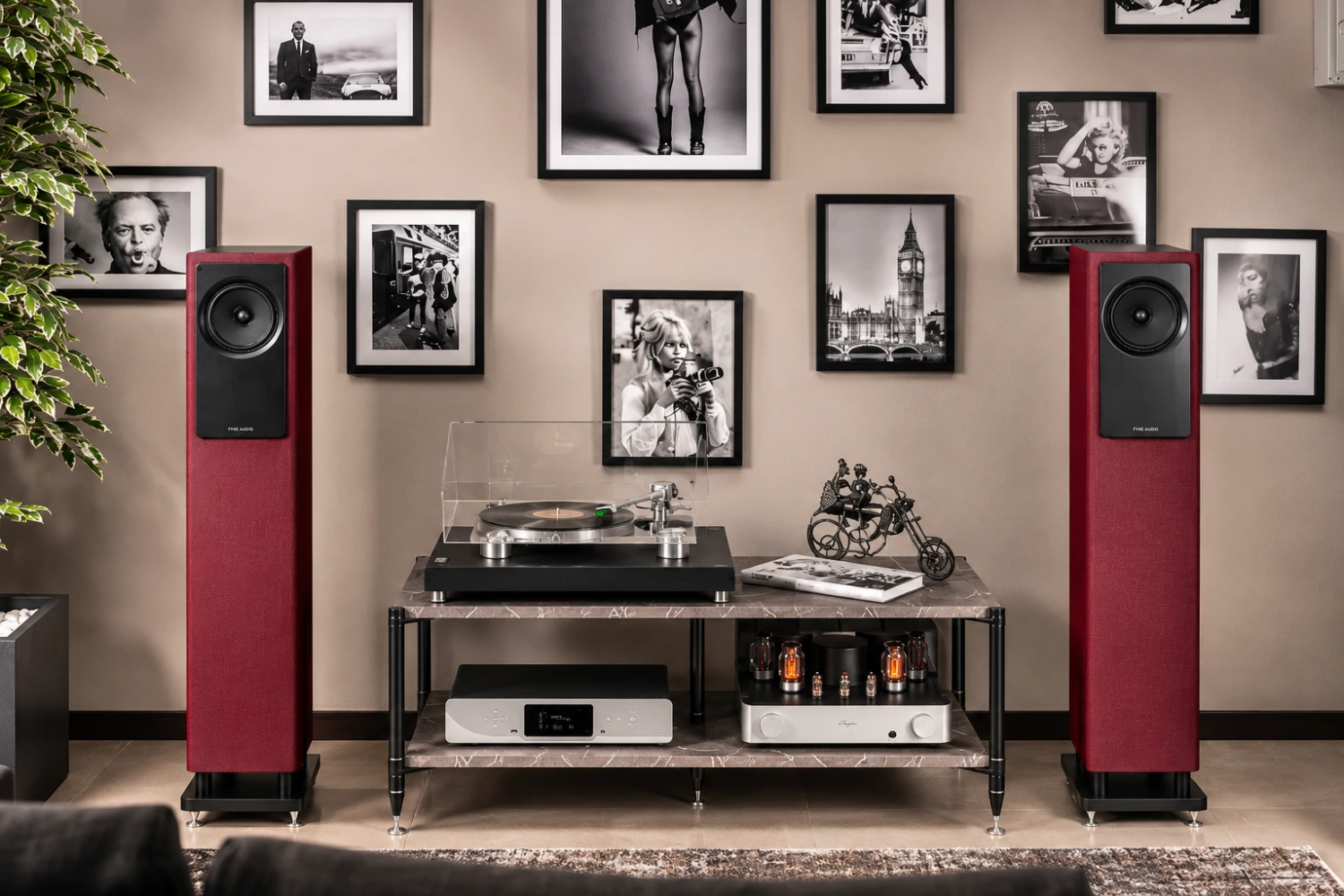
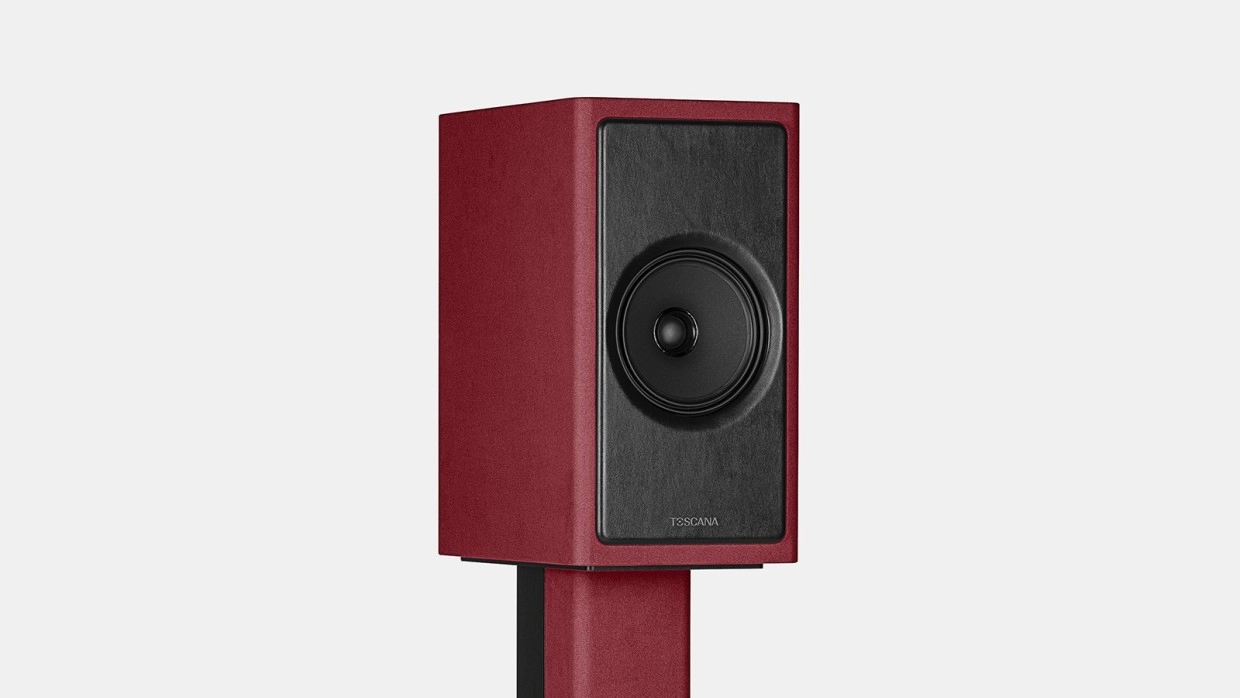
Florence-based Rosso Fiorentino Audio has introduced Toscana, an independent speaker brand opening with three models for music and home cinema. The Toscana B monitor, Toscana C center speaker and Toscana F floorstander share a specially developed coaxial driver rather than treating the center channel as an unrelated addition to a stereo range. Their cabinets also use layers of rigid and elastic materials to address vibration. It is a distinct project for a company that has developed and produced loudspeakers since 2007, with Toscana conceived as its own system rather than simply as a reduced version of existing Rosso Fiorentino products.
One driver architecture, three speaker roles
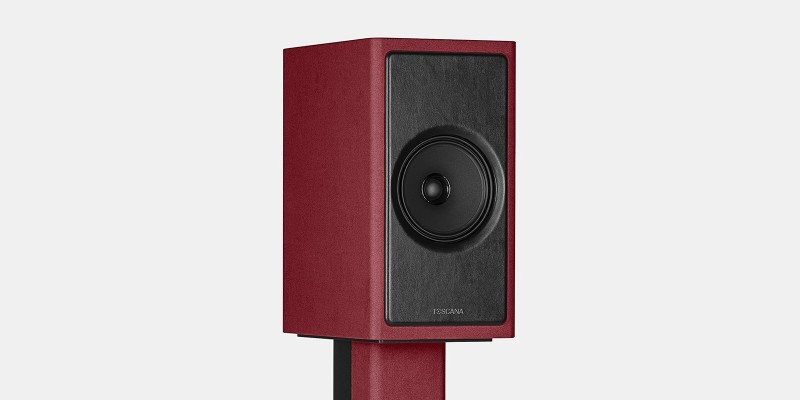
The common element across the range is a patented coaxial design combining a 165 mm mid-bass driver with a 25 mm silk dome tweeter. The larger driver uses a coated paper cone, while the centrally positioned tweeter has a neodymium magnet system. Placing the tweeter within the mid-bass driver puts their acoustic output on a largely shared axis, an approach intended to approximate a point source.
That arrangement gives the designers a particular way to address the relationship between midrange and treble, including how the speakers radiate sound away from their main axis. Toscana’s stated goal is a response that remains as uniform as possible both on and off that axis. Even so, a coaxial layout has its own challenge: the central tweeter and surrounding cone can interact, making their geometry and crossover tuning important parts of the design.
The crossover points are not identical across the family. Toscana B and C use a 1.7 kHz transition between the mid-bass driver and tweeter, while the floorstanding F specifies 2 kHz. The shared architecture is intended to support a consistent tonal character, but the announcement does not provide measurements establishing how closely the finished models match.
A family planned for music and film
The model choices make the range’s dual purpose clear. A pair of Toscana B monitors or Toscana F floorstanders offers a starting point for a stereo system, while the Toscana C is a dedicated center speaker for a multichannel setup. Having all three roles represented at launch gives buyers a way to build around speakers from the same family rather than finding a center from a different design.
In a home cinema, consistency between channels matters when a voice or effect moves from one speaker to another. Sharing the core driver architecture is a logical way to pursue that consistency, although cabinet size, crossover tuning and placement can also affect the result. The C’s different crossover point from the F is one detail to bear in mind when considering a mixed-model system.
Rosso Fiorentino describes Toscana as an independent concept developed with its components matched from the outset. The company has experience building higher-end loudspeakers, but the announcement does not identify a direct predecessor for these models or provide a specification-by-specification comparison with its existing range.
Layered cabinets take on vibration
Cabinet construction is the other major part of the Toscana platform. The B and C use a multilayer structure combining high-density fiberboard, rubber and aluminum. The larger F follows a similar principle but uses high-density MDF alongside rubber and aluminum.
The approach relies on bonding rigid and elastic layers together to damp mechanical vibration in the structure. Its purpose is to reduce unwanted cabinet-wall resonances generated during speaker operation, rather than leaving the enclosure to act as a simple box around the drivers.
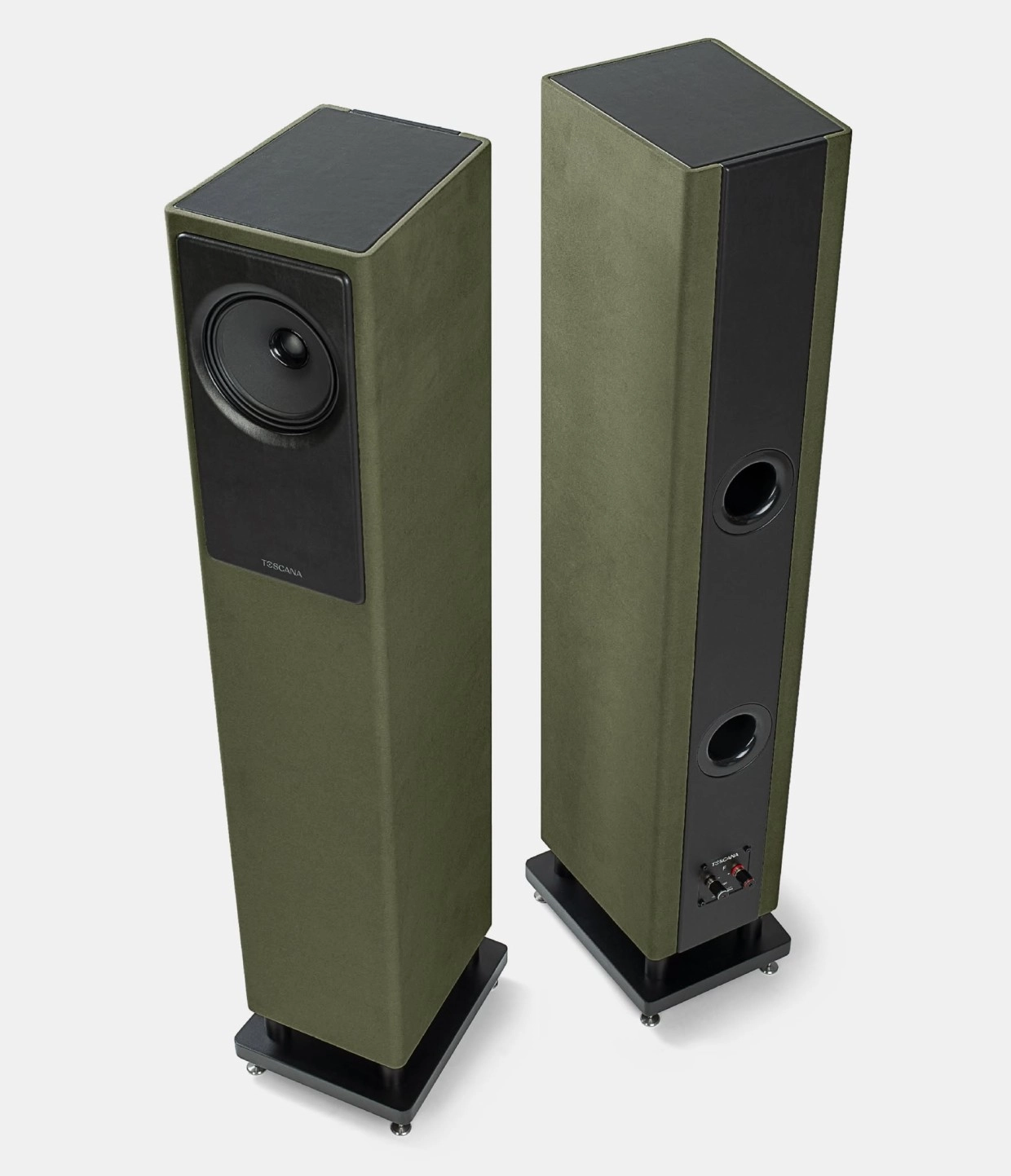
The distinction between the materials used in the smaller models and the floorstander is documented, but the announcement does not quantify cabinet resonances or explain the different material choices. The design intent is clear; its audible contribution remains something that would need assessment rather than inference from the construction alone.
Five finishes with Tuscan names
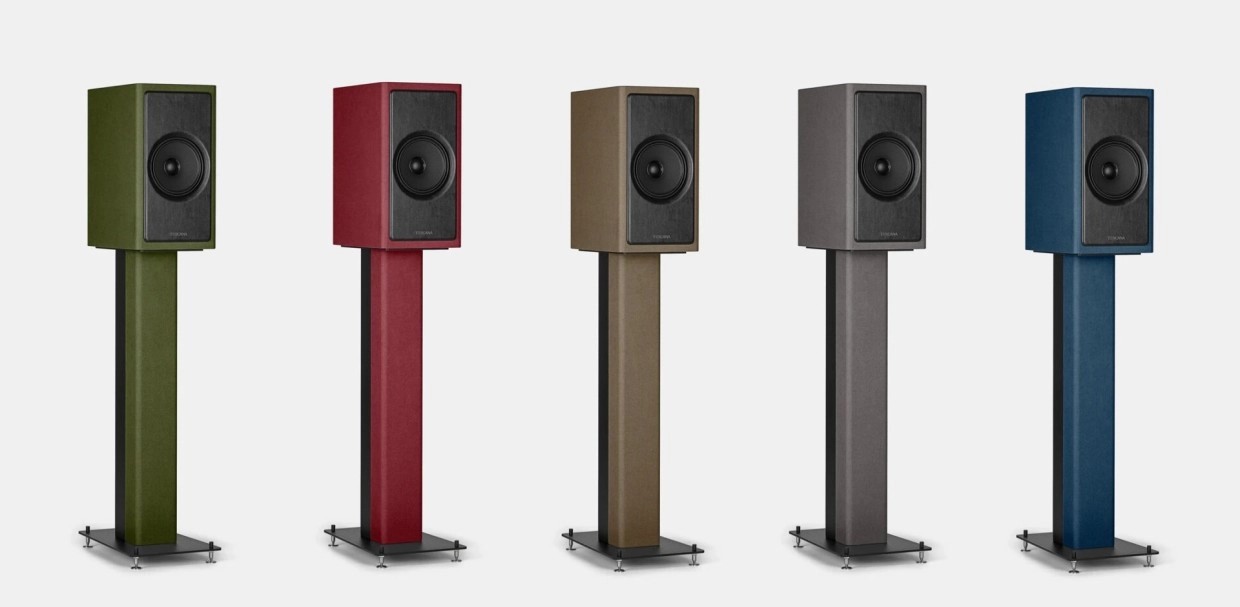
All three models are offered in five finishes inspired by Tuscany: Grigio Pietraforte, Verde Abetone, Marrone Sorano, Rosso Chianti and Blu Tirreno. The same selection across the monitor, center and floorstander gives a buyer assembling a mixed-model system a consistent set of finish choices.
The range also leaves several practical questions unanswered. Pricing and delivery details for the Benelux market have yet to be announced, and no US price or availability information is provided. Other specifications that would help with system planning, including dimensions and amplifier-matching figures, are not supplied in the announcement.
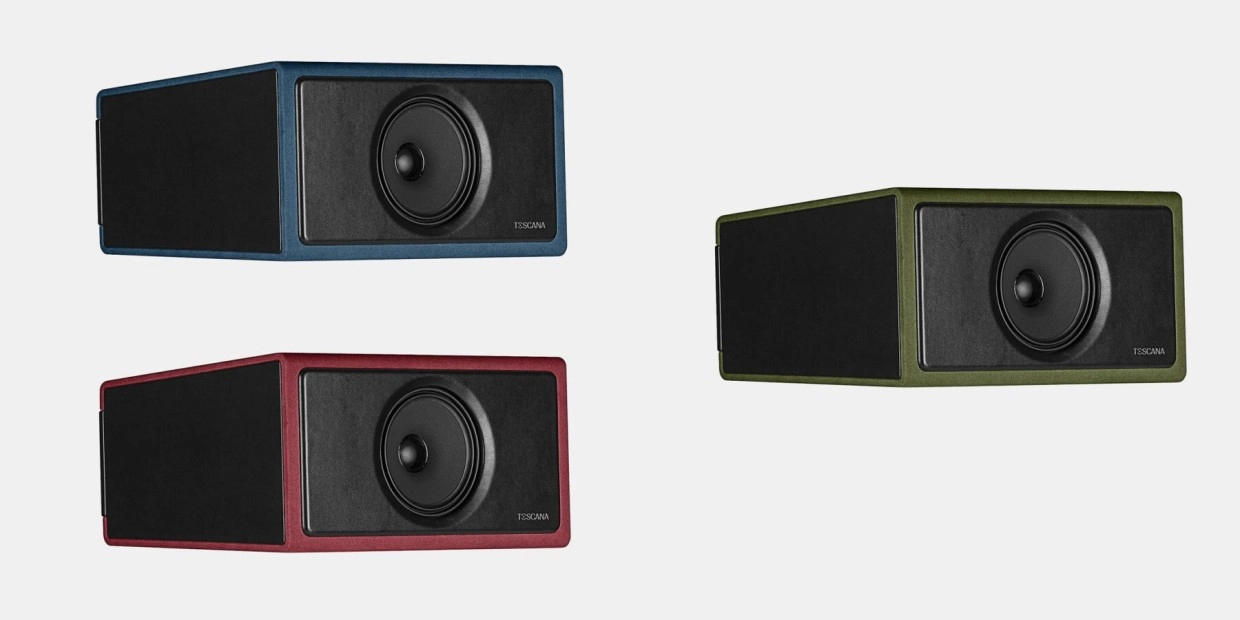
Toscana’s opening range appears aimed at listeners who want a choice between stereo and multichannel systems without abandoning a shared speaker design. The dedicated center is particularly relevant to that ambition, while the monitor and floorstander offer different physical formats for the main channels. Before choosing between them, buyers will need more information about size, placement and amplifier requirements, as well as local pricing and delivery. The other question is how the models work together in a room: the coaxial driver and layered cabinets establish the design goals, but they do not by themselves establish the speakers’ measured or audible performance. For now, the most useful next step will be fuller specifications and an opportunity to hear the range.


Sound Off
0Join the discussion if you have something to add.