
Buying a hi-fi streamer sounds straightforward until you discover that the word can describe several very different products. One box may simply fetch music from your network and send it to an existing DAC. Another may include a DAC and volume control. A third may replace a streamer, DAC and preamplifier in one chassis, while a multimedia player adds television, movie and surround-sound duties.
The important question is not which streamer has the highest supported resolution. It is: what jobs do you need the box to perform, and which parts of your system do you already own?
This guide explains the differences between a network transport, a streamer with a built-in DAC, and an all-in-one digital hub. The products covered here show the range clearly, from the transport-focused Volumio Rivo+ to the unusually comprehensive Shanling SM90.
What it actually means
A network streamer receives digital music from services such as Tidal or Qobuz, from a local computer or NAS, or from another device using a protocol such as AirPlay, Chromecast or Bluetooth. It then processes and outputs that music for the rest of your system.
That description hides three separate functions:
- Network transport: retrieves the digital audio and passes it to another DAC.
- Digital-to-analogue converter: turns digital data into the analogue signal an amplifier needs.
- Control or preamplifier stage: manages volume and source selection before the signal reaches a power amplifier or active speakers.
Some products perform only the first task. Others combine two or all three. The distinction matters because a streamer’s outputs, control features and sound-related design only make sense in the context of the equipment connected to it.
A transport makes sense if you already have a DAC you like. A streamer-DAC is appropriate when you need a complete digital front end for an integrated amplifier or power amplifier. An all-in-one player can be the cleanest choice when you want fewer boxes, direct control and broad input flexibility.
Why it matters
Choosing the wrong type of streamer can leave you paying for unused circuitry or, just as frustratingly, without a connection you need. The practical decision comes down to system layout, source requirements and how much control you want in one place.
Start with the equipment you already own
If your amplifier has a good DAC and plenty of digital inputs, a network transport may be all you need. It can keep the streaming interface and network duties separate from the conversion stage. The Volumio Rivo+ is a useful example of this approach. It provides digital coaxial and AES/EBU outputs, with support up to 24-bit/192kHz PCM and DSD64, while its I2S output over HDMI supports up to 32-bit/768kHz PCM and DSD256. It is designed to feed an external DAC rather than replace one.
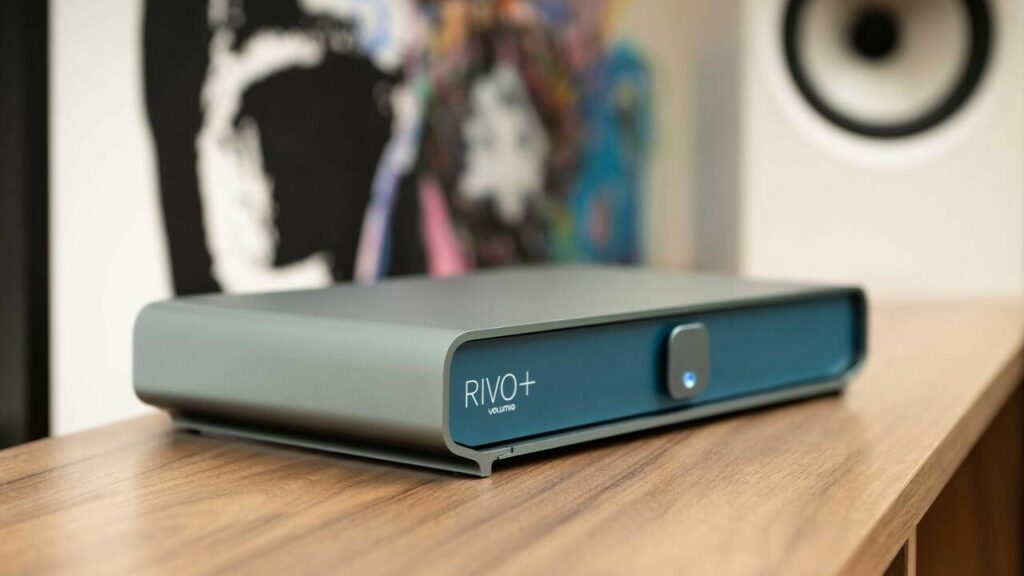
The Rivo+ also illustrates why output compatibility is more important than headline numbers. Its I2S-over-HDMI connection can be advantageous with suitable external DACs, but I2S is not a universal plug-and-play standard in the same way as ordinary HDMI audio or USB. Before buying, check that the receiving DAC supports the exact interface and pin arrangement required.
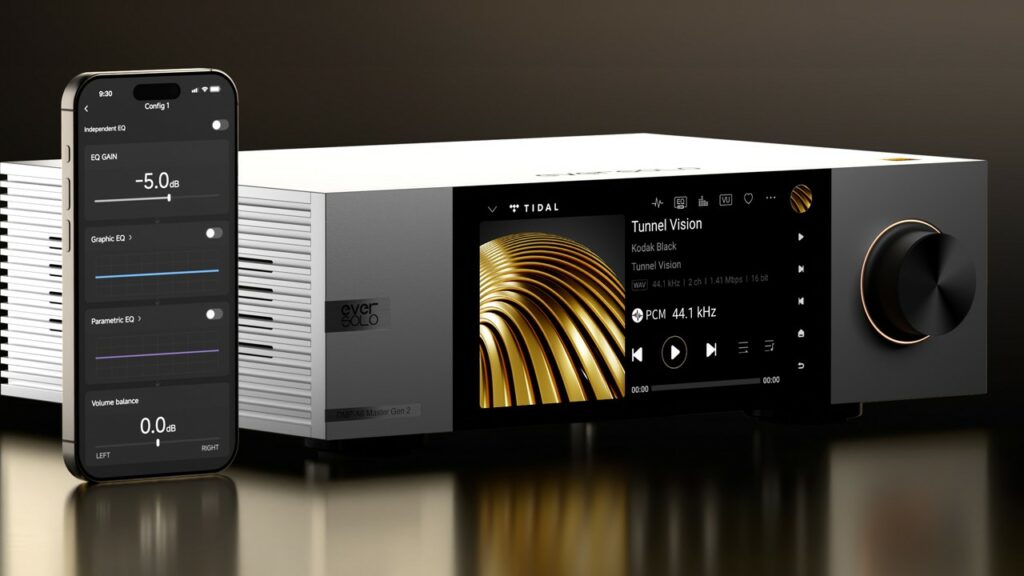
If your amplifier is analogue-only, you need a streamer with a built-in DAC and analogue outputs. The Eversolo DMP-A6 Gen 2 offers both balanced XLR and unbalanced RCA outputs, and can also act as a preamplifier with volume control. Its design uses dual ESS ES9038Q2M DAC chips, an XMOS XU316 interface and Eversolo’s EOS and EVC processing systems. Those details are relevant because the unit is intended to sit directly before an amplifier, not merely feed another digital converter.
For a system built around a power amplifier or active loudspeakers, a digital preamp function can remove the need for a separate analogue preamplifier. That can reduce box count and cable connections, although you should confirm that the streamer provides the output level, connector type and volume-control behaviour your amplifier requires.
Transport, streamer-DAC or all-in-one?
A network transport for an existing DAC
A transport is the focused option. It handles the network connection, software and digital output, while your separate DAC determines how the signal is converted. This can be a sensible route if you have invested in a DAC already or want the freedom to upgrade the digital source and converter independently.
The Volumio Rivo+ fits this category most clearly, although its multiple digital outputs and I2S interface give it more flexibility than a basic network bridge. It supports services including Spotify, Tidal, Qobuz and Bandcamp, and can be controlled through an app or web browser. AirPlay, Bluetooth 5.0 and plug-ins add further ways to get music into the system.
A transport is not automatically the “purer” or better-sounding option. It simply moves the conversion decision elsewhere. In a system where the existing DAC is already capable and compatible, that separation can be useful. In a system with no DAC, it creates another purchase.
A streamer with its own DAC and volume control
This is the most versatile format for many two-channel systems. It can connect directly to an integrated amplifier, power amplifier or active speaker system, while still offering a digital output if you later add an external DAC.
The Eversolo DMP-A6 Gen 2 supports local files, streaming services and formats including DSD, MQA, FLAC, APE and WAV. It works with Roon and Tidal Connect, and provides a 6-inch touchscreen for browsing and setup. Its balanced architecture gives users a choice of XLR or RCA analogue connection.
The Naim NDX 2 is another example, but with a different design philosophy and system context. It includes a PCM1791A-based DAC section, proprietary digital filtering and discrete analogue circuitry. It accepts network files up to 32-bit/384kHz and DSD128 via UPnP, while its S/PDIF inputs support up to 24-bit/192kHz. It also offers analogue outputs, digital inputs and compatibility with services and platforms including Tidal, Spotify, Chromecast, AirPlay, Bluetooth aptX HD and Roon.
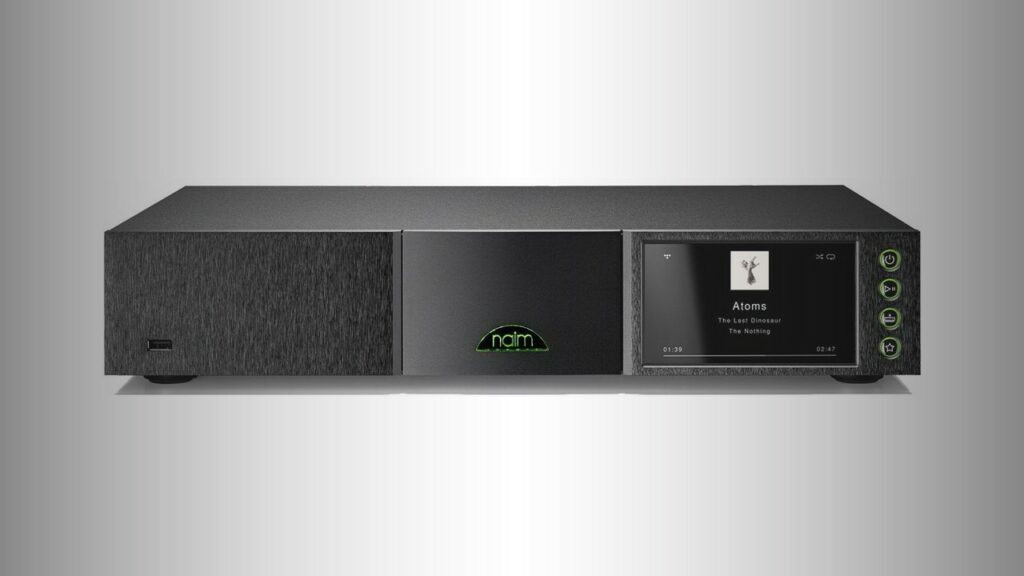
Those specifications should be read as a connection map rather than a competition. If your music comes mainly from a streaming service, you may never use the highest local-file resolution. If you own a large NAS library, UPnP support and file browsing may matter more. If your amplifier accepts only RCA, balanced XLR capability may be irrelevant unless you plan to change the system later.
An all-in-one digital hub
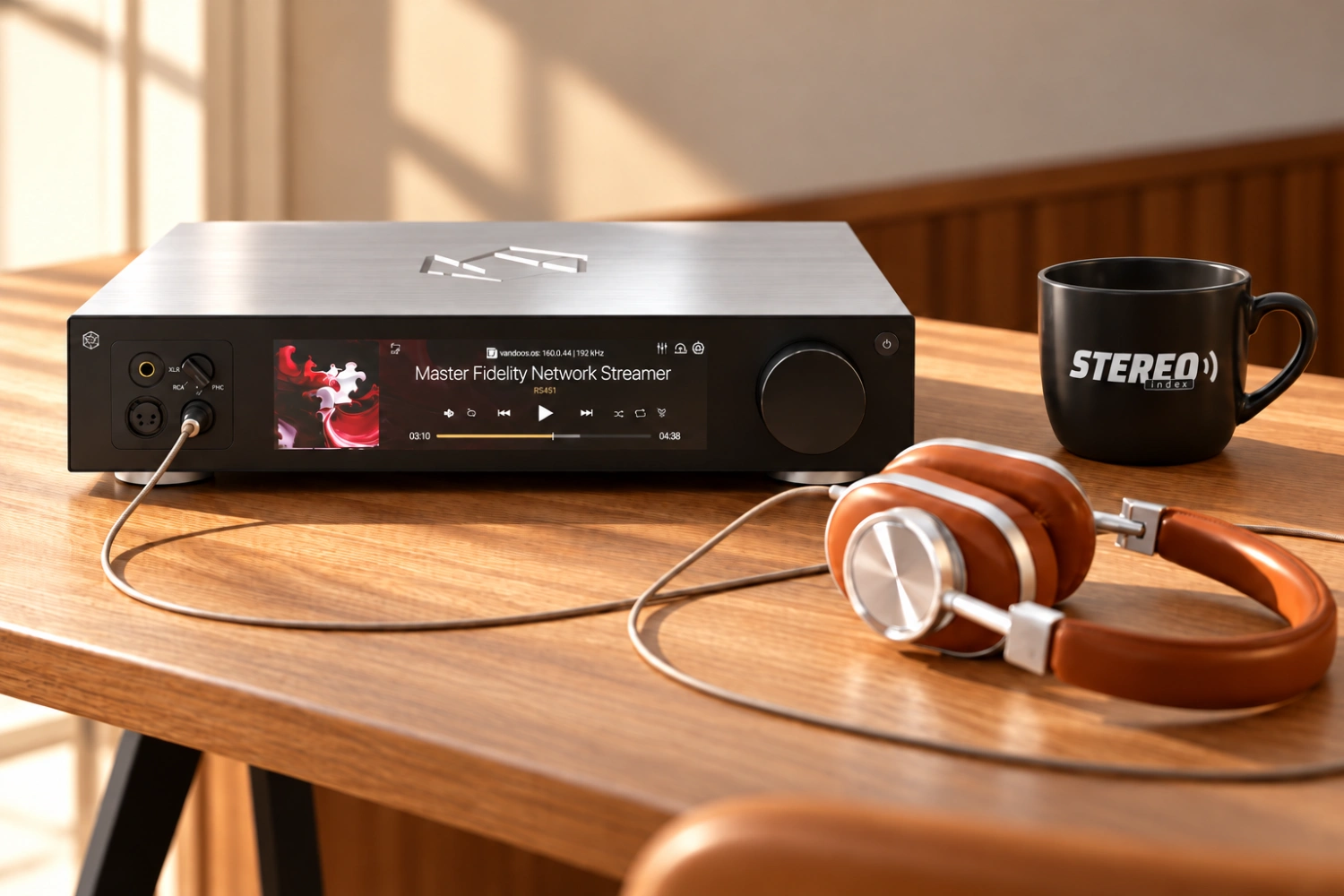
An all-in-one player is intended to replace several components. The Shanling SM90 combines streaming, DAC, digital pre-stage and network functions in one chassis. It includes balanced XLR and RCA analogue outputs, plus USB, coaxial and optical digital outputs if you want to use another DAC. It also accepts external sources through USB DAC, coaxial, optical and HDMI ARC inputs.
That HDMI ARC input is particularly useful if the same system handles television sound. The SM90 also offers native apps for Spotify, Tidal, Qobuz, Apple Music and Amazon Music through its Android platform, alongside Tidal Connect, Qobuz Connect, AirPlay 2, DLNA and Bluetooth 5.2 with LDAC. Internal M.2 SSD support, USB storage and NAS compatibility make it suitable for listeners who want local files as well as cloud services.
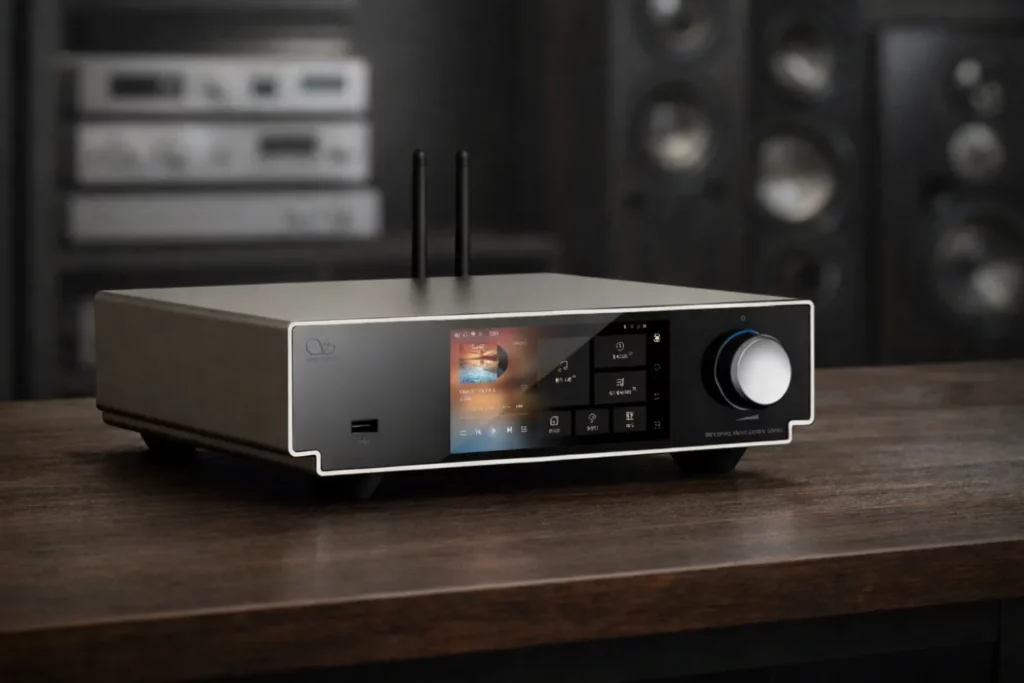
This level of integration can be more meaningful than a marginal difference in DAC specifications. One box means fewer interconnects, one control environment and fewer separate power supplies. It also means that a failure or an outdated software platform can affect more of the system at once. Think about both sides before treating integration as an automatic advantage.
Do you need a high-resolution streamer?
Most current streamers support formats far beyond the resolution used by much everyday listening. The products here cover everything from standard compressed files to DSD512 and PCM at 32-bit/768kHz. That does not mean every source will sound better simply because it is delivered at a higher number.
Resolution support matters when you own compatible files or subscribe to a service that provides them. It also matters if you want a product that will not impose an obvious ceiling on a new library. But the DAC’s implementation, analogue output stage, software stability, volume control and system matching can be more important to daily satisfaction than maximum PCM or DSD figures.
Check the whole signal path. A high-resolution file may be converted, resampled or limited by the application, operating system or digital output you use. That is not necessarily a problem, but it is why the phrase “supports 32-bit/768kHz” should not be treated as a guarantee of audible superiority.
When it matters less
The streamer’s technical ceiling matters less when you mostly listen to standard-resolution streaming, internet radio or Bluetooth. In those cases, app support, reliable networking and easy control are likely to have a larger effect on your experience.
It also matters less if the streamer is feeding an existing DAC that already handles your preferred formats. The transport then needs to provide a stable, compatible digital output and a user interface you enjoy using. Spending extra for a built-in DAC you will bypass is difficult to justify unless you value the additional features or future flexibility.
Likewise, balanced outputs are not automatically necessary. They can be useful for long cable runs, equipment with balanced inputs or systems where the connection genuinely reduces noise. For a short connection between nearby domestic hi-fi components, good-quality RCA may be entirely adequate.
Streaming music or streaming movies?
Not every device described as a streamer is aimed at the same job. The R_volution PlayerMini is primarily a compact multimedia player for a home-theatre environment. It supports network or USB playback, 4K/60p HDR video, Dolby Vision, HDR10+, and audio formats including DSD, AIFF, FLAC, ALAC, Dolby Atmos and DTS:X. It includes HDMI, optical and Ethernet connections, as well as two USB ports.
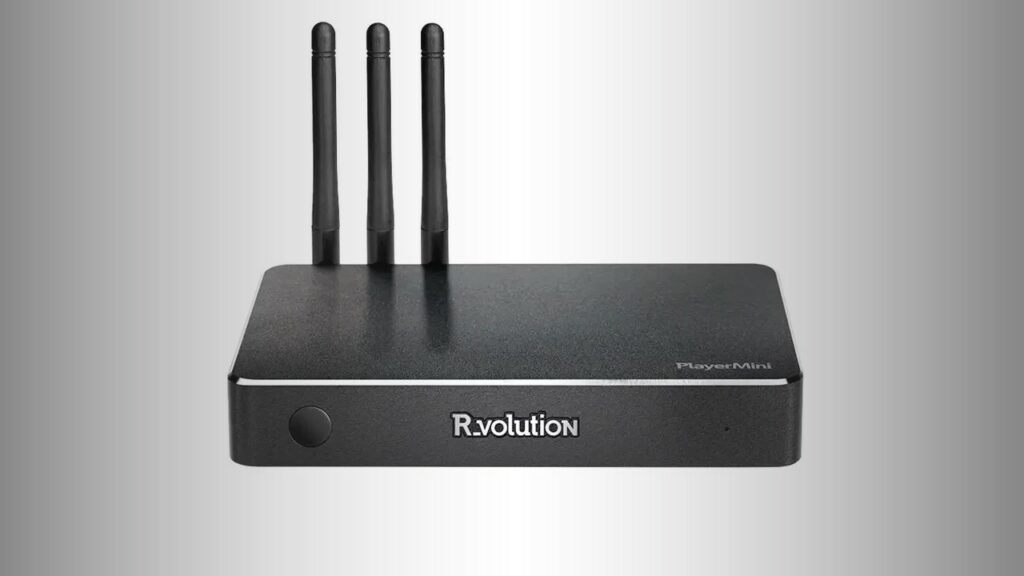
That makes it a strong fit for someone whose priority is a NAS full of films, concert recordings or multichannel content. It is not the obvious choice for a listener who wants the simplest two-channel music system and has no use for video processing or surround formats. The PlayerMini’s suggested retail price is $349, but its value lies in the job it performs, not in comparing its price directly with a specialist stereo streamer.
Network and control: the features you will use every day
A streamer can sound impressive on paper and still be frustrating if the control system is awkward. Before buying, check whether your preferred services have native support, whether the device works with the control method you already use, and whether it can access music stored on a NAS or USB drive.
Roon compatibility, Tidal Connect, Qobuz Connect, AirPlay and Chromecast are not interchangeable features. Each changes how you browse and hand off music. Native apps may run on the device itself, while Connect systems use a phone or tablet as a controller. Bluetooth is convenient for guests and casual listening, but it is usually better treated as an additional input than the main reason to buy a high-end streamer.
Wired Ethernet is worth considering if the streamer will sit near your router. Wi-Fi is perfectly practical in many homes, but a wired connection can simplify setup in a fixed system. The Eversolo DMP-A6 Gen 2, for example, includes a Wake-on-LAN function when used with a wired network connection, allowing it to be activated through the app.
Use the connections as a buying checklist
Before choosing a model, write down the equipment and sources it must connect to:
- Does your amplifier need analogue RCA, balanced XLR, or a digital input?
- Do you need a volume control, or will the amplifier handle volume?
- Will you use a separate DAC now or in the future?
- Do you need HDMI ARC for a television?
- Are your files stored on a NAS, USB drive, internal SSD or streaming service?
- Do you need multichannel audio and video, or only stereo music?
- Will the box fit your rack, and can you operate it without a phone?
The answers will usually narrow the field more effectively than comparing DAC chip names. A dual-DAC design, a linear power supply or an advanced clock can be useful elements, but they do not compensate for missing outputs or an interface you dislike using.
How to build a sensible system
For a compact stereo system, start by deciding whether you want the streamer to include the DAC and volume control. If yes, a model such as the Eversolo DMP-A6 Gen 2 or Shanling SM90 can act as the digital centre of the system. The choice between them will then depend on the inputs, outputs, operating system and services you prefer.
For a system with a trusted external DAC, focus on the transport. The Volumio Rivo+ offers a broad set of digital outputs and a strong emphasis on external conversion. For a traditional network player with extensive digital and analogue connectivity, the Naim NDX 2 takes a more component-based approach and also allows compatible external power supplies.
For a combined television, movie and music setup, consider a multimedia player such as the R_volution PlayerMini. Its video and multichannel support may be more valuable than a specialist stereo streamer’s audiophile-oriented features.
Finally, do not assume that buying the most elaborate unit guarantees the best result. The best streamer is the one whose functions match the rest of your system, whose software you will actually use, and whose outputs connect directly to the equipment you intend to keep. Once those fundamentals are right, format support and internal architecture become useful tie-breakers rather than distractions.


Sound Off
0Join the discussion if you have something to add.