Bang & Olufsen Beosystem 9000c: A CD Icon Reframed for Modern Living
The Beosystem 9000c gives Bang & Olufsen’s sculptural six-disc CD player a second life, combining restored 1990s hardware with contemporary Beolab 28 speakers, app control, wireless streaming, and a renewed focus on visible physical media.

The Bang & Olufsen Beosystem 9000c is unusual because it is not simply a new audio product styled to look nostalgic. It is built around restored examples of the original Beosound 9000 CD player, first introduced in 1996, and places that visually expressive machine alongside the company’s contemporary Beolab 28 loudspeakers. The result is a music system that treats the compact disc not as an outdated format to be hidden away, but as an object worth seeing, selecting, and living with. For listeners who still value physical media, design-led hi-fi, and integrated operation, the Beosystem 9000c stands out as a carefully considered bridge between Bang & Olufsen’s past and present.
A restored classic with a visible music library
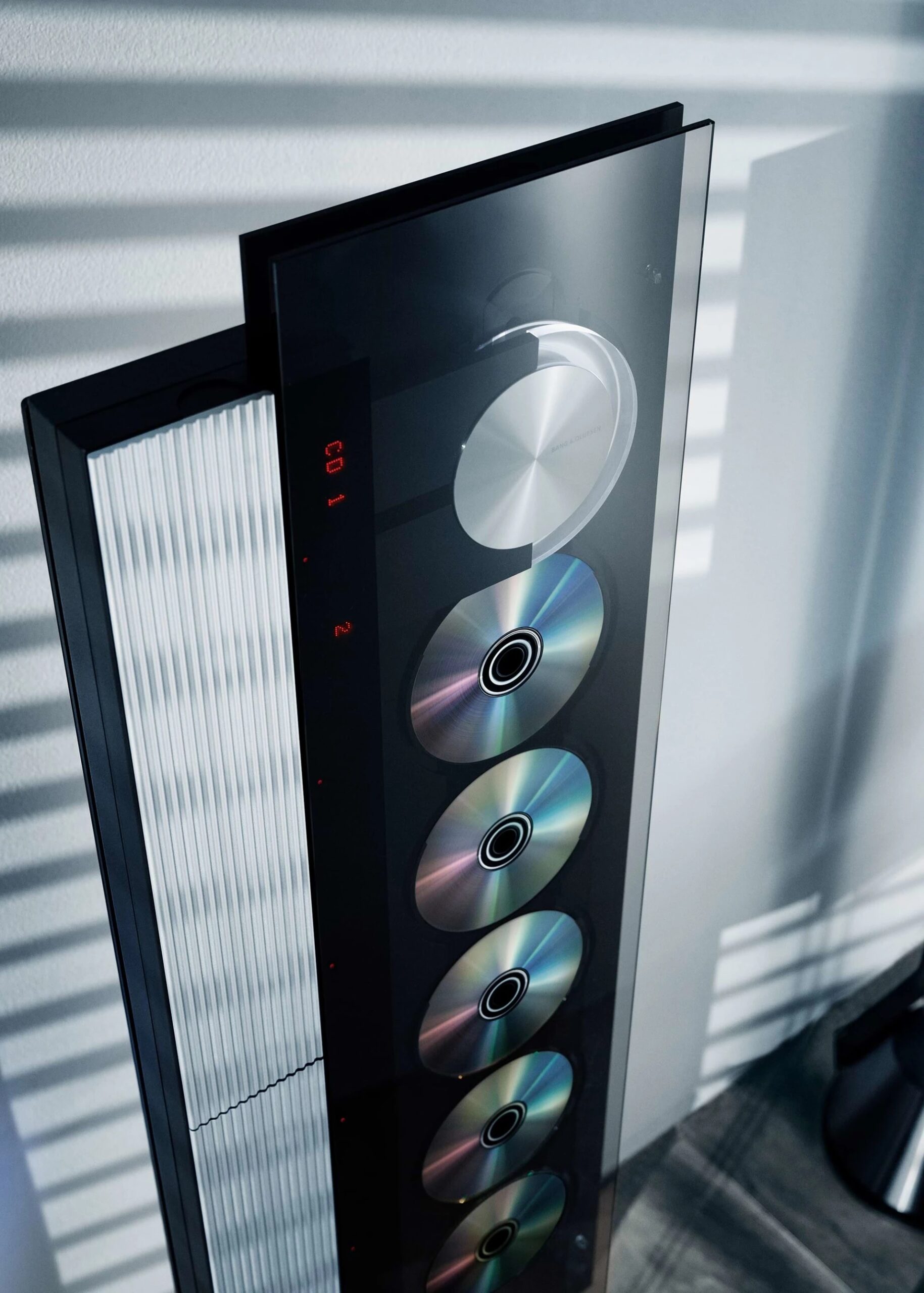
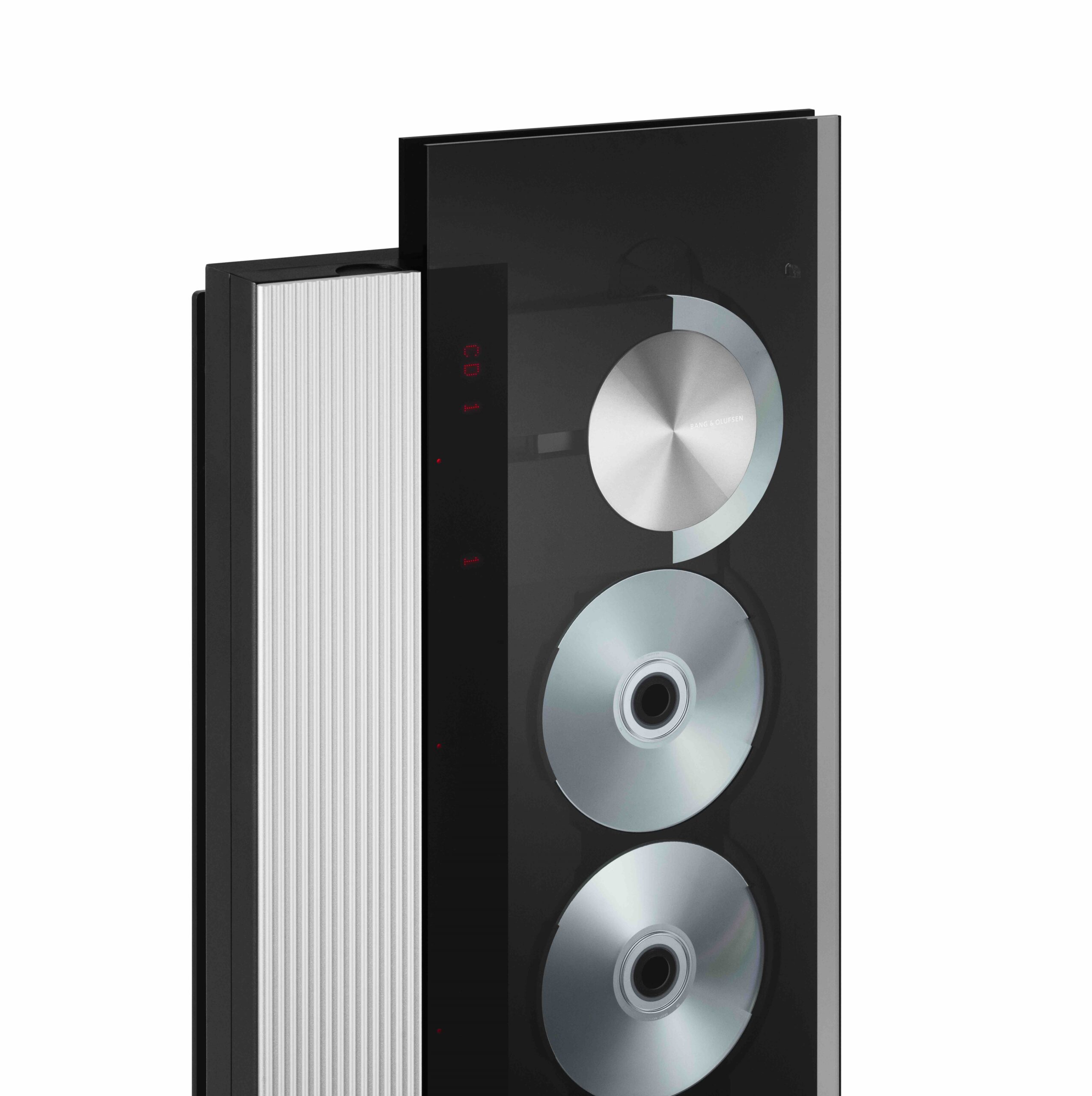
At the center of the Beosystem 9000c is the Beosound 9000, one of Bang & Olufsen’s most recognizable CD players. Its defining feature is a six-disc linear changer displayed behind glass, allowing album artwork and disc labels to remain visible rather than being concealed in a drawer or carousel. That matters because it changes the relationship between listener and format. Choosing music becomes more tactile and more visual, closer to browsing a small wall-mounted gallery than operating a conventional black-box source component.
The original Beosound 9000 was designed by David Lewis, whose work for Bang & Olufsen often explored the idea that technology should be understandable, elegant, and long-lived. In this case, the concept of “audio visuality” is central: the mechanism, the discs, the control surface, and the movement of the CD clamp are all part of the experience. The product does not ask the owner to forget the machine; it makes the machine part of the pleasure of using physical media.
Bang & Olufsen has based the Beosystem 9000c on 200 original Beosound 9000 units that were returned to the company’s factory in Struer, Denmark. Each player is disassembled, cleaned, repaired where required, inspected, tested, and adjusted to meet the manufacturer’s specifications. That restoration process is important because the appeal of the system depends not only on the look of the original design, but on the credibility of bringing actual original hardware back into service.
The appeal of mechanical design done with intent
The Beosound 9000’s mechanical behavior is a major part of its identity. Its CD clamp travels in a straight line between six discs, selects a disc, reads it, and begins playback within a few seconds. This exposed motion is more than decoration. It gives the owner a direct sense of what the system is doing and reinforces the idea that playing a CD is an intentional act rather than a background process.
The motorized glass lid is another distinctive feature. It is designed to open and close with the same controlled motion whether the unit is positioned lying down, standing, or mounted on a wall. Bang & Olufsen uses optical sensors and digital timing control to monitor this movement, with the door operating within a specified time window of 3.5 to 4.0 seconds. These details show how much of the Beosystem 9000c’s character comes from choreography: the movement is engineered, repeatable, and part of the product’s usability.
There is also an automatic positioning idea built into the original Beosound 9000 concept, intended so the text on a CD remains readable. That may not be essential to playback, but it is meaningful in a product whose purpose is to keep physical media visible. It reflects a design philosophy in which practical use and theatrical presentation are not separated.

A contemporary finish that respects the original shape
For the Beosystem 9000c, Bang & Olufsen has reimagined the original color scheme rather than simply reproducing it. The restored Beosound 9000 receives a Cosmic Black aluminum back plate, contrasted with Natural Aluminum on the control panel. This darker backdrop helps the six displayed CDs stand out more strongly, emphasizing the album-art concept that informed the original design.
The matching Beolab 28 speakers receive Natural Aluminum fins and a Cosmic Black aluminum base. This connection of colors and materials helps the two parts of the system feel related even though their designs come from different eras. It is a sensible design choice because a hybrid product like this could easily feel like a vintage source paired with unrelated modern speakers. Instead, the finishes create a visual link across decades.
The aluminum work is also part of the product’s appeal. Bang & Olufsen brushes, etches, and bead-blasts the aluminum at Factory 5 in Struer. The aluminum elements of the Beosound 9000 are original parts that have been re-machined and re-anodized, preserving the historical object while giving it a finish aligned with the new system. For a prospective owner, that combination of restoration and refinishing is a key reason the Beosystem 9000c feels different from a conventional reissue.
Beolab 28 brings the system into current use
Pairing the restored CD player with Beolab 28 speakers is what turns the Beosystem 9000c into a complete contemporary music system rather than a standalone heritage component. The Beolab 28s add modern operation, wireless connectivity, and active speaker functionality, while visually echoing the aluminum and black finishes of the restored source.
The speakers also contribute a physical sense of occasion. When the system is switched on, the curtains on the Beolab 28s slide aside, indicating that the speakers are ready for playback. Their position also reflects whether the beam width is set to narrow or wide mode. Narrow mode is intended to minimize wall reflections, while wide mode spreads sound more broadly through the room. This gives the owner a visible indication of how the system is configured for different listening situations.
That flexibility matters in real homes, where a system may be used for focused listening at one moment and more casual room-filling playback at another. The Beosystem 9000c does not present the CD player as an isolated object; it integrates it into a speaker platform designed for present-day living spaces.

Control options for both physical and digital habits
The Beosystem 9000c includes a Beoremote One, allowing the owner to operate the installation from a dedicated handset. That is significant for a system built around visible physical media, because it preserves the feeling of a complete hi-fi installation rather than making a phone the only control point.
At the same time, Bang & Olufsen has not limited the system to disc playback. Operation is also available through the Beolab 28 speakers and the Bang & Olufsen app on a smartphone or tablet. As a user approaches the Beolab 28, the physical interface on top of the speakers lights up, giving access to play, track skip, and volume control. Four favorite buttons can be assigned to B&O Radio stations or playlists from a preferred music streaming service.
Wireless connectivity includes AirPlay 2, Chromecast, and Bluetooth 5.0. These features are important because they prevent the Beosystem 9000c from becoming a single-format statement piece. Owners can enjoy the CD changer as the visual and conceptual focus of the system while still using common streaming and wireless playback methods when convenience is the priority.

Sustainability through reuse and long-life design
The Beosystem 9000c is part of Bang & Olufsen’s recreated classics series, following the Beogram 4000c project. Its sustainability message is not based on making a new product look old, but on giving existing high-quality objects a second life. The company’s decision to restore 200 original players at the same Struer facility where they were first produced gives the project a clear circular-design dimension.
This approach is especially relevant in hi-fi, where many products are kept, repaired, traded, and cherished for decades. A restored Beosound 9000 is attractive not only because of its design history, but because it demonstrates that durable hardware can remain desirable when supported by skilled service work and thoughtful updating.
The system also arrives at a time when physical media has regained cultural attention. CDs and vinyl records offer a more deliberate interaction with music than purely cloud-based libraries. The Beosystem 9000c responds to that shift by making the CD collection visible, selectable, and central to the room, while still accommodating digital listening habits.
Who the Beosystem 9000c is most suitable for
The Beosystem 9000c is most suitable for listeners who value design as part of the listening ritual. It will particularly appeal to owners with a meaningful CD collection, or to those who like the idea of displaying a small rotating selection of albums rather than storing all media out of sight. Its strongest attraction is not just that it plays CDs, but that it makes the act of playing them visually engaging.
It is also well suited to someone who wants an integrated Bang & Olufsen system rather than a stack of separate components. The inclusion of Beolab 28 speakers, Beoremote One, app operation, and wireless streaming support makes it more flexible than a purely vintage setup. It can serve physical media listeners, radio users, and streaming households without forcing one method of playback to exclude the others.
The system will be less aligned with those who prefer invisible audio installations, purely utilitarian equipment, or a source component that disappears into a cabinet. The Beosystem 9000c is intentionally present. Its glass, aluminum, moving clamp, visible discs, and speaker curtains are central to what it offers. For the right owner, that presence is the point.
Conclusion
The Bang & Olufsen Beosystem 9000c is compelling because it gives a distinctive CD-era design a carefully restored second life while pairing it with current speaker technology and modern control options. Its six-disc visual layout, reworked aluminum finishes, mechanical movement, Beolab 28 integration, app and remote operation, and wireless connectivity make it more than a nostalgic object. It is best suited to listeners who want physical media to remain visible and meaningful, while still having the convenience of a contemporary connected music system.