

Speakers are rarely interchangeable, and this selection makes that especially clear.
It spans cardioid active monitors, outdoor installation speakers, portable wireless designs, a television-friendly streaming soundbar, passive bookshelf models, a surround package and dedicated active subwoofers.
The right choice therefore depends less on a universal ranking than on where the product will be used and what equipment must accompany it. Several models address room interaction in distinctive ways. Sigberg Audio uses a cardioid radiation pattern to direct more energy toward the listener, while Bausound angles multiple front panels to spread sound across a wider area. Other products focus on specific environments or applications: Sonus Faber brings weather resistance to an installation speaker, Bang & Olufsen combines portability with network streaming, and Polk Audio packages the main components of a five-channel home-theater system. The summaries below are based on the manufacturers’ stated designs and the supplied product information rather than comparative listening tests. Pay particular attention to whether a model is active or passive, whether it requires a subwoofer, how it connects to sources, and whether its radiation pattern suits the intended room and seating arrangement.
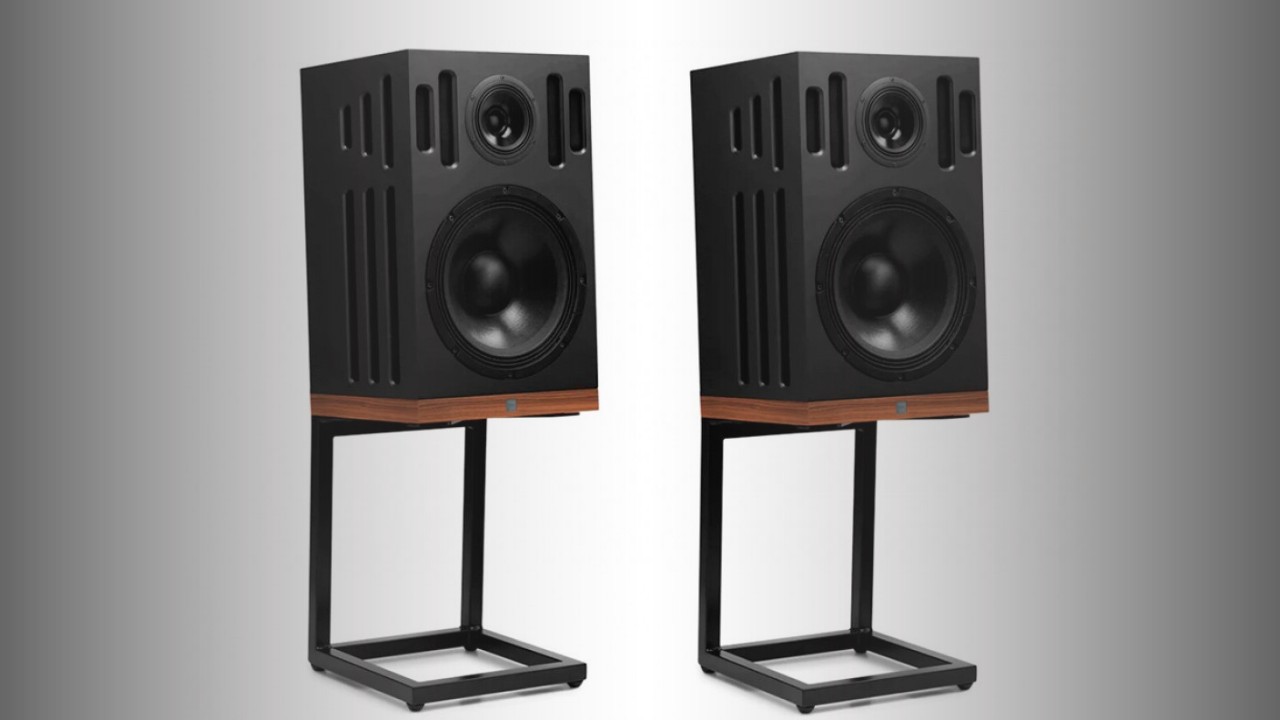
1. Sigberg Audio MANTA: Powerful active monitors from Norway
The Sigberg Audio MANTA active monitor combines a large midbass driver with a coaxial midrange and tweeter in a cardioid design.
The Sigberg Audio MANTA is a three-way active monitor built around a 12-inch midbass driver and a coaxial unit combining a 5.5-inch midrange driver with a 1-inch silk-dome tweeter.
Its defining feature is a cardioid polar pattern that Sigberg Audio says operates across an exceptionally wide frequency range, concentrating more sound energy toward the listener and reducing energy directed at room boundaries.
Despite the large midbass driver, the stated lower frequency limit is 90 Hz. MANTA is consequently intended to work with an active subwoofer, forming what the company describes as an effectively four-way system. Three-channel Hypex nCore Class D amplification is built in.
Best for: Active systems built around careful subwoofer integration
- Cardioid radiation is designed to reduce room reflections
- Built-in three-channel Hypex nCore amplification
- Coaxial midrange and tweeter arrangement
- Designed to integrate with active subwoofers
Verdict: MANTA is a specialized active monitor for listeners who value controlled dispersion and are prepared to use a separate subwoofer.
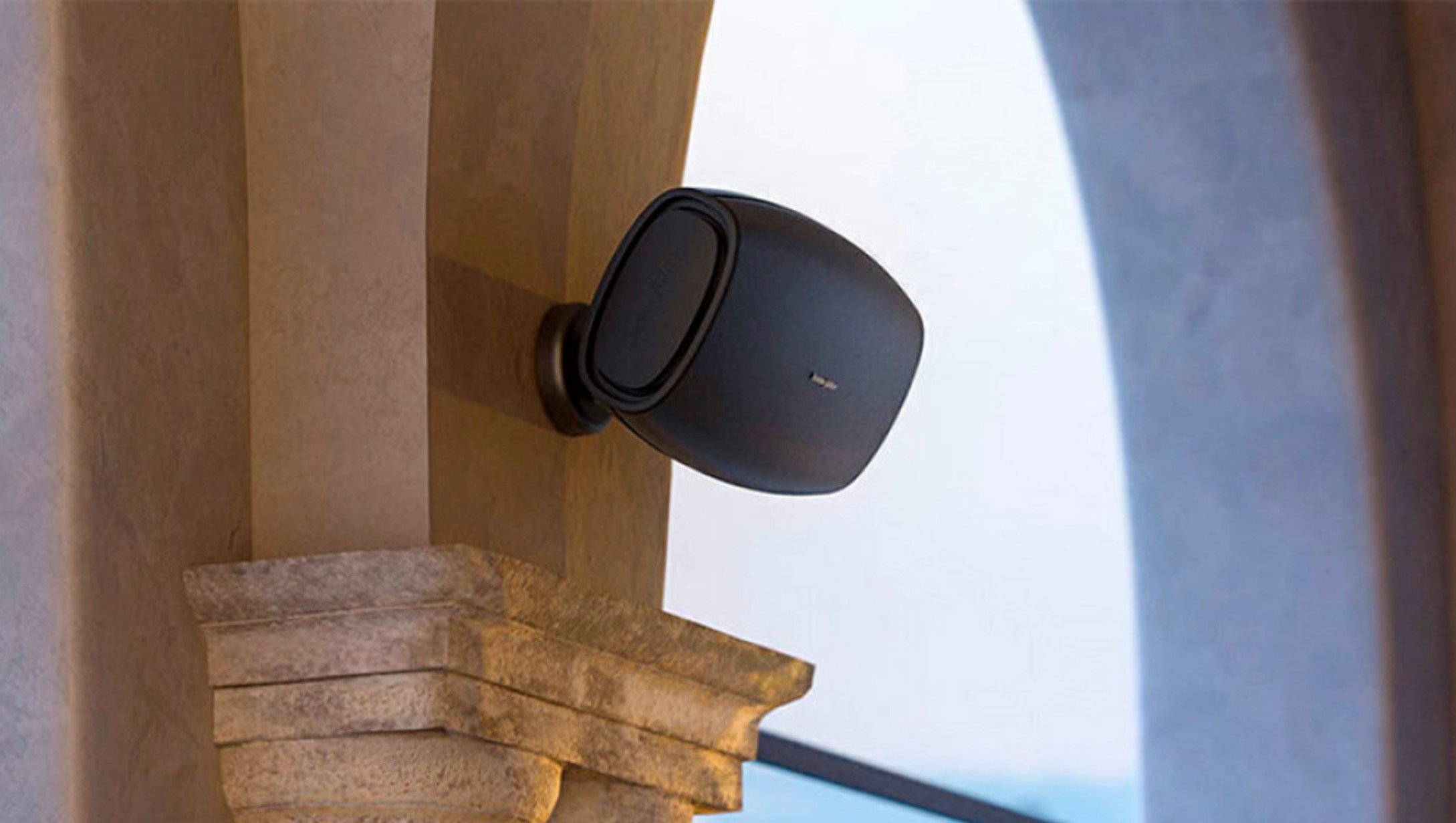
2. Sonus Faber Aster: The first all-weather speaker from Sonus Faber
The compact Sonus Faber Aster uses a two-way driver layout, side-mounted passive radiators and an adjustable wall bracket.
The Sonus Faber Aster is a compact passive two-way installation speaker intended for outdoor use.
It combines a 5.81-inch woofer/midrange driver with a 1.07-inch dome tweeter, while two side-mounted passive radiators support low-frequency output.
IP65 certification provides resistance to water and dust, making the enclosure suitable for exposed locations including areas where it may encounter rain. An aluminum wall bracket is included, attaches with a single screw and permits up to 15 degrees of tilt. The speaker has a nominal impedance of 8 ohms, a minimum impedance of 6 ohms and a stated sensitivity of 88 dB; Sonus Faber recommends a 100-watt amplifier.
Best for: Permanent outdoor and weather-exposed installations
- IP65-rated resistance to water and dust
- Included adjustable aluminum wall bracket
- Compact passive two-way design
- Available in black or white
Verdict: Aster combines practical weather protection and straightforward wall mounting with Sonus Faber’s compact installation-speaker format.

3. System Audio SA Silverbar: All-in-One Streaming Soundbar with DSP
System Audio’s SA Silverbar places four independently amplified drivers and network-streaming hardware inside a compact soundbar enclosure.
At just over 72 cm wide, the System Audio SA Silverbar is designed to serve either as a television soundbar or as a self-contained active wireless speaker.
Two midrange/woofers and two tweeters are each driven by a separate 80-watt Class D amplifier, while the internal DSP handles crossover duties and room-correction settings.
HDMI with ARC and CEC allows connection to a television and control through a compatible TV remote. Optical S/PDIF and 3.5 mm analog inputs broaden its source compatibility, while UPnP, Spotify Connect, Apple AirPlay 2 and Google Chromecast cover network playback. It can also interact with other products in System Audio’s Silverback wireless ecosystem for multi-room use.
Best for: A combined TV soundbar and network music system
- HDMI ARC and CEC for television integration
- DSP supports room-correction settings
- AirPlay 2, Chromecast and Spotify Connect
- Optical and 3.5 mm analog inputs
Verdict: The SA Silverbar is a versatile option when one compact active speaker must handle television audio, wired sources and streaming.

4. Xounts: 360 degree sound system
The obelisk-shaped Xounts Soundsystem combines 360-degree sound, integrated lighting and a replaceable decorative cover.
The Xounts Soundsystem takes the form of an obelisk and is designed to distribute sound through 360 degrees using flat-membrane technology.
Its room-filling approach differs from conventional speakers that are aimed toward a fixed listening position, although the supplied information does not include detailed acoustic specifications or independent listening findings.
The enclosure can also function as a smart light source and is operated through the company’s app. Interchangeable protective Style Covers provide visual customization, with options ranging from contemporary art to music-themed designs and artist collaborations.
Best for: Design-led rooms without a single fixed listening seat
- 360-degree sound distribution
- Interchangeable protective Style Covers
- Integrated smart lighting function
- App-based operation
Verdict: Xounts is an unconventional omnidirectional speaker and light whose visual flexibility is clearer from the available information than its acoustic performance.

5. Beosound A5: Retro style wireless speaker from Bang & Olufsen
The Bang & Olufsen Beosound A5 uses a handled, retro-influenced enclosure and a four-driver layout for portable 360-degree playback.
The Bang & Olufsen Beosound A5 is a portable active wireless speaker with styling influenced by the brand’s earlier radio designs.
Four drivers—a 130 mm bass unit, two 50 mm midrange drivers and a 20 mm tweeter—are powered by four amplifiers delivering a stated total of 280 watts and arranged to provide 360-degree radiation.
Its battery is rated for up to 12 hours of operation, while IP65 certification provides protection against dust and moisture. Bluetooth 5.2 is joined by AirPlay 2, Chromecast, Spotify Connect and Bang & Olufsen’s Mozart platform, giving the A5 both direct wireless and network-streaming options.
Best for: Portable listening with both Bluetooth and Wi-Fi streaming
- Up to 12 hours of battery operation
- IP65 dust and moisture protection
- Bluetooth 5.2 and network streaming
- 360-degree radiation pattern
Verdict: Beosound A5 brings broad streaming support, battery power and weather resistance together in a portable 360-degree speaker.
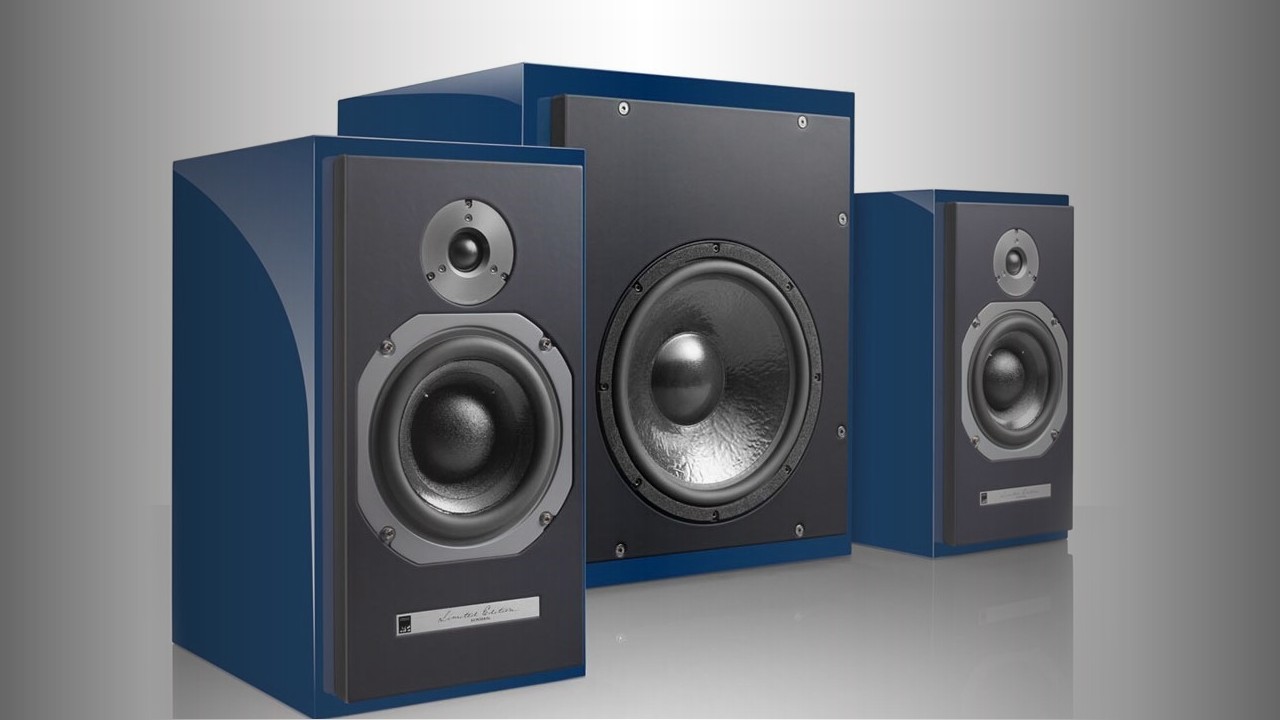
6. ATC SCM20ASL Limited Edition: High-End active loudspeaker
ATC’s SCM20ASL Limited Edition pairs a dark-blue sealed cabinet with a leather-clad baffle and silver-anodized metal details.
The ATC SCM20ASL Limited Edition is a compact, sealed-box active two-way speaker restricted to 150 pairs.
It uses ATC’s 150 mm Super Linear mid/woofer and 25 mm S-Spec dual-suspension tweeter in a 20-liter cabinet.
A matched Class A/B MOSFET amplifier provides 200 watts in total, with separate 50-watt feeds stated for each speaker’s woofer and tweeter. The active crossover uses second-order Linkwitz-Riley analog filtering, complemented by an all-pass filter intended to optimize phase response. Connectivity is through a balanced XLR input. A dark-blue high-gloss cabinet, Nappa-leather front panel and silver-anodized alloy parts distinguish this limited version visually.
Best for: Compact active systems with balanced source equipment
- Matched active Class A/B amplification
- Sealed 20-liter cabinet
- Balanced XLR input
- Limited-edition lacquer, leather and alloy finish
Verdict: The SCM20ASL Limited Edition combines ATC’s active two-way engineering with unusually elaborate materials and strictly limited production.

7. Seawave AM 23: Bookshelf speakers with beryllium super tweeter
The Seawave AM 23’s aluminum cabinet houses a large mid/bass driver, horn compression tweeter and beryllium super tweeter.
The Seawave AM 23 is a passive three-way bookshelf speaker distinguished by a 20 mm beryllium-dome super tweeter, a 50 mm horn compression tweeter and a 200 mm Eton Hexacone mid/bass driver.
The super tweeter extends the stated operating range to 35 kHz, with crossover points at 1.2 kHz and 18 kHz.
Its enclosure is made from AC4C aluminum alloy, selected by the manufacturer for rigidity and inertness. Internal electrical joints use Seawave Acoustics’ solderless crimped and twisted connection method, while the crossover includes proprietary ceramic resistors, Kapton inductors and Kapton-film capacitors. The stated sensitivity is 91 dB with an 8-ohm nominal impedance.
Best for: Passive systems seeking extended high-frequency output
- Dedicated beryllium-dome super tweeter
- Rigid AC4C aluminum-alloy enclosure
- Three-way passive driver configuration
- Stated 91 dB sensitivity and 8-ohm impedance
Verdict: The AM 23 is an unusually engineered bookshelf speaker built around a dedicated super tweeter, horn treble driver and aluminum enclosure.

8. Polk Audio MagniFi MAX SR: Powerful 5 channel home theater speaker set
The Polk Audio MagniFi MAX SR package includes a multi-driver soundbar, two wireless rear speakers and a compact wireless subwoofer.
The Polk Audio MagniFi MAX SR is a five-channel home-theater package comprising a soundbar, two wireless SR1 rear speakers and a wireless subwoofer.
The rear speakers pair with the system automatically, providing discrete surround channels without signal cables running back to the soundbar.
Polk’s Voice Adjust processing allows dialogue level to be tailored, while the company’s SDA technology is intended to create a wider soundstage. The soundbar contains four side-mounted full-range drivers, two tweeters and a central 1-inch driver. An 8-inch woofer supports its bass output, with the separate subwoofer extending the system’s low-frequency role.
Best for: TV viewers wanting surround sound from a packaged system
- Wireless rear speakers and subwoofer included
- Automatic rear-speaker connection
- Adjustable dialogue through Voice Adjust
- Complete five-channel package
Verdict: The MagniFi MAX SR is a practical route to five-channel television sound without wiring rear speakers back to the front of the room.

9. Tonewinner launches SW-D4000 and SW-D6000 active subwoofers
Tonewinner’s SW-D6000 active subwoofer provides rear-panel DSP controls, an LCD and both RCA and balanced XLR connectivity.
The Tonewinner SW-D4000 and SW-D6000 are active bass-reflex subwoofers, with the supplied detailed specifications concentrating on the larger SW-D6000.
That model uses a 38 cm driver and an 800-watt amplifier, together with onboard DSP and equalization for matching bass response to a system and room.
Adjustments can be made from the rear panel, where an LCD displays settings, or remotely through Tonewinner’s mobile app. Preset DSP modes are provided alongside manual equalization. Dual RCA and balanced XLR LFE inputs, an RCA line input and an RCA LFE output support integration with home-theater and hi-fi systems, including connection of a second subwoofer.
Best for: Home theaters requiring adjustable, high-output bass support
- Onboard DSP and manual equalization
- Rear-panel controls with LCD feedback
- RCA and balanced XLR LFE inputs
- LFE output for a second subwoofer
Verdict: The SW-D6000 is the better-documented model here, offering extensive connection and DSP controls for integrating substantial bass into a room.

10. Bausound Model 101: A truly unique loudspeaker
The Bausound Model 101 arranges four aluminum mid/woofers around a central tweeter on angled Bauhaus-inspired panels.
The Bausound Model 101 is a two-way bass-reflex loudspeaker shaped by Bauhaus-inspired design principles.
Four 15 cm aluminum-cone mid/woofers surround a centrally positioned 26 mm aluminum tweeter, with a first-order crossover managing the two-way configuration.
Its angled front panels direct sound in several directions, a layout the designers say widens the useful listening area and supports more consistent sound across different seating positions. The cabinet uses a high-density composite material, while non-parallel surfaces are intended to reduce internal resonances. The sculptural form is therefore tied to both the Model 101’s dispersion strategy and its visual identity.
Best for: Wide seating areas and design-conscious interiors
- Angled panels distribute sound in multiple directions
- Four aluminum-cone mid/woofers
- Centrally positioned aluminum tweeter
- High-density composite cabinet
Verdict: Model 101 uses its distinctive geometry as both an architectural statement and a means of broadening sound distribution around the room.
Frequently asked questions
Should I choose active or passive speakers?
Active speakers contain their own amplification and may add DSP, streaming or room-correction functions, as shown by MANTA, the SA Silverbar and the SCM20ASL Limited Edition.
Passive models such as the Sonus Faber Aster, Seawave AM 23 and Bausound Model 101 require a separate compatible amplifier but give you more freedom to select and replace system electronics.
When does a speaker system need a separate subwoofer?
A subwoofer is useful when the main speakers are designed with limited deep-bass extension, when stronger low-frequency effects are wanted for films, or when bass placement needs to be optimized independently.
Sigberg Audio explicitly designs MANTA to work with an active subwoofer, while the Polk package includes one and Tonewinner offers dedicated models with DSP adjustment.
What connections should I check before buying?
Match the speaker to every intended source.
A television setup may benefit from HDMI ARC and CEC, network playback requires support for the preferred streaming platform, and professional or balanced equipment may call for XLR.
Passive speakers instead require suitable amplifier outputs, impedance compatibility and adequate amplification.
How does speaker dispersion affect placement?
Conventional forward-facing speakers usually reward careful positioning around a primary listening seat.
Cardioid designs such as MANTA aim to reduce energy directed toward room boundaries, while 360-degree products such as Xounts and Beosound A5 spread sound around the enclosure.
Bausound takes another approach, using angled panels to serve a wider seating area.
How to Choose the Right Speaker for Your Space
Begin with the application rather than the cabinet style.
For a television, decide whether a single soundbar is enough or whether discrete rear channels and a subwoofer are priorities.
The System Audio SA Silverbar emphasizes compactness, streaming and HDMI integration, whereas the Polk Audio MagniFi MAX SR supplies a fuller surround package. Dedicated music systems require a different decision: an active design reduces the need to match separate amplifiers, while a passive speaker leaves more of the system architecture open to the owner. Room and placement constraints should come next. A cardioid monitor can be attractive where reducing reflected energy is important, but MANTA’s 90 Hz lower limit makes subwoofer planning essential. Omnidirectional or broadly dispersed designs can suit social spaces and multiple seating positions, although they behave differently from speakers aimed at a focused listening seat. Outdoor installations demand appropriate environmental protection; among these products, Aster and Beosound A5 carry IP65 certification, but one is a wall-mounted passive installation speaker and the other is a battery-powered wireless model. Finally, audit the entire signal path before deciding. Check source connections, amplifier requirements, network-platform support, subwoofer outputs and the practical locations of power sockets. Specifications can establish compatibility and indicate intended use, but they do not replace an assessment of room size, placement, preferred listening level and tonal preference. The strongest choice is the product whose format and connectivity solve the actual installation without adding unwanted complexity.

Join the discussion
Share your thoughts, listening impressions or product experience.