
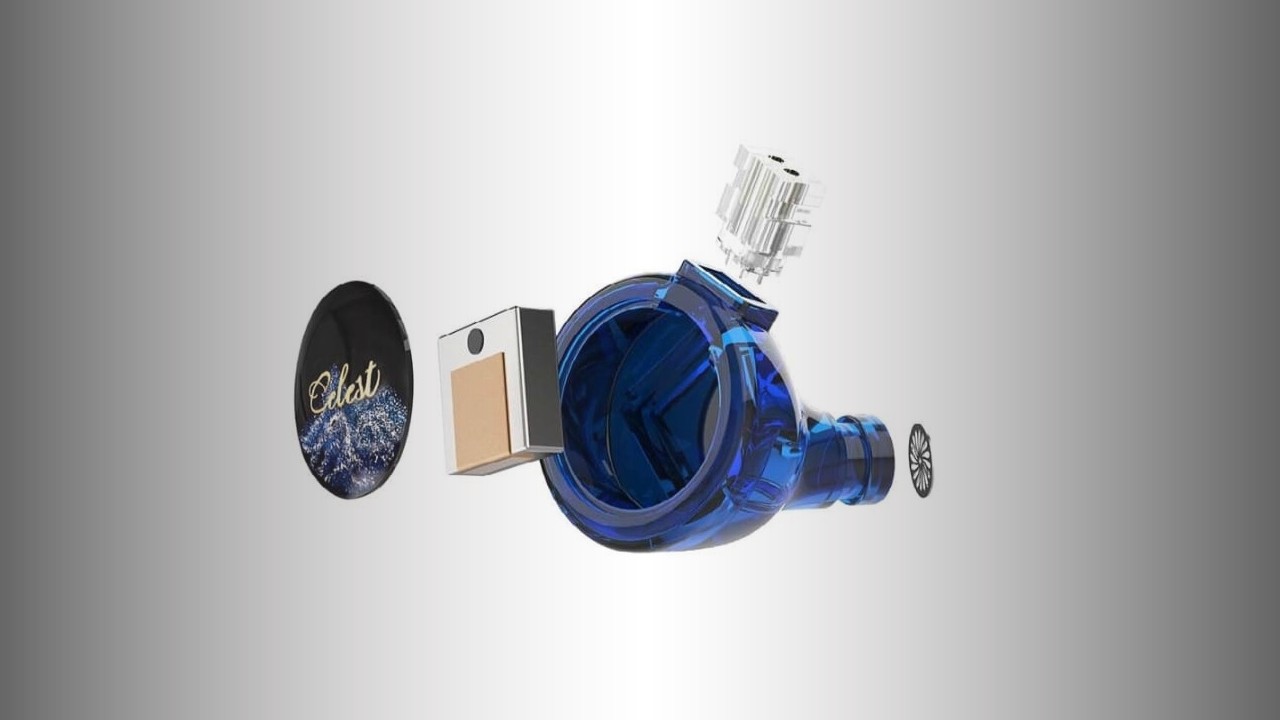
The Celest Pandamon 2.0 takes a distinctive route to compact planar headphones. Its central feature is the company’s second-generation SPD 2.0 driver, a small, square planar design intended to provide full-range reproduction from a single transducer. Celest complements that technical foundation with unusually low impedance, high stated sensitivity, conventional two-pin cable connections and visually individual hand-painted faceplates. The result is a product aimed at listeners who want planar-driver technology without limiting themselves to a large desktop system.
A square take on the planar driver
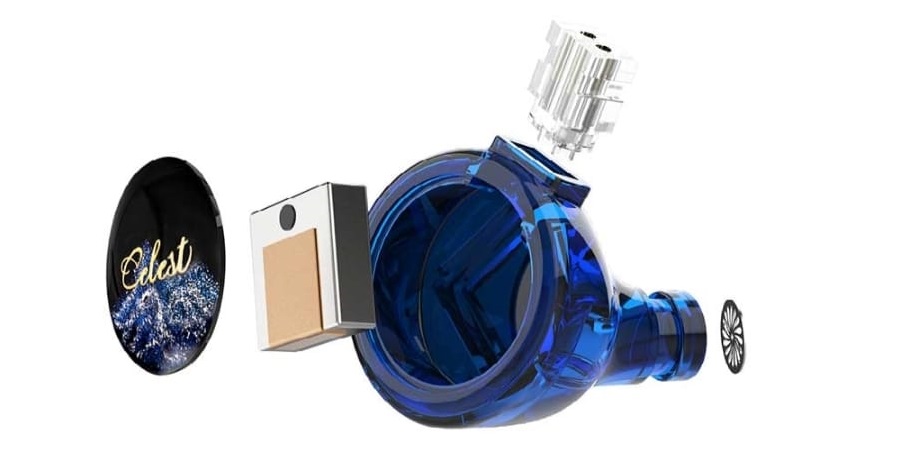
The defining technology inside the Pandamon 2.0 is Celest’s SPD 2.0 full-range planar driver. Rather than using a conventional circular format, this transducer has a square profile. Celest identifies compact dimensions, durable materials, high sensitivity and balanced energy distribution among the design’s principal attributes.
Using one full-range driver also gives the Pandamon 2.0 a comparatively direct architecture. There is no documented multi-driver arrangement or crossover dividing the audible range among several transducers. Instead, the SPD 2.0 unit is responsible for the complete stated frequency range of 20Hz to 20kHz. For prospective owners, that makes the driver itself—not the number of components—the product’s main technical point of interest.
The SPD 2.0 designation is also significant because the Pandamon 2.0 is presented as a new version rather than simply a cosmetic variation. Its square, second-generation driver provides a clear identity in a category where dynamic drivers, balanced armatures and more conventional planar implementations all compete for attention.
Electrical specifications designed for portable sources
Planar headphones are often associated with demanding amplification, but the Pandamon 2.0 has specifications intended to make source matching less restrictive. Its impedance is listed at just 9 ohms, while sensitivity is specified as 108dB. Celest specifically positions the ultra-low impedance as suitable for connection to a mobile phone.
That accessibility is useful for anyone trying to keep a portable system uncomplicated. The published figures indicate that a dedicated desktop headphone amplifier is not an assumed requirement. A phone, portable player, compact dongle or another compatible device can therefore form the basis of a Pandamon 2.0 system, depending on the device’s available headphone output.
Low impedance does, however, make sensible source matching important. Not every phone has an analog headphone socket, and output behavior varies between devices. Prospective users should confirm that their chosen source has the appropriate connection and is designed to work with low-impedance headphones. The Pandamon 2.0’s specifications emphasize flexibility, but they do not remove the need to check practical compatibility.
A tuning concept for detailed, complex material
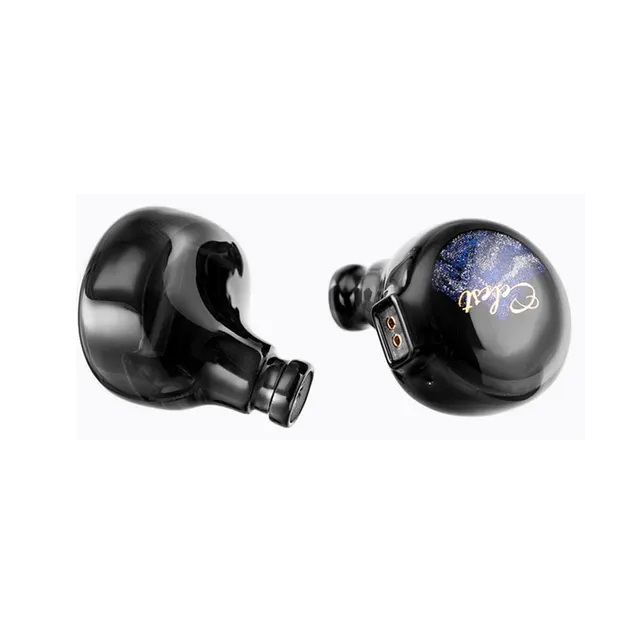
Celest describes the Pandamon 2.0’s tuning as having its energy tilted toward the upper midrange and high frequencies. The stated intention is to create a faster, calmer presentation with greater high-frequency extension and clearer handling of song details. ACG music—an umbrella term commonly associated with anime, comics and games—is specifically identified as one of the intended applications, alongside other complex musical material.
This tuning direction helps define the product more clearly than a generic promise of neutrality would. Listeners whose libraries contain dense arrangements, layered electronic production, prominent vocals or intricate upper-frequency information may find the concept particularly relevant. The emphasis is not presented as a bass-led approach; the documented focus is on mid-to-high-frequency energy, extension and the organization of detail.
Those are design intentions rather than listening results, and tonal preference remains personal. Buyers who favor an explicitly warm or strongly bass-centered balance should take the stated upper-frequency emphasis into account. Conversely, listeners looking for a planar model conceived around clarity and complex arrangements have a straightforward indication of what Celest set out to achieve.
Translucent resin and individually painted faceplates
The Pandamon 2.0 does not rely on its driver technology alone to distinguish itself. Its body is made from translucent resin, giving the enclosure a layered visual character rather than the appearance of an opaque molded shell. Resin also allows the square-driver concept to be housed in a compact form without giving the exterior an overtly industrial look.
The front panel is hand-painted by an artist through a multi-stage process. That detail gives the Pandamon 2.0 an artisanal element that contrasts with the precision-oriented description of the SPD 2.0 driver. It is a meaningful feature for owners who regard personal audio products as visible accessories as well as functional equipment.
Hand-applied decoration also makes the design more distinctive than a simple printed badge or standardized faceplate. Celest does not document specific tolerances or guarantee that every panel will differ, so it would be inappropriate to promise complete uniqueness. Even so, the use of a manual painting process is a clear point of separation from wholly machine-finished alternatives.

Familiar connections for different systems
On the headphone side, the Pandamon 2.0 uses a 0.78mm two-pin connection. This is a familiar interface in personal audio and gives the cable arrangement a recognizable format. It is a more system-oriented choice than permanently attaching a cable to the body, while keeping the connection compact.
The listed source-side connector choices are 3.5mm and 4.4mm. A 3.5mm termination suits the conventional headphone outputs found on many portable products and adapters. The 4.4mm option addresses equipment fitted with that increasingly common balanced-output standard, including compatible digital audio players, headphone amplifiers and portable DAC/amplifier units.
Having both termination formats represented allows the Pandamon 2.0 to fit more than one type of setup. The 3.5mm option supports straightforward everyday use, while 4.4mm caters to owners whose existing source equipment is built around that connector. Buyers should select the version that matches their hardware rather than assuming both plugs will work with the same output.
Who the Pandamon 2.0 is best suited to
The strongest case for the Pandamon 2.0 is for a listener curious about planar technology but unwilling to build a large or power-intensive system around it. Its 9-ohm impedance, 108dB sensitivity and mobile-oriented positioning make portability a central part of the design rather than an afterthought.
It should also appeal to buyers who value a visually expressive product. The translucent resin body and multi-stage hand-painted front panel offer more decorative character than a purely utilitarian enclosure. Meanwhile, the 0.78mm two-pin interface and choice of 3.5mm or 4.4mm termination make it easier to align the headphones with an existing portable source.
The documented tuning concept is most relevant to listeners interested in upper-midrange and treble energy, detail-focused presentation and complex material such as ACG music. Those seeking a specifically warm, relaxed or bass-emphasized signature may not be the clearest target audience. Similarly, users should verify low-impedance compatibility and physical connector requirements before choosing a source or cable configuration.
Conclusion
The Celest Pandamon 2.0 brings together several well-defined ideas: a compact square SPD 2.0 full-range planar driver, highly accessible electrical specifications, expressive resin construction and practical two-pin connectivity. Its hand-painted faceplate gives the product a crafted visual identity, while 3.5mm and 4.4mm termination choices support both conventional portable use and compatible balanced-output systems. It is most naturally suited to listeners seeking a portable planar design with an upper-midrange and high-frequency-oriented tuning concept, particularly those whose music libraries contain dense, detailed arrangements. Without requiring the owner to approach it as a desktop-only headphone, the Pandamon 2.0 presents planar technology in a flexible and visually distinctive format.


Sound Off
0Join the discussion if you have something to add.