
Choosing a DAC is primarily an exercise in system matching.
A compact phone dongle, a portable discrete converter and a full-width R2R component may perform the same fundamental task, but they differ substantially in connectivity, headphone-driving facilities, power architecture and the amount of space they demand.
Portable listeners should focus on headphone outputs, power consumption and device compatibility. Desktop headphone systems benefit from integrated amplification and precise volume control, while a conventional separates system may be better served by balanced outputs, multiple digital inputs or a dedicated conversion architecture. Format support matters, but only when it aligns with the sources and recordings already in use. This selection covers those distinct roles rather than presenting a simple sound-quality ranking. It also includes the Schiit Audio Eitr 2, which is a digital-to-digital converter rather than a DAC; its place is upstream of an existing converter. The MSB Technology Sentinel is similarly treated with caution because its announcement provides architectural context but not the pricing, interfaces or delivery details needed for a complete system assessment.

1. FiiO KA15: DAC/Headphone amplifier equipped with an audiophile-grade DSP
The compact FiiO KA15 combines a cassette-inspired exterior with DAC, headphone amplification and 10-band parametric EQ.
The FiiO KA15 suits a portable headphone system in which sound adjustment is as important as compactness.
Its 10-band high-precision parametric equalizer can be configured through FiiO’s app or web interface, with facilities for importing, exporting and sharing settings.
The processor also monitors voltage and current, dynamically adjusting consumption to reduce the load on a connected smartphone. A cassette-recorder-inspired enclosure gives the dongle a distinctive identity without changing its practical role as a DAC and headphone amplifier.
Best for: Portable listeners who want detailed EQ control
- 10-band high-precision PEQ
- Importable and shareable EQ settings
- Battery-aware power management
- Compact DAC and headphone amplifier
Verdict: The KA15 is a strong match for phone-based headphone systems that need flexible tonal adjustment and carefully managed power consumption.

2. Denafrips Enyo: R2R DAC that supports high-resolution audio streams
The Denafrips Enyo is a balanced R2R converter with USB-B, coaxial and optical inputs plus RCA and XLR outputs.
The Denafrips Enyo is a dedicated balanced R2R DAC for a separates system, with stereo RCA and balanced XLR outputs feeding an integrated amplifier, preamplifier or headphone amplifier.
Its resistor-ladder architecture uses four R2R networks per channel, while selectable non-oversampling and oversampling modes are joined by slow and sharp filter choices.
Connectivity includes two coaxial, two optical and one USB-B input. USB accepts the highest-resolution streams listed in the source, while the optical and coaxial inputs are limited to PCM at 24-bit/192 kHz and DSD64 through DoP.
Best for: Balanced separates built around a dedicated R2R DAC
- Balanced XLR and RCA outputs
- Multiple coaxial, optical and USB inputs
- Selectable NOS and oversampling modes
- Slow and sharp filter options
Verdict: The Enyo offers a practical route into resistor-ladder conversion for systems that need balanced outputs, several digital inputs and selectable processing modes.

3. Audio-GD HE-8: Massive R2R DAC featuring a high-end design
The substantial Audio-GD HE-8 houses four PCM1704U-K chips, discrete circuitry and an elaborate regenerative power system.
The Audio-GD HE-8 is intended for a substantial stationary system rather than a compact desktop.
Its symmetrical architecture is based on four PCM1704U-K conversion chips, discrete audio circuits, an Accusilicon femtosecond clock and FPGA clock control.
Particular attention is paid to power: the regenerative supply converts incoming AC and generates a new low-distortion waveform, with separate Class A supplies serving the left and right channels. The supplied excerpt does not specify inputs, outputs or supported formats, so compatibility should be assessed separately rather than inferred from the internal design.
Best for: Large separates systems prioritizing power and circuit architecture
- Four PCM1704U-K conversion chips
- Symmetrical discrete audio architecture
- Regenerative power-supply system
- Accusilicon clock with FPGA control
Verdict: The HE-8 is an architecture-led choice for a spacious reference system, although the available source leaves its connection and format options unspecified.

4. Mytek Manhattan DAC II: Technically advanced USB DAC
The full-width Mytek Manhattan DAC II provides two front headphone connections alongside its ES9038 Pro conversion platform.
The Mytek Manhattan DAC II combines ES9038 Pro conversion with a proprietary linear power supply and Mytek Femto Clock, making it a natural fit for a full-size desktop or rack-based digital system.
Two front-panel headphone outputs allow two conventional pairs to be connected, while demanding headphones can use a balanced connection through a 4-pin XLR adapter.
The headphone amplifier is rated by the manufacturer at 6 W with 0-ohm impedance. At 432 by 267 by 50 mm and 8 kg, this is a substantial component that needs considerably more shelf space than a typical desktop DAC.
Best for: Full-size DAC and headphone systems
- ES9038 Pro conversion
- Proprietary linear power supply
- Two front-panel headphone outputs
- Declared 6 W headphone amplifier
Verdict: The Manhattan DAC II fits listeners seeking an imposing USB DAC with serious integrated headphone facilities and a purpose-designed clock and power supply.

5. iBasso D16 Taipan: Portable and discrete DAC
The portable iBasso D16 Taipan uses FPGA control, 128 PWM DAC elements and a super Class A transistor amplifier.
The iBasso D16 Taipan is aimed at portable enthusiasts who want a discrete conversion architecture rather than a conventional integrated DAC chip.
Its FPGA-Master 2.0 platform controls 128 independent PWM DAC elements, arranged to create balanced L+, L−, R+ and R− outputs.
Each channel uses 32 PWM DACs in a parallel-delay configuration that operates as a hardware analog FIR filter. A super Class A transistor amplifier completes the signal path, while the source reports a THD+N figure of 0.0001 percent. Connection types, supported formats and battery specifications are not provided in the supplied material.
Best for: Portable systems seeking discrete DAC architecture
- 128 discrete PWM DAC elements
- FPGA-Master 2.0 signal processing
- Hardware analog FIR filtering
- Super Class A transistor amplifier
Verdict: The D16 Taipan brings an unusually elaborate FPGA-controlled discrete conversion and amplification design to a portable format, though the supplied details do not establish its connectivity or battery endurance.
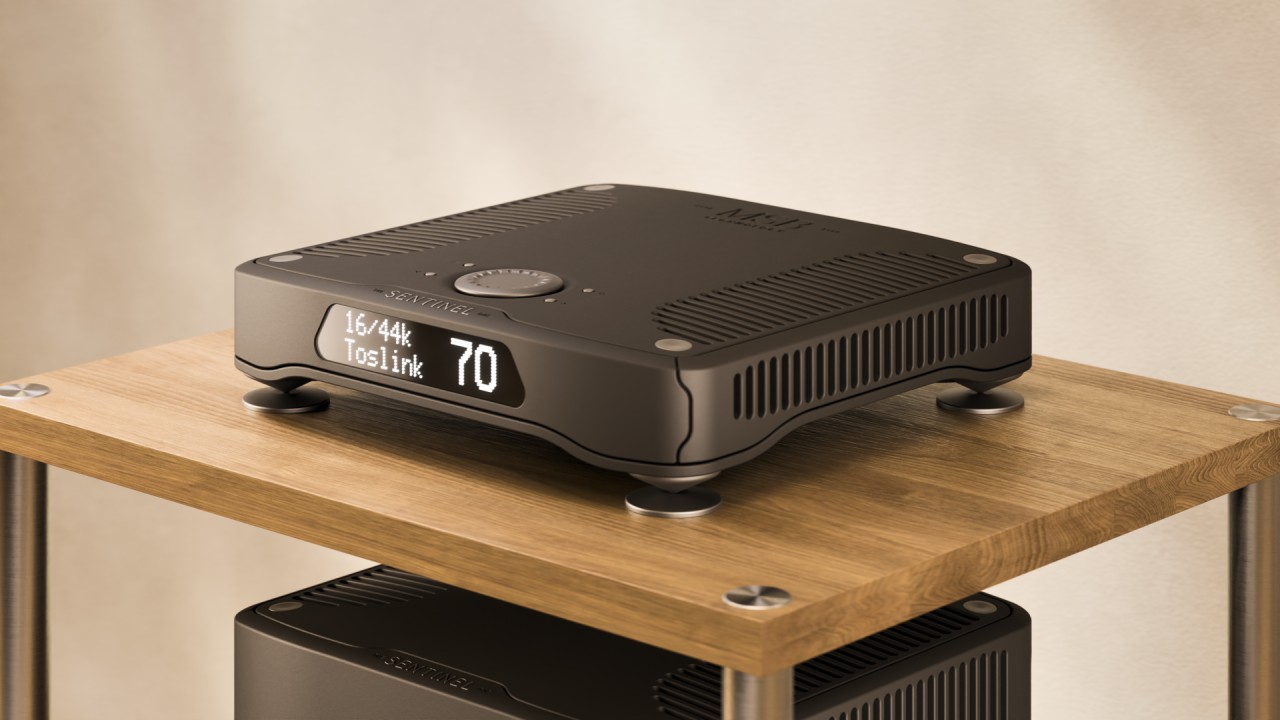
6. MSB Technology Sentinel: The World’s Most Advanced Digital-to-Analog Converter
The MSB Technology Sentinel divides its conversion system across three streamlined, matte-finished bodies.
MSB Technology presents the Sentinel as a no-constraint digital-to-analog converter system built around three separate bodies.
According to the manufacturer, concealed three-dimensional layouts are used to improve electronic interaction while keeping the external presentation streamlined, and the components share a smooth matte finish.
The announcement does not provide pricing, delivery timing, supported formats, input and output options or measured performance. It should therefore be viewed as an ambitious system concept rather than a fully assessable purchase recommendation at this stage.
Best for: No-constraint systems awaiting complete technical details
- Three-body system architecture
- Concealed three-dimensional internal layouts
- Streamlined matte exterior
Verdict: The Sentinel is a striking architectural statement, but meaningful system matching must wait for confirmed interfaces, specifications, pricing and availability.

7. Kiwi Ears Allegro: Probably the coolest portable DAC this year
The gamepad-styled Kiwi Ears Allegro provides 3.5 mm and balanced 4.4 mm headphone connections over USB Type-C.
The Kiwi Ears Allegro is an accessible match for phone-based listening when both common headphone connection standards are required.
It combines an ES9028Q2M DAC with a 3.5 mm single-ended output and a 4.4 mm balanced output, all within a gamepad-inspired enclosure.
USB Type-C connectivity supports compatible Android devices from version 5.1 onward. Format handling extends to PCM at 32-bit/384 kHz and DSD256, and the source lists THD+N at 0.0015 percent into a 32-ohm load.
Best for: Android users with 3.5 mm or 4.4 mm headphones
- 3.5 mm and balanced 4.4 mm outputs
- PCM 32-bit/384 kHz support
- DSD256 support
- USB Type-C connectivity
Verdict: The Allegro is a versatile portable option for Android systems that need both single-ended and balanced headphone outputs in a distinctive enclosure.

8. HiBy Digital D1: Compact and powerful DAC
The aluminum HiBy Digital D1 pairs a 3.5 mm headphone jack with dedicated physical volume buttons.
The HiBy Digital D1 keeps the portable formula straightforward: a CS46L41 DAC, a 3.5 mm headphone output and physical volume buttons with a 50-step adjustment range.
Its amplifier delivers 65 mW into 32 ohms, while low power consumption is intended to limit smartphone battery drain during longer sessions.
HiByMusic app compatibility provides settings and USB audio functions on Android and iOS devices, and the D1 can also operate as a USB DAC with a computer. The aluminum enclosure is offered in three colors.
Best for: Simple phone and computer headphone systems
- Physical 50-step volume control
- 65 mW output at 32 ohms
- Android and iOS app compatibility
- Computer USB DAC mode
Verdict: The Digital D1 is a compact, uncomplicated choice for listeners who value physical volume controls, a standard 3.5 mm output and broad device compatibility.
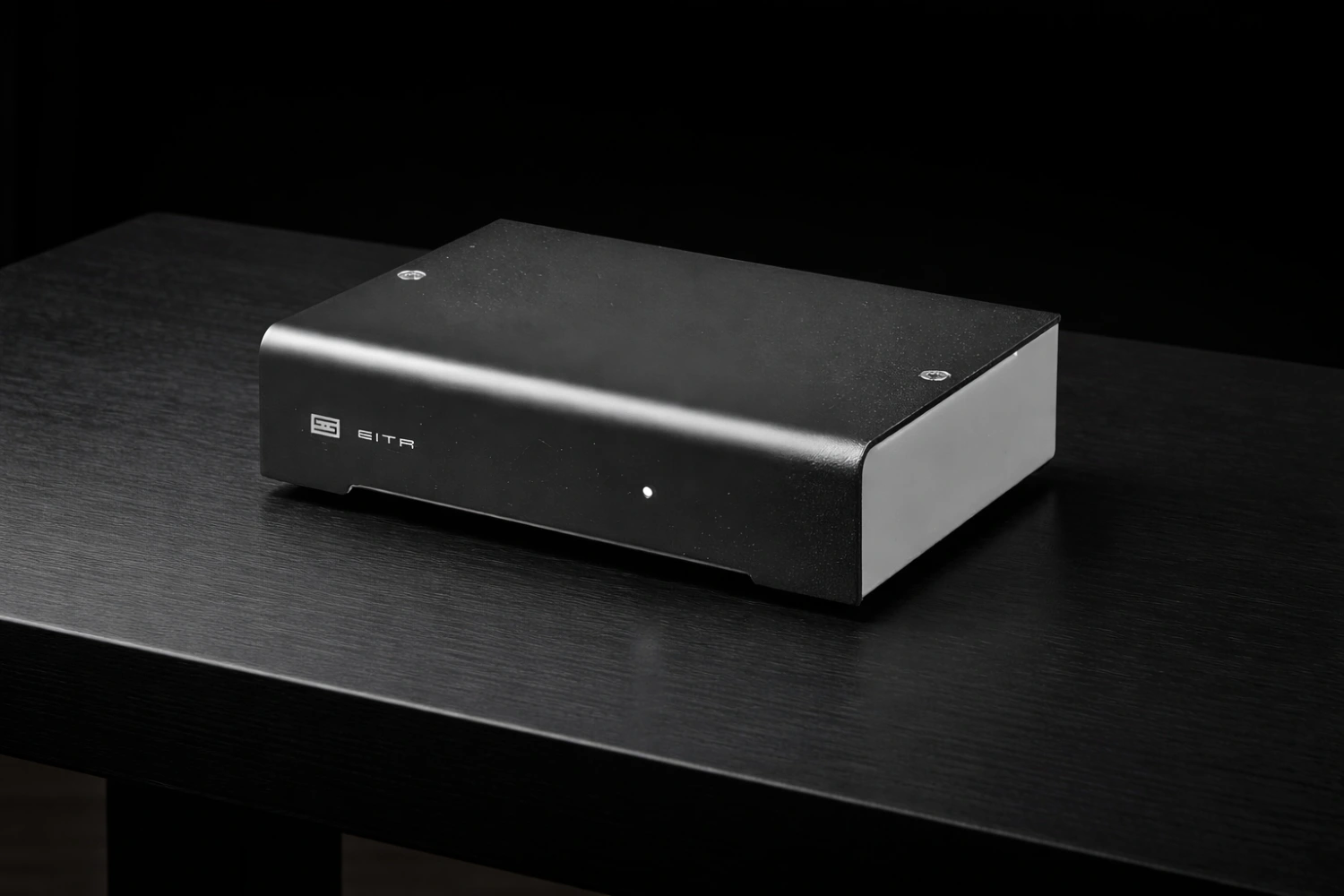
9. Schiit Audio Eitr 2: A Smarter, Cleaner Path from USB to High-End Digital Audio
The compact Schiit Audio Eitr 2 converts USB audio into coaxial, AES/EBU or optical digital output for an external DAC.
The Schiit Audio Eitr 2 is not a digital-to-analog converter and cannot feed an amplifier directly.
It is a digital-to-digital converter designed to sit between a USB source and an existing DAC, regenerating audio from a computer, tablet or smartphone before passing it through transformer-isolated coaxial, AES/EBU or optical outputs.
Schiit’s proprietary Unison USB interface handles the incoming signal, while the optical output supports PCM up to 24-bit/192 kHz. Its relevance depends entirely on whether the downstream DAC benefits from an alternative to direct USB connection.
Best for: Existing DACs that need a dedicated USB bridge
- Proprietary Unison USB interface
- Transformer-isolated coaxial output
- AES/EBU and optical outputs
- Compact digital-bridge format
Verdict: The Eitr 2 is a focused upstream upgrade for USB-based systems, but it requires a separate DAC and should not be mistaken for one.
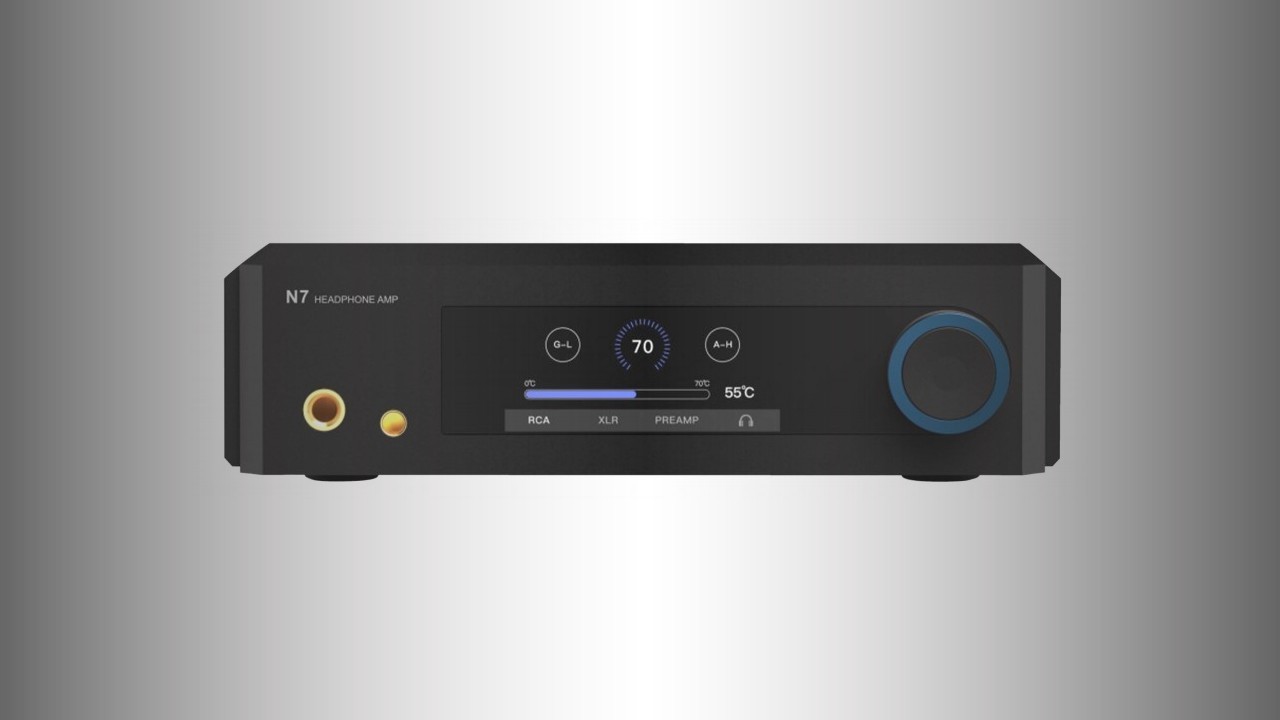
10. Aune N7 DAC Edition: Versatile DAC, Headphone Amplifier, and Preamplifier in One
The Aune N7 DAC Edition integrates dual-CS43198 conversion, preamplification and balanced Class A headphone drive.
The Aune N7 DAC Edition is the most overtly multifunctional component in this selection, combining a dual-CS43198 DAC, balanced Class A headphone amplifier and preamplifier.
USB-C playback supports PCM at 32-bit/384 kHz and DSD256.
Its analog stage uses discrete JFET transistors, while four-channel R2R volume control is implemented with a pair of JRC chips and dedicated operational amplifiers. Aune specifies compatibility with headphones from 16 to 600 ohms, with output reaching 1,900 mW into 32 ohms through the 6.35 mm connection and 6,570 mW into 32 ohms through the balanced 4.4 mm output.
Best for: Desktop systems needing one digital and analog control hub
- DAC, headphone amplifier and preamplifier
- Dual CS43198 conversion
- Balanced Class A headphone stage
- Four-channel R2R volume control
Verdict: The N7 DAC Edition is the clearest all-in-one match here for a desktop system requiring conversion, preamplification and substantial single-ended or balanced headphone output.


Sound Off
0Join the discussion if you have something to add.