
These ten amplifiers cover markedly different roles.
The field includes full integrated amplifiers, network-enabled models, tube designs, line preamplifiers and dedicated power amplifiers.
The ranking therefore rewards broad system usefulness, documented power and connectivity, and ease of matching before considering more specialized design philosophies. The highest positions go to amplifiers that can anchor a complete system with relatively few additional components. Separate preamplifiers and power amplifiers appear lower where they require a carefully chosen partner, while the most specialized tube products are ranked according to their narrower system suitability rather than any assumption that they are inherently inferior. This is not presented as a level-matched listening comparison. The judgments are grounded in the supplied descriptions, including published power ratings, circuit topology, connections and manufacturer-stated design choices. Where one source covers multiple models, a single clearly identified model is evaluated so that every entry remains a distinct product.

1. Onkyo A-50
The Onkyo A-50 combines a high-current Class AB amplifier with streaming and Dirac Live.
The Onkyo A-50 earns first place by offering the most complete combination of substantial amplification, modern source handling and system optimization in the supplied material.
Its symmetrical Class AB output stage uses a three-stage inverted Darlington design and Onkyo’s DIDRC circuit, with stated output of 140 watts per channel into 8 ohms and 180 watts into 4 ohms.
Streaming support and Dirac Live extend its usefulness beyond conventional analogue amplification, while the fanless construction avoids mechanical noise. A 5 mm aluminum front panel, copper busbar, substantial heatsink and robust speaker terminals reinforce the impression that the physical engineering has not been secondary to the feature list.
Best for: A full-size, high-power streaming system with room correction
- 140 watts per channel into 8 ohms and 180 watts into 4 ohms
- Dirac Live room correction alongside streaming capabilities
- Symmetrical Class AB output stage with DIDRC
- Fanless construction with a substantial aluminum heatsink
Verdict: The A-50 is the strongest all-round recommendation because it combines serious stated power, streaming and Dirac Live without abandoning traditional Class AB engineering.

2. Leema Acoustics iD85
The Leema Acoustics iD85 adds digital conversion and USB connectivity to the company’s 85-watt Class AB platform.
The source introduces both the analogue i85 and DAC-equipped iD85; this ranking evaluates the iD85 as the more broadly equipped individual model.
It retains the cited Class AB platform, rated at 85 watts per channel into 8 ohms, together with four RCA inputs, an MM phono input, subwoofer and preamplifier outputs, a recording output and a separate headphone amplifier.
Its principal advantage over the i85 is the addition of a DAC powered from a separate supply line. Two coaxial inputs, two optical inputs and an asynchronous USB-B connection make the iD85 suitable for mixed analogue, vinyl and computer-audio systems. The source notes that technical information was still relatively scarce, so its high ranking rests on the announced specification rather than extensive test evidence.
Best for: Mixed vinyl, analogue and computer-audio systems
- Class AB amplification rated at 85 watts per channel into 8 ohms
- Built-in DAC with coaxial, optical and asynchronous USB-B inputs
- MM phono input plus subwoofer and preamplifier outputs
- Separate headphone amplifier
Verdict: On its published specification, the iD85 is a thoughtfully equipped integrated amplifier for listeners who want digital and analogue sources handled in one component.

3. Unison Research S6 Black Edition
The Unison Research S6 Black Edition uses six KT77 output tubes across its two pure Class A channels.
The S6 Black Edition is the highest-ranked dedicated tube integrated amplifier because it combines a pure Class A output stage with a meaningful stated power rating.
It delivers 40 watts into 6 ohms and uses three parallel KT77 Gold Lion output tubes per channel in an ultralinear configuration with a 20 percent tap.
Unison Research also revised the signal path and power supply rather than limiting the Black Edition to cosmetic changes. Its 40-watt rating gives it more practical scope than many lower-powered tube amplifiers, although speaker sensitivity and impedance remain more important considerations here than with the higher-output solid-state models above it.
Best for: A high-end tube system built around appropriately matched speakers
- Pure Class A tube output stage
- 40-watt rating into 6 ohms
- Three parallel KT77 Gold Lion output tubes per channel
- Reworked signal path and power supply
Verdict: The S6 Black Edition is the most compelling tube integrated option here for listeners seeking Class A architecture with a comparatively useful 40-watt output.
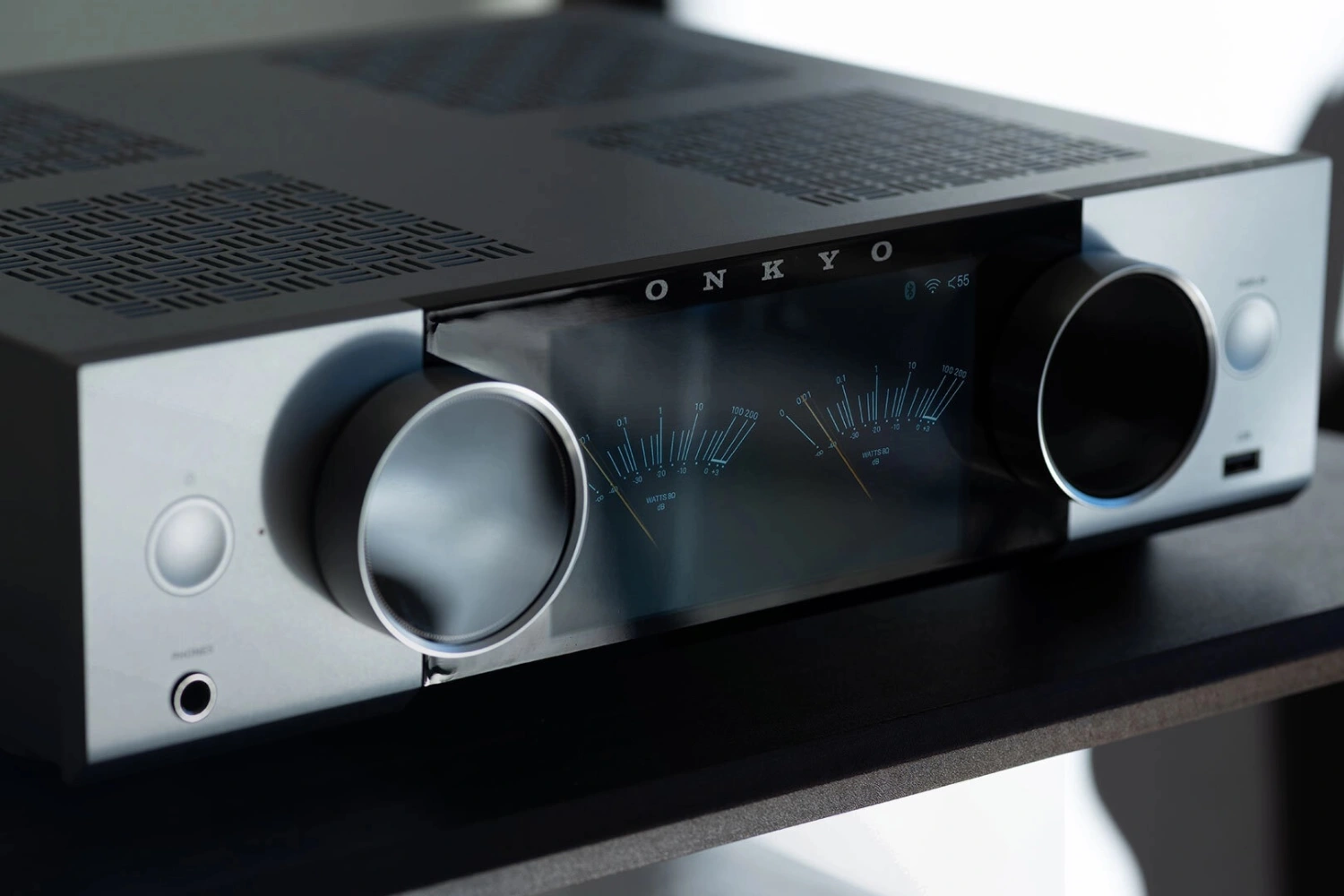
4. Onkyo Muse Y-50
The compact Onkyo Muse Y-50 includes network playback, a color display and high-output Class D amplification.
The source covers two Muse amplifiers, and the Y-50 takes this position as the higher-powered individual model.
Its fully digital signal path feeds Axign Class D amplification rated at up to 125 watts per channel into 8 ohms and 250 watts into 4 ohms, giving the compact chassis unusually substantial published output.
Network playback is central to the design rather than an accessory, while the 5.46-inch color display can show album artwork, track information and VU-style meters. It ranks below the A-50 because the supplied material presents the Y-50 as a digitally focused platform, whereas the A-50 offers the more traditional Class AB foundation and documented Dirac Live integration.
Best for: A compact, network-first system requiring substantial stated power
- Up to 125 watts per channel into 8 ohms and 250 watts into 4 ohms
- Integrated network playback
- Fully digital signal path with Axign Class D amplification
- 5.46-inch color display for artwork and playback information
Verdict: The Muse Y-50 is a powerful and visually informative network amplifier for listeners comfortable with a fully digital architecture.

5. NAD C268
The NAD C268 can operate as an 80-watt-per-channel stereo amplifier or a 300-watt bridged mono amplifier.
The NAD C268 is a focused power amplifier rather than a complete source-and-volume-control hub.
In standard stereo operation it is rated at 80 watts per channel, using a high-efficiency Class D platform related to the one in NAD’s C368 integrated amplifier.
Its defining strength is configuration flexibility. The C268 can be bridged into a 300-watt mono amplifier or used as part of a bi-amplified system, giving owners several paths for expansion. It ranks in the middle because those options are genuinely useful, but it still requires an external preamplifier or suitably equipped source and does not provide streaming by itself.
Best for: Expanding, bi-amplifying or adding power to an existing separates system
- 80 watts per channel in stereo operation
- Bridgeable for 300-watt mono operation
- Supports bi-amplified system configurations
- Efficient Class D amplification
Verdict: The C268 is a flexible power amplifier whose stereo, bridged-mono and bi-amplification options make it especially suitable for systems intended to evolve.

6. Audio Research LS-2
The Audio Research LS-2 places a balanced 6H30 tube circuit behind a modern touchscreen interface.
The Audio Research LS-2 is a line-stage preamplifier, so it does not drive passive speakers and must be partnered with a separate power amplifier.
Within that role, its design is notably purist: it operates in Class A, contains no semiconductors in the signal path and uses no global negative feedback.
A pair of 6H30 double triodes operates in a cathode-follower configuration intended to maintain low output impedance and facilitate compatibility with different power amplifiers and cable lengths. The fully balanced architecture and touchscreen control combine traditional tube-circuit priorities with a contemporary interface, but its specialist line-stage role prevents it from ranking alongside the more complete integrated amplifiers.
Best for: A purist tube-based separates system needing a modern balanced line stage
- Pure Class A tube line stage
- No semiconductors in the signal path and no global negative feedback
- 6H30 cathode-follower configuration for low output impedance
- Fully balanced architecture with touchscreen control
Verdict: The LS-2 is a carefully focused Class A tube preamplifier for listeners who value signal-path simplicity and already have a suitable power amplifier.

7. Pro-Ject Pre Box S3
The Pro-Ject Pre Box S3 combines HDMI eARC, digital conversion, MM phono amplification and Bluetooth in a compact enclosure.
The Pre Box S3 is the most versatile compact preamplifier in the ranking.
It combines two analogue RCA line inputs with digital conversion, Bluetooth, an MM phono stage, a headphone amplifier, a subwoofer output and HDMI eARC, allowing televisions, turntables and wireless sources to share one small control component.
Its MM input provides a stated 45 dB of gain, while the preamplifier outputs make it suitable for active speakers or a separate power amplifier. It cannot power passive speakers directly, but its unusually broad connection set makes it a practical alternative to a full-size integrated amplifier when amplification is already available elsewhere.
Best for: Compact systems combining a television, turntable and active speakers
- HDMI eARC and Bluetooth connectivity
- Built-in DAC and headphone amplifier
- MM phono stage with 45 dB of gain
- Subwoofer output and compatibility with active speakers or power amplifiers
Verdict: The Pre Box S3 is an exceptionally flexible small-format control center, provided the system already includes active speakers or a separate power amplifier.

8. Riviera Audio APL01SE
The Riviera Audio APL01SE is an all-tube Class A preamplifier with transformer-coupled balanced inputs.
Although introduced alongside the separate AFM100SE mono power amplifier, the APL01SE is assessed here on its own as a distinct tube preamplifier.
Its audio circuit is entirely tube-based and operates in Class A without feedback, using an SRPP configuration and a linear power supply built around an approximately 200 VA transformer.
The supporting engineering is elaborate: six independently stabilized power supplies, dual inductive filtering, transformer-coupled true balanced inputs with mu-metal shielding and a motorized TKD volume potentiometer. These choices establish the APL01SE as an uncompromising specialist product, but the supplied material does not provide comparative listening evidence that would justify placing this separate line stage above the more broadly useful amplifiers.
Best for: A reference-level separates system centered on an all-tube line stage
- Entirely tube-based Class A zero-feedback audio circuit
- Six separate stabilized power supplies
- True balanced transformer inputs with mu-metal shielding
- Motorized TKD volume potentiometer
Verdict: The APL01SE offers unusually elaborate tube and power-supply engineering, but its specialist preamplifier role and dependence on separate amplification limit its general appeal.

9. Fosi Audio BT20A MAX
The compact Fosi Audio BT20A MAX emphasizes advanced Bluetooth codec support and passive-speaker compatibility.
The BT20A MAX targets desktop and compact living-room systems, combining a small enclosure with the ability to drive passive speakers specified between 2 and 8 ohms.
It operates from an external 32-to-48-volt power supply and also accommodates a subwoofer-based setup.
Bluetooth is its best-documented strength. The Qualcomm QCC3095 implementation supports aptX Adaptive, aptX Lossless and LDAC in addition to SBC and AAC, with wireless range stated at up to 15 meters. It ranks ninth because the supplied text does not include a continuous output rating or enough wired-input detail for a more complete comparison with the larger integrated amplifiers.
Best for: A compact wireless system using passive bookshelf speakers
- Compact enclosure suitable for desktop systems
- Bluetooth support for aptX Adaptive, aptX Lossless and LDAC
- Specified compatibility with speakers from 2 to 8 ohms
- Support for adding a subwoofer
Verdict: The BT20A MAX is an appealing Bluetooth-centered compact amplifier, although the supplied information is not detailed enough to judge its power delivery against the larger alternatives.
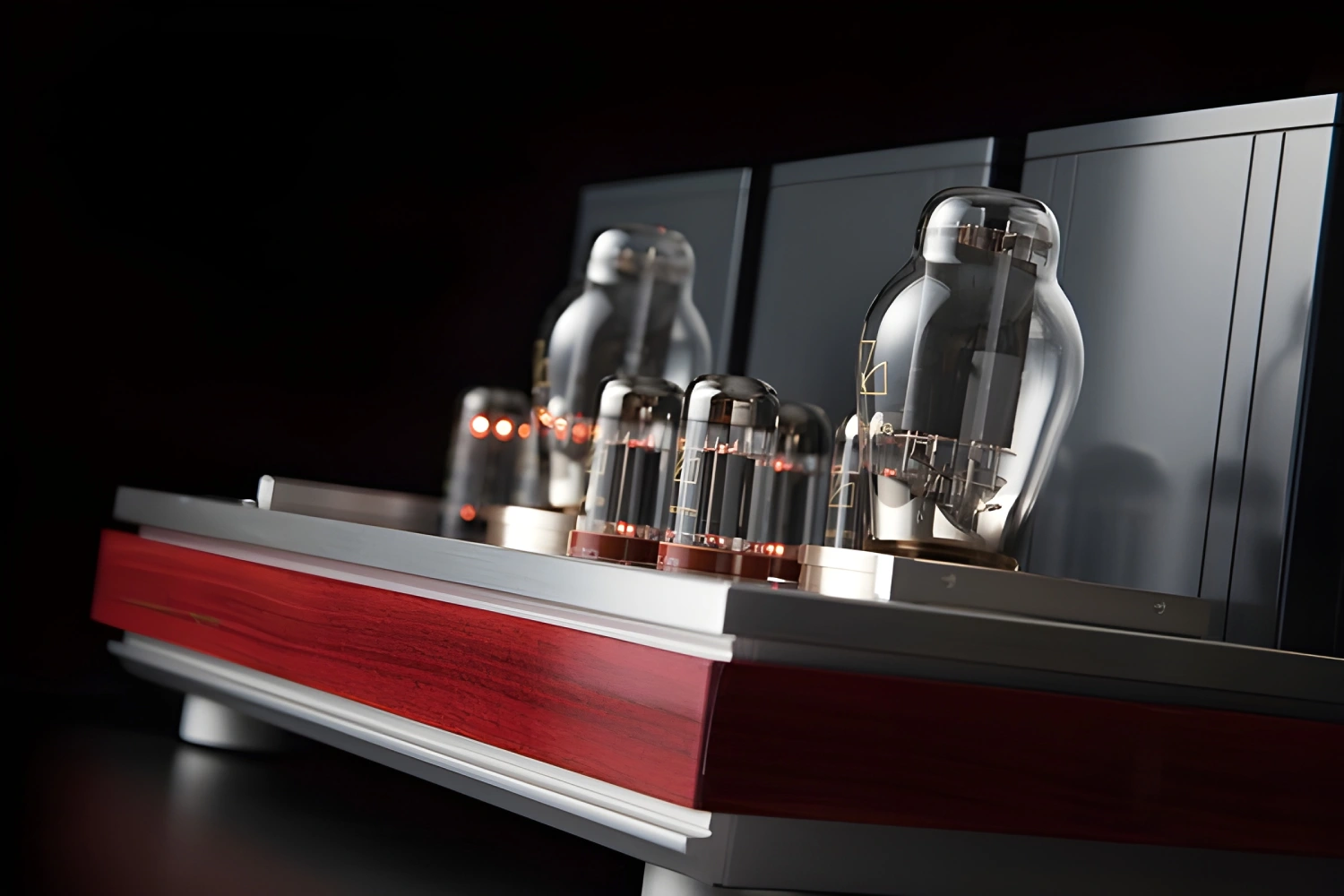
10. Luxman MQ-300
The Luxman MQ-300 reinterprets the company’s classic exposed-transformer 300B amplifier format.
The Luxman MQ-300 is a dedicated 300B tube power amplifier whose identity is closely tied to the company’s historic tube designs.
Its walnut frame, exposed transformers, proportions and detailing deliberately recall classic Luxman amplifiers while presenting the format as a current high-end component rather than a simple visual reproduction.
Its final position reflects breadth of recommendation, not an assertion of poor quality. The supplied material does not include output power, connection details or load behavior, making responsible speaker-matching guidance impossible from the available evidence. As a dedicated 300B power amplifier, it is also inherently less self-contained than any integrated model above it.
Best for: A carefully assembled high-end system specifically built around 300B amplification
- Dedicated 300B tube architecture
- Distinctive walnut-framed construction with exposed transformers
- Design informed by Luxman’s established tube-amplifier heritage
Verdict: The MQ-300 is the most specialized amplifier in the ranking, offering clear heritage appeal but too little supplied technical information for a broad recommendation.



Sound Off
0Join the discussion if you have something to add.