

In high-end audio, longevity matters. Not because age guarantees quality, but because decades of accumulated knowledge—about sound, design, and musical priorities—inevitably shape how a company thinks and builds. Few brands embody this better than Luxman.
Founded in 1925, Luxman is one of the rare audio manufacturers whose history isn’t just something to celebrate—it’s something they actively use. Even in 2026, the company continues to release products that feel relevant, desirable, and unmistakably Luxman. The Luxman MQ-300 is a perfect example: a power amplifier that looks back to the past without sounding trapped in it.
A design pulled straight from Luxman’s golden years
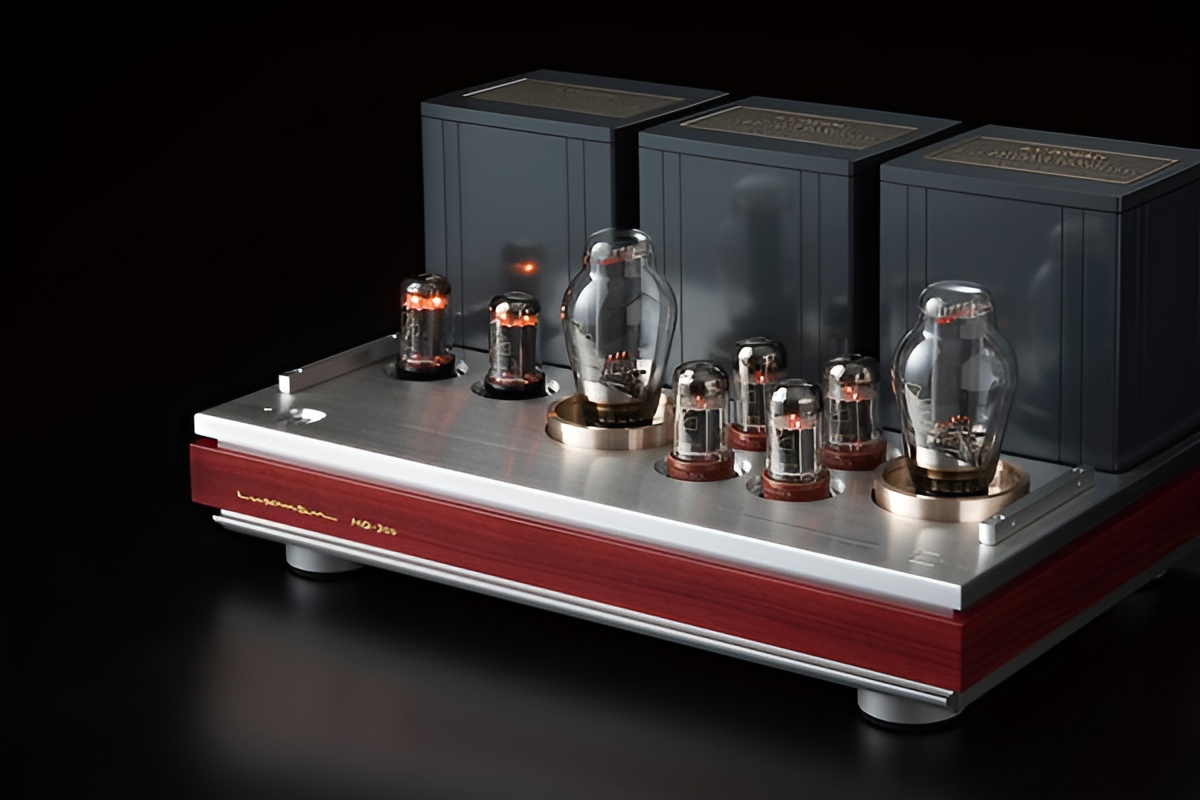
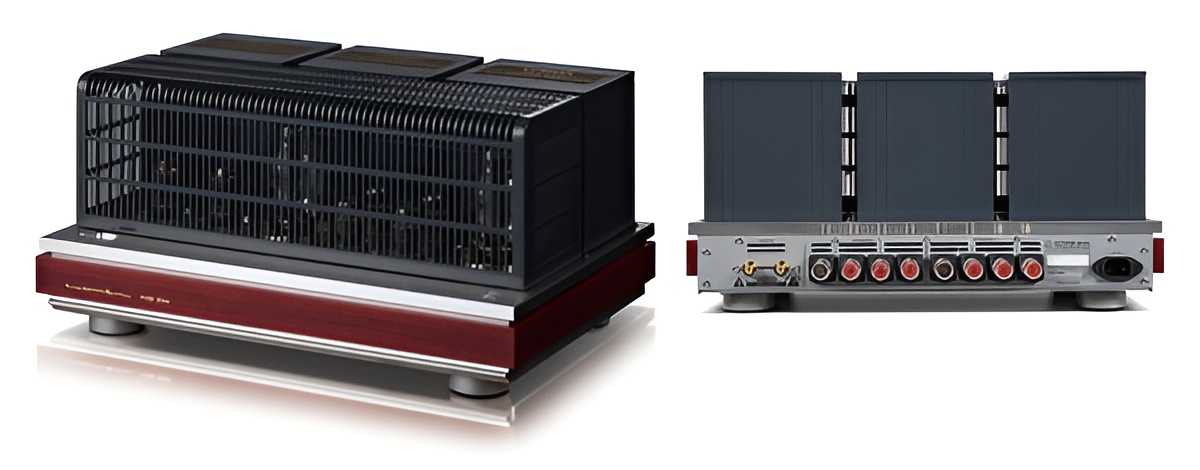
One look at the MQ-300, and it’s hard not to smile. The design is instantly familiar to anyone who remembers Luxman’s iconic tube amplifiers of the late 1970s and 1980s—most notably the legendary MB-300 monoblocks. That amplifier helped define what many listeners still think of as “the 300B sound”: open, delicate, harmonically rich, and deeply human.
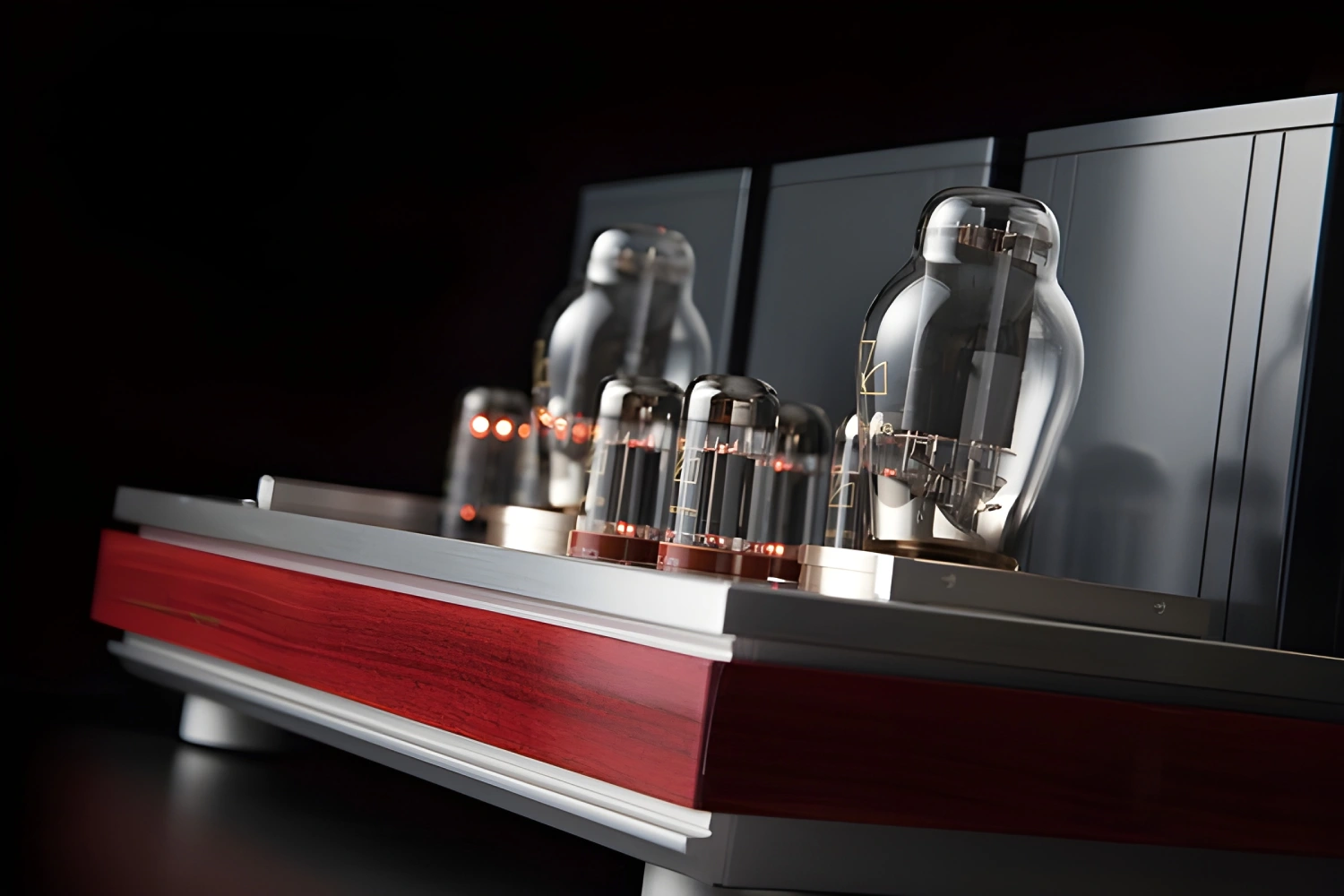
The MQ-300 faithfully revives that visual language. The natural walnut frame, the proportions, the exposed transformers, even the typography and detailing on the output transformer plate all echo classic Luxman designs. It doesn’t feel like a retro pastiche—it feels like a continuation, as if this amplifier could have existed back then, just waiting for modern refinement.
The 300B, done the Luxman way
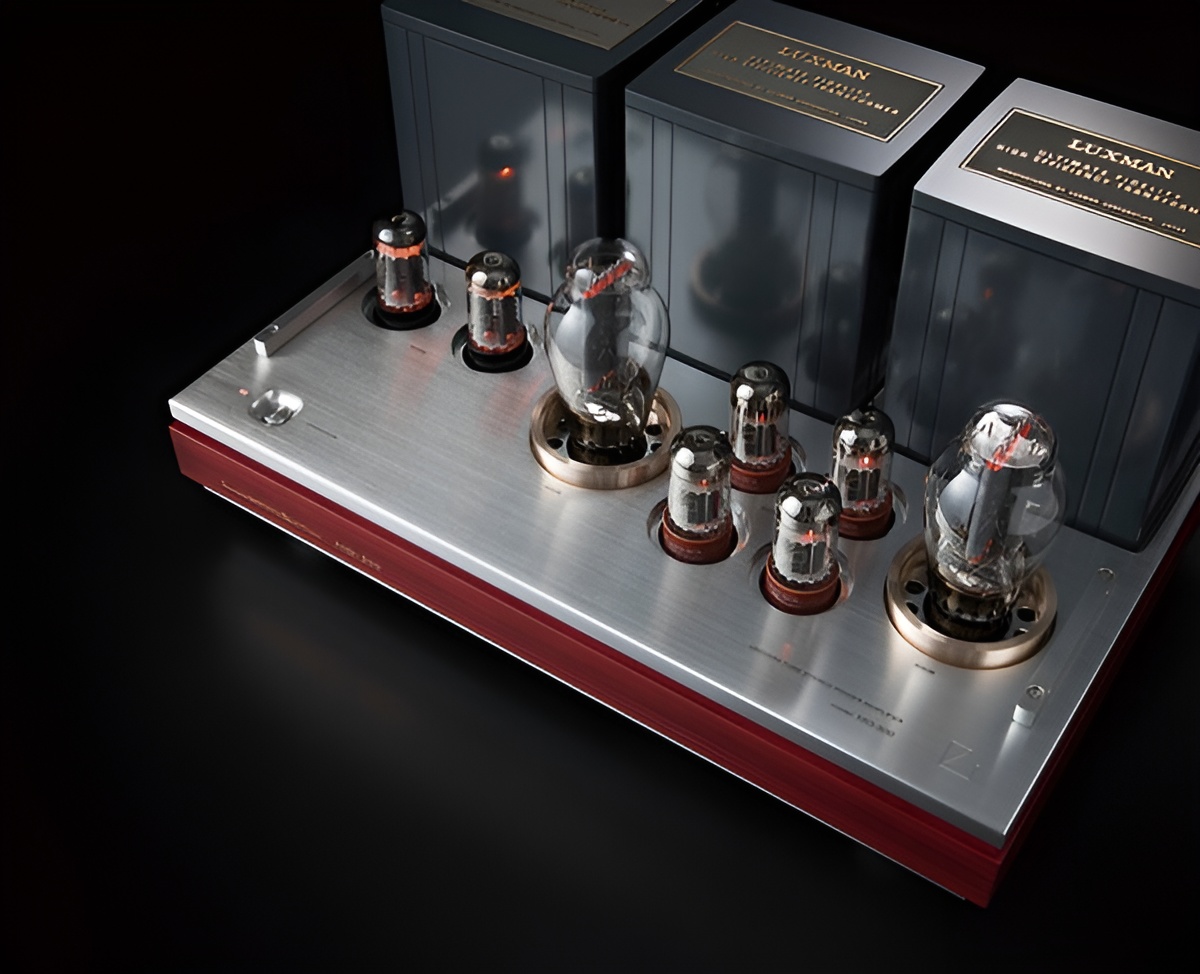
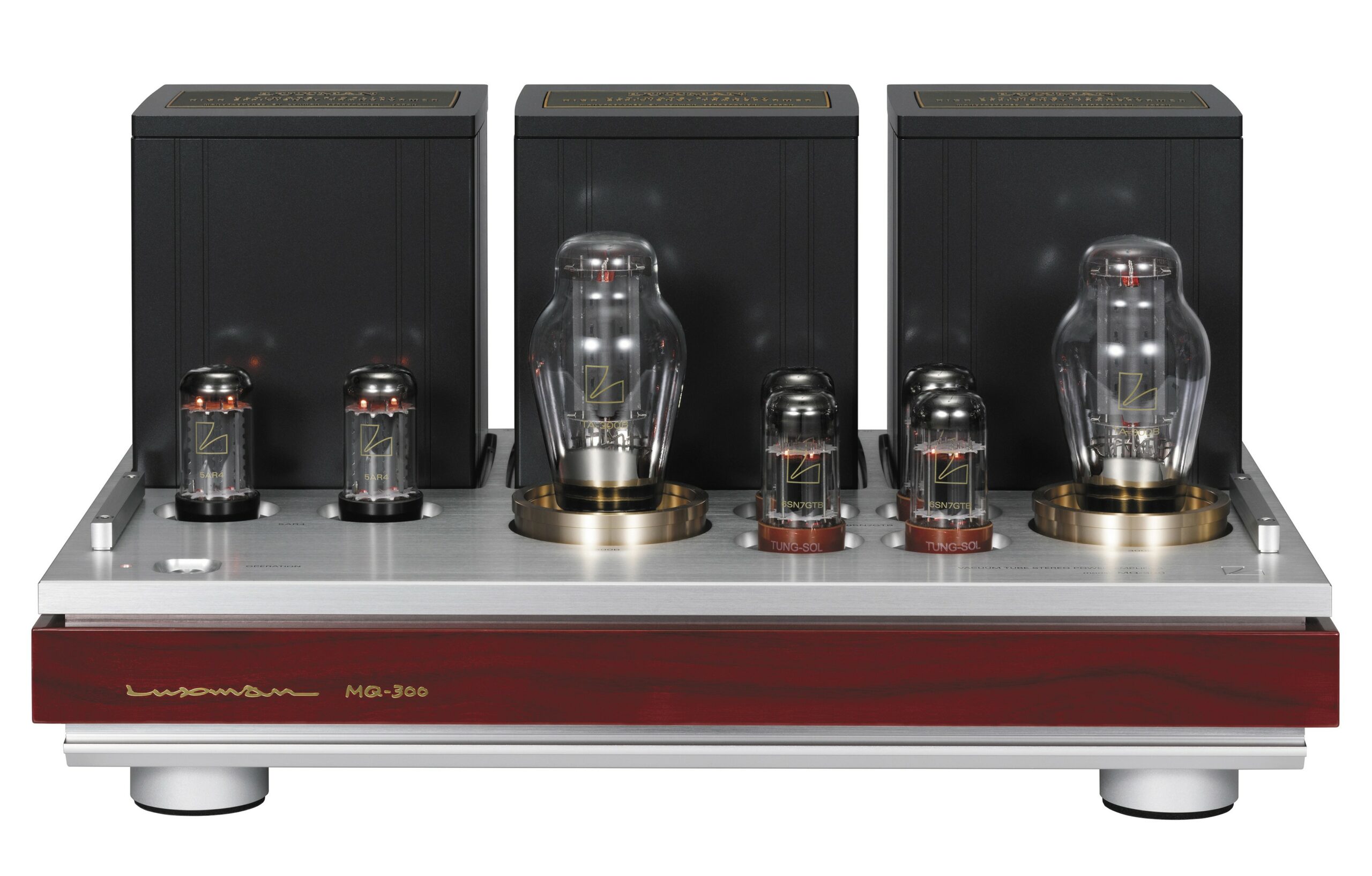
At the heart of the MQ-300 is, of course, the 300B output tube—but Luxman takes a distinctly modern and premium approach. Rather than using vintage Western Electric tubes or a monoblock configuration, the MQ-300 is a stereo single-ended amplifier built around the highly regarded Takatsuki Electric TA-300B, one of the most respected contemporary 300B tubes available today.
The supporting cast is equally serious:
-
four Tung-Sol 6SN7GTB tubes in the driver stage
-
two Sovtek 5AR4 rectifier tubes
Output is rated at 8 watts per channel, which on paper may sound modest, but in practice is exactly what 300B enthusiasts expect. Paired with high-sensitivity loudspeakers, the MQ-300 delivers that unmistakable triode magic—effortless flow, dimensionality, and tonal beauty.
Luxman’s engineering choices underline its philosophy. The amplifier uses a zero-feedback single-ended circuit, cathode biasing, and a DC heater ignition system, all designed to extract the purest possible harmonic structure from the 300B. This is not about brute force or measurements—it’s about preserving musical integrity.
A classic sound
What’s striking about the MQ-300 is how little it feels like a museum piece once you start listening. Yes, it delivers the seductive midrange and vocal intimacy that made the 300B famous, but the presentation is cleaner, more transparent, and more controlled than many vintage-inspired tube amplifiers.
Vocals float freely, with a sense of presence that feels almost tangible. Acoustic instruments bloom naturally, and chamber music gains an uncanny sense of space and air. There’s warmth, certainly—but not excess softness. Instead, the MQ-300 offers clarity and refinement that place it firmly in the modern high-end category.
This is Luxman’s long-standing sound philosophy in action: emotional, harmonically rich, yet disciplined. If you’ve ever wondered why audiophiles speak so reverently about “purity of sound,” the MQ-300 explains it better than words ever could.
A century of experience, distilled into eight watts
The MQ-300 isn’t designed to impress everyone. It’s not about power, versatility, or universal compatibility. Instead, it’s a deeply focused amplifier, built for listeners who value musical intimacy and emotional connection above all else.
In that sense, it feels like a distillation of Luxman’s century-long journey—proof that even in 2026, the company knows exactly why the 300B still matters.
Specifications
-
Output tubes: TA-300B ×2
-
Driver tubes: 6SN7GTB ×4
-
Rectifier tubes: 5AR4 ×2
-
Output power: 8 W (stereo)
-
Input impedance: 240 kΩ
-
Input sensitivity: 490 mV
-
Output impedance: 4 Ω / 8 Ω / 16 Ω
-
THD: 1%
-
Signal-to-noise ratio: 105 dB
-
Dimensions (W×H×D): 46 × 23.7 × 34 cm
-
Weight: 29 kg


Join the discussion
Share your thoughts, listening impressions or product experience.