
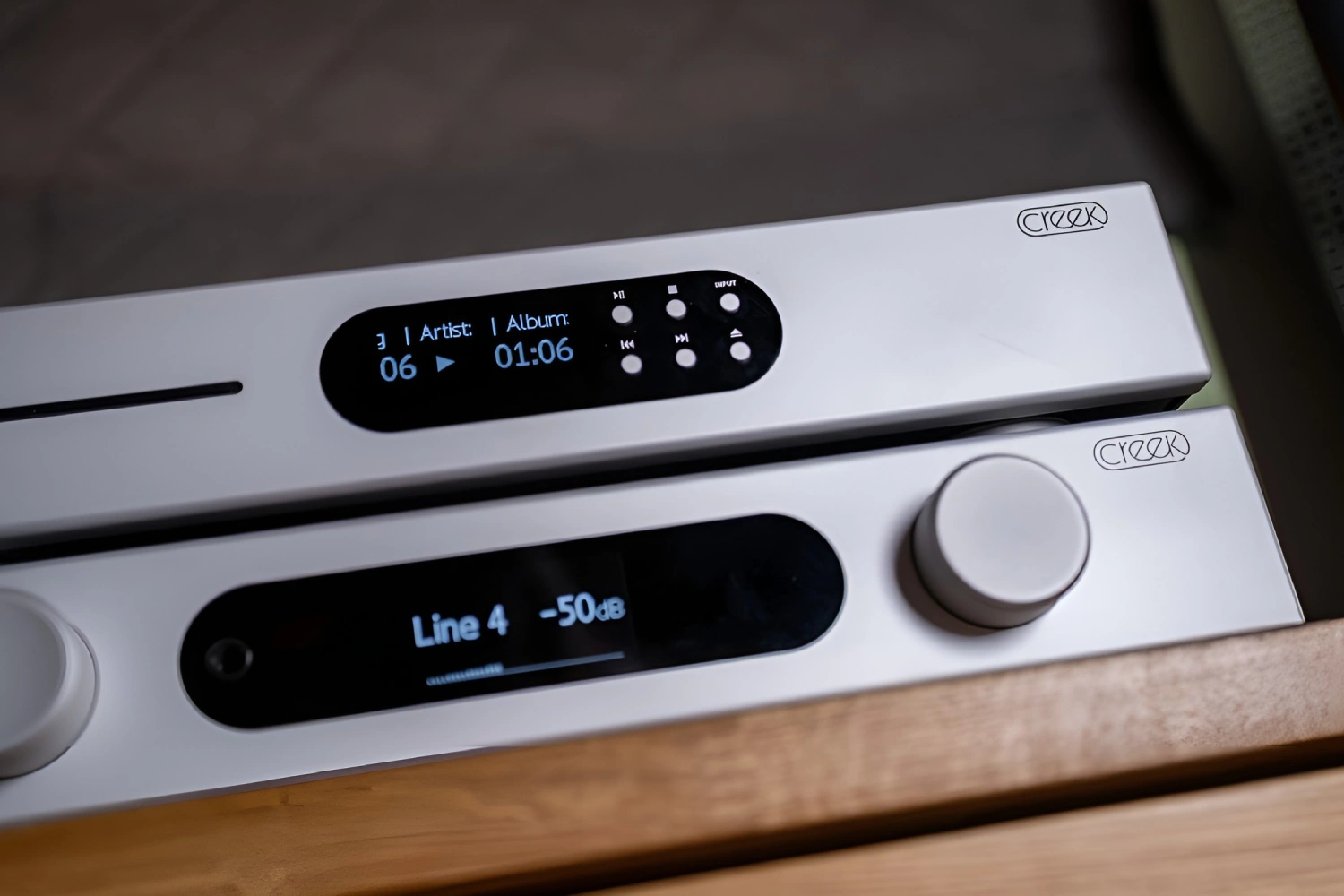
Buying a better CD player sounds straightforward until you look at what the player is expected to do. Is it merely reading discs and sending a digital signal to an existing DAC, or will it become the system’s main digital source? Do you need SACD playback, a headphone amplifier, USB input, streaming access or volume control? And will your amplifier actually benefit from balanced outputs?
Those questions matter more than the price of the player. A well-matched, uncomplicated CD player can be a worthwhile upgrade, while an expensive model with features you never use may change very little. The sensible starting point is to identify the current bottleneck in your system, then choose the player architecture that addresses it.
Should you upgrade this first?
Before replacing a CD player, establish what is limiting your listening. If your current player is reliable, reads your discs without skipping and is connected to a capable amplifier through a sensible analogue or digital path, the improvement from changing it may be smaller than expected. Loudspeaker positioning, room acoustics, amplifier suitability and a poor connection choice can all have a larger audible effect.
There are, however, clear reasons to consider a CD player upgrade:
- Your present player has a noisy or unreliable transport, difficulty reading CD-Rs, or mechanical problems.
- You are using an older player as both transport and DAC, but want better connectivity or more flexible digital playback.
- You have added a separate DAC or amplifier and need a cleaner, more appropriate digital or analogue interface.
- You want to move from CD-only playback to SACD, USB audio, network playback or headphone listening.
- Your current component lacks the output options needed by the rest of the system.
It is also worth checking the simple things first. Clean the disc, inspect the cable, confirm that the amplifier is receiving the intended input and compare the player’s analogue and digital outputs at sensible, matched volume levels. If the problem is hum, intermittent sound or obvious distortion, troubleshooting may be more productive than shopping.
The most important distinction is between a transport upgrade and a complete source upgrade. A transport reads the disc and sends digital data to an external DAC. A complete player includes its own DAC and analogue output stage. Some products can do both. The Taga Harmony TCD-70T, for example, combines an ESS SABRE ES9018 converter with RCA, XLR, optical and coaxial connections. That makes it a candidate for direct connection to an amplifier, while also leaving the option of using an external DAC through its digital outputs.
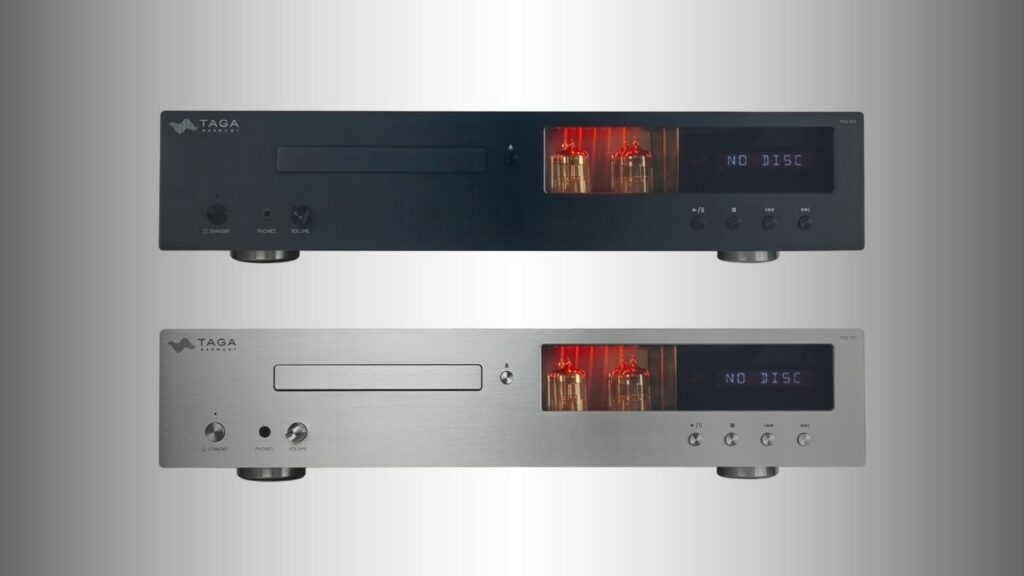
That flexibility does not automatically make it the right upgrade. If your existing external DAC is clearly the strongest part of the digital chain, you may gain more by choosing a transport-focused player and keeping the DAC. If you need a single-box source with a tube-equipped analogue output, the TCD-70T represents a different kind of system decision. Its two 6N2 tubes are used for the unbalanced RCA output, while the player also provides balanced XLR output. The important point is to decide which output you will actually use, rather than paying for a feature that remains disconnected.
What to match
Matching a CD player to a system is mainly about signal paths, connection standards and functions. It is less about matching brands or buying components at identical prices.
Analogue or digital connection? If you connect the player’s RCA or XLR outputs directly to an integrated amplifier, the player’s DAC and analogue output stage become central to the result. If you use optical or coaxial digital output into an external DAC, that DAC does most of the digital-to-analogue conversion work. In the latter arrangement, the CD player’s transport, digital output and usability matter more than its internal analogue circuitry.
Do not assume that balanced XLR automatically sounds better. It can be useful where the amplifier has proper balanced inputs, particularly when cable runs are long or the system is susceptible to ground-related noise. But a short, well-made RCA connection is perfectly appropriate for many domestic systems. Check the amplifier’s input type and the player’s output level before choosing.
Output level and volume control. A conventional source normally feeds a line-level input on an integrated amplifier or preamplifier. A player with a variable output can sometimes feed a power amplifier or active speakers directly, but this requires careful confirmation of the output design, available control range and safe operating procedure. The Creek Voyage CD is unusually flexible here: its rear-panel switch can activate a built-in volume control, allowing it to function as a digital preamplifier and connect directly to a power amplifier or active speakers. That is useful only if your system is built around that arrangement; otherwise, the volume control may be redundant.
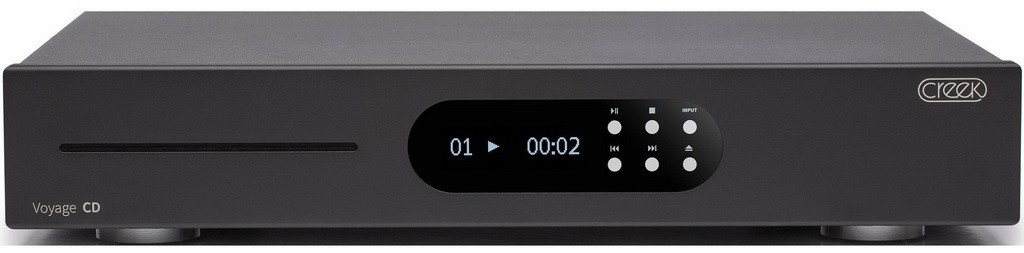
The Creek Voyage CD also accepts digital sources beyond discs. It has two coaxial S/PDIF inputs, two optical inputs and asynchronous USB, with support specified up to 384kHz PCM over USB and native DSD up to 22.4MHz. Its analogue outputs include unbalanced RCA and fully balanced XLR. This makes it more than a disc spinner: it can be the centre of a broader digital system. If you only own CDs and already have a separate DAC, much of that capability may not justify changing your current source.
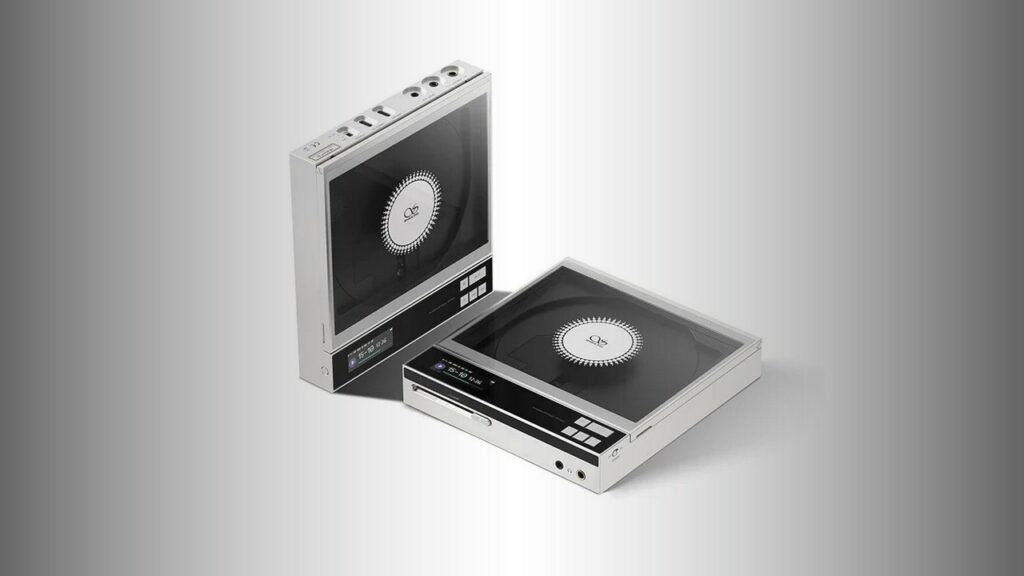
Headphones. A headphone output can be a valuable reason to upgrade, but its presence says little about how well it will suit a particular pair of headphones. Check the headphone impedance, sensitivity and the manufacturer’s power figures where available. The Taga Harmony TCD-70T specifies a headphone output with adjustable volume, while the portable Shanling EC Zero offers both 3.5mm and 4.4mm headphone connections, with higher output available from its balanced socket and when using external power. Those are very different use cases: the Taga is a full-size home component, whereas the Shanling is designed around portable listening and battery operation.
Disc formats. Make a list of the discs you actually own. A CD-only player is not a downgrade if your collection consists entirely of standard Compact Discs, but it is the wrong purchase if you have built an SACD library. The Pro-Ject CD Box RS2 Tube is designed exclusively for Red Book CDs and does not play other optical discs. By contrast, the Mark Levinson No. 5101 accepts SACD, CD-Audio, CD-R and CD-RW. It also supports stored audio files and network sources, so it addresses a broader library than a conventional CD player.
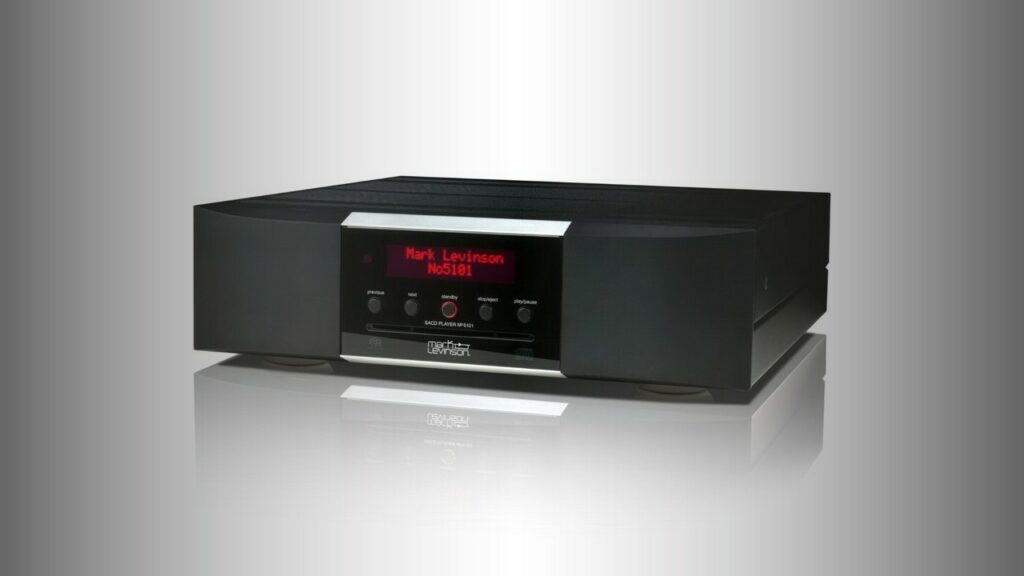
Digital inputs and future use. Decide whether the player is meant to serve discs only or become a wider digital hub. The Mark Levinson includes coaxial and optical digital inputs, USB playback, Ethernet and Wi-Fi, as well as DLNA and UPnP support. That feature set can make sense when you want one substantial source component to handle discs, local files and network playback. It is unnecessary complexity if the rest of your system already has a good streamer and your main requirement is reliable CD playback.
Physical layout. Top-loading mechanisms need clearance above the player and may be less convenient in a cabinet. The Pro-Ject CD Box RS2 Tube uses a top-loading aluminium cover with a magnetic clamp, while the Creek Voyage CD uses a slot-loading Stream Unlimited CD80 transport. Neither approach is inherently superior. Measure the shelf, consider access to the disc and make sure the player’s ventilation and controls will remain practical in daily use.
Where upgrades make the biggest difference
The most meaningful upgrade is usually the one that changes a limitation you can identify, not the one with the most elaborate specification sheet.
1. Moving from an ageing all-in-one source to a more capable digital front end. If your current player has limited outputs or an outdated, unreliable mechanism, a modern player can improve convenience and system integration even before you consider sound. The Creek Voyage CD adds multiple digital inputs, USB capability, volume control and balanced analogue output. The Mark Levinson No. 5101 adds SACD and network functionality. These are practical changes that can alter how the system is used.
2. Choosing the right analogue stage for the amplifier. If you connect directly to an amplifier, the player’s output circuit matters. The Pro-Ject CD Box RS2 Tube uses a fully balanced tube amplifier with separate XLR and RCA output stages. Its digital outputs remain available for an external DAC, so it can support either approach. The Taga also combines tube-equipped RCA output with balanced XLR and digital connections. These examples show why “tube CD player” is not a complete system recommendation: you still need to decide whether the tube-equipped analogue output, balanced connection or external DAC is the intended route.
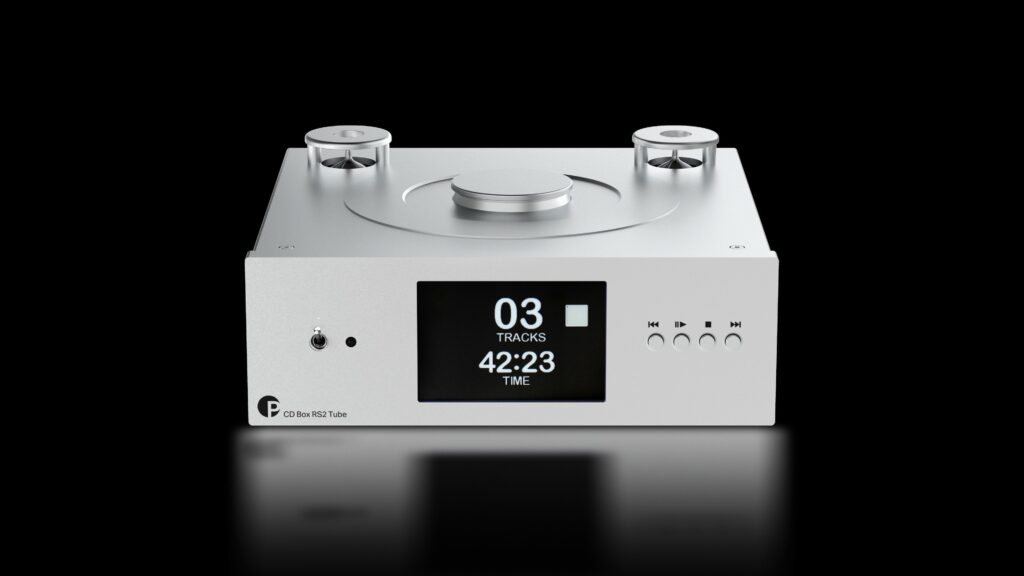
The Pro-Ject CD Box RS2 Tube is particularly focused on Red Book CD playback. Its SUOS DM-3381 drive, BlueTiger servo system, built-in Texas Instruments PCM1796 DAC and external power supply are part of a design that prioritises dedicated disc playback. Pro-Ject also describes an optional Power Box RS2 linear power supply upgrade. That may appeal to an owner who wants to refine an existing CD-centred system, but it is not a reason for every listener to replace a functioning player.
3. Adding a serious headphone or portable option. The Shanling EC Zero can play CDs, operate as a USB DAC and transmit Bluetooth using aptX Adaptive, aptX or SBC. It has a 5500mAh battery rated for up to 10 hours of playtime and can rip CDs to WAV on FAT32 storage. Its compact 158 x 150 x 28mm enclosure and 575g weight make it a fundamentally different proposition from a full-width hi-fi component. Choose it when mobility, headphone use, ripping or USB DAC duties are the reason for upgrading—not simply because its digital specifications are higher.
4. Upgrading the transport while preserving a trusted DAC. If your DAC already gives you the connectivity and sound you want, a player with a stable transport and suitable digital output may be the logical move. Connect by coaxial or optical S/PDIF, select the correct input on the DAC and leave the player’s analogue output unused. Avoid paying extra for a tube output stage, headphone circuit or preamplifier section that your system cannot use.
5. Consolidating multiple boxes. A player with a capable DAC, digital inputs and volume control can simplify a system. The Creek Voyage CD can accept several digital sources and, with its volume function enabled, feed a power amplifier or active speakers. The Mark Levinson No. 5101 can combine disc playback, file playback, network access and standalone DAC duties. Consolidation can be a genuine upgrade when it reduces clutter without removing a function you value.
When not to upgrade
Keeping your current CD player is the correct decision when it already performs its main job and the proposed replacement does not solve a real problem. If you listen only to standard CDs, use a separate DAC that you prefer and have no need for balanced outputs, a tube stage, SACD or network functions, a new player may offer little practical benefit.
Do not upgrade because a specification is larger in isolation. Higher supported sample rates are relevant for USB or file playback, but a CD transport is still reading standard CD data. A large transformer, a premium DAC chip or a balanced output can be part of a well-designed product, but none removes the need to match the component to the rest of the signal chain.
Likewise, do not buy a player with a variable output as a shortcut to removing your preamplifier unless the entire system has been checked for level control, input sensitivity and safe operation. A conventional integrated amplifier may already provide the most convenient and flexible volume control.
Finally, consider the collection itself. If most of your listening has moved to streaming, replacing a CD player may not be the best use of the budget. If you still value physical discs but want access to files and online music, a broader digital component such as the Creek Voyage CD or Mark Levinson No. 5101 may make more sense than a narrowly focused transport. If you want portable disc playback and ripping, the Shanling EC Zero addresses that goal more directly.
A sensible upgrade checklist
- Write down the formats you need: CD, CD-R, SACD, stored files or network audio.
- Decide whether the player will use its own DAC or feed an external one.
- Check the amplifier’s available inputs and whether RCA, XLR, optical or coaxial is appropriate.
- Identify whether headphone listening, direct connection to a power amplifier or active speakers is important.
- Measure the available shelf space, especially for a top-loading player.
- Compare usability: display, remote control, loading method, volume operation and access to digital inputs.
- Only then consider specialist features such as tubes, an upgraded power supply or balanced circuitry.
The best CD player upgrade is therefore not necessarily the most ambitious model. It is the one that removes the actual restriction in your system while preserving the parts that already work well. For a straightforward home CD source, a flexible player such as the Taga Harmony TCD-70T may be enough. For a dedicated CD-focused design, the Pro-Ject offers a more specialised route. Creek and Mark Levinson make sense when digital sources need to be consolidated, while Shanling is the more relevant answer for portable, headphone-led listening. If none of those problems applies to your system, keep the player you have and spend the money where the bottleneck really is.



Sound Off
0Join the discussion if you have something to add.