
Amplifiers now cover a remarkably broad range of roles.
A single chassis may provide straightforward power amplification, combine tubes with modern signal processing, manage streaming and room correction, or anchor a television-based 2.1 system.
Traditional designs remain relevant too, particularly for listeners who value dedicated preamplifiers, low-powered tube circuits or installation-specific hardware. This selection highlights products and articles with clearly differentiated purposes. It includes ambitious monoblocks, flexible integrated amplifiers, a feature-rich tube preamplifier and a compact four-channel installation model. A premium power-amplifier overview and a practical setup guide add useful context for choosing and configuring the hardware. One entry, the Astell&Kern SP3000, is a portable player rather than a speaker amplifier. It earns a qualified place here because its separate balanced and unbalanced headphone-amplifier paths illustrate how amplification also shapes personal-audio systems. The distinction is made explicit so that speaker-system shoppers can focus on the more relevant entries.

1. Audio Research Reference 330M: Mono power amplifier with tubes
The Audio Research Reference 330M monoblock, available in black or aluminum finishes.
The Reference 330M is Audio Research’s 330-watt monoblock, developed from ideas associated with several earlier Reference designs.
Its input stage uses an ECC83 tube for voltage amplification, followed by specialized bipolar buffers intended to increase input-stage headroom while retaining the tube’s operating qualities.
A 6H30 differential stage follows, drawing on circuitry used in the company’s 610T and 250 models. This is the most specialized proposition in the selection: a high-output mono power amplifier for a system built around separate components. Black and aluminum finishes are offered, giving buyers a choice beyond the underlying circuit architecture.
Best for: Reference systems requiring high-output tube monoblocks
- 330-watt rated output
- ECC83 and 6H30 tube stages
- Reference-derived circuit design
- Black or aluminum finishes
Verdict: The Reference 330M combines substantial rated output with a tube-led circuit derived from Audio Research’s established Reference designs.

2. McIntosh C2800: Roon Tested Vacuum Tube Preamplifier
The McIntosh C2800 tube preamplifier with illuminated branding and extensive rear-panel connectivity.
McIntosh’s C2800 is a four-tube preamplifier designed to accommodate unusually complex systems.
Its 16 inputs span analog, phono and digital sources, while the integrated DAC supports files up to 24-bit/192 kHz and DSD512.
Three pairs each of balanced and unbalanced outputs, a dedicated subwoofer output and support for bi-amping broaden its system-building options. Practical features include electronically controlled bass and treble adjustment in 1 dB steps, an HXD-equipped headphone connection and the returning processor loop for an external equalizer or signal processor. The C2800 is also Roon Tested and can be controlled through the McIntosh Connect app.
Best for: Multi-source systems needing flexible analog and digital control
- 16 analog, phono and digital inputs
- Four-tube preamplifier circuit
- DSD512 and 24-bit/192 kHz support
- Processor loop and multiple output pairs
Verdict: The C2800 is a comprehensively equipped tube preamplifier for systems that need extensive source, output and signal-processing flexibility.
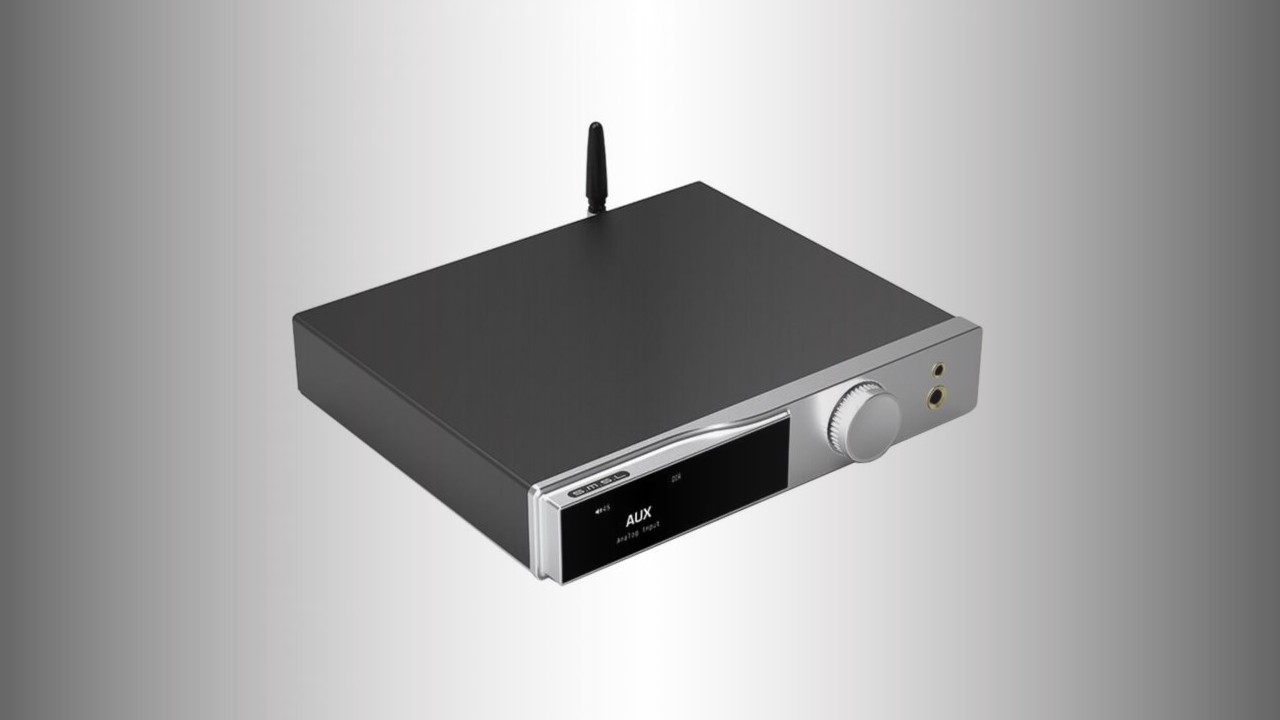
3. SMSL AO300: Versatile Class D amplifier with Bluetooth
The SMSL AO300 combines Class D speaker amplification with a DAC, Bluetooth receiver and two front-panel headphone outputs.
The compact SMSL AO300 combines a Class D speaker amplifier, DAC and headphone amplifier.
Its MA5332MS amplification stage is rated at up to 165 watts per channel into 4 ohms or 85 watts per channel into 8 ohms, while the CS43131 DAC and XU316 XMOS USB interface support PCM up to 32-bit/768 kHz and DSD256.
HDMI ARC makes the AO300 suitable for television audio, and its subwoofer output enables a 2.1-channel arrangement. Bluetooth support includes aptX HD and LDAC, while balanced 4.4 mm and 6.35 mm headphone outputs serve personal listening. Eight equalizer settings and five filters provide additional adjustment.
Best for: Compact desktop, headphone and television-based 2.1 systems
- Speaker, DAC and headphone functions
- HDMI ARC and subwoofer output
- aptX HD and LDAC Bluetooth support
- PCM 32-bit/768 kHz and DSD256 decoding
Verdict: The AO300 packs speaker amplification, digital conversion, headphone outputs and television-friendly connectivity into one compact component.
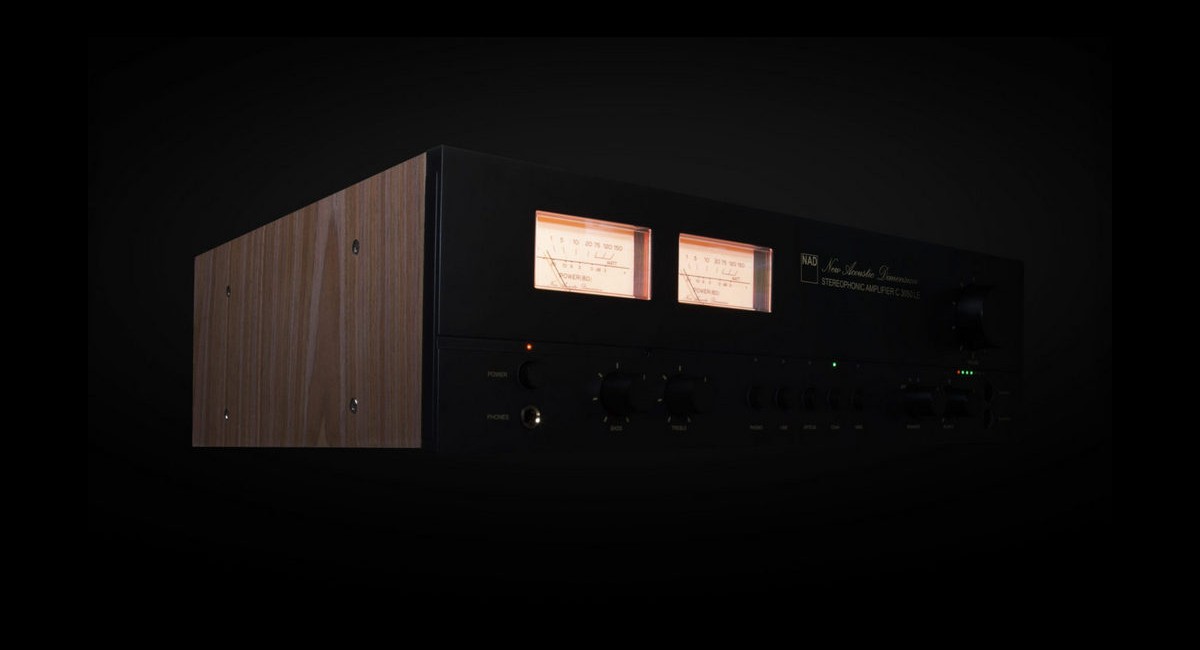
4. NAD C 3050LE: Integrated amplifier in a old school design
The NAD C 3050LE features backlit meters, physical controls and real-wood veneer alongside modern digital functions.
The NAD C 3050LE pairs a deliberately retro exterior with a modern integrated-amplifier platform.
Large backlit meters, push-button switches, balance and tone controls, and a real-wood veneer recall earlier NAD designs, while HybridDigital UcD amplification provides a stated 100 watts per channel.
Its BluOS MDC 2.0 module adds Tidal Connect, Spotify Connect, Apple AirPlay 2, Roon Ready support, two-way Bluetooth and Dirac Live room correction. A 32-bit/384 kHz DAC is accessible through HDMI eARC, coaxial and optical inputs. An MM phono stage, subwoofer output, preamp connections and dedicated headphone amplifier round out the feature set.
Best for: Listeners seeking vintage styling with modern streaming
- 100 watts per channel
- BluOS streaming and Roon Ready support
- Dirac Live room correction
- HDMI eARC and MM phono input
Verdict: The C 3050LE successfully places streaming, room correction and broad connectivity behind a design rooted in NAD’s past.

5. Top-tier high-performance amplifiers between $6,000 and $10,000
The guide spans contrasting premium power-amplifier designs, including the tube-based Manley Mahi and solid-state Ayre VX-8.
This overview compares premium power amplifiers rather than recommending a single model.
The supplied section begins with the Manley Laboratories Mahi, a switchable tube design rated from 14 to 41 watts depending on operating mode and speaker impedance.
Importantly, it also notes that the Mahi is best suited to a 6-ohm load and is not recommended for speakers that fall significantly below 4 ohms. The Ayre VX-8 provides a contrasting solid-state approach, using JFET amplification, linear power regulation without feedback and a Double Diamond output stage. It is rated at 100 watts into 8 ohms. The article also introduces the PS Audio Stellar M1200, showing the range of architectures available within the guide’s stated price bracket.
Best for: Shoppers comparing premium power-amplifier architectures
- Tube and solid-state designs represented
- Speaker-load guidance for the Manley Mahi
- Circuit details for the Ayre VX-8
- Individual prices supplied in the source
Verdict: This overview is most useful as a starting point for comparing amplifier topology, output and speaker compatibility within a premium budget.
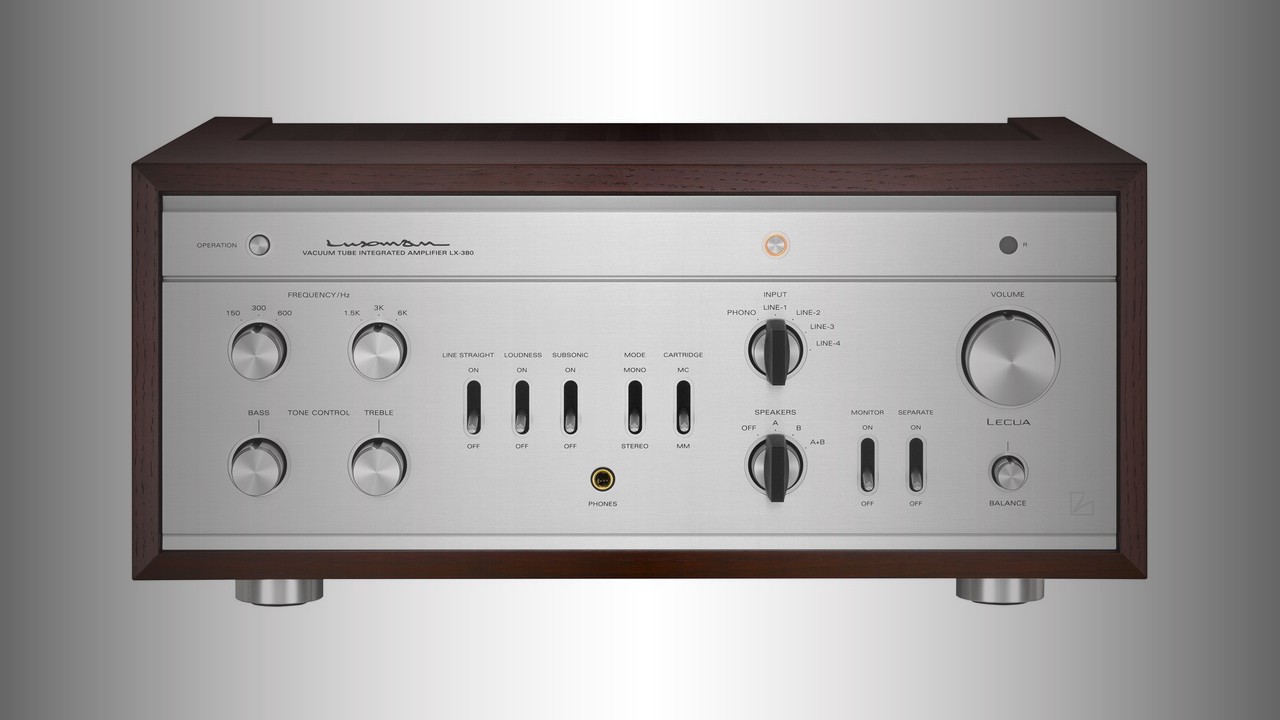
6. Luxman LX-380: Classic tube integrated amplifier
The Luxman LX-380 tube integrated amplifier combines an aluminum control panel with a wooden outer case.
The Luxman LX-380 is a traditional tube integrated amplifier built around a push-pull circuit.
Three ECC82 tubes serve the driver section, while four 6L6GC beam tetrodes form the output stage.
Rated power is 18 watts per channel into 8 ohms, making speaker matching an important consideration. Its analog facilities are unusually complete. The built-in phono stage supports both moving-magnet and moving-coil cartridges, with an infrasonic filter available to reduce low-frequency rumble. Luxman’s electronically controlled LECUA attenuator provides stepped volume adjustment, while tone, balance and loudness controls offer further tailoring. A front-panel headphone jack, aluminum fascia and wooden enclosure complete the classic presentation.
Best for: Vinyl-focused systems paired with suitable speakers
- ECC82 and 6L6GC tube complement
- MM and MC phono stage
- LECUA stepped volume control
- Tone, balance and loudness adjustment
Verdict: The LX-380 combines an 18-watt tube circuit with extensive phono, volume and tonal controls in a distinctly traditional enclosure.
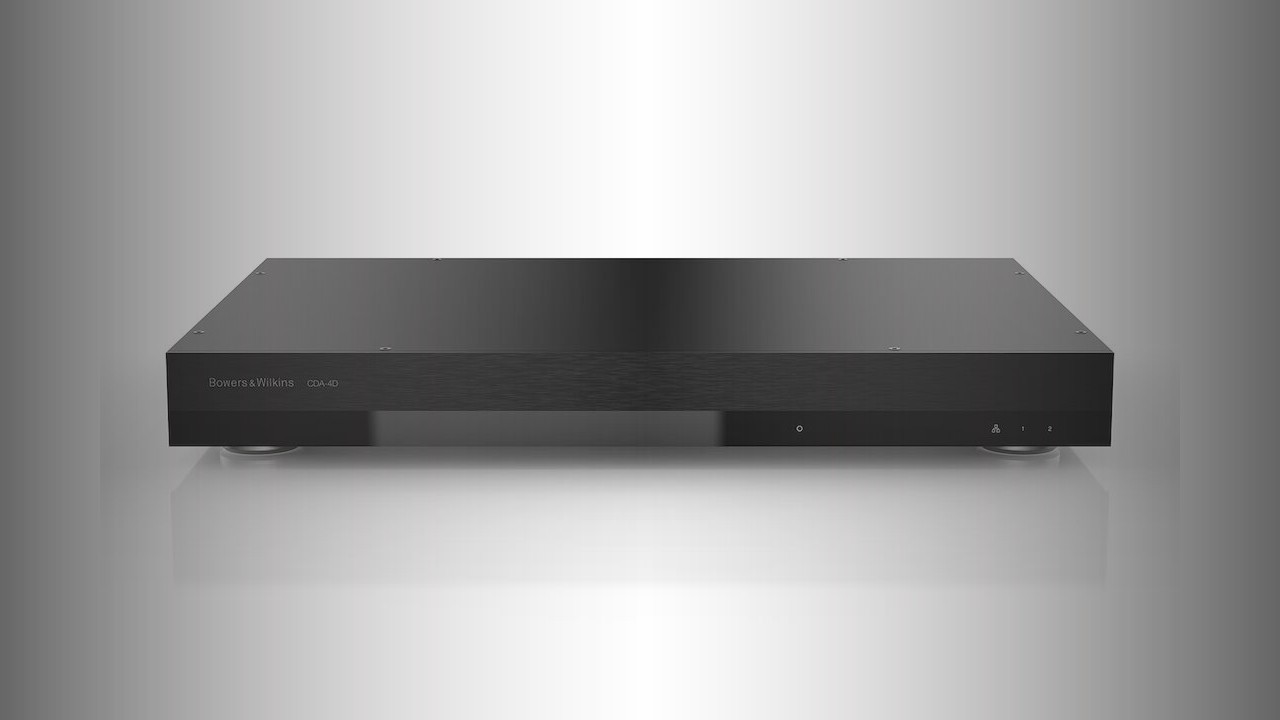
7. Bowers & Wilkins CDA-4D: Compact and powerful 4-channel power amplifier
The compact Bowers & Wilkins CDA-4D provides four ICEpower amplification channels for installed and multi-zone audio.
The CDA-4D is a compact four-channel power amplifier intended for built-in speakers, multi-zone systems and compatible passive subwoofers.
ICEpower amplification supplies a stated 125 watts to each of its four channels, allowing it to operate two stereo speaker pairs.
Channels can be bridged for up to 250 watts into 8 ohms, enabling configurations such as two 250-watt channels or two 125-watt channels alongside one 250-watt channel. Integrated digital signal processing and a web interface support configuration for custom installations, where flexibility and stable integration matter as much as the chassis size.
Best for: Custom installations and compact multi-zone systems
- Four channels rated at 125 watts each
- Bridgeable to 250 watts into 8 ohms
- Integrated digital signal processing
- Web-based configuration interface
Verdict: The CDA-4D is a purpose-built installation amplifier with flexible channel allocation, bridging and DSP-based configuration.
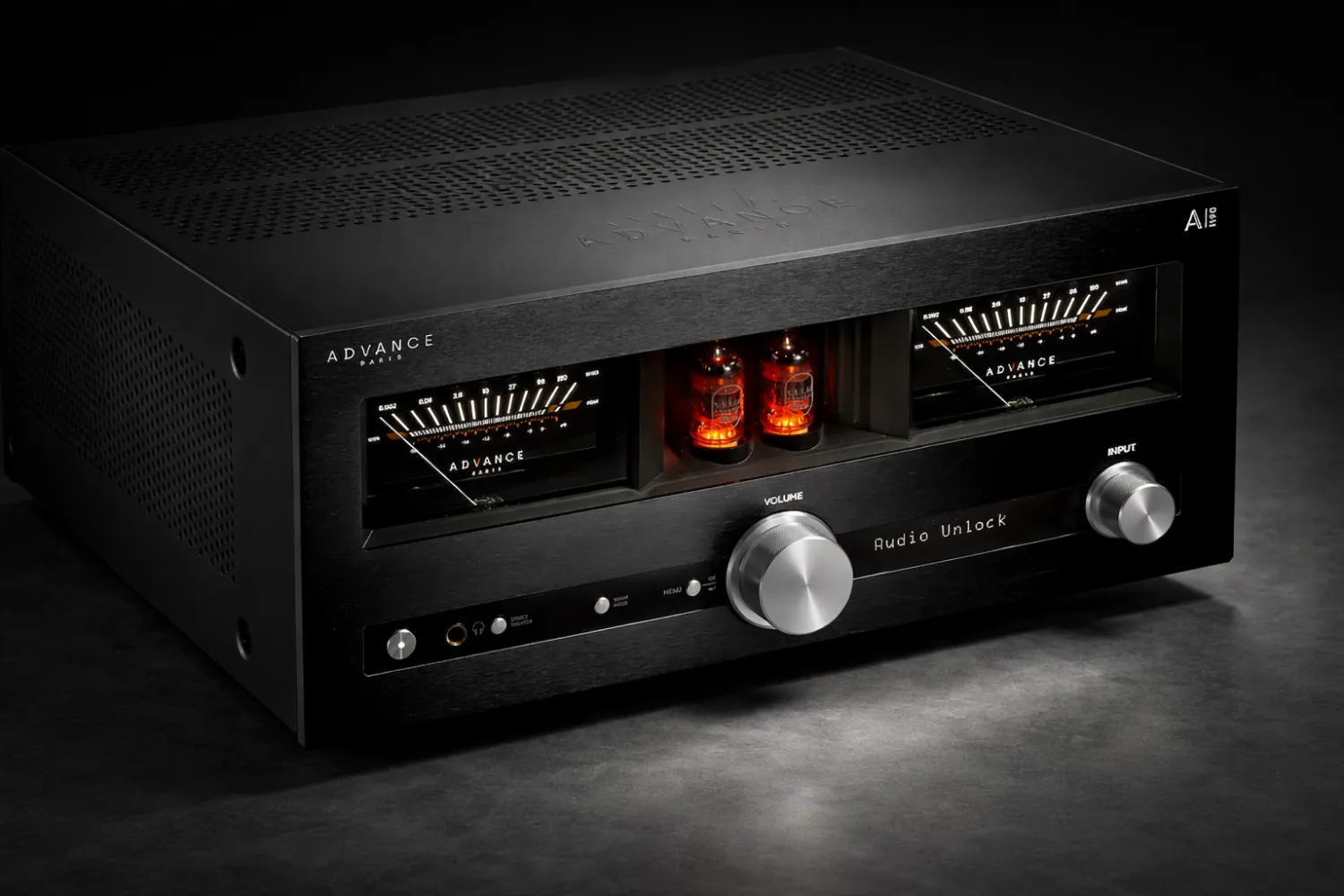
8. Advance Paris NOVA: The hybrid amplifier that does almost everything
Advance Paris Nova integrated amplifiers combine an ECC81 preamplifier stage, Class AB output section and four-channel DSP.
Advance Paris describes the Nova A-i130 and A-i190 as integrated system hubs rather than simple amplifiers.
Both use an ECC81 tube preamplifier feeding a Class AB output stage, combining tube and solid-state sections within the same hybrid architecture.
An ESS9017 DAC operating in Quad mode handles digital conversion, while a four-channel DSP provides equalization and room correction for the left and right speakers plus as many as two subwoofers. Support for 2.1 and 2.2 configurations includes crossover filtering and independent subwoofer control. The wider Nova range also introduces optional modules, giving the platform an expansion path beyond its initial analog and digital connections.
Best for: Integrated systems requiring serious subwoofer management
- ECC81 tube and Class AB hybrid design
- ESS9017 DAC in Quad mode
- Room correction and equalization
- Independent management for two subwoofers
Verdict: The Nova amplifiers stand out for combining hybrid amplification with DSP, room correction and unusually thorough 2.1 or 2.2 bass management.
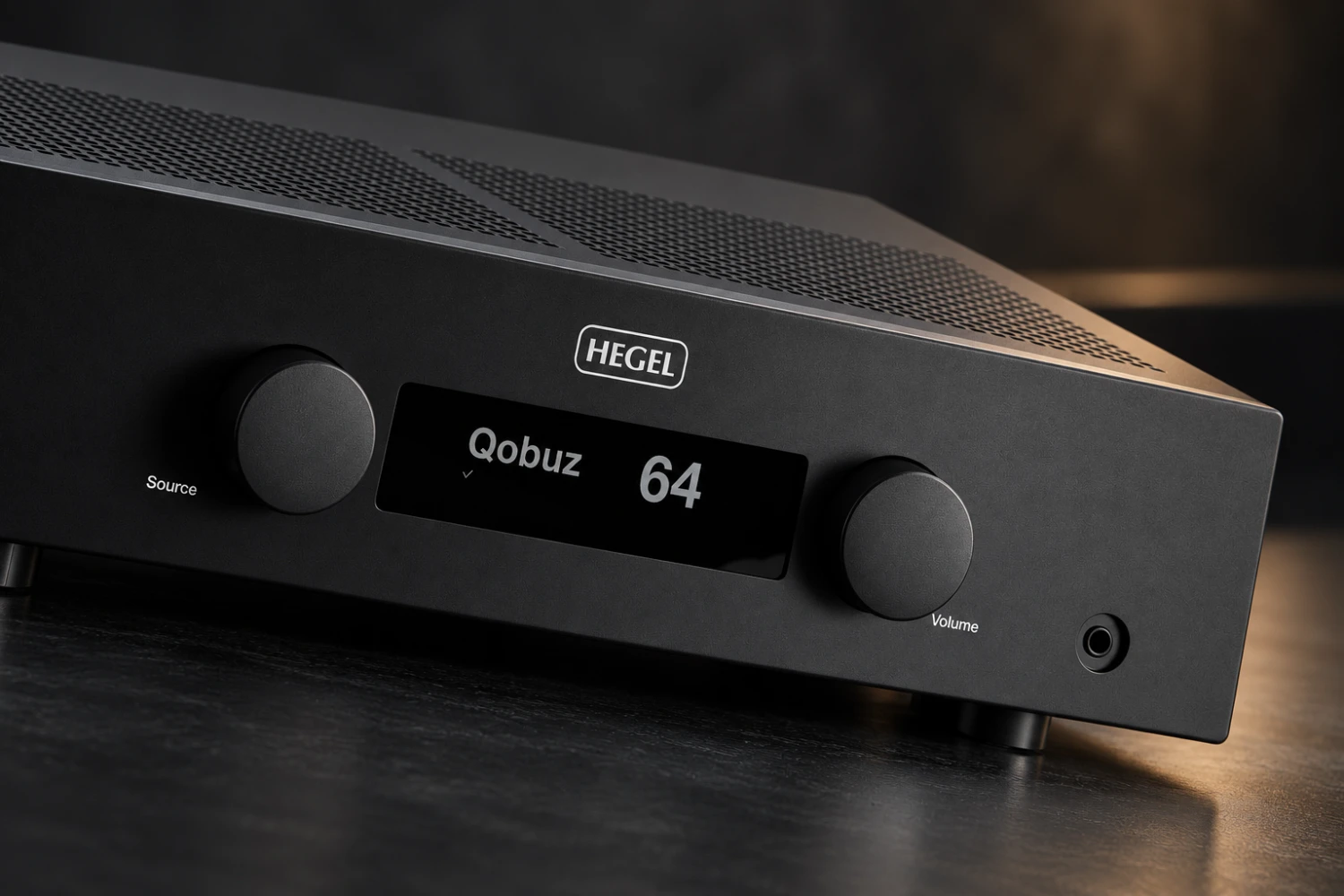
9. How to Get More from Your Hi-Fi Amplifier: 7 Practical Setup Tips
A system-planning approach helps identify the role of each source, converter and amplifier connection.
This is a setup guide rather than a product recommendation, but it addresses an essential part of amplifier ownership: making the component work correctly with the rest of the system.
Its advice begins with mapping the complete signal path so that duplicate controls, unnecessary conversions and troubleshooting problems are easier to identify.
The article also draws attention to cartridge loading, source-specific gain, network playback, parametric EQ, external DAC loops and home-cinema integration. Its central point is practical and well grounded: amplifier settings should reflect the connected speakers and sources rather than being left unchanged by default.
Best for: Amplifier owners refining an existing system
- Clear signal-path mapping advice
- Coverage of cartridge loading and source gain
- Guidance on EQ and external DAC loops
- Attention to home-cinema integration
Verdict: This guide offers a useful framework for configuring amplifier features without adding needless complexity to the signal path.

10. What is it like to listen to music on the Astell&Kern SP3000?
The Astell&Kern A&ultima SP3000 portable player provides separate balanced and unbalanced headphone signal paths.
The Astell&Kern A&ultima SP3000 is a portable digital audio player, not an amplifier for passive speakers.
Its relevance here is limited to headphone amplification: the design uses separate balanced and unbalanced output paths, each served by dedicated conversion and amplification hardware.
Four AK4499EX DACs and two AK4191 delta-sigma modulators separate digital processing from digital-to-analog conversion. Balanced and unbalanced headphone connections accommodate different cable formats, while the internal platform uses a Snapdragon 6125 processor and 8 GB of DDR4 memory. A&K states a signal-to-noise ratio of 130 dB for the player.
Best for: Portable listeners needing integrated headphone amplification
- Separate balanced and unbalanced signal paths
- Four AK4499EX DACs
- Balanced and unbalanced headphone outputs
- 8 GB of DDR4 memory
Verdict: The SP3000 is relevant to headphone systems, but it should not be mistaken for an alternative to the speaker amplifiers elsewhere in this guide.

Sound Off
0Join the discussion if you have something to add.