
An amplifier should suit the architecture of a system rather than simply offer the largest power figure.
This selection covers several distinct roles: integrated amplifiers for complete two-channel systems, power amplifiers for separate-component installations, a dedicated headphone amplifier, and a configurable multi-room model.
The differences extend beyond output power. Some models combine digital conversion, streaming or Bluetooth with amplification, while others deliberately maintain an analog-only signal path. Connections, supported speaker loads, room-correction facilities, preamplifier functions and physical size may therefore matter as much as headline wattage. Use these recommendations as a focused overview of the available approaches. Power ratings should always be considered alongside speaker impedance, room requirements and intended listening levels, while system builders should confirm that every required source and output is accommodated before choosing an amplifier.

1. Aune S17 Pro: 7.5 Watt Class A Headphone Amplifier
The Aune S17 Pro Class A headphone amplifier with its color status display and front-panel headphone connections.
The Aune S17 Pro is a discrete Class A headphone amplifier that can also operate as a preamplifier in a conventional hi-fi system.
It provides stereo RCA and balanced XLR inputs, balanced outputs and an R2R volume-control arrangement.
Its front display reports current, temperature, output type and volume. Aune specifies support for headphones with impedances from 32 to 600 ohms and output power reaching 7.5 watts. Two selectable current settings, 50mA and 100mA per JFET, add flexibility when matching different headphones. The source assessment characterizes its presentation as warm and detailed, making this a particularly versatile choice for a headphone-centered system.
Best for: Demanding headphones and headphone-led systems
- Up to 7.5 watts of headphone output
- Supports 32- to 600-ohm headphones
- RCA and balanced XLR inputs
- Can operate as a preamplifier
Verdict: A powerful Class A headphone amplifier with broad impedance support, balanced connectivity and useful preamplifier functionality.

2. Accuphase P-4600: New impressive power amplifier launched
The Accuphase P-4600 power amplifier, distinguished by its gold-colored front panel and twin analog power meters.
The Accuphase P-4600 is a substantial stereo power amplifier built around a large toroidal transformer and filter capacitors with a stated total capacity of 50,000 microfarads.
It delivers 150 watts into 8 ohms and 300 watts into 4 ohms, while bridge operation raises the quoted outputs to 600 and 900 watts respectively.
RCA and XLR inputs support unbalanced or balanced preamplifiers, and two sets of speaker terminals provide installation flexibility. The amplifier also includes bridge and dual-mono modes, with the latter allowing it to be used in a bi-amplified system. At 30 kilograms, it requires appropriately sturdy support and enough installation space.
Best for: High-power separate-component stereo systems
- 150 watts into 8 ohms and 300 watts into 4 ohms
- Bridge and dual-mono operating modes
- Balanced XLR and unbalanced RCA inputs
- Two sets of speaker terminals
Verdict: The P-4600 combines substantial stereo output with flexible operating modes for ambitious preamp-and-power-amplifier installations.

3. Merrill Audio ELEMENT 110: Powerful monoblock with a large touch screen
The Merrill Audio ELEMENT 110 monoblock featuring a seven-inch color touchscreen and rose-gold-plated front panel.
The Merrill Audio ELEMENT 110 is a monoblock power amplifier rated at 150 watts into 8 ohms, 300 watts into 4 ohms and 600 watts into 2 ohms.
It is also specified to handle impedance falling to 1 ohm, while its stated damping factor is 4,000.
Those figures make load tolerance and electrical control central to its design brief. A seven-inch capacitive color display provides mute, brightness and VU-meter functions. The chassis incorporates IsoAcoustics GAIA III isolation mounts, an XLR input and WBT rhodium-plated copper speaker terminals. Because it is a monoblock, a two-channel system requires one amplifier for each speaker.
Best for: Low-impedance speakers and monoblock systems
- Rated from 150 watts into 8 ohms to 600 watts into 2 ohms
- Specified to handle impedance down to 1 ohm
- Seven-inch capacitive display
- Integrated IsoAcoustics isolation mounts
Verdict: The ELEMENT 110 pairs substantial low-impedance output ratings with a modern display and carefully specified connection hardware.

4. Rega Elex-R: Powerful, high-end integrated amplifier
The slim, full-width Rega Elex-R integrated amplifier with its restrained source and volume controls.
The Rega Elex-R is a straightforward integrated amplifier with five-source selection and a conventional volume control.
Its design includes the same phono preamplifier board used in Rega’s higher-tier integrated model, making vinyl playback an important part of its appeal without requiring an external phono stage.
Its output section uses selected complementary pairs of Darlington transistors in a circuit intended to emulate aspects of Class A operation. The supplied listening assessment highlights the amplifier’s ability to form a vivid, tangible soundstage even at lower volume levels. It omits the recording-output source-selection panel and direct playback mode found on the related Elicit-R, so buyers should assess those functional differences before choosing it.
Best for: Vinyl-oriented, straightforward stereo systems
- Integrated phono preamplifier
- Five-source selection
- Greater power than the Rega Brio
- Convincing soundstage at lower listening levels
Verdict: The Elex-R concentrates on uncomplicated analog operation, a built-in phono stage and an engaging presentation at modest volume.
5. Creek Voyage i20: Cutting-edge integrated amplifier
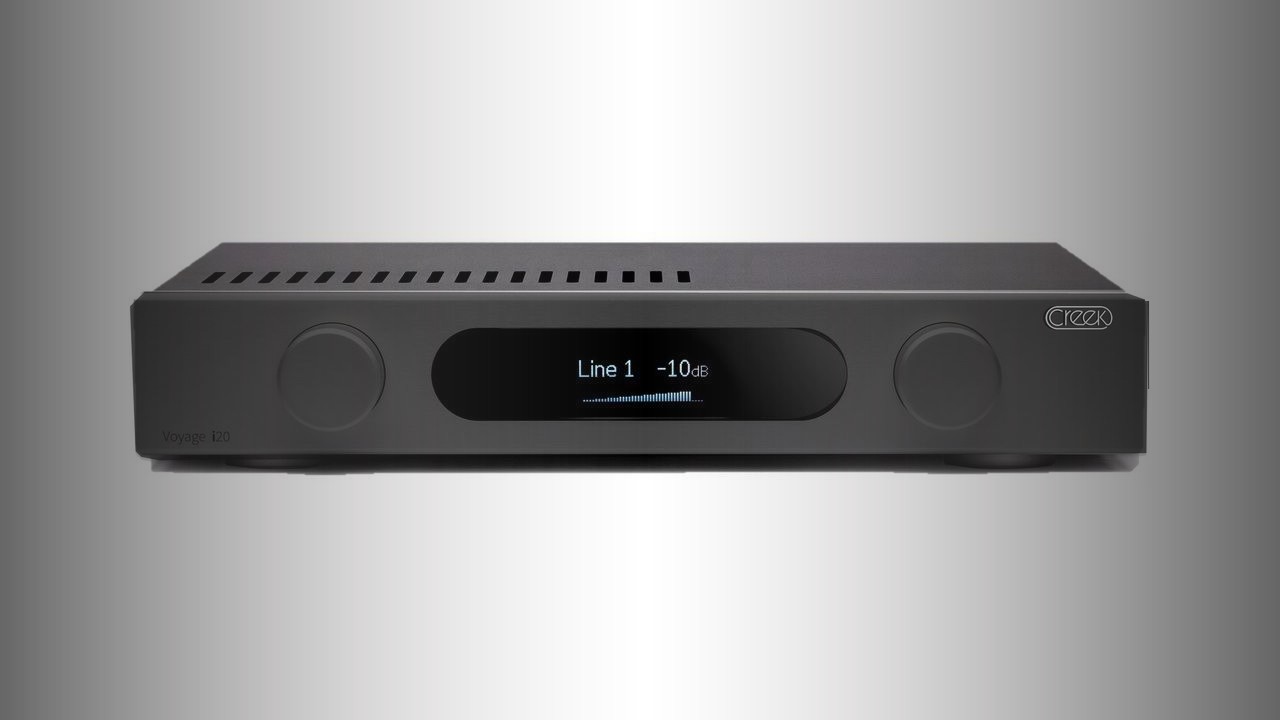
The Creek Voyage i20 integrated amplifier with its large OLED information display and compact chassis.
The Creek Voyage i20 brings an analog preamplifier, digital-to-analog converter and power amplifier together in a compact enclosure.
Its power section is connected to a regulated power supply, while a total of ten analog and digital inputs gives it the scope to serve as the control center of a source-rich stereo system.
A large front-panel OLED shows operating information, and settings can be accessed with the supplied remote or the controls on the amplifier itself. The combination of broad connectivity, integrated conversion and an interface designed for everyday use differentiates the Voyage i20 from more minimalist analog amplifiers.
Best for: Compact systems with numerous analog and digital sources
- Ten analog and digital inputs
- Integrated digital-to-analog converter
- Regulated power supply
- Large OLED display with remote operation
Verdict: The Voyage i20 is a versatile integrated design for listeners who want extensive source handling without assembling multiple components.

6. Aiyima A200: 2x180W power amplifier with Bluetooth 5.0
The compact Aiyima A200 Class D amplifier with its combined volume and source-selection control.
The Aiyima A200 is a compact Class D stereo amplifier based on the TPA3255 amplification chip.
Its specified output is 2 x 180 watts into 4 ohms at 1 percent THD+N, and it is intended for speakers with impedances from 4 to 8 ohms.
The enclosure measures 173 x 120 x 120 millimeters, making it considerably easier to place than a full-width component. Source options comprise stereo RCA, USB-B and Bluetooth 5.0. Supported Bluetooth formats include SBC, AAC, aptX and aptX HD. USB and Bluetooth share the same module, and Bluetooth takes priority if both are active, an operational detail worth noting when organizing connected sources.
Best for: Compact and affordable wireless stereo systems
- 2 x 180 watts into 4 ohms at 1 percent THD+N
- Compact enclosure
- USB-B and stereo RCA inputs
- Bluetooth 5.0 with aptX HD support
Verdict: The A200 offers strong rated output and useful wired and wireless inputs in a notably small Class D package.

7. Anthem MDX-16: Multi-room amplifier tailored for audiophiles
The Anthem MDX-16 multi-zone amplifier designed to manage amplification, routing and room correction across eight zones.
The Anthem MDX-16 is designed for distributed audio rather than a single conventional stereo room.
It serves eight independently configurable zones, delivering 60 watts per channel into 8 ohms or 120 watts into 4 ohms, with bridged operation providing 200 watts into 8 ohms.
Each zone benefits from independent Anthem Room Correction, a dedicated subwoofer output, and adjustable tone and volume settings. The integrated DAC supports conversion up to 24-bit/192 kHz, while matrix switching can route any analog or digital input to any output. Ethernet, RS-232, a 12-volt trigger and a web configuration interface support integration into automated home-audio installations.
Best for: Custom-installed multi-room audio systems
- Eight independently configurable zones
- Room correction available for each zone
- Analog and digital matrix routing
- Ethernet, RS-232 and 12-volt trigger integration
Verdict: The MDX-16 combines eight-zone amplification with independent correction, flexible routing and the control facilities needed for sophisticated installations.

8. Audio Research Reference 330M: Mono power amplifier with tubes
The Audio Research Reference 330M monoblock, available with black or aluminum exterior finishes.
The Audio Research Reference 330M is a tube-based monoblock rated to deliver 330 watts.
Its circuit draws from several earlier Reference designs rather than acting simply as a higher-powered version of one existing model.
An ECC83 tube provides voltage amplification in the preamplifier stage, followed by specialized bipolar buffers intended to preserve headroom while emulating tube characteristics. The subsequent stage uses a 6H30 differential tube circuit associated with other Audio Research designs. This architecture is aimed at listeners who want substantial output from a Reference-series tube amplifier, but its monoblock format means stereo operation requires a matched pair and the corresponding installation space.
Best for: High-output reference tube systems
- Rated output of 330 watts per monoblock
- Tube-based amplification architecture
- ECC83 voltage-amplification stage
- 6H30 differential tube stage
Verdict: The Reference 330M applies Audio Research’s tube design principles to a powerful monoblock architecture intended for uncompromising separate-component systems.

9. Burson Timekeeper Voyager: Class AB power amplifier with high current efficiency
The Burson Timekeeper Voyager Class AB power amplifier housed in the company’s compact Cool Case enclosure.
The Burson Timekeeper Voyager is a compact Class AB power amplifier capable of delivering up to 200 watts per channel into 4 ohms.
Its output stage uses EXICON MOSFET transistors, while a discrete input buffer incorporates Burson Supreme Sound V7 Vivid operational amplifiers.
Burson’s Max Current Power Supply operates at 170 kHz, and Silent Power 02 regulators are used to manage power-supply noise. The amplifier runs at a high idle current to keep its transistors within a more linear operating range, but this also results in idle consumption exceeding 100 watts. Buyers should account for that continuous power demand when considering placement and everyday use.
Best for: Compact systems requiring high-current Class AB amplification
- Up to 200 watts per channel into 4 ohms
- EXICON MOSFET output stage
- Discrete input buffer
- Compact Class AB design
Verdict: The Voyager combines a high-bias Class AB circuit and proprietary power-supply technology, with elevated idle consumption as the practical trade-off.
10. Hegel H200 and A200 Offer Connected and Analog Amplifier Paths
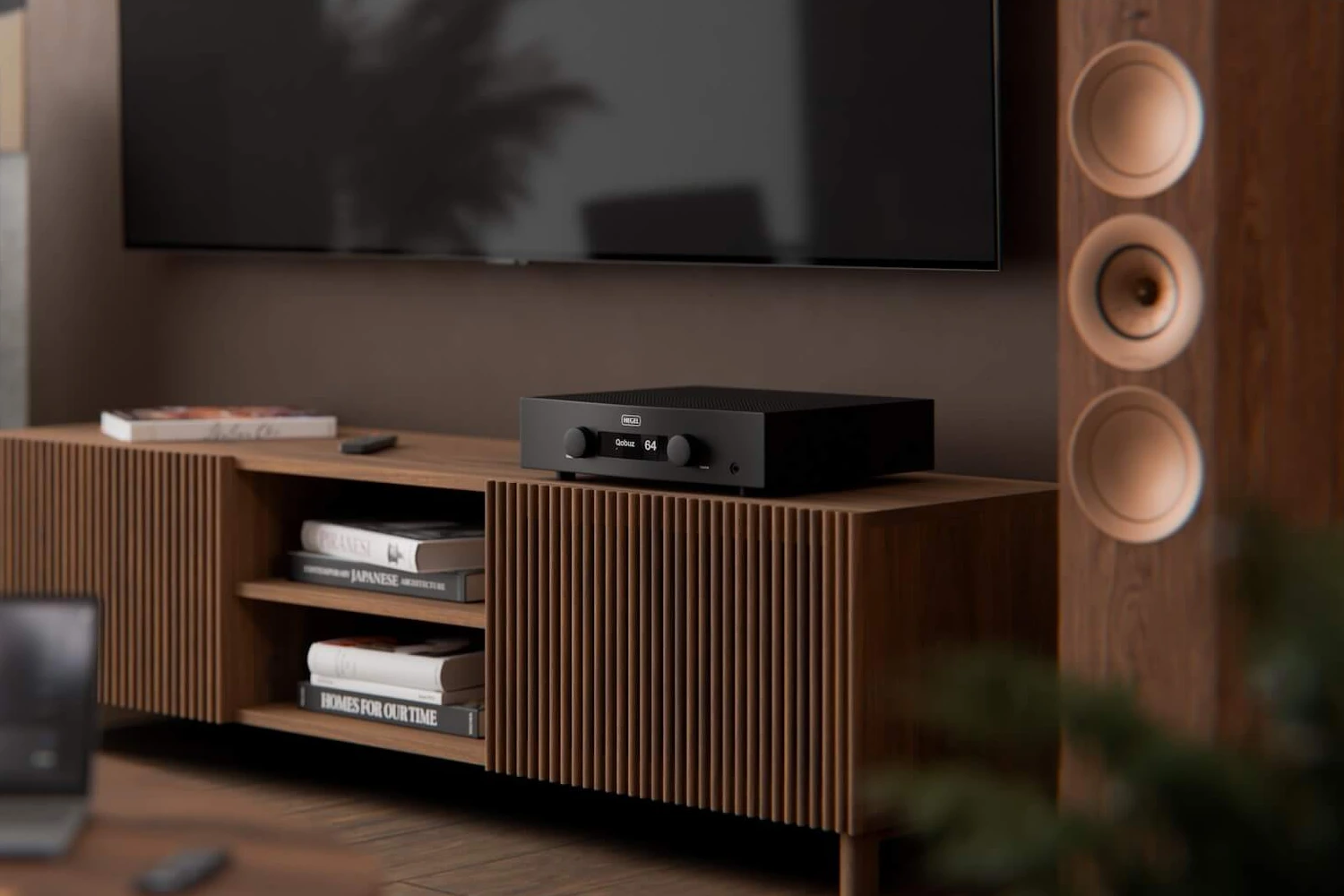
The Hegel H200 and A200 integrated amplifiers, offering connected and analog-only interpretations of the same amplification platform.
The Hegel H200 and A200 share a 150-watt-per-channel Class A/B amplifier platform but are intended for different system strategies.
Both employ Hegel’s SoundEngine2 distortion-management technology, are specified as stable into loads down to 2 ohms, and have a stated damping factor greater than 4,000.
The H200 is the connected option, combining network playback, digital conversion, analog inputs, an MM phono stage and headphone listening. The A200 removes digital circuitry and concentrates on analog sources, making it the more appropriate partner for an existing external DAC, streamer or other dedicated front end. Choosing between them is therefore primarily a question of system integration rather than amplifier output.
Best for: Choosing between all-in-one connectivity and analog separates
- 150 watts per channel from both models
- Specified stability into 2-ohm loads
- H200 includes streaming, DAC and MM phono functions
- A200 offers an analog-only signal path
Verdict: The shared amplifier platform lets buyers select the connected H200 or analog-only A200 according to their preferred source architecture.
Frequently asked questions
How much amplifier power do I need?
Begin with the speaker manufacturer’s impedance and amplification guidance, then consider room size and listening level.
Power figures are not directly interchangeable unless load impedance and distortion conditions are also stated; for example, the Aiyima A200’s 2 x 180-watt rating is specified into 4 ohms at 1 percent THD+N.
Should I choose an integrated amplifier or separate preamp and power amplifier?
An integrated amplifier reduces component count and may include useful source facilities, as demonstrated by the Creek Voyage i20 and Hegel H200.
A separate power amplifier such as the Accuphase P-4600 provides more freedom to choose a preamplifier and may offer bridge, dual-mono or bi-amplification options.
Do I need digital inputs and streaming inside the amplifier?
Choose built-in digital functions when you want a simpler system with fewer separate boxes.
If you already own a preferred DAC or streamer, an analog-only model such as the Hegel A200 avoids duplicating that equipment, while the H200 incorporates network playback and digital conversion.
What should I check before installing a high-power amplifier?
Confirm the amplifier’s dimensions, weight, power consumption, speaker-load compatibility and operating format.
Monoblocks require one chassis per channel, the 30-kilogram Accuphase P-4600 needs sturdy support, and the Burson Voyager consumes more than 100 watts at idle.
How to Choose the Right Amplifier for Your System
Start by defining the amplifier’s job.
A headphone-focused setup points toward the Aune S17 Pro, while a conventional stereo system may be better served by an integrated model such as the Rega Elex-R, Creek Voyage i20 or either Hegel.
Systems built around a separate preamplifier can instead take advantage of dedicated power amplifiers from Accuphase, Merrill Audio, Audio Research or Burson. Next, audit every connection and source. Vinyl listeners should check for a compatible phono stage rather than assuming one is included. Digital users need to distinguish between a basic USB input, Bluetooth playback, an integrated DAC and full network streaming, because these functions are not equivalent. For distributed audio, the Anthem MDX-16 offers zone-specific facilities that a conventional stereo amplifier does not provide. Finally, assess the practical demands of ownership and installation. Match the amplifier to the speaker’s impedance requirements, compare output ratings under equivalent load conditions, and allow for chassis size, weight, power use and the number of units required. The most suitable amplifier is the one that provides the necessary electrical performance and system functions without duplicating equipment or adding complexity that will go unused.



Sound Off
0Join the discussion if you have something to add.