
Speakers become interesting for different reasons.
Some reconsider the relationship between drivers, amplification and digital processing; others combine sound with lighting, streaming or multi-room control.
Even apparently conventional compact monitors can distinguish themselves through cabinet construction, placement features or unusually ambitious engineering. This selection therefore covers more than a single type of loudspeaker. It includes complete active systems, passive floorstanders and monitors, architectural audio, subwoofers and an ecosystem update that connects older sources with current wireless products. One entry is a safety recall rather than a purchase recommendation, but it belongs here because checking the status of older equipment is an essential part of responsible system ownership. The right choice depends less on novelty than on fit. Room size, placement, amplifier compatibility, source connections, installation requirements and long-term ecosystem support should all be considered before any speaker earns a place in the home.
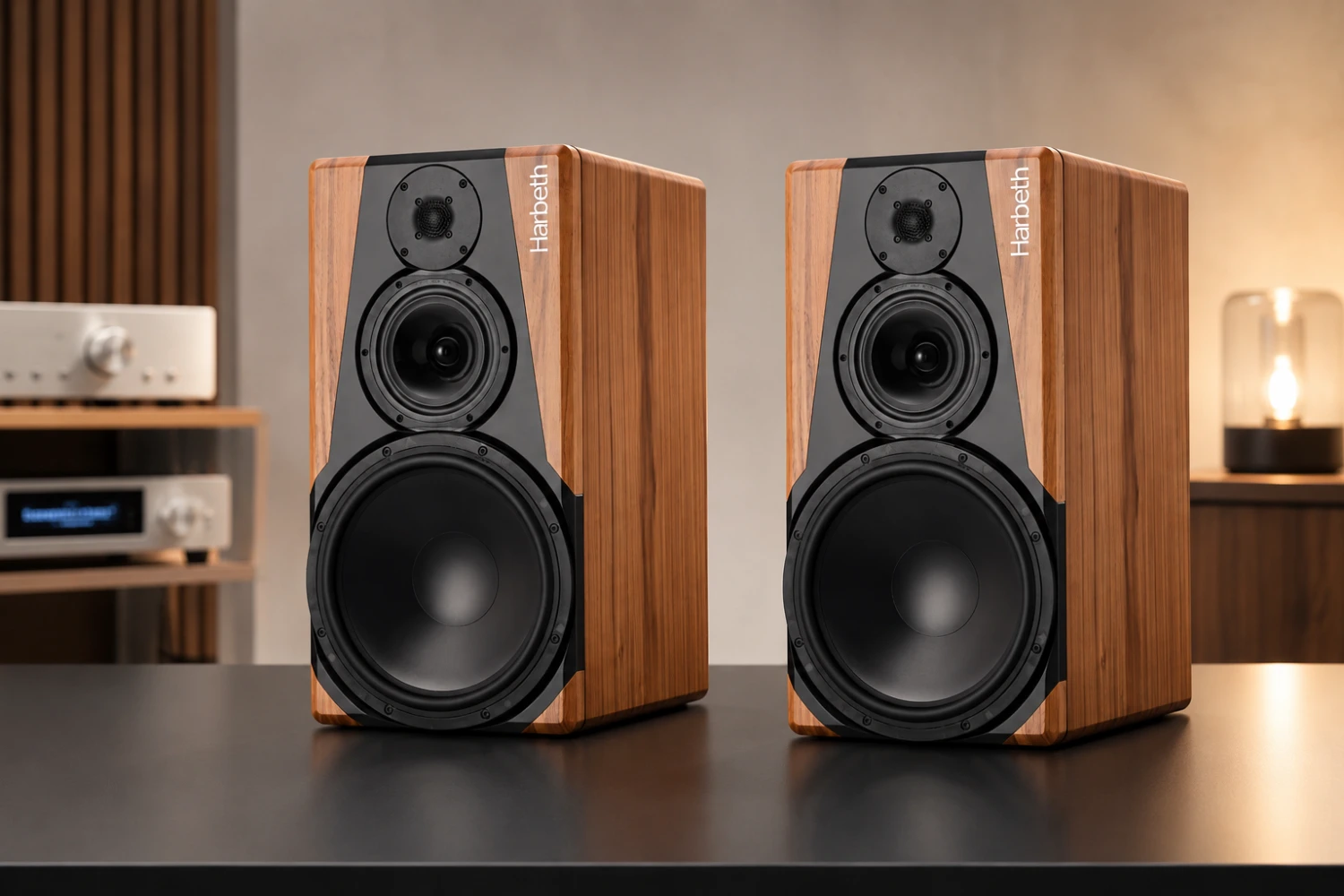
1. Harbeth NLE-3
The Harbeth NLE-3 system comprises two substantial three-way monitors, a dedicated DSP controller and a six-channel Ncore amplifier.
The NLE-3 is a complete Harbeth system built around two passive three-way loudspeakers, a dedicated DSP controller and a six-channel Class D Ncore amplifier.
Each driver receives its own amplifier channel, allowing the supplied electronics to manage the system through DSP.
The speakers combine a 300-millimeter woofer with a 200-millimeter midrange driver using Harbeth's proprietary RADIAL cone material. At 610 x 313 x 424 millimeters and 40 kilograms per cabinet, this is a substantial installation despite its classic monitor proportions.
Best for: Listeners seeking a complete DSP-managed Harbeth system
- Dedicated amplification for every driver
- Harbeth-designed DSP controller
- Three-way RADIAL-based design
- Choice of four cabinet finishes
Verdict: The NLE-3 is the most comprehensively integrated proposition here, pairing Harbeth's three-way speakers with purpose-designed processing and six-channel amplification.

2. Schetl Bridgeway
Schetl Bridgeway stacks a coaxial upper cabinet above a separate enclosure containing a supporting 12-inch bass driver.
Schetl's Bridgeway takes a high-sensitivity, two-cabinet approach.
Its upper enclosure contains the proprietary SCALEAX coaxial driver, which combines a 12-inch paper cone with a centrally mounted 1.7-inch titanium-diaphragm compression driver.
A second 12-inch driver in the isolated lower cabinet supports frequencies below 250 Hz. The specified sensitivity is 96 dB, and the passive crossover is isolated within the plinth and provides adjustment switches.
Best for: Systems built around low-powered or single-ended tube amplifiers
- Specified 96 dB sensitivity
- Proprietary coaxial driver
- Separate low-frequency enclosure
- Adjustable passive crossover
Verdict: Bridgeway stands out for combining high sensitivity, coaxial radiation and dedicated low-frequency support in a modular passive design.

3. Zuma Lumisonic
Zuma Lumisonic conceals an LED light and an active coaxial two-way speaker within a compact ceiling-mounted unit.
Lumisonic combines a ceiling-mounted LED luminaire with an active coaxial two-way speaker.
Its proprietary installation system is intended to simplify ceiling fitting, while an app controls lighting and sound settings.
Audio can be streamed through AirPlay 2, Spotify Connect or Bluetooth 4.2, and the stated file support includes WAV, ALAC and FLAC at up to 24-bit/192 kHz. Alexa voice control and combined lighting-and-sound presets broaden its smart-home role.
Best for: Discreet architectural audio with integrated smart lighting
- Integrated lighting and audio
- Ceiling-mounted installation
- Hi-Res file support
- AirPlay 2 and Spotify Connect
Verdict: Lumisonic is a specialized alternative to conventional speakers for rooms where unobtrusive installation and combined lighting control matter most.

4. Technics SC-CX700
The Technics SC-CX700 active stereo system combines coaxial drivers, Class D amplification, streaming and extensive wired connectivity.
The SC-CX700 brings amplification, network streaming and source connectivity into an active stereo pair.
Its newly developed coaxial Phase Precision Driver 4 uses a lightweight ring tweeter, while Technics' Class D JENO-Engine provides amplification.
Wi-Fi, Ethernet, Google Cast and multiple streaming services are supported. HDMI ARC allows connection to a television, and the MM phono input accommodates a compatible turntable without a separate phono preamplifier. USB-C, a 3.5-millimeter analog input and network radio further expand its source options.
Best for: A compact stereo system serving music, television and vinyl sources
- Integrated network streaming
- HDMI ARC for television audio
- Built-in MM phono input
- Wi-Fi and Ethernet connectivity
Verdict: The SC-CX700 is the broadest all-in-one stereo option in this selection, particularly for listeners who want streaming, television and turntable connections in one system.

5. Bang & Olufsen Beolink update
The Beolink update links selected vintage Bang & Olufsen sources with current wireless products such as Beosound Level and Beolab 28.
This Beolink update is significant for owners rather than a standalone speaker purchase.
It enables current products including Beosound Level, Beosound Balance, Beosound Emerge and Beolab 28 to work with equipment based on earlier Beolink technologies.
Compatible legacy sources, including the Beogram 5500 turntable and Beosound 9000 CD player, can feed current wireless Bang & Olufsen speakers. Control is available through Beoremote One, Beoremote Halo or the Bang & Olufsen app.
Best for: Bang & Olufsen owners combining vintage sources with current speakers
- Connects legacy and current Bang & Olufsen products
- Supports wireless playback from older sources
- Remote and app control options
Verdict: The Beolink update has unusual practical value for established Bang & Olufsen systems by extending multi-room integration across product generations.

6. Treble Clef Audio TCA-M
Treble Clef Audio mounts the TCA-M's separate driver enclosures on a rigid frame shaped to evoke a treble clef.
The TCA-M is a three-way floorstanding speaker conceived as an overt piece of industrial design.
Its drivers occupy separate enclosures mounted on a rigid metal frame shaped like a treble clef, departing visibly from the usual rectangular cabinet.
The available source material does not provide technical specifications, availability information or pricing, so its appeal can be assessed only at the conceptual and visual level for now.
Best for: Design-focused spaces where a speaker is intended to be visually prominent
- Three-way floorstanding format
- Separate enclosures on a rigid metal frame
Verdict: The TCA-M is an intriguing sculptural concept, but the absence of technical and availability details prevents a complete buying assessment.

7. Monitor Audio Vestra
The Monitor Audio Vestra range includes W10, W12 and W15 active subwoofers in matte black and matte white finishes.
Vestra is a family of active subwoofers offered as W10, W12 and W15 models in matte white or matte black.
All three use Monitor Audio's ceramic-coated aluminum-magnesium C-CAM cone technology, selected for a combination of low weight, strength and resistance to fatigue.
New motor systems include improved venting and larger round-wound voice coils made with high-purity copper wire. The W12 and W15 additionally use triple suspension to improve control at very low frequencies.
Best for: Adding dedicated low-frequency support with a choice of sizes
- Three cabinet and driver sizes
- C-CAM bass-driver technology
- Active subwoofer design
- Matte black or white finishes
Verdict: Vestra offers a clearly tiered route into Monitor Audio subwoofers, with shared C-CAM driver technology and additional suspension engineering in the larger models.
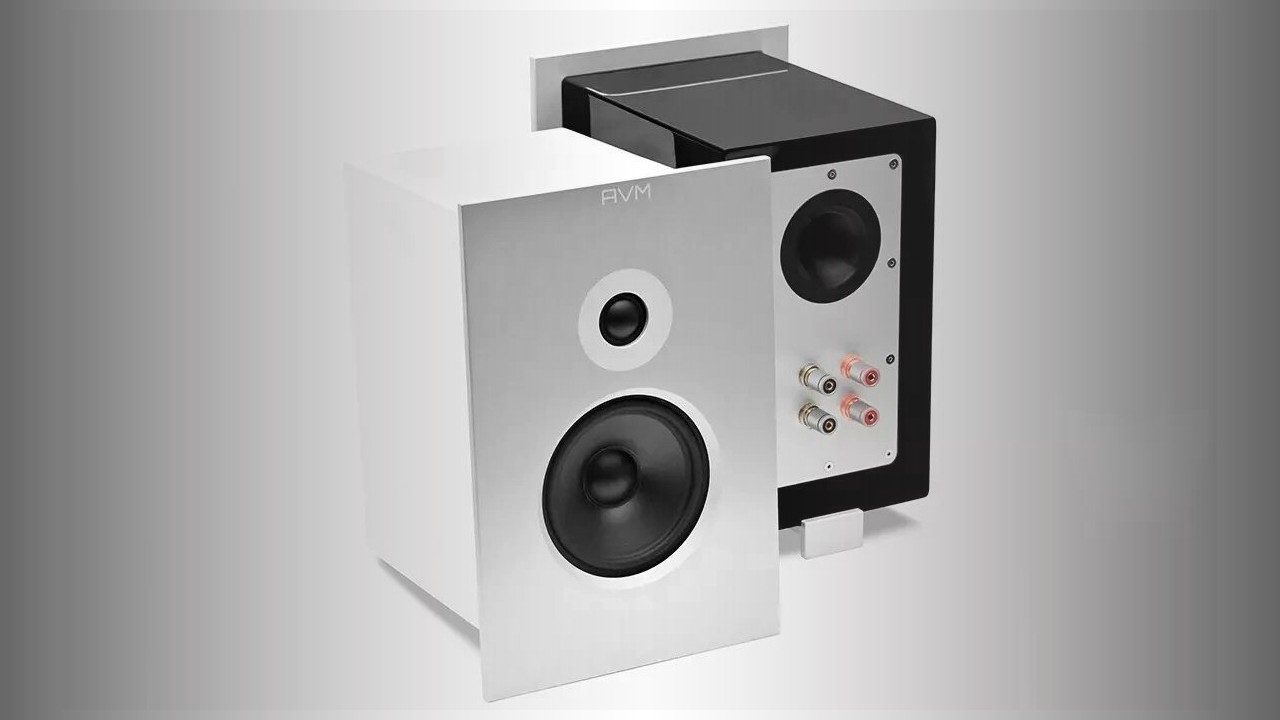
8. AVM Audition CB 2.3
AVM's compact Audition CB 2.3 uses a projecting aluminum front panel, a 160-millimeter woofer and a fabric-dome tweeter.
The Audition CB 2.3 is AVM's first loudspeaker design, developed with speaker specialist Karl-Heinz Fink.
This compact two-way bass-reflex monitor combines a 160-millimeter woofer with a fabric-dome tweeter in a 345 x 238 x 230-millimeter lacquered cabinet.
Its projecting anodized-aluminum front panel can help direct output when the speaker sits below the ideal listening height. AVM specifies a 37 Hz to 50 kHz operating range, 88 dB sensitivity and 140-watt power handling, while dual-wiring is supported.
Best for: Refined compact systems requiring flexible placement
- Compact two-way cabinet
- Adjustable radiation angle through front-panel positioning
- Dual-wiring support
- Magnetically attached grilles
Verdict: The Audition CB 2.3 combines manageable dimensions with thoughtful placement engineering and a conventional passive two-way architecture.

9. Q Acoustics Concept 50 and Concept 30
The Q Acoustics Concept range pairs the compact Concept 30 with the taller Concept 50 floorstander, both using Gelcore cabinet construction.
Q Acoustics offers the Concept design in two forms: the floorstanding Concept 50 and compact Concept 30.
The Concept 50 places two 5-inch drivers above and below its tweeter in a D'Appolito configuration, while the Concept 30 uses one midwoofer with the same tweeter and can be mounted on a three-legged stand.
Both inherit Gelcore cabinet construction from the larger Concept 500, using a gel-like intermediate layer within a multilayer wooden structure to damp cabinet vibration. Specified sensitivity is 90 dB for the Concept 50 and 87 dB for the Concept 30; their impedance falls below 4 ohms, making amplifier compatibility worth checking carefully.
Best for: Listeners choosing between standmount and floorstanding versions of one design family
- Choice of floorstanding or compact models
- Gelcore vibration-damping cabinets
- Shared Concept-series design principles
Verdict: Concept 30 and Concept 50 provide two room-friendly formats built around the same cabinet-damping philosophy, although their low impedance deserves attention when matching an amplifier.

10. Bose Acoustimass, Lifestyle and Companion subwoofer recall
Certain older Bose bass modules from Acoustimass, Lifestyle and Companion systems are covered by a safety recall concerning fire risk.
This entry is a safety notice, not a product endorsement.
Bose recalled certain older bass modules supplied with Acoustimass, Lifestyle and Companion home-theater systems after reports of units igniting or melting.
The manufacturer advises owners of affected subwoofers to stop using them immediately. Eligibility depends on the specific unit, so identification must be checked against the official Bose recall information or the relevant consumer-safety authority.
Best for: Owners checking the safety status of an older Bose home-theater system
Verdict: Any affected Bose bass module should be treated as a safety issue rather than kept in service as an older but otherwise usable component.
Frequently asked questions
Should I choose active or passive speakers?
Active systems combine speakers with dedicated amplification, although the amplifiers may be built into the cabinets or supplied as separate matched electronics, as with the Harbeth NLE-3.
Passive models provide more freedom to choose an amplifier, but sensitivity, impedance and power requirements must be checked before pairing components.
How should sensitivity and impedance affect amplifier matching?
Higher sensitivity can be useful with lower-powered amplifiers, which is central to the 96 dB Schetl Bridgeway design.
Sensitivity is not the whole story, however: the Q Acoustics models are specified below 4 ohms, so the amplifier must also be comfortable driving their impedance load.
Which connections matter in an all-in-one speaker system?
Start with the sources already in use.
HDMI ARC is useful for a television, an MM phono input can simplify turntable connection, and Wi-Fi or Ethernet may be important for reliable streaming.
Compatibility with preferred services and established multi-room products should also be confirmed before purchase.
What should owners do about a recalled subwoofer?
For affected Bose Acoustimass, Lifestyle and Companion bass modules, the manufacturer's guidance is to stop using the unit immediately.
The exact model should be checked through official Bose recall information or the appropriate consumer-safety authority before it is connected again.
How to choose among very different speaker ideas
Begin with the system rather than the headline feature.
A DSP-managed package such as the Harbeth NLE-3 removes much of the electronics-matching process but requires space for substantial cabinets and dedicated components.
Technics offers a more compact route for mixed sources, while Zuma addresses architectural installation and Bang & Olufsen focuses on continuity between existing and current equipment. Passive designs from Schetl, AVM and Q Acoustics place more responsibility on amplifier selection and physical setup. Measure the available space, decide whether stands or permanent installation are acceptable, and list every source that must be connected. For passive speakers, compare sensitivity and impedance with the amplifier's capabilities rather than relying on a power figure alone. Subwoofer selection should account for room size and integration with the main speakers, while older equipment should be checked for active safety notices. Where possible, evaluate speakers in a room and placement arrangement resembling the intended setup, because the most remarkable design is still only worthwhile when it suits the complete system.



Sound Off
0Join the discussion if you have something to add.