Heartfield Orange Product Spotlight: Four-Armature In-Ear Design with a Practical Wired Focus
Heartfield Orange is a wired in-ear headphone built around four independent balanced armature drivers, a three-way crossover, ergonomic resin shells, stainless steel sonic tips, and a supplied 3.5mm hybrid braided cable.
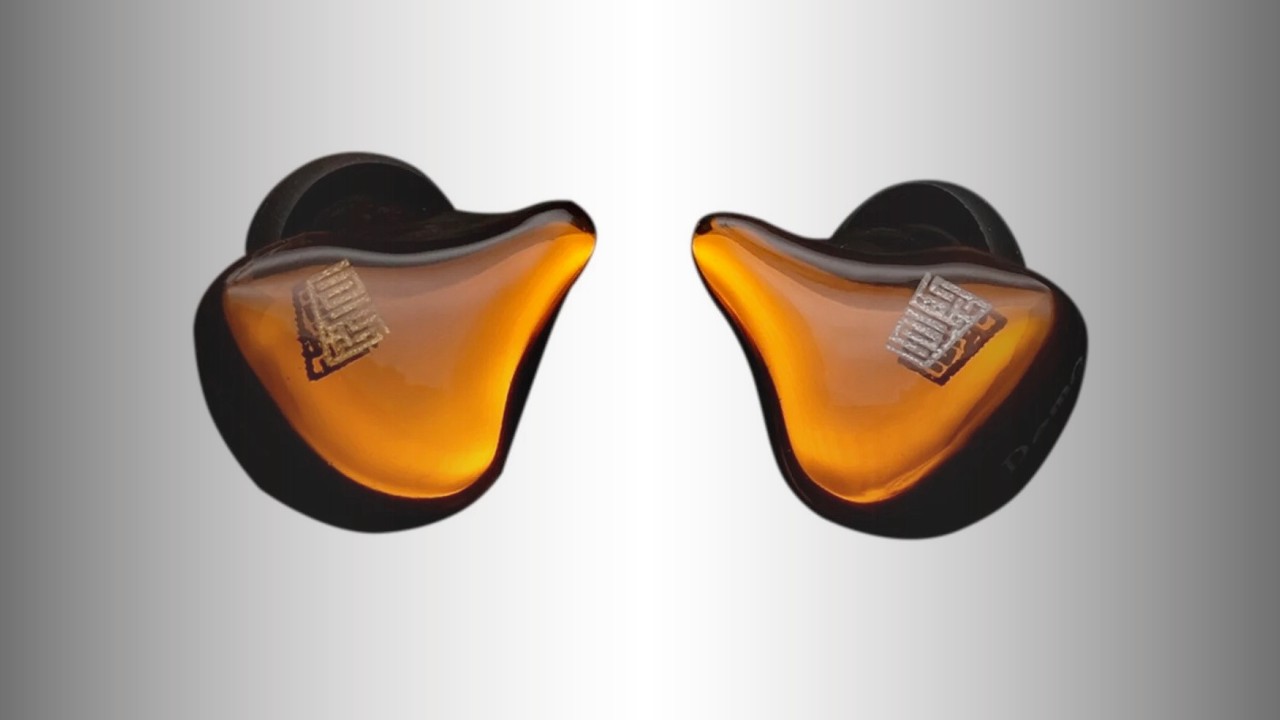
Heartfield Orange is a new wired armature headphone positioned as an evolution of the company’s Star River Pro. Its appeal is not built around wireless convenience or app-driven processing, but around a more traditional in-ear hi-fi recipe: multiple balanced armature drivers, a dedicated crossover, a shaped resin body, and a detachable-looking premium-style cable specified with a standard 3.5mm termination. At $390, it sits in territory where prospective owners are likely to care about design decisions as much as headline specifications. The documented feature set points to an earphone made for listeners who want a compact, wired, passive design with careful attention to driver allocation, fit, materials, and cable construction.
A four-driver balanced armature layout
The core of Heartfield Orange is its use of four independent balanced armature drivers. Balanced armatures are widely used in compact in-ear designs because they can be packaged efficiently inside small housings and assigned to specific parts of the frequency range. In a multi-driver earphone, this allows the designer to divide the work between separate transducers rather than asking a single driver to reproduce the full spectrum on its own.
Heartfield specifies a frequency response range of 20 Hz to 20,000 Hz for Orange. That range corresponds to the conventional limits of human hearing and indicates that the design is intended to cover the full audible band. The important point for a prospective owner is not merely the number of drivers, but the way those drivers are organized. Four independent armatures give the manufacturer scope to tune separate frequency regions, manage driver workload, and create a compact earphone that is still technically ambitious.
Because no listening impressions or measurements are provided here, it would be inappropriate to describe the Orange’s sound character in subjective terms. What can be said is that the architecture is aimed at precision and separation: a multi-armature design is chosen when the manufacturer wants more control over how different parts of the spectrum are reproduced inside an in-ear shell. For listeners shopping specifically for a wired armature design, that is a central attraction of the Orange.
Three-way crossover for driver coordination
Multiple drivers require coordination, and Heartfield Orange includes a three-way crossover. This is a significant part of the design because a crossover determines how audio information is distributed among the drivers. Without an effective crossover, a multi-driver layout can become more complicated without necessarily becoming more coherent.
A three-way crossover suggests that the earphone separates the signal into three frequency regions before handing them to the balanced armature system. In practical terms, this is intended to help the drivers operate within appropriate ranges and to support a more organized transition between lows, mids, and highs. For the owner, the benefit is not a specification to admire in isolation, but a design choice that affects consistency across the frequency band.
Heartfield’s emphasis on separation and coherence is best understood as an engineering intention rather than a listening verdict. The documented design shows that Orange is not simply a four-driver earphone by count; it also includes the crossover architecture required to make a multi-armature layout purposeful. That is especially relevant at its $390 price, where buyers are likely to expect more than a basic single-driver construction.
Ergonomic resin body and everyday wearability
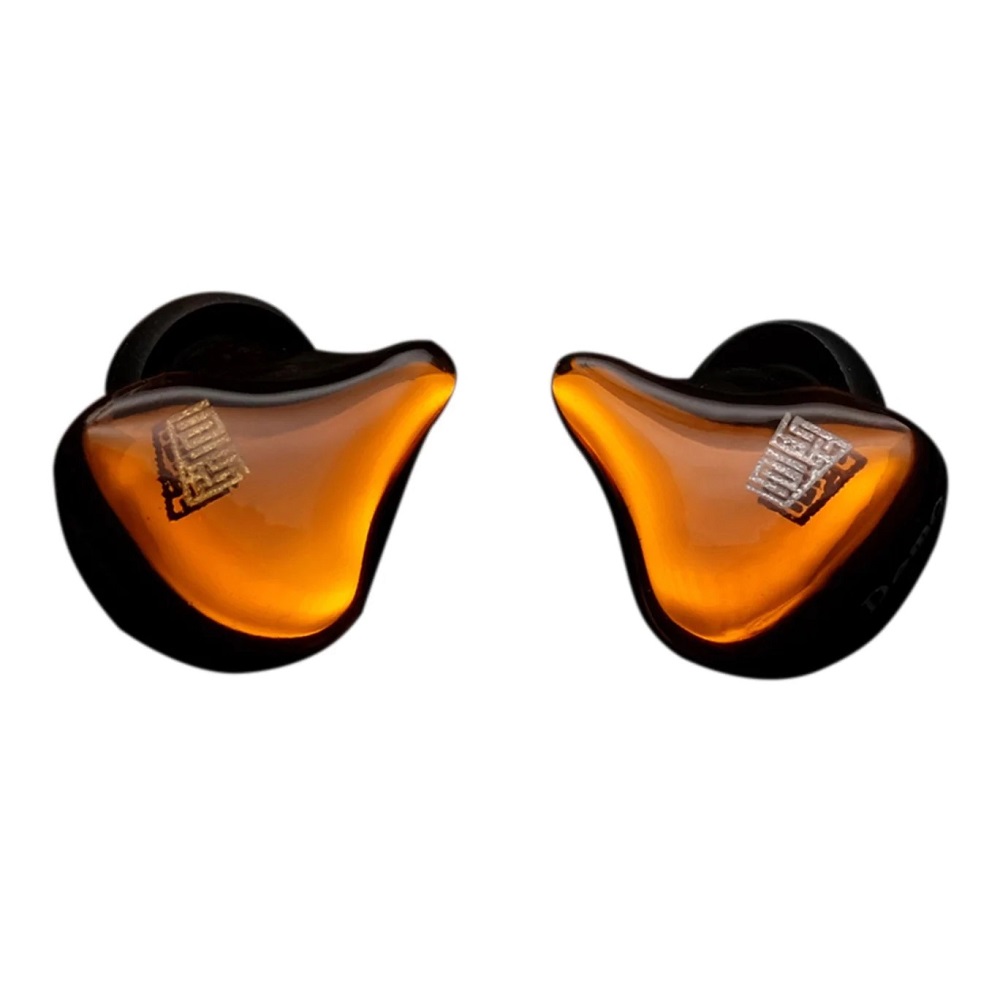
An in-ear headphone’s technical layout matters, but long-term usefulness depends heavily on fit. Heartfield highlights the ergonomics of the Orange housing, describing a body designed to provide comfort for most ear shapes while also supporting sound isolation. This is an important point because an earphone can only perform as intended when it seals properly and remains comfortable enough for extended listening.
The shell is made from imported resin material, chosen for a combination of skin-friendly texture, low weight, and durability. Resin is a common material in shaped in-ear housings because it can be formed into smooth contours and finished attractively while keeping the earpiece light. For users who listen at a desk, during travel, or over longer sessions, weight and surface comfort can be as important as driver count.
The mention of isolation is also meaningful. Passive isolation in an in-ear design is not the same as active noise cancellation, and Heartfield does not claim ANC for Orange. Instead, isolation here depends on shell shape, insertion, and eartip seal. For prospective owners, this makes fit a central part of the experience: the ergonomic body is intended to help the earphone sit securely and consistently, which in turn supports both comfort and bass stability.
304 stainless steel sonic tip
Heartfield Orange uses a sonic tip made from 304 stainless steel. This appears to refer to the sound outlet or nozzle area, a small but important physical interface between the driver system and the ear. Stainless steel is valued for its strength, corrosion resistance, and ability to hold precise shapes, all of which are relevant in a part that must withstand repeated eartip changes and regular contact during use.
Heartfield also references safety and durability by comparing the material standard to applications in food and medical equipment. The practical takeaway is that the Orange uses a robust metal component at a point of mechanical stress rather than relying only on resin throughout the sound path. For an in-ear headphone intended for repeated daily handling, the nozzle or sonic tip is not a decorative detail; it contributes to long-term reliability and the consistency of the eartip interface.
This material choice also complements the resin body. The Orange combines a lightweight shell for comfort with a harder stainless element where precision and wear resistance are especially useful. That mix of materials is one of the more distinctive aspects of the product’s physical design.
Hybrid braided 3.5mm cable
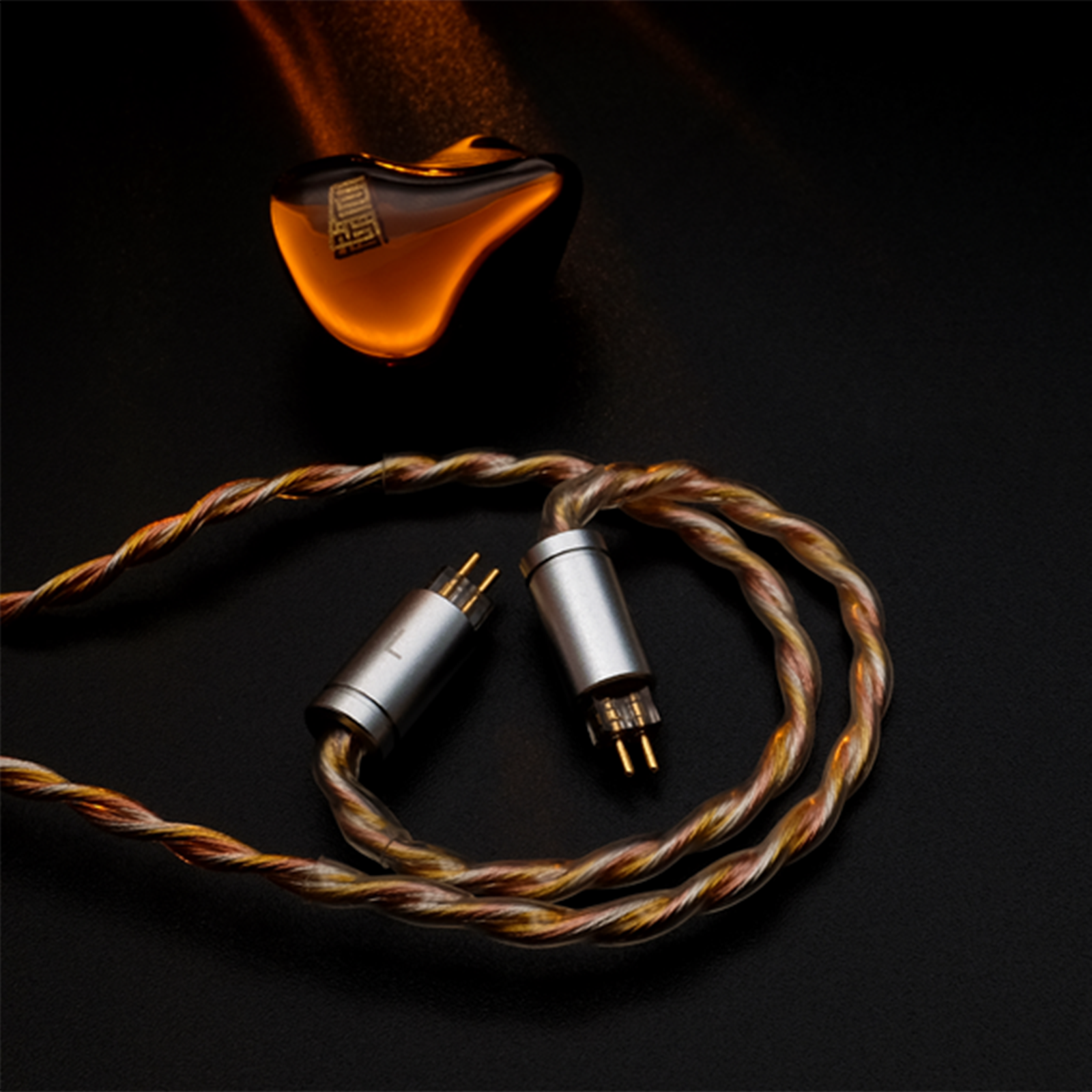
Orange is supplied with a standard 3.5mm gold/silver/copper braided hybrid headphone cable. The source specification describes a construction that combines premium oxygen-free copper with gold and silver wires. It also notes a transparent elastic sheath designed for comfort and for reducing the stethoscope effect, the cable-borne noise that can occur when a cable rubs against clothing or other surfaces.
The 3.5mm termination is a practical choice. It keeps the Orange compatible with many headphone outputs, portable players, desktop amplifiers, USB dongles with analog headphone jacks, and other conventional wired sources. Owners using modern phones without a headphone output would still need a suitable adapter or DAC, but the earphone itself follows a broadly supported analog standard.
The braided construction and mixed conductor materials also give the product a more considered presentation. While cable materials should not be treated as a substitute for driver design or fit, a comfortable, low-noise cable can make a real difference in daily use. Reduced microphonics, flexibility, and a secure feel are all practical qualities for an in-ear headphone, especially one intended for portable or close-up listening.
A wired alternative to feature-heavy earphones
Heartfield Orange is notable for what it does not emphasize. There is no documented Bluetooth mode, battery system, active noise cancellation, companion app, microphone feature, or digital processing platform. Instead, the product is a passive wired in-ear headphone focused on acoustic construction, materials, and analog compatibility.
That makes its market position relatively clear. At $390, Orange is aimed at listeners who already value wired playback or who are building a compact system around a dedicated player, dongle DAC, or headphone amplifier. Its appeal is likely strongest for users who prefer not to manage charging cycles, firmware updates, wireless codecs, or app settings, and who instead want a direct cable connection and a compact multi-driver earpiece.
This approach will not suit everyone. If the priority is gym use, phone calls, transparency modes, ANC, or total wireless convenience, the documented feature set does not point in that direction. Orange is more logically considered by listeners who want a purpose-built wired earphone and are comfortable matching it with appropriate source hardware.
Who Heartfield Orange is most suitable for
Heartfield Orange is best suited to the listener who wants a compact wired in-ear headphone with a multi-balanced-armature design and a focus on fit, materials, and cable quality. It should appeal to enthusiasts who appreciate the engineering logic of separate drivers and a three-way crossover, particularly those looking for an earphone that can be used with standard 3.5mm outputs.
It is also a sensible match for users who value passive isolation and ergonomic shell design. The resin body, stainless steel sonic tip, and elastic-sheathed braided cable all support a product concept built around repeated hands-on use rather than purely decorative specification. For someone who listens at a desk, on public transport, or with a portable hi-fi player, these details may matter every day.
On the other hand, Orange is not the obvious choice for buyers whose checklist starts with wireless features, phone integration, or noise-cancelling electronics. It is also not possible to infer its sonic personality from the supplied specifications alone. Prospective owners should view it as a technically specified wired armature earphone rather than as a promise of a particular tonal character.
Conclusion
Heartfield Orange’s strongest documented qualities are its four independent balanced armature drivers, three-way crossover, ergonomic resin housing, 304 stainless steel sonic tip, and supplied 3.5mm hybrid braided cable. Together, these features describe a wired in-ear headphone designed around acoustic architecture, physical comfort, and practical analog use. At $390, it is most suitable for listeners who want a compact multi-driver earphone for dedicated wired playback, and who place more value on materials, fit, crossover design, and cable execution than on wireless convenience or app-based features.