Monitor Audio Silver 7G: A Flexible Speaker Family Built Around Updated Driver Technology
Monitor Audio’s seventh-generation Silver range is notable less for one single model than for the way it applies updated driver engineering across a broad, home-theater-ready speaker family.

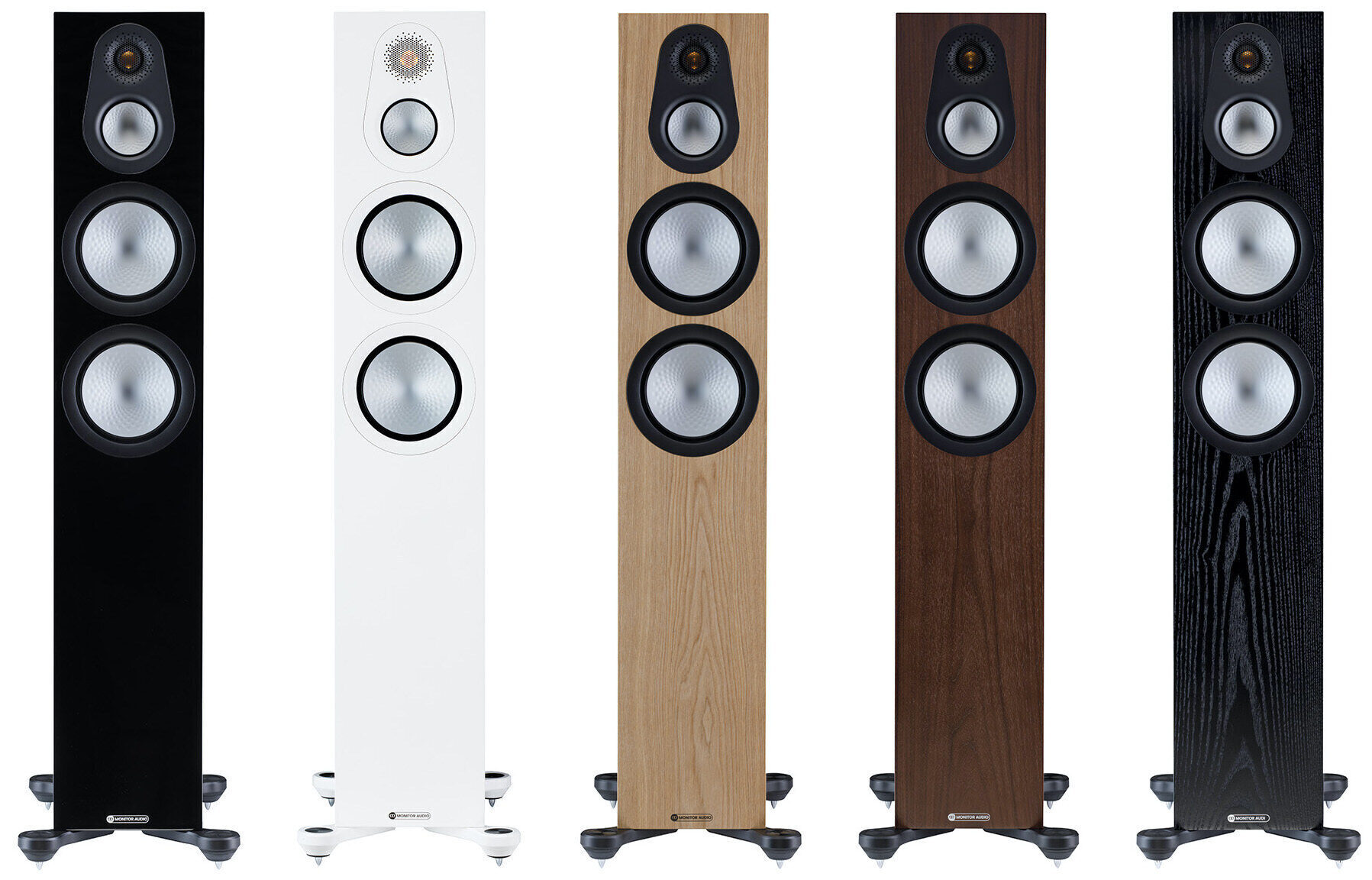
The Monitor Audio Silver 7G Series is designed as a complete loudspeaker ecosystem rather than a single stand-alone product. That is a significant part of its appeal. The range includes large and compact floorstanding speakers, bookshelf models, a center-channel option, surround speakers, and dedicated Atmos modules, all built around a common set of updated driver technologies and visual design cues. For prospective owners, that matters because consistency across a stereo or multichannel system can be just as important as the specification of any one speaker. The seventh generation of Silver places particular emphasis on an updated C-CAM tweeter, RST II midrange and bass cones, revised crossover design, and practical cabinet details intended to make the speakers easier to integrate into real rooms.
A complete range rather than a single loudspeaker
The Silver 7G line covers several common system needs. At the top of the range is the Silver 500 7G floorstanding speaker, described as the largest model and specified for operation at powers up to 250 watts. It is joined by the Silver 300 7G and Silver 200 7G floorstanders, giving the series more than one tower option for different room sizes and system ambitions.
For smaller spaces, or for listeners who prefer stand-mounted speakers, Monitor Audio includes two bookshelf models: the Silver 50 7G and Silver 100 7G. The Silver 100 7G is notable within the supplied information because it uses an 8-inch woofer, a relatively substantial bass/mid driver for a bookshelf-format loudspeaker. The range is then extended into home cinema with a Silver 200 7G center-channel system, Silver FX 7G surround speakers, and Silver AMS 7G Atmos systems.
This breadth is useful because it allows a prospective owner to build gradually or configure a system around the room rather than forcing one format to do every job. A pair of bookshelf speakers may suit a compact stereo setup, while the floorstanding models can serve as the anchors of a larger two-channel or front left/right theater installation. The presence of matching center, surround, and Atmos models also makes the series relevant to listeners who want a coherent multichannel system using speakers from the same generation and design family.
The updated C-CAM tweeter and why it matters
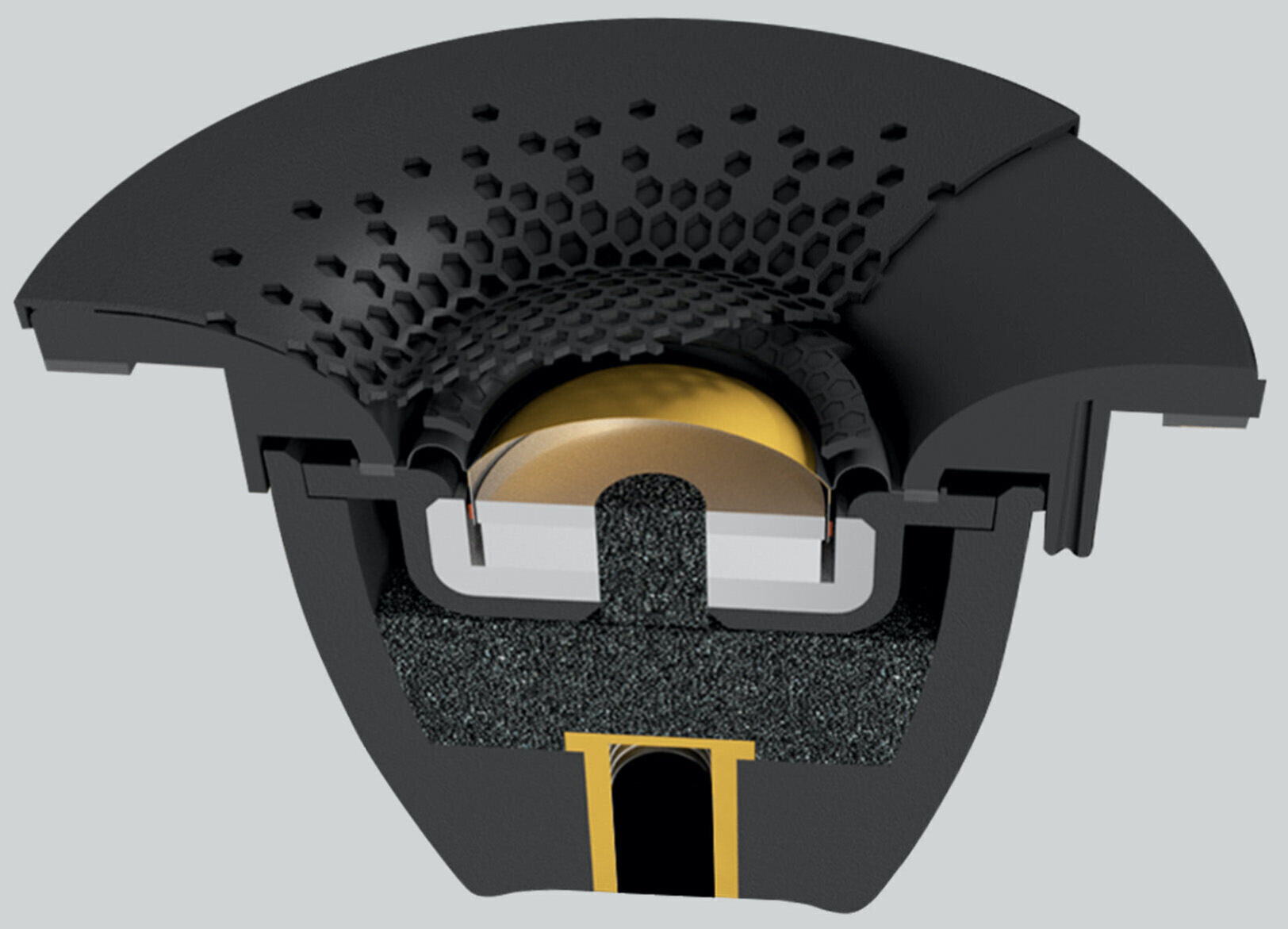
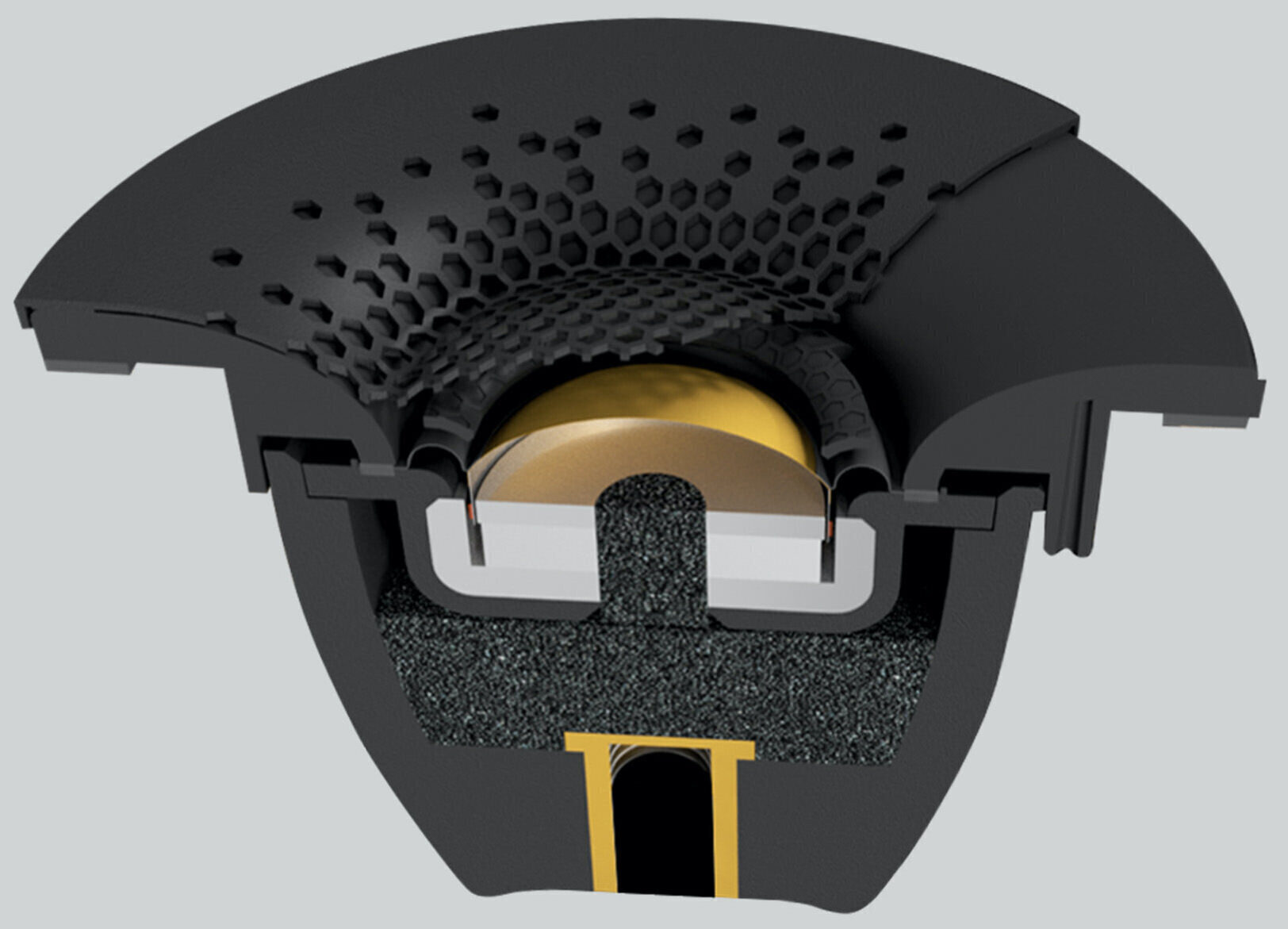
One of the central technical updates in Silver 7G is the tweeter. The one-inch dome is made from Monitor Audio’s proprietary aluminum-magnesium alloy with a ceramic C-CAM coating. On the outside, the membrane is gold-plated, and it operates in the updated UD II, or Uniform Dispersion Waveguide II. The manufacturer also highlights improvements to the tweeter’s magnet system and rear chamber.
The value of this combination is not merely cosmetic or material-driven. In a loudspeaker, the tweeter has to reproduce high-frequency information while also integrating smoothly with the midrange driver below it. A waveguide can be important because it influences dispersion: how sound energy is spread into the room rather than projected only on a narrow axis. A design called Uniform Dispersion Waveguide II signals that Monitor Audio is paying attention not only to extension but also to how the speaker behaves in typical listening positions.
The supplied information states that the result is a natural high-frequency response up to 35 kHz. While that figure sits beyond the upper limit of normal human hearing, high-frequency extension can still be part of a broader design goal involving low distortion, controlled breakup behavior, and a smoother operating range within the audible band. Without making listening claims, it is fair to say that this tweeter update is a meaningful part of how Monitor Audio has defined the seventh-generation Silver platform.
RST II cones: stiffness through surface geometry
The midrange and woofer drivers in the Silver 7G Series use Rigid Surface Technology II, or RST II. These cones are identified by regular, variable-sized hexagonal grooves across their surface. According to Monitor Audio’s description, this pattern strengthens the moving system and improves sound.
The engineering logic is straightforward: a speaker cone must be light enough to move quickly but stiff enough to resist unwanted flexing. Surface geometry is one way to add rigidity without simply making a cone heavier. The hexagonal groove pattern gives the RST II drivers a distinctive look, but the more important point is functional. It suggests an attempt to manage cone behavior mechanically at the driver level, before the crossover and cabinet design do their work.
For a buyer comparing loudspeaker families, this kind of shared driver technology can also be reassuring. The bookshelf, floorstanding, and theater-focused models are not merely styled to look related; they are built around the same broad material and structural approach. That can matter when assembling a system where the front speakers, center channel, surrounds, and height modules all need to operate as parts of one larger acoustic presentation.
Crossover and system integration considerations
Monitor Audio also states that the Silver 7G Series uses an improved crossover design. The source material does not provide component values, slopes, or internal layout, so there is no basis for deeper technical claims. Still, the crossover is a critical part of any loudspeaker because it determines how the tweeter, midrange driver, and woofer share the audio spectrum.
In a series with multiple cabinet sizes and driver layouts, crossover design is especially important. A floorstanding speaker with multiple drive units has different requirements from a compact bookshelf model or a center-channel speaker. The fact that crossover improvements are mentioned alongside new tweeter and RST II cone work indicates that Monitor Audio has treated the generation update as a system-level exercise rather than a simple cosmetic refresh.
For users, this matters most in practical matching. A loudspeaker line intended for both stereo and home theater should give owners a clear route to expansion. Someone may begin with a pair of Silver 100 7G bookshelf speakers or Silver 300 7G floorstanders and later add a center, surrounds, or Atmos modules. A consistent design language and shared driver philosophy make that path more straightforward.
Cabinet details designed for everyday setup
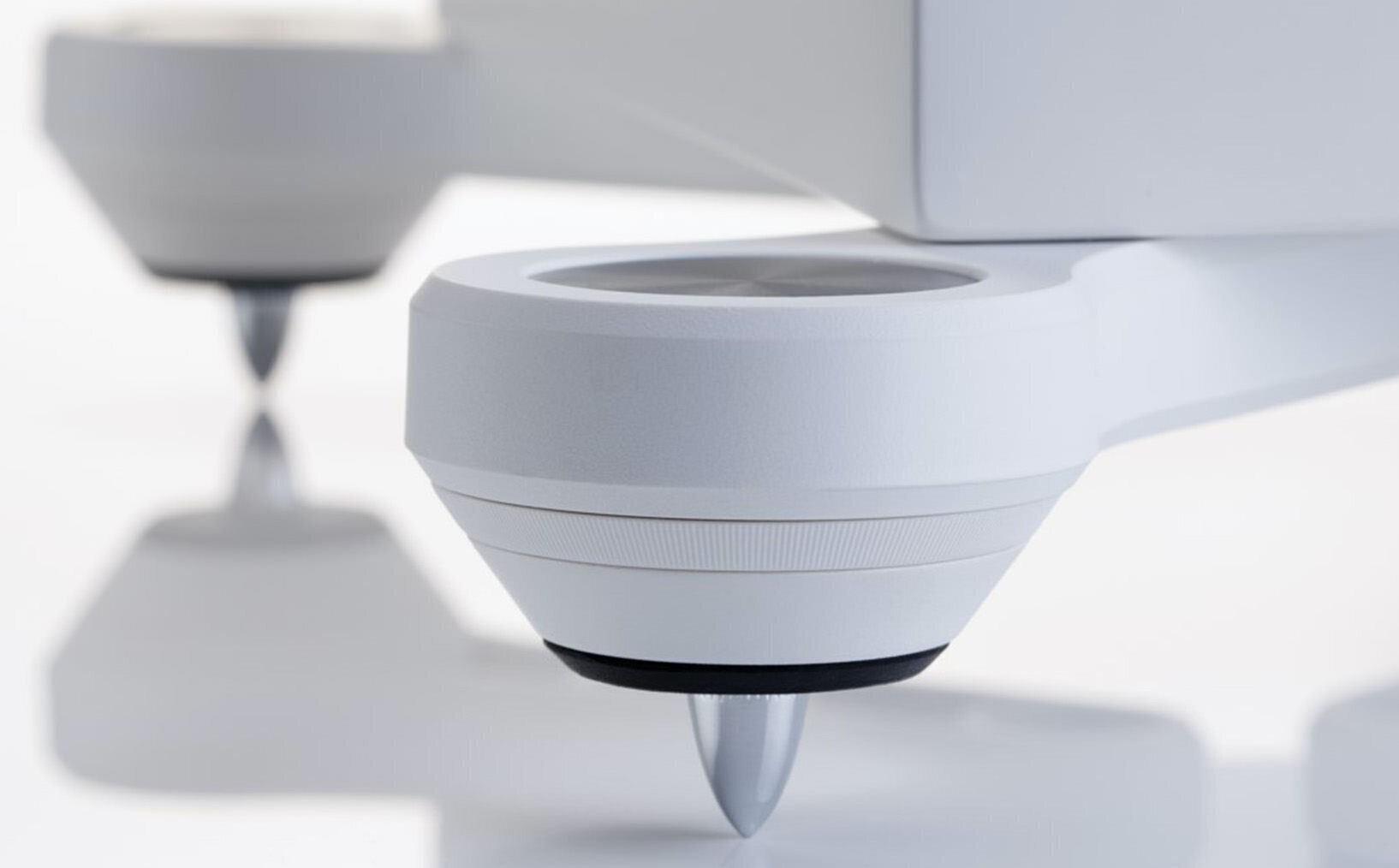
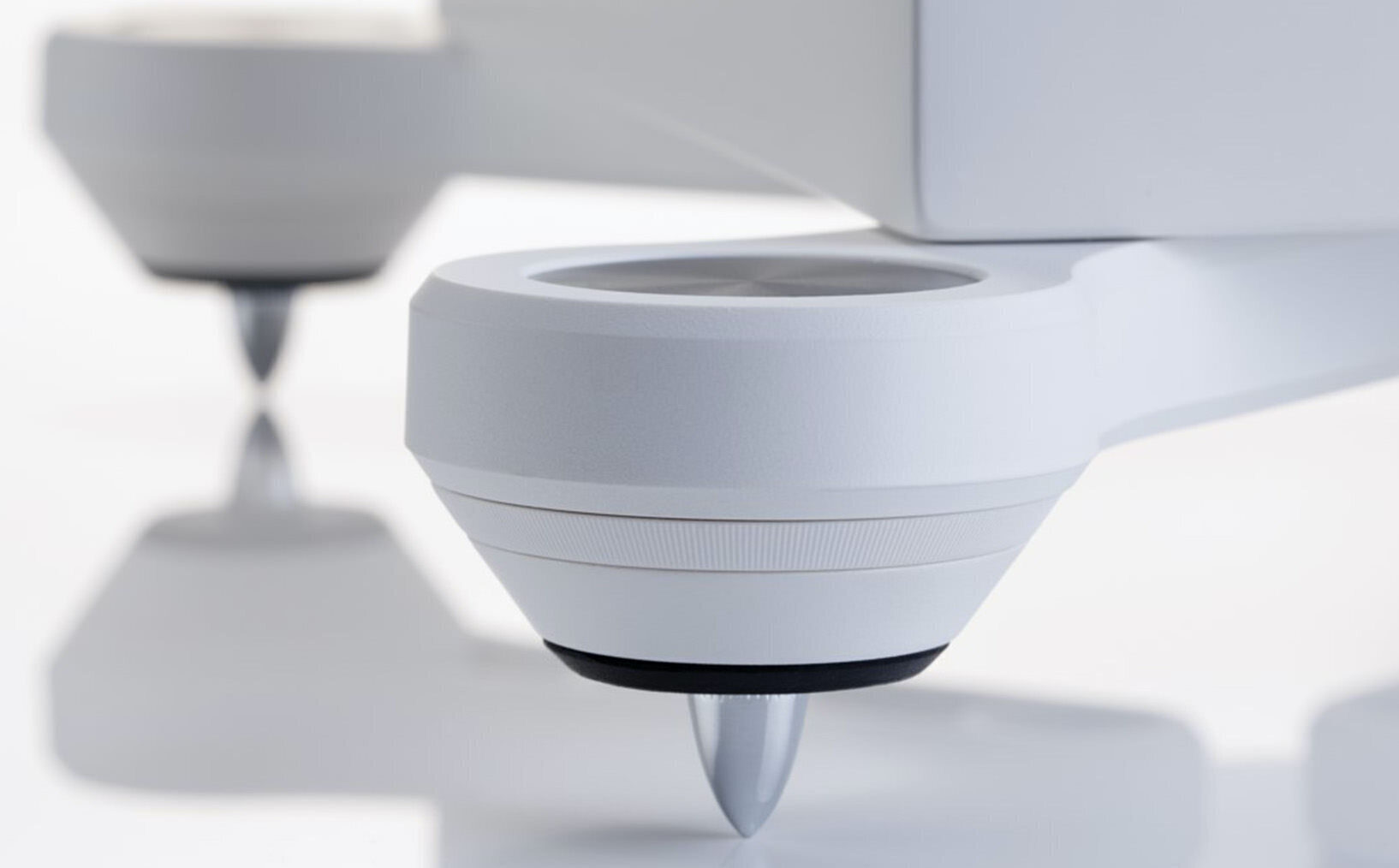
The Silver 7G speakers keep a recognizable Monitor Audio appearance, including ring pads around the drivers and floorstanding models with strongly protruding supports. These supports are more than a styling flourish. Floorstanders need stable contact with the floor, and the supplied description notes that the metal legs are adapted for both hard surfaces and carpets.
That kind of detail can make ownership easier. Many listening rooms are not purpose-built hi-fi spaces; they may have timber floors, tile, rugs, or thick carpet. A floor speaker support system that acknowledges both hard and soft surfaces gives the owner more flexibility at setup time. It can also reduce the need to immediately search for aftermarket feet or improvised solutions.
Magnetic cloth grilles are another practical feature. Magnetic attachment avoids visible grille sockets on the front baffle when the grilles are removed, while still allowing the speakers to be covered when a subtler appearance or added driver protection is desired. Updated brand logos complete the visual refresh, but the broader point is that the Silver 7G range appears designed to work in living spaces as well as dedicated listening rooms.
Home theater flexibility is a major part of the appeal
The range’s home theater ambitions are clear. In addition to the floorstanding and bookshelf models, the Silver 7G family includes a center-channel system, FX surrounds, and AMS Atmos systems. That gives owners the building blocks for more than a basic two-channel setup.
A center speaker is central to many theater systems because it handles much of the dialogue and on-screen action anchoring. Surround speakers help create side and rear spatial information, while Atmos modules are intended for height effects in compatible immersive audio systems. The inclusion of dedicated models for these roles suggests that Monitor Audio expects the Silver 7G Series to be used in serious multi-speaker installations, not only in stereo pairs.
This modularity is attractive because different rooms impose different limits. Some spaces can accommodate large front floorstanders but require compact surrounds. Others may use bookshelf speakers at the front with matching home cinema components added later. By offering multiple speaker types within the same generation, Silver 7G gives system builders options without leaving the family.

Who the Monitor Audio Silver 7G Series is most suitable for
The Silver 7G Series is likely to be most suitable for listeners who want a conventional passive loudspeaker system with room to grow. It is particularly relevant to buyers planning a matched stereo or surround setup, because the range includes several cabinet formats and home theater-specific models. Someone who values a coordinated design across front, center, surround, and Atmos channels will find the structure of the line useful.
The larger floorstanding models, especially the Silver 500 7G, are aimed at systems where a full-size speaker is appropriate and amplifier power is not an afterthought. The bookshelf models are better suited to smaller rooms, stand-mounted use, or systems where space and placement flexibility matter more. The Silver 100 7G, with its 8-inch woofer, may interest those who want a larger driver in a bookshelf format, although room matching and amplification still need to be considered carefully.
This is not the most suitable product family for someone seeking an all-in-one wireless speaker, a minimalist soundbar, or a system with built-in amplification and streaming. The supplied information describes passive loudspeakers and associated theater models, so prospective owners should expect to match them with appropriate amplification and source components. The range is also best approached by buyers who appreciate traditional hi-fi system building: selecting speaker size, channel count, placement, and amplification as parts of one plan.
Conclusion
The Monitor Audio Silver 7G Series stands out as a broad, carefully structured loudspeaker family built around updated C-CAM tweeter technology, RST II cone construction, improved crossover design, and practical cabinet details such as magnetic grilles and floor supports suited to different surfaces. Its strongest documented qualities are flexibility, shared driver engineering across the range, and the availability of models for stereo, center-channel, surround, and Atmos roles. For prospective owners who want to build a passive hi-fi or home theater system with matching speakers from one coherent lineup, Silver 7G offers a thoughtfully developed platform rather than a single isolated product.