
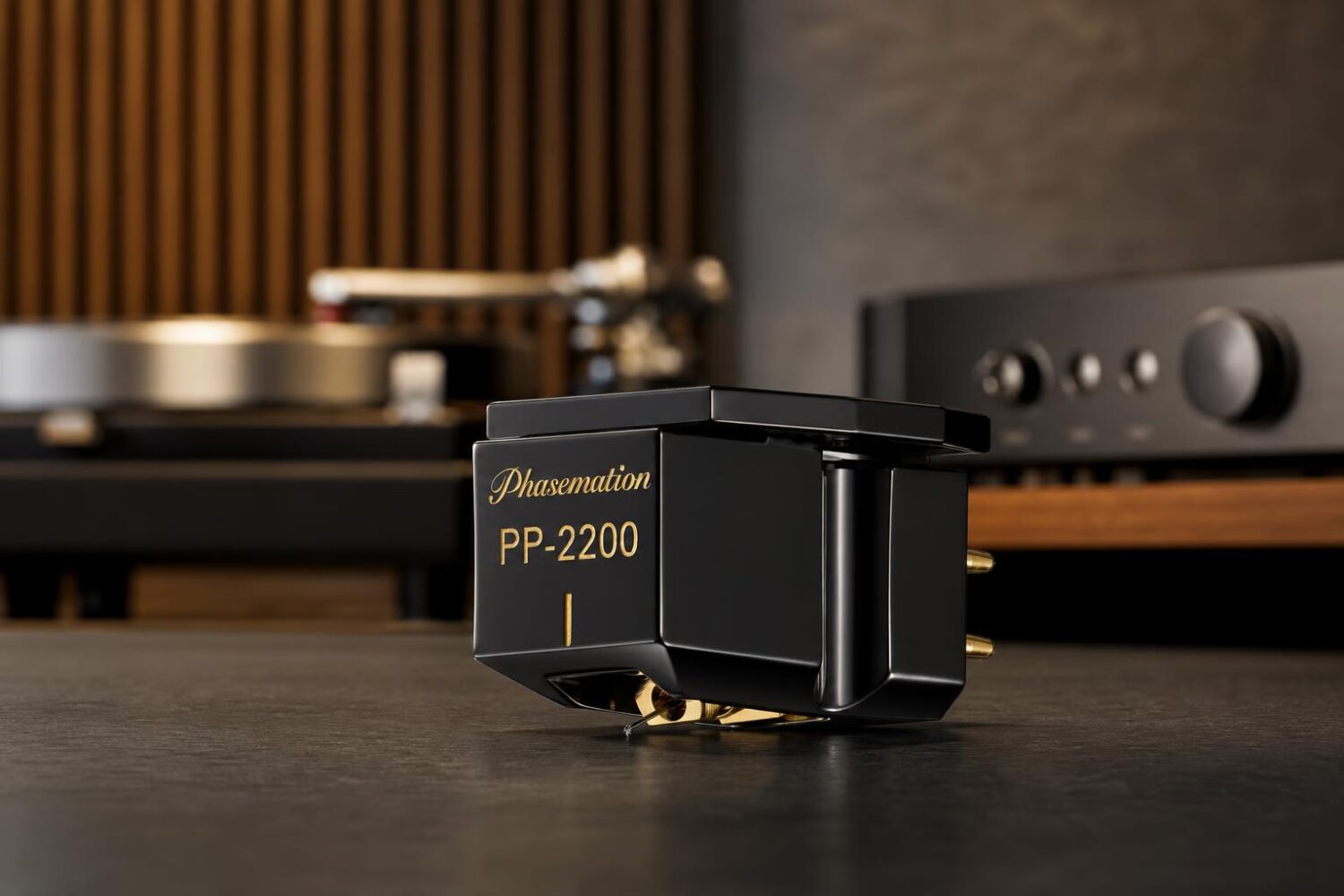
Replacing a cartridge that remained in production for more than a decade calls for more than a cosmetic update. With the PP-2200, Phasemation has reconsidered the internal design of its established moving-coil model while preserving the format and role associated with the preceding PP-2000. The defining change is a revised magnetic circuit intended to increase generation efficiency at the first stage of analog playback: the conversion of stylus movement into an electrical signal.
That tightly focused approach is one of the PP-2200’s most interesting qualities. Rather than expanding the specification with unrelated additions, Phasemation has concentrated on the cartridge’s fundamental operating system. The company links the new magnetic arrangement to lower audible distortion, improved retention of fine musical information, and a stronger sense of presence. These remain manufacturer-stated objectives rather than independent listening findings, but they clearly explain the priorities behind the redesign.
A redesign shaped by practical realities
The PP-2200 directly succeeds the PP-2000, a moving-coil cartridge that had been manufactured since 2015. During that long production life, the earlier model was used as a reference by other manufacturers and audio publications. Its replacement therefore carries a degree of continuity within Phasemation’s analog range, even though the new cartridge is not simply a continuation of the same construction.
Phasemation identified increasing difficulties with the processing quality of individual components, as well as supply problems that made the PP-2000 progressively more challenging to manufacture. Instead of preserving the older design unchanged, the company used the replacement process as an opportunity to reconsider its construction. That makes the PP-2200 notable as both an engineering development and a response to current production conditions.
For a prospective owner, this background matters because it shows that the redesign was not created merely to establish a new model number. Phasemation needed a cartridge that could take over the PP-2000’s role while moving away from parts and manufacturing processes that had become problematic. The result retains the moving-coil principle but introduces a substantially revised internal foundation.
Why generation efficiency matters
A phono cartridge performs a demanding task: it must translate extremely small mechanical movements at the stylus into an electrical signal that can be passed to the phono amplification stage. In a moving-coil design, the magnetic circuit is central to that conversion process. Phasemation has therefore placed generation efficiency, rather than an ancillary feature, at the center of the PP-2200’s development.
The company says the revised magnetic arrangement increases that efficiency. Its stated intention is to reduce audible distortion while preserving finer information from the record groove. Phasemation also associates the change with a more pronounced sense of presence in the reproduced soundstage. Without independent testing, these should be understood as design goals, but they indicate that the company is addressing signal generation at its origin rather than relying on downstream compensation.
This is a purposeful engineering strategy for listeners who view the cartridge as a critical part of the analog signal chain. Any information lost or altered at the initial conversion stage cannot simply be recovered later by a phono stage or amplifier. Concentrating development on the magnetic circuit consequently gives the PP-2200 a clear technical identity.
Continuity without preserving the old design unchanged
The PP-2200 occupies the same broad place in Phasemation’s range as the long-running PP-2000, but the company has avoided treating continuity as an obligation to reproduce the earlier cartridge part for part. The moving-coil format and direct-successor status provide a recognizable lineage, while the new magnetic circuit creates a meaningful point of separation.
This balance should appeal to existing followers of the brand who want to understand what has changed and why. The PP-2200 does not appear to be an exercise in adding convenience functions or broadening the cartridge into a different category. Its development remains centered on the core electromechanical process. That makes its proposition relatively easy to grasp: it is a replacement designed to carry forward the PP-2000’s role using a reworked approach to signal generation.
A focused product rather than a feature exercise
Cartridges do not offer the kind of extensive connectivity or software options found in network players and integrated amplifiers. Their flexibility instead depends on how successfully they can be incorporated into a compatible analog playback system. In that context, the PP-2200’s focused design is a strength: its principal distinction is directly connected to the job the product must perform.
There are no documented claims here about interchangeable components, adjustment systems, bundled accessories, or alternative operating modes. Nor has Phasemation turned the model change into a different cartridge type. Buyers are instead being asked to value a foundational redesign of the magnetic circuit and the associated goals of more efficient generation, lower perceived distortion, finer detail retention, and increased presence.
This narrow brief will make most sense to enthusiasts who prefer engineering changes with a direct relationship to groove-to-signal conversion. It also helps distinguish the PP-2200 from product updates that depend primarily on styling or peripheral additions.
System matching still requires careful attention
As a moving-coil cartridge, the PP-2200 is intended for an analog system able to accommodate that cartridge format. Prospective owners should confirm compatibility with their tonearm and phono amplification before purchase. The supplied information does not include output voltage, recommended loading, compliance, tracking force, body mass, or dimensional details, so no precise matching recommendations can be made from the available specifications.
That absence is especially relevant at the PP-2200’s approximately $3,935 price. A cartridge at this level is likely to be considered as part of a carefully planned record-playing system rather than as an isolated upgrade. Owners should obtain the complete technical data and verify tonearm suitability, setup requirements, phono-stage gain, and loading options with the relevant dealer or distributor.
Installation and alignment are also inherently important to cartridge performance, although Phasemation has not provided specific setup provisions in the available material. The attraction of the redesigned magnetic circuit does not remove the need for appropriate supporting equipment and accurate configuration.
Who the PP-2200 is most suitable for
The PP-2200 is most clearly aimed at committed vinyl listeners seeking a moving-coil cartridge with a deliberately revised internal architecture. It may be particularly relevant to owners who followed or used the PP-2000 and want its formal successor, as well as enthusiasts building a system around Phasemation’s analog products.
Its appeal is strongest for buyers interested in how a cartridge generates its signal, rather than those looking for convenience features or a change of cartridge technology. The long service life of the PP-2000 also gives the replacement useful context: the PP-2200 is taking over an established position instead of entering the range as an unrelated experiment.
It will be less suitable for anyone who cannot verify moving-coil phono-stage and tonearm compatibility, or for buyers who require complete international pricing and availability information immediately. Because important matching specifications have not been supplied, it would also be premature to assume that it will fit every high-end analog setup. The product’s focused engineering case is compelling on paper, but appropriate system integration remains essential.
Market position and release plans
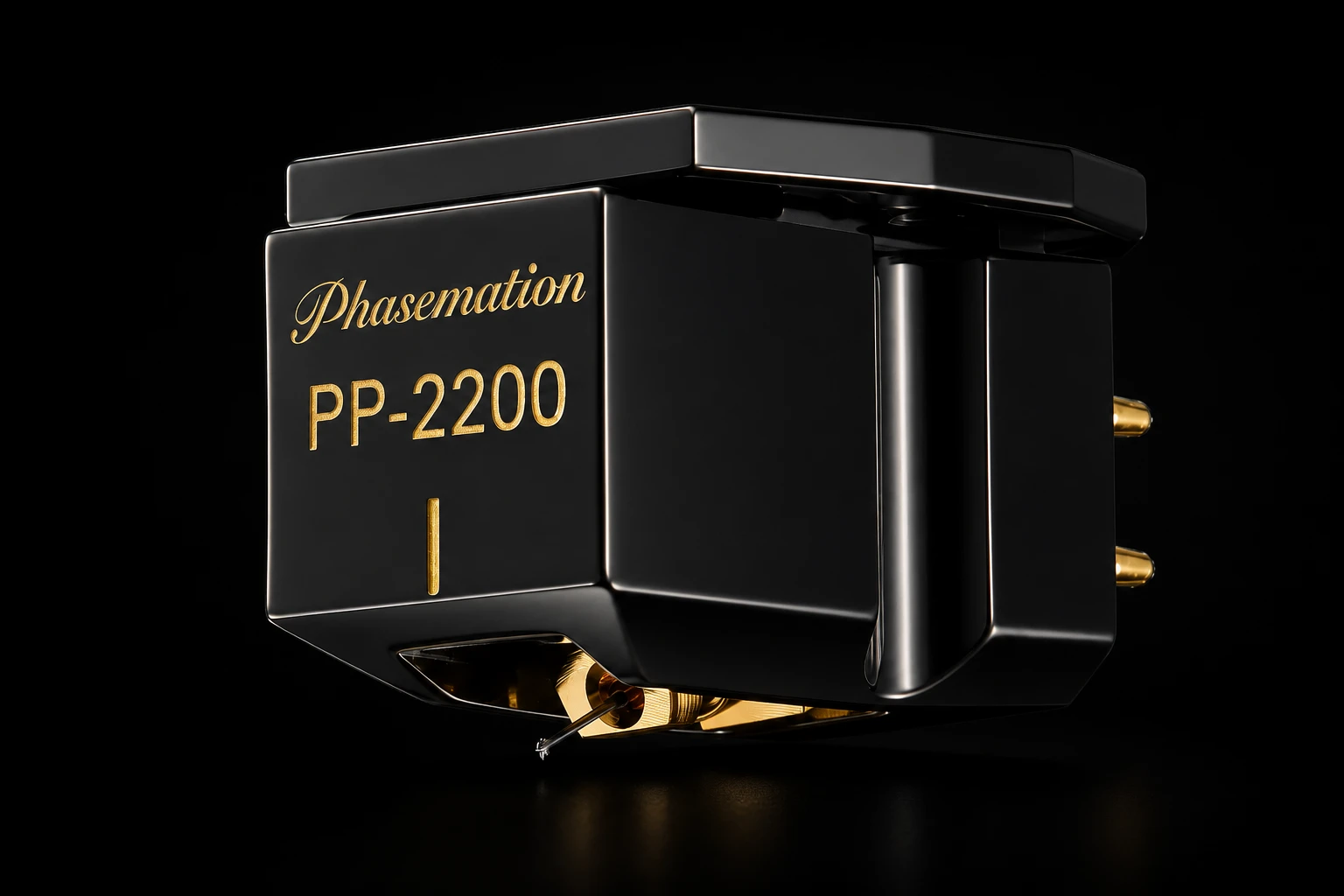
The PP-2200 was publicly previewed at HIGH END Vienna in June 2026, giving the cartridge an international introduction before its planned domestic release. Sales in Japan are scheduled to begin on September 10, 2026, with an indicated price of approximately $3,935.
Pricing and availability outside Japan have not been specified. International buyers will therefore need to wait for regional distributors to confirm local release details. Even so, the announced price and direct replacement of a model previously used as a reference product establish the PP-2200 as a serious, specialized component within Phasemation’s moving-coil range.
Conclusion
The Phasemation PP-2200 stands out for the clarity of its engineering purpose. It replaces a cartridge produced since 2015, responds to component-processing and supply challenges, and uses that transition to introduce a substantially revised magnetic circuit. Phasemation’s central objective is greater generation efficiency, with claimed benefits including lower audible distortion, better preservation of fine information, and a stronger sense of presence.
Its ideal audience is the experienced vinyl enthusiast assembling a compatible moving-coil playback system and willing to give cartridge, tonearm, and phono-stage matching careful attention. The PP-2200 is not defined by added features; its attraction lies in a concentrated redesign of the process at the very beginning of the analog signal path.