TAD ME1TX: A Compact Monitor Built Around Coherent Driver Engineering
The TAD ME1TX is a high-end standmount monitor that combines TAD’s concentric CST driver, a beryllium tweeter, a reinforced enclosure, and a refined bass-loading system in a compact but serious loudspeaker package.
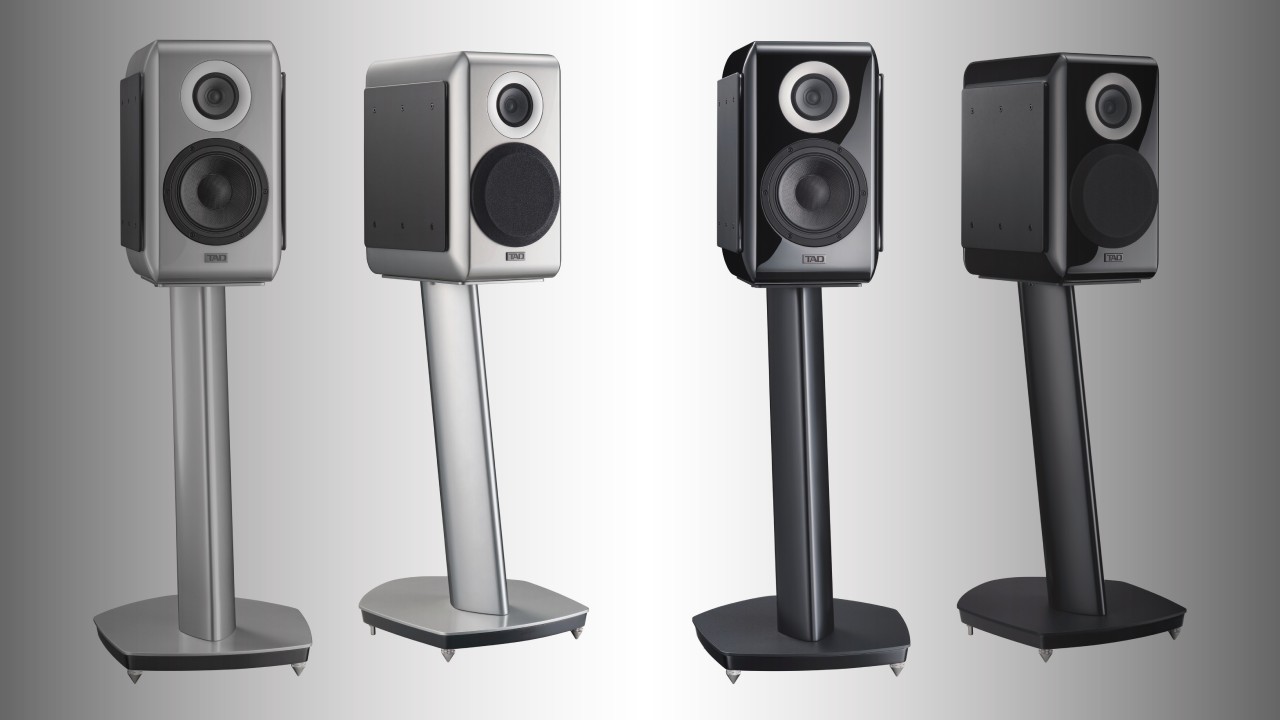
The TAD ME1TX is not simply a compact loudspeaker with premium materials. It is a monitor-style design built around a specific engineering idea: keeping the midrange and treble behavior coherent while controlling the cabinet, port, and bass driver so they do not undermine that goal. As the successor to the TAD-ME1 introduced in 2016, the ME1TX carries forward several established TAD concepts, including the Bidirectional Aero-Dynamic Slot port system, while adding revisions to the concentric CST driver, diaphragm construction, baskets, enclosure damping, and cosmetic finish options. For prospective owners, its appeal lies in the way those choices address practical loudspeaker concerns: imaging consistency, dispersion, resonance control, bass integration, placement, and long-term system matching.
A monitor format with serious engineering intent
The ME1TX is a standmount speaker, but its specification and construction place it firmly in high-end monitor territory rather than casual bookshelf use. Each speaker measures 254 x 411 x 402 millimeters and weighs 21 kilograms without its stand. That mass is significant for a compact enclosure, and it reflects the amount of structural work TAD has applied to the cabinet and driver system.
This format will appeal to listeners who want a loudspeaker that can fit into rooms where a large floorstander may be inappropriate, but who do not want a simplified compact design. The quoted frequency response is 36 Hz to 60 kHz, with crossover points at 420 Hz and 2.5 kHz. The impedance is specified at four Ohms, and sensitivity is 85 dB at 2.83 Volt / 1 meter. Those figures suggest a speaker intended for careful partnering with capable amplification rather than a casual plug-and-play role in a lightweight system.
The CST driver is the central design feature
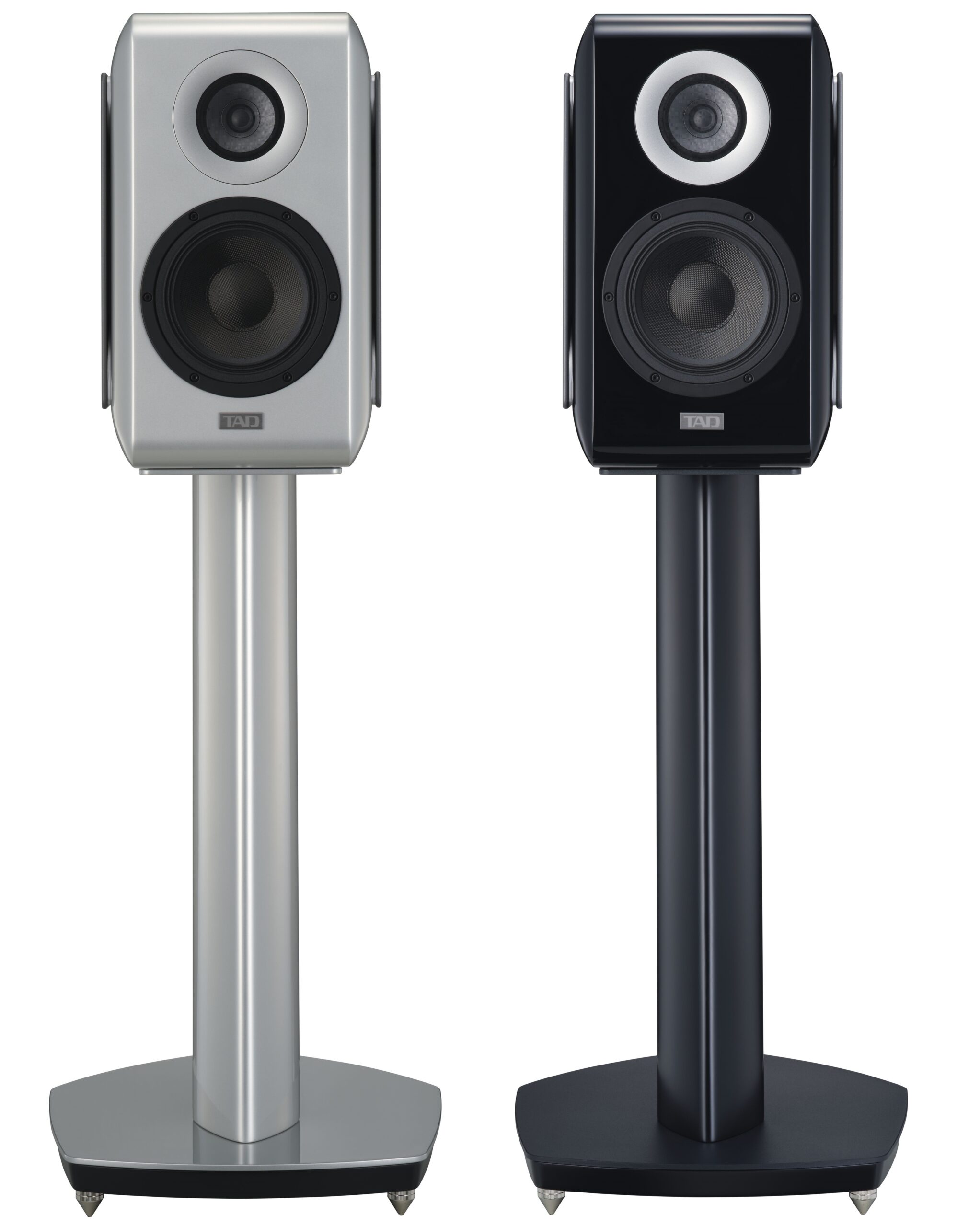
The most distinctive part of the ME1TX is TAD’s Coherent Source Transducer, or CST, driver. This is a concentric arrangement in which the midrange unit and tweeter are mounted on the same acoustic axis. In the ME1TX, the CST driver has a 90-millimeter diameter and is designed to cover a wide operating range from 420 Hz to 60 kHz.
The purpose of this arrangement is not merely visual neatness. By aligning the midrange and tweeter around a common point, TAD aims to manage directivity and phase behavior through the crossover region. The midrange cone is designed to help control the tweeter’s directivity, which can help maintain a more consistent relationship between the two units as frequency changes. For a listener, the practical attraction is that this type of architecture is intended to support stable imaging and a natural sound field, especially where the transition from midrange to treble can otherwise become audible or uneven.
This approach may be especially relevant in real rooms, where off-axis sound contributes strongly to what is heard. A driver system that pays close attention to dispersion and phase alignment can be valuable not only for a single central listening position, but also for maintaining tonal consistency as sound reflects into the room. TAD’s implementation is clearly aimed at coherence rather than simply extending the frequency range on paper.
Beryllium tweeter and optimized diaphragm geometry
The ME1TX uses a newly engineered 25mm beryllium diaphragm for its tweeter. TAD produces this diaphragm through a patented vapor deposition process, an approach also associated with the company’s higher-end models. Beryllium is valued in loudspeaker design because it can combine low mass with high rigidity, characteristics that are useful when a diaphragm must move rapidly while resisting unwanted deformation.
TAD also applies a computer-analyzed optimization technique called Harmonized Synthetic Diaphragm Optimum Method, or HSDOM, to refine the diaphragm shape. The stated purpose is to control both distributed vibration and pistonic movement. In practical terms, this kind of development is about managing how the diaphragm behaves across its operating range rather than treating the tweeter as a simple moving surface. The ME1TX’s stated upper extension reaches 60 kHz, but the more meaningful point for most owners is that the tweeter has been engineered for controlled behavior beyond the conventional audible band, which may contribute to more orderly performance within its core working range.
Midrange and woofer materials chosen for control
The CST midrange diaphragm is made from magnesium alloy. TAD describes it as lightweight, with high internal loss properties. Anodizing and surface coating are used to improve durability and further increase internal loss. The goal is to suppress resonance, including small resonant effects that can arise around the lead wire connection to the voice coil. These are the kinds of details that matter in a monitor speaker, where midrange clarity and driver integration are central to the design brief.
Below the CST driver, the ME1TX uses a 160-millimeter woofer with a Multi-layered Aramid Composite Cone, or MACC, diaphragm. This cone is built from laminated woven and non-woven aramid fabrics. TAD’s stated aim is to produce rich, clear low-frequency output while keeping the mid-to-low range neutral. The woofer is paired with a refined Linear Drive Magnet Circuit and a corrugated foamed polycarbonate surround, both intended to support linear movement.
TAD has also re-engineered the basket arms for the midrange assembly and the woofer. In both cases, the aim is greater structural integrity and smoother sound-wave propagation behind the diaphragm. This is a reminder that driver performance is not just about cone material or magnet size. The mechanical structure around the moving parts can influence airflow, rigidity, and energy storage, all of which can affect how cleanly the driver operates.
A cabinet built to suppress unwanted vibration
The enclosure uses TAD’s SILENT technology, short for Structurally Inert Laminated Enclosure Technology. It combines birch plywood braces with high-loss MDF panels, and TAD reinforces the cabinet with 5-millimeter-thick steel panels on both sides. The objective is to reduce cabinet vibration and provide a stable mechanical foundation for the drivers.
This kind of construction is important because a loudspeaker cabinet is not just a box that holds the drivers. If panels flex or store energy, they can add their own delayed output. In a high-resolution monitor, that behavior can work against the precision sought from the driver layout. The ME1TX also uses selected acoustic absorber materials inside the cabinet, positioned according to analyses of internal standing waves. That detail matters because internal reflections and standing waves can escape through the driver diaphragms or port system and interfere with the intended sound field.
ADS ports aim for controlled bass from a compact enclosure
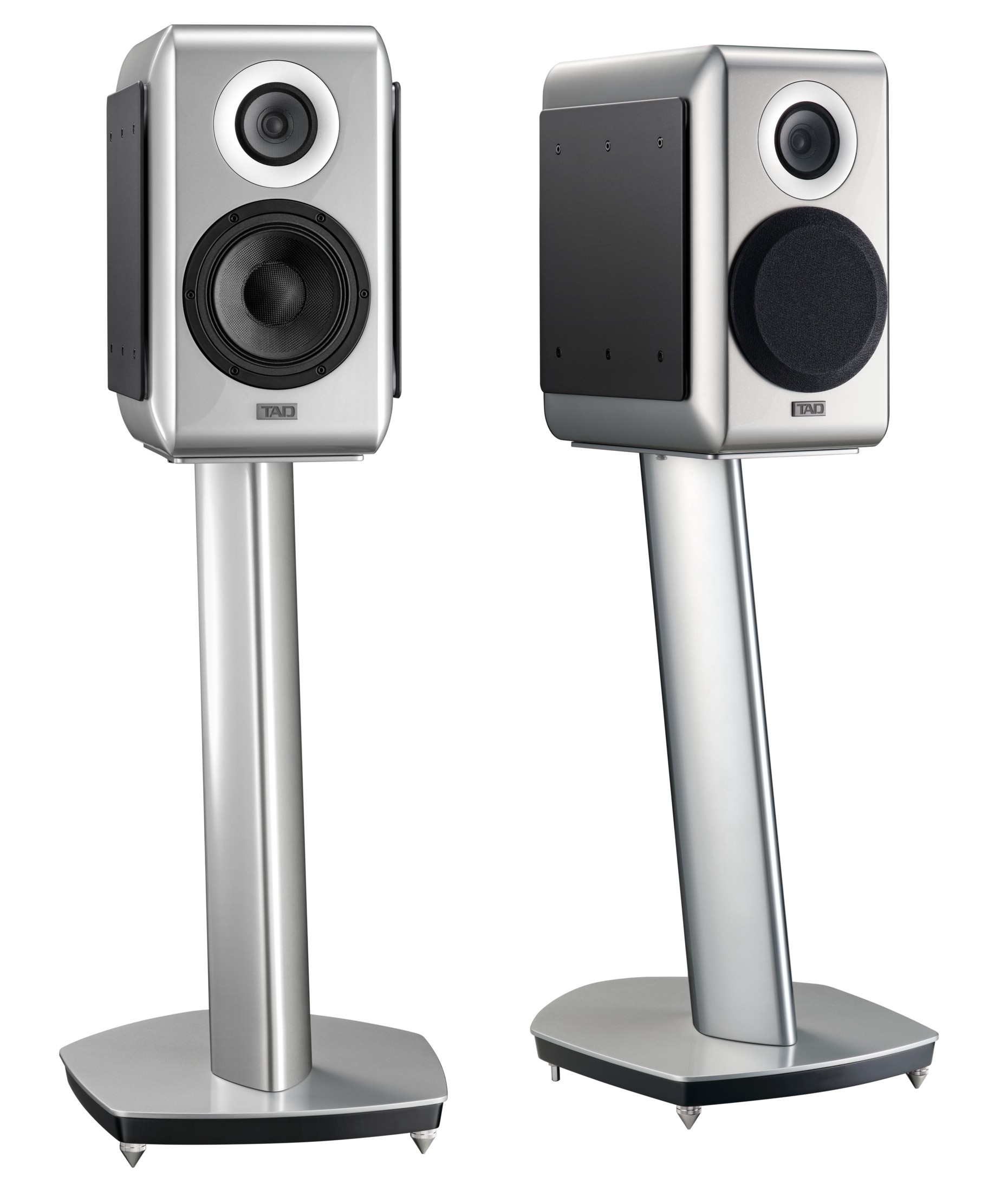
The ME1TX continues with TAD’s Bidirectional Aero-Dynamic Slot port design. Instead of a conventional round port, it uses slit-shaped ports on the side panels, with flared openings at both the front and rear. This geometry is intended to smooth airflow, reduce port noise at higher volume levels, and prevent internal standing waves from escaping in a way that would interfere with the speaker’s output.
The symmetrical arrangement of the port openings, both laterally and along the front-rear axis, is designed to cancel vibrations caused by port movement. For a compact monitor specified down to 36 Hz, bass loading is a critical part of the design. The ADS approach suggests TAD has tried to extract useful low-frequency performance without treating the port as an afterthought. For owners, this may matter in rooms where bass quality and cabinet control are more important than simply producing the largest possible enclosure.
Finishes, stands, and room integration
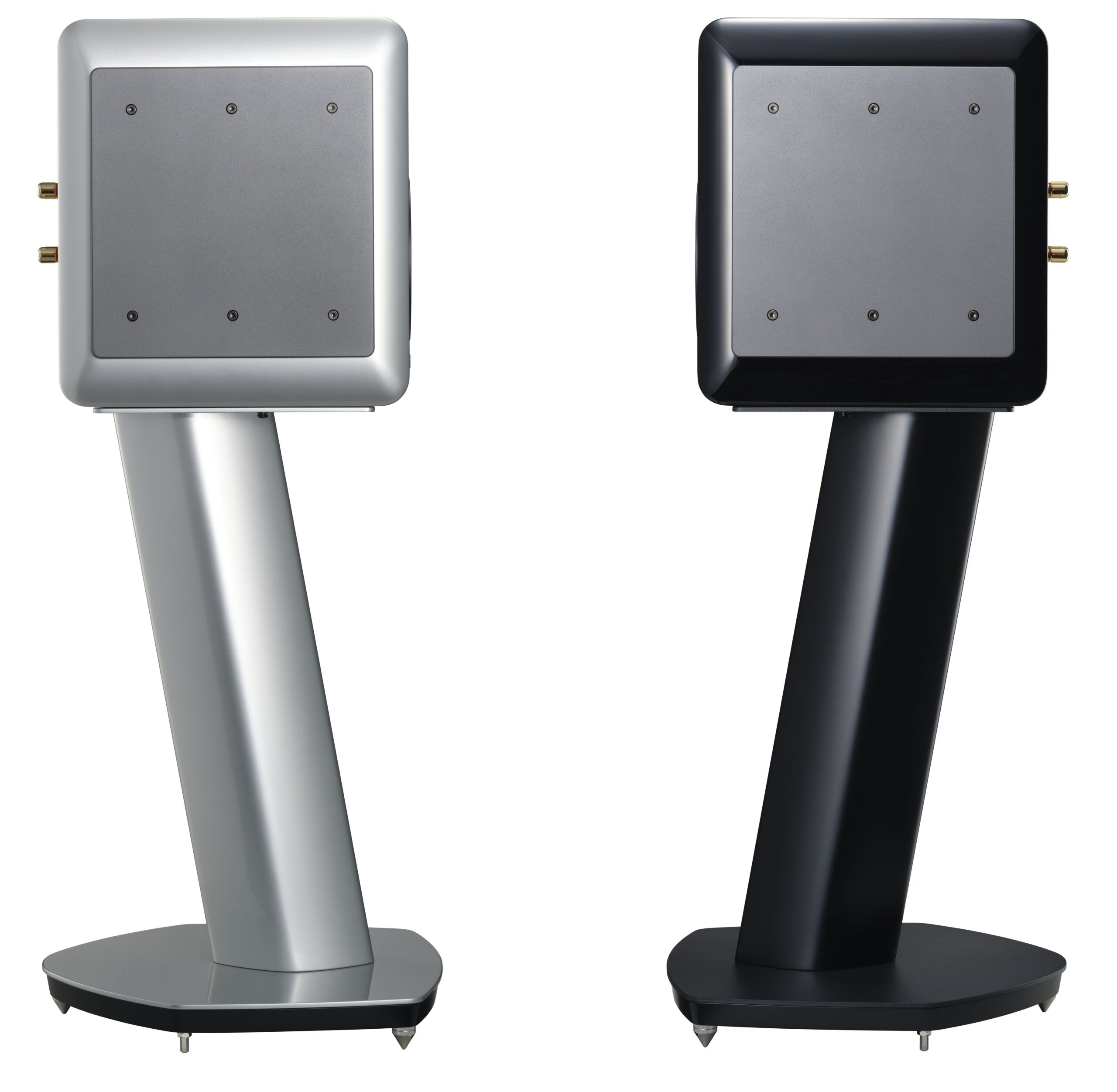
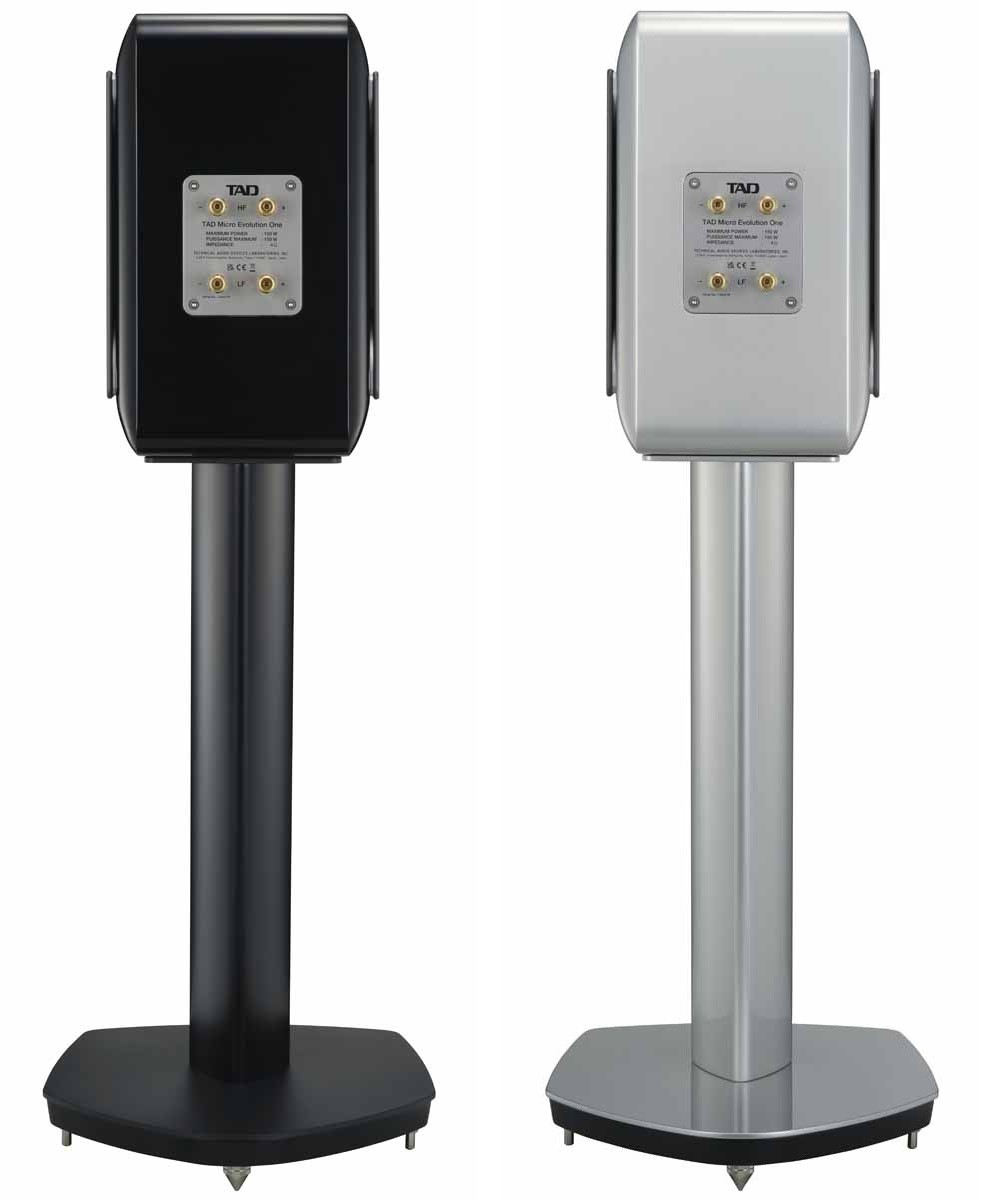
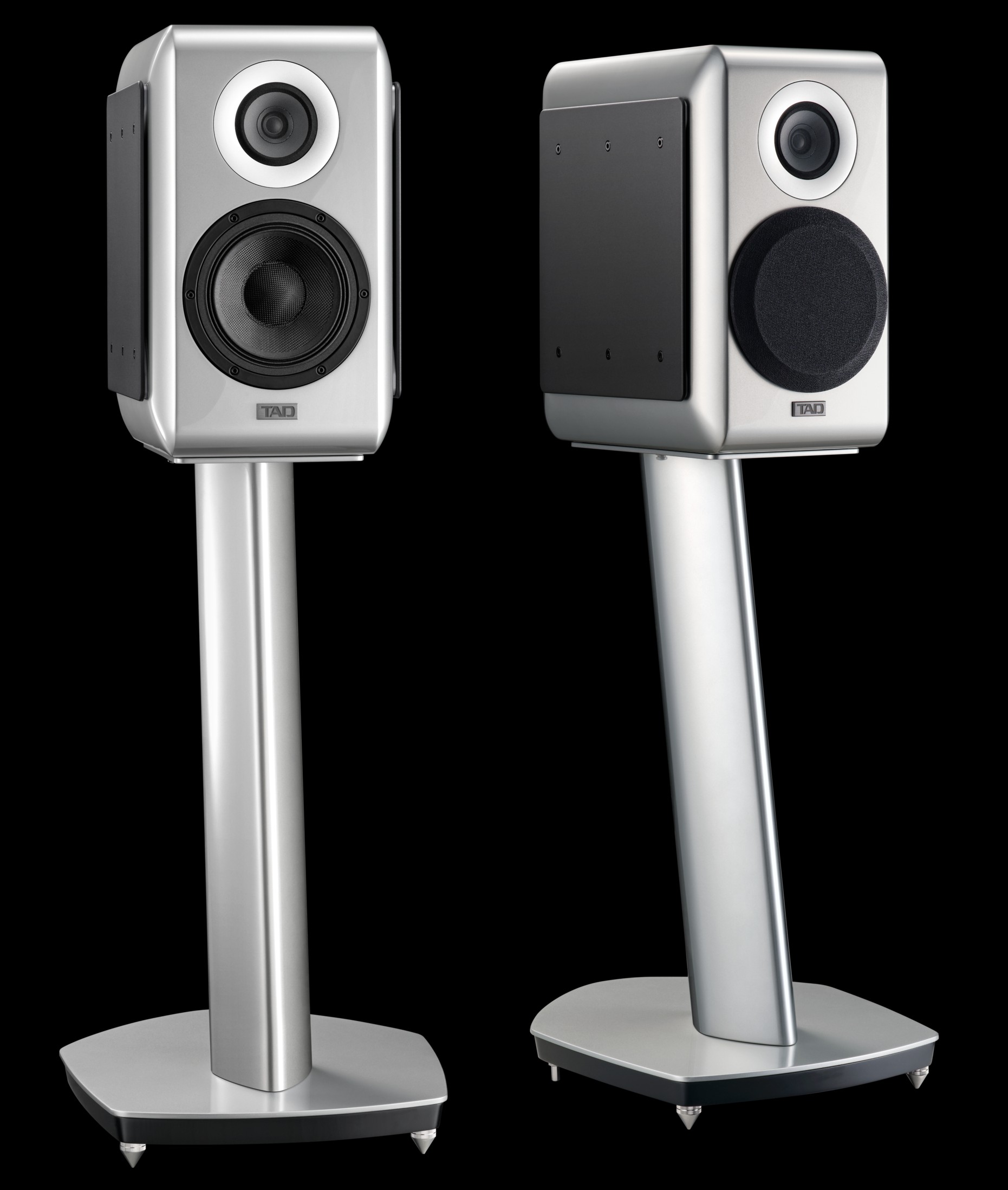
The ME1TX is available in black and silver white. The silver white finish is new for this generation, while black continues the more traditional option. TAD describes a labor-intensive finishing process involving clear coat application, base-coat polishing, and final surface polishing. This is relevant because a speaker in this price category is also a long-term piece of furniture, and finish quality can influence how comfortably it fits into a living space or dedicated listening room.
The speaker is supplied with non-slip pads for placement under the enclosure, a cleaning cloth, and a woofer grille designed to have minimal impact on performance. TAD also offers dedicated TAD-ST3TX stands in matching black and silver white finishes. Each stand weighs 16 kilograms and uses an angled design intended to reduce sound reflection and diffraction while improving structural integrity and vibration damping. For a standmount speaker of this mass and ambition, the stand is not a cosmetic accessory; it is part of the mechanical support system and a meaningful consideration in installation planning.
Conclusion
The TAD ME1TX is best suited to listeners building a serious high-end system around a compact monitor rather than a large floorstanding loudspeaker. Its four-Ohm impedance, 85 dB sensitivity, 21-kilogram cabinet weight, and optional 16-kilogram dedicated stands point to a product that deserves robust amplification, careful placement, and a stable support platform. It will be most attractive to owners who value coherent driver geometry, resonance control, premium diaphragm materials, and refined cabinet construction. It is less likely to suit those seeking a lightweight bookshelf speaker, a low-cost system solution, or a speaker chosen mainly for maximum sensitivity. At $17,300 per pair in black and $17,500 per pair in silver white, with matching stands priced at $2,800 and $2,900 per pair respectively, the ME1TX occupies a specialist high-end position. Its strongest documented qualities are the concentric CST driver with beryllium tweeter, controlled midrange and woofer engineering, heavily damped SILENT enclosure, ADS bass-port system, and carefully executed finish options. For the right system and room, it offers a concentrated version of TAD’s loudspeaker engineering in a compact monitor form.