Nagra Streamer: A Compact Network Source for Serious Digital Systems
The Nagra Streamer is a compact network transport designed to connect modern streaming services, local files and USB storage to high-quality digital-to-analog converters.

The Nagra Streamer is a notable addition to a brand long associated with precision digital recording and high-end playback hardware. Rather than arriving as an all-in-one player with built-in digital-to-analog conversion, it is positioned as a dedicated digital source: a compact network transport intended to feed an external DAC. That choice is central to its appeal. It allows owners of Nagra converters, and users of other high-quality DACs, to add contemporary streaming and file playback without replacing the conversion stage they already value. The result is a product that addresses a practical gap in many serious hi-fi systems: how to bring streaming, local network audio and USB-stored music into a refined system while keeping the signal path focused and flexible.
### A Modern Source from a Digital Heritage Brand
Nagra’s history gives useful context for the Streamer. The company introduced the Nagra D in the early 1990s, a 24-bit/96kHz digital recorder that was advanced for its time and became relevant in professional music and film production. Later, the brand’s CDC reference CD player represented another stage in its digital playback story. The Streamer follows that lineage, but it is clearly aimed at today’s listening habits, where high-resolution music is available not only from owned files but also through online streaming platforms.
What makes the Streamer interesting is not simply that it adds network audio to the catalogue. It does so in a way that respects the role many Nagra products have traditionally played: focused, purpose-built components intended to integrate into demanding systems. The Streamer is not presented as a lifestyle speaker, a one-box amplifier or a DAC replacement. It is a digital transport for listeners who want access to modern sources while preserving the rest of their system architecture.
### Compact Chassis with a Clear System Purpose
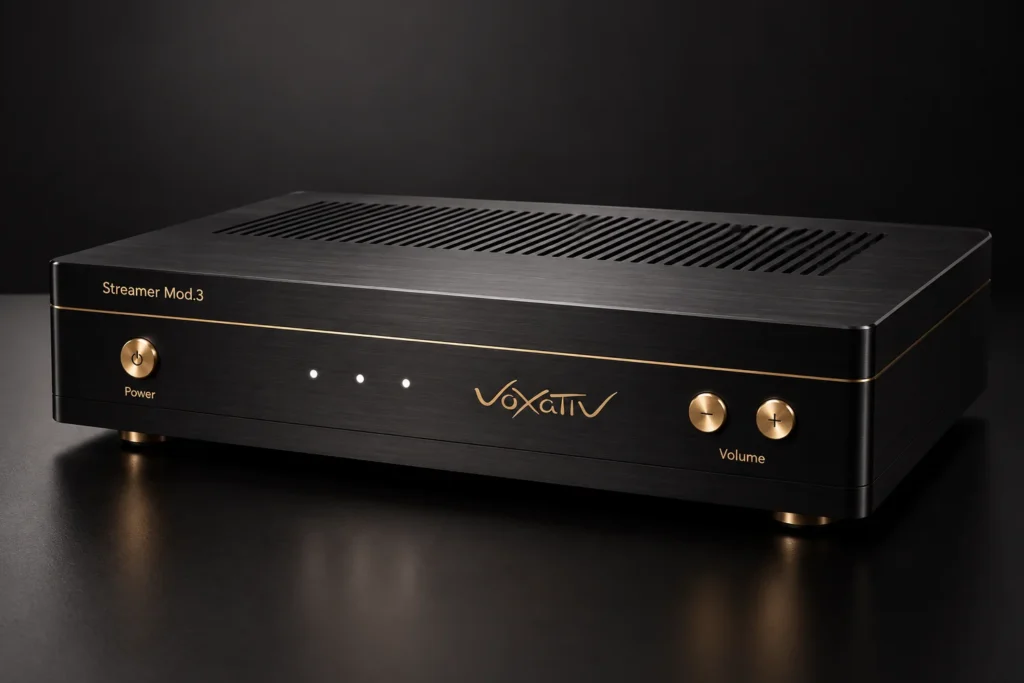
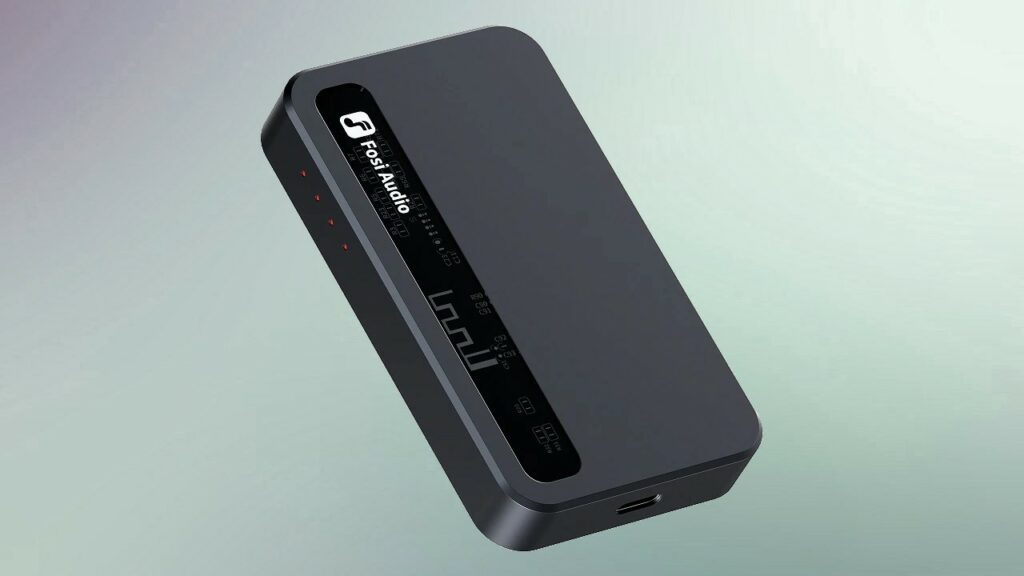
The Streamer’s physical design is one of its most distinctive elements. Its chassis is described as being the size of the Nagra VII, with a form factor intended to complement that digital recorder. This continues a pattern within Nagra’s product families, where the Classic line drew from the Nagra V and the HD line from the Nagra VI. In practical terms, the Streamer is compact, solid and deliberately space-efficient.
The cabinet is precisely CNC-machined from solid aluminum, a construction approach that emphasizes rigidity and robustness. For a digital transport, this kind of mechanical execution may matter to owners who expect a source component to sit confidently among higher-end electronics, both physically and visually. The compact footprint is also a real-world advantage. Many serious audio racks are already crowded with amplifiers, power supplies, DACs, phono stages, disc players or network hardware. A source that is “as large as needed, but no larger” is easier to place without forcing a system redesign.
Its size also supports flexible installation. The Streamer can be placed where network access and rack space make sense, then connected to a DAC using a digital cable. That is useful for systems where the DAC is already established in the main rack, or where the listener wants the network transport located away from more sensitive analogue components.
### Streaming Services and Local Playback Options
The Nagra Streamer is designed around the main ways many listeners now access music. It supports direct streaming from Tidal Connect, Spotify Connect, Qobuz and internet radio through vTuner. These options cover both subscription-based listening and more casual discovery, giving the component a broad range of daily-use scenarios. Tidal Connect and Spotify Connect are especially convenient because playback can be controlled from the familiar service apps, reducing the need to learn a proprietary interface for basic use.
Qobuz support is significant for listeners who prioritize high-resolution catalogues and album-focused browsing. Internet radio through vTuner adds another dimension: news, specialty programming, live stations and niche music broadcasts can all become part of a high-quality system without additional hardware. The Streamer is also expected to become Roon Ready in the near future, according to the published information. For Roon users, that would make the product easier to incorporate into a multi-room or library-driven digital environment, though prospective buyers should confirm final certification status before making plans around that capability.
Beyond commercial services, the Streamer supports AirPlay 2 and UPnP/DLNA. AirPlay 2 is useful for easy wireless playback from Apple devices and compatible apps, while UPnP/DLNA provides a route for playing local files from networked storage or media servers. This combination makes the Streamer more than a service-specific endpoint; it is intended to bridge both cloud-based music and music libraries kept at home.

### Network and USB Connectivity for Different Libraries
The Streamer connects to a local network using an RJ45 Ethernet cable. A wired network connection is often preferred in serious hi-fi installations because it can provide predictable connectivity and reduce reliance on wireless signal strength. The inclusion of Ethernet suits the product’s role as a stable source component in a fixed system, rather than a portable device moved from room to room.
There is also a USB Type-A connector for playing files directly from a USB storage device. This is a practical feature for listeners who keep albums, high-resolution downloads or curated collections on external drives. It provides an alternative to maintaining a full network server or NAS-based setup. For someone with a large but simple file library, direct USB playback can be a convenient way to bring that library into a high-end system without adding another always-on computer or network component.
### Digital Outputs for Nagra and Non-Nagra DACs
A key design decision is that the Nagra Streamer outputs a digital signal rather than functioning as a complete player with its own DAC stage. For Nagra owners, the N-Link connection is provided for use with Nagra DA converters. This gives the product a natural place in an all-Nagra or partly Nagra digital system, where the Streamer can act as the modern network front end feeding a dedicated Nagra conversion stage.
The inclusion of SPDIF output broadens the audience. It means the Streamer is not limited to Nagra DACs and can be connected to other digital-to-analog converters that accept SPDIF. This is important because many potential owners may already have a DAC they want to keep. In that context, the Streamer becomes an upgrade to source access and digital transport functionality, not an attempt to replace the entire digital front end. This modular approach is especially attractive in systems where the DAC was chosen carefully for its features, inputs or compatibility with the rest of the system.
### Power Supply Flexibility
The Streamer is supplied with its own external power supply, so it is conceived as a complete operating product rather than an accessory that requires an additional purchase to function. At the same time, Nagra provides a path for owners who want to integrate it more deeply into an existing Nagra power ecosystem. The unit can be used with Nagra ACPS, MPS or Classic PSU 12 V power supplies.
That flexibility matters because power supply architecture is often part of how high-end systems are configured and refined. For an owner who already uses Nagra power supplies, the Streamer can potentially fit into a familiar installation strategy. For someone entering the Nagra ecosystem with this product, the standard external supply keeps the starting point straightforward, while the optional compatibility leaves room for future system development.

### Who the Nagra Streamer Is Most Suitable For
The Nagra Streamer is best suited to listeners who already have, or plan to use, a separate high-quality DAC. Its strengths are most relevant in systems where the conversion stage is not an afterthought and where the owner wants a dedicated network source rather than a multi-function box. It is also a logical match for existing Nagra digital systems, particularly those built around Nagra DA converters and the N-Link connection.
It will also appeal to users who value compact, carefully machined hardware and need a source that can fit into a crowded rack. The mix of Tidal Connect, Spotify Connect, Qobuz, internet radio, AirPlay 2, UPnP/DLNA, Ethernet and USB storage support makes it suitable for households that combine streaming services with local music files. On the other hand, listeners looking for a one-box player with built-in DAC, analogue outputs, amplification or speaker-driving capability should view it differently. The Streamer is purpose-built as a digital source, so its usefulness depends on having the right downstream components.
Conclusion
The Nagra Streamer’s strongest documented qualities are its focused role, compact machined-aluminum construction, broad modern playback support and flexible digital output options. It brings Tidal Connect, Spotify Connect, Qobuz, internet radio, AirPlay 2, UPnP/DLNA, wired networking and USB storage playback into a dedicated transport designed for use with external DACs. Its N-Link output makes it especially relevant for Nagra DA converter owners, while SPDIF gives it wider system compatibility. For listeners who want to add contemporary streaming and file playback to a serious hi-fi system without replacing a trusted DAC, the Nagra Streamer occupies a clear and practical position.