
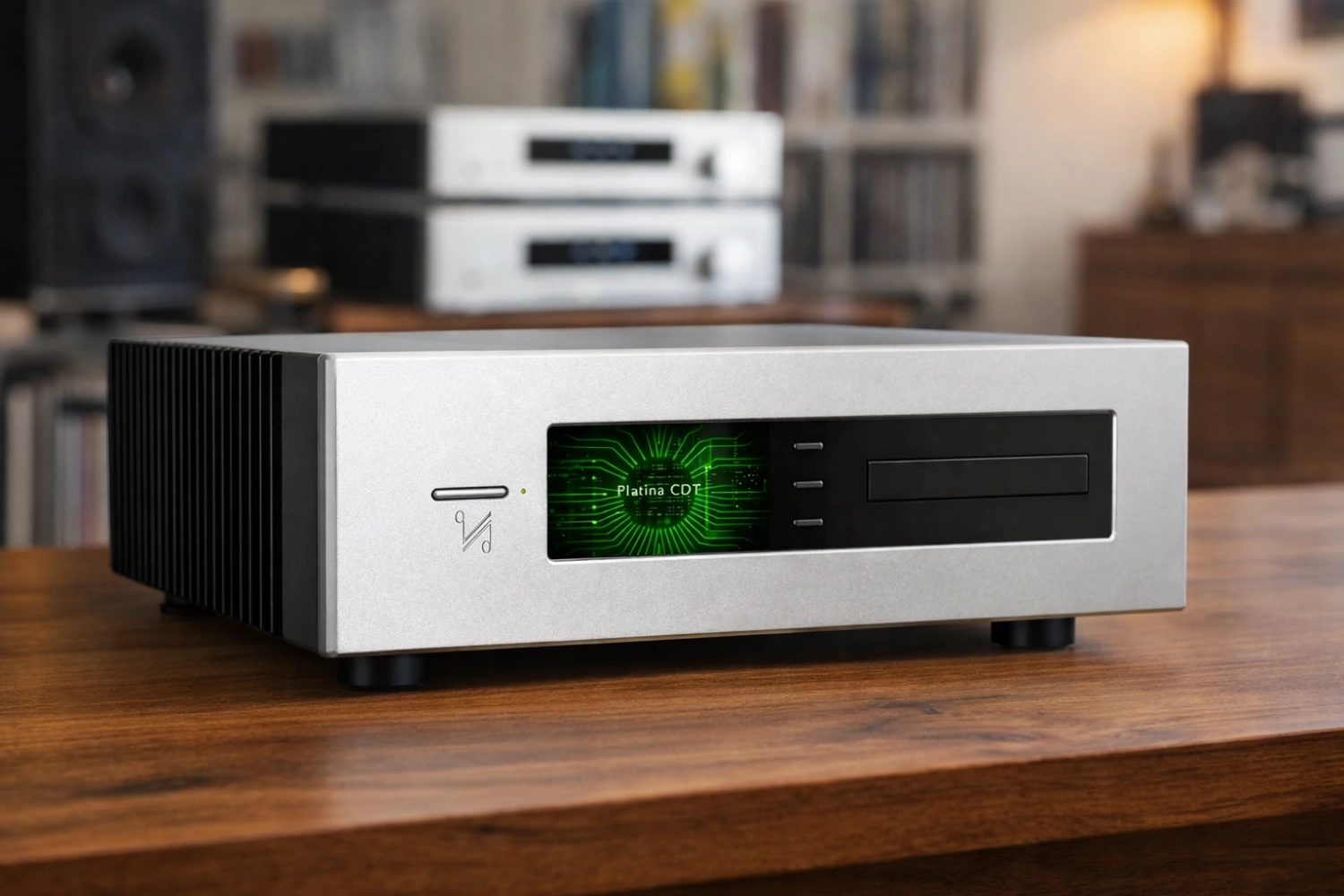
The Quad Platina CDT addresses a clear requirement: high-quality CD playback for listeners who already own a capable digital-to-analog converter. By omitting an internal DAC, Quad has kept the component focused on disc reading, digital signal management, clocking, power-supply isolation, and delivery to an external converter. That approach makes particular sense within the Platina range, where the matching Platina Integrated already includes digital-to-analog conversion. It also gives the CDT a broader role in systems built around another compatible DAC or amplifier. Alongside its dedicated CD mechanism, the player adds USB storage playback, allowing it to serve as a straightforward source for both physical discs and locally stored music files.
A purpose-built transport rather than a complete CD player
The distinction between a CD transport and a conventional CD player is central to the Platina CDT. It reads and processes digital information from a disc, but it does not convert that information into an analog signal. Conversion instead takes place in a connected DAC, digital preamplifier, or suitably equipped integrated amplifier.
This division of responsibilities can be useful for owners who have already invested in digital conversion elsewhere in their system. It avoids duplicating a DAC inside the disc player and allows the user to retain a preferred converter. In a complete Platina system, the CDT can feed the DAC in the Platina Integrated; outside that ecosystem, its standard digital outputs make it suitable for other compatible components.
The design is therefore less about maximizing the number of functions in one enclosure and more about concentrating resources on the stages that remain inside it. Quad has focused on disc handling, data retrieval, timing, electrical isolation, and digital output—the areas that define the transport’s job.
Disc reading and timing receive dedicated attention
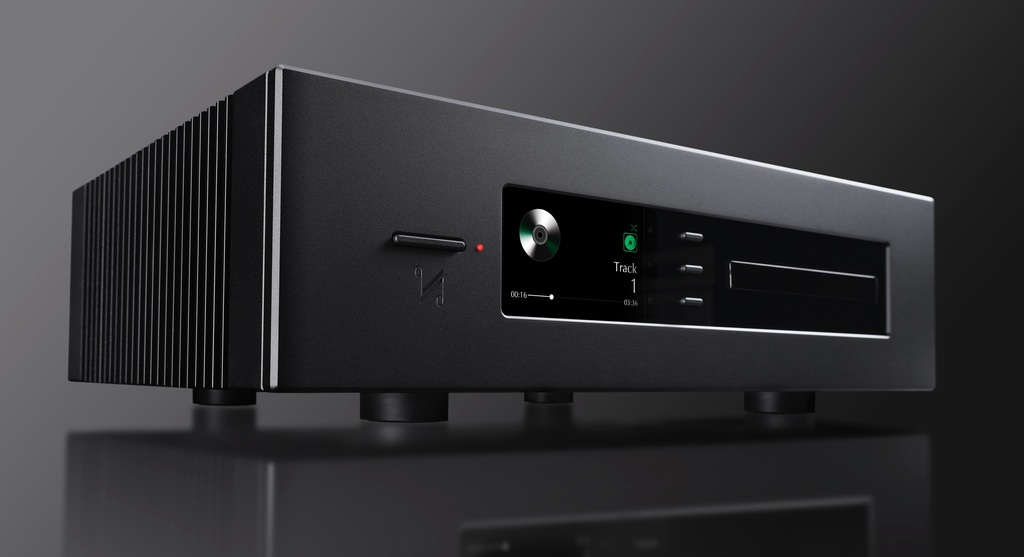
At the heart of the Platina CDT is a dedicated CD transport mechanism paired with a custom servo-control system. A dual-core processor manages the digital data retrieved from a disc, with the stated aim of reducing reading errors and jitter before that data leaves the player.
Clocking is handled by a temperature-compensated crystal oscillator, or TCXO. Temperature compensation is intended to help the oscillator maintain stable operation as internal conditions change. Quad supports this master clock with its own independent low-noise power supply, separating a timing-critical circuit from other demands within the component.
These provisions matter because a transport must do more than simply recover the correct sequence of digital data. It must also pass that data to an external converter in a consistently timed form. The final result will still depend on the connected DAC and the rest of the system, but the Platina CDT’s architecture shows deliberate attention to the quality and stability of its digital output.
Power and mechanical design support the digital architecture
The power supply is based on a Noratel toroidal transformer, with additional isolation applied to key circuits. Quad also provides separate power lines for the motor, servo, decoder, and display systems. This arrangement is intended to limit interaction between sections with different electrical demands and to minimize interference reaching the signal path.
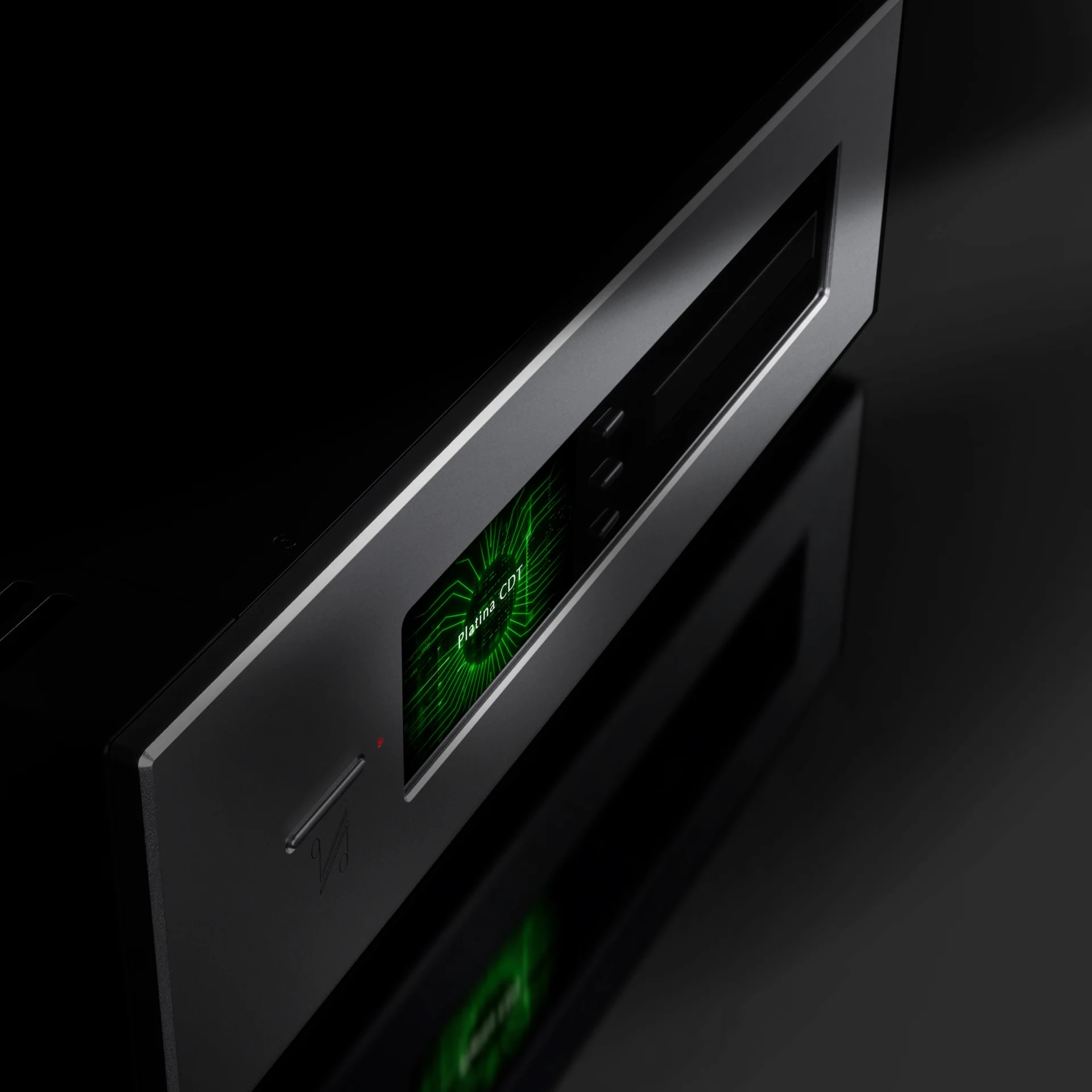
Mechanical control receives similar consideration. The transport mechanism is shielded, while the internal layout is designed to reduce vibration and interference. Externally, the component uses a steel chassis, anti-resonance feet, and a thick aluminum front panel. At 445 millimeters wide, 135 millimeters high, and 310 millimeters deep, it has the proportions of a full-width hi-fi separate. Its 10.9-kilogram weight also reflects a more substantial construction than that of a lightweight utility disc drive.
These choices are relevant in a device containing a spinning disc, an electromechanical servo system, digital processing, and a display. Rather than treating those sections as one undivided assembly, Quad has used shielding, isolation, separate supply lines, and chassis measures to manage their potential interaction.
Straightforward controls and coordinated styling
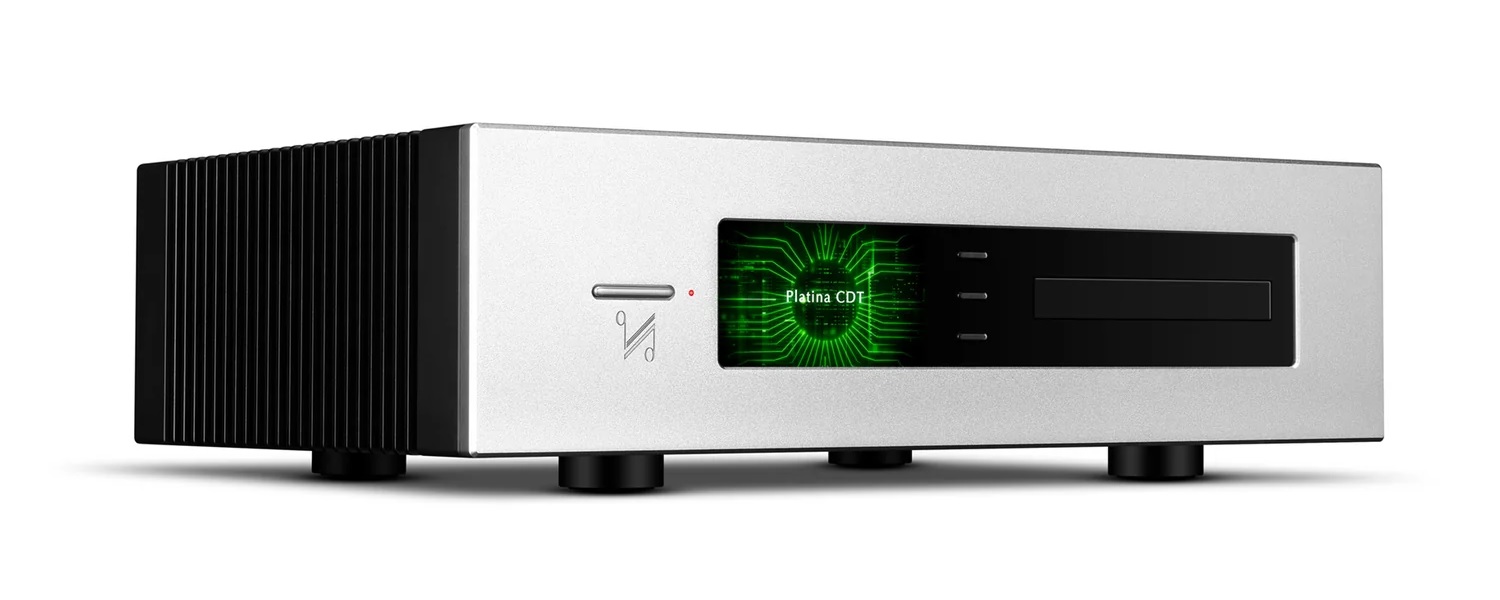
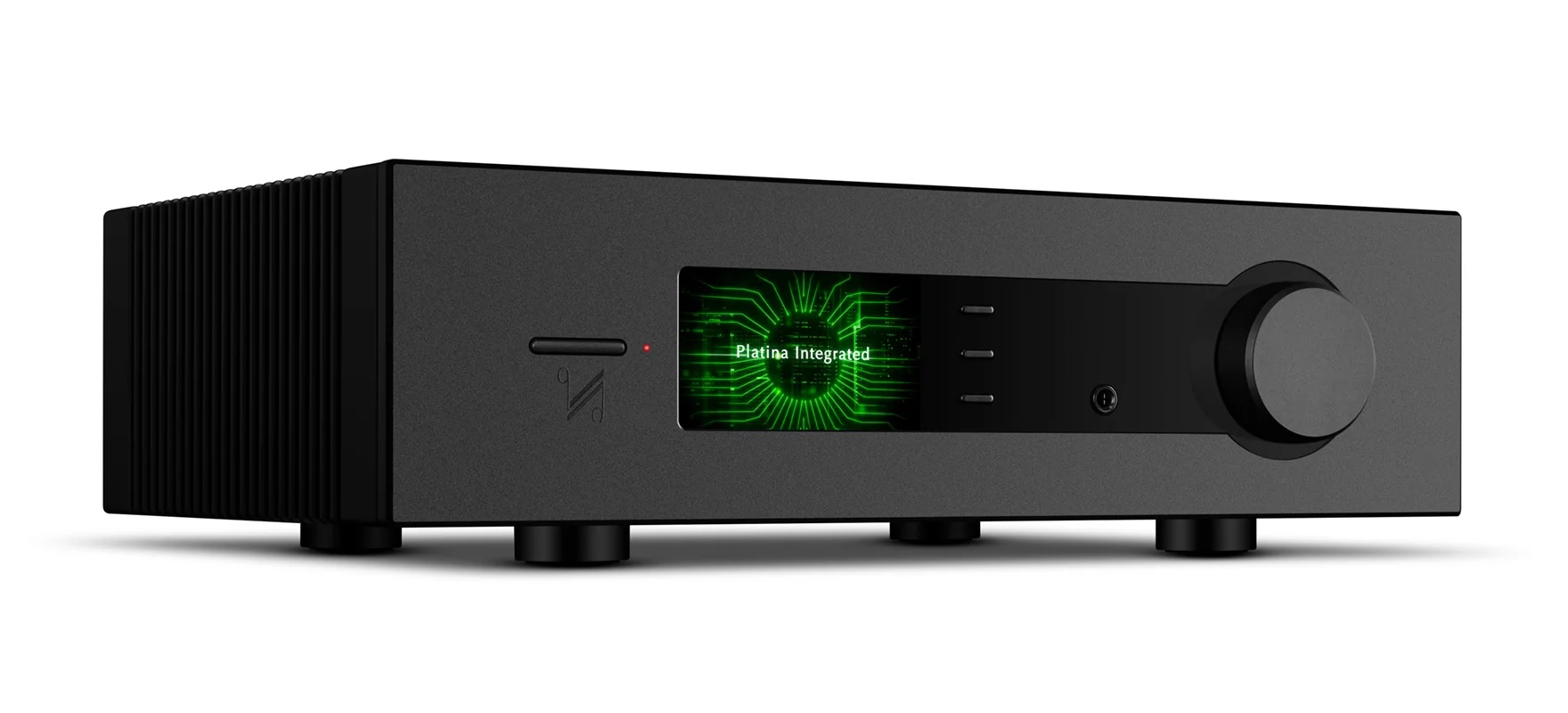
The front panel is deliberately restrained. It carries a power button, the disc tray, three control buttons, and a 4.3-inch color display. The screen can show metadata and user-selectable settings, offering more information than a basic track-number display without filling the fascia with controls.
Its display and overall appearance match the Platina Integrated and Platina Stream. That visual consistency will be especially attractive to owners assembling a coordinated Quad system, although it does not limit the transport to matching electronics. Black and silver finishes provide options for integration with different equipment racks and existing components.
The physical interface also preserves the familiarity expected of a disc player. A conventional front-loading tray and direct controls mean that basic CD operation does not depend on a phone, tablet, or streaming application. For listeners who value immediate access to a physical library, that simplicity remains a practical advantage.
Support for more than commercially pressed CDs
The Platina CDT is not restricted to standard pressed audio CDs. It can also play CD-R and CD-RW media, as well as data discs. That wider compatibility is useful for collections containing home-authored compilations, archived material, or music stored on recordable optical media.
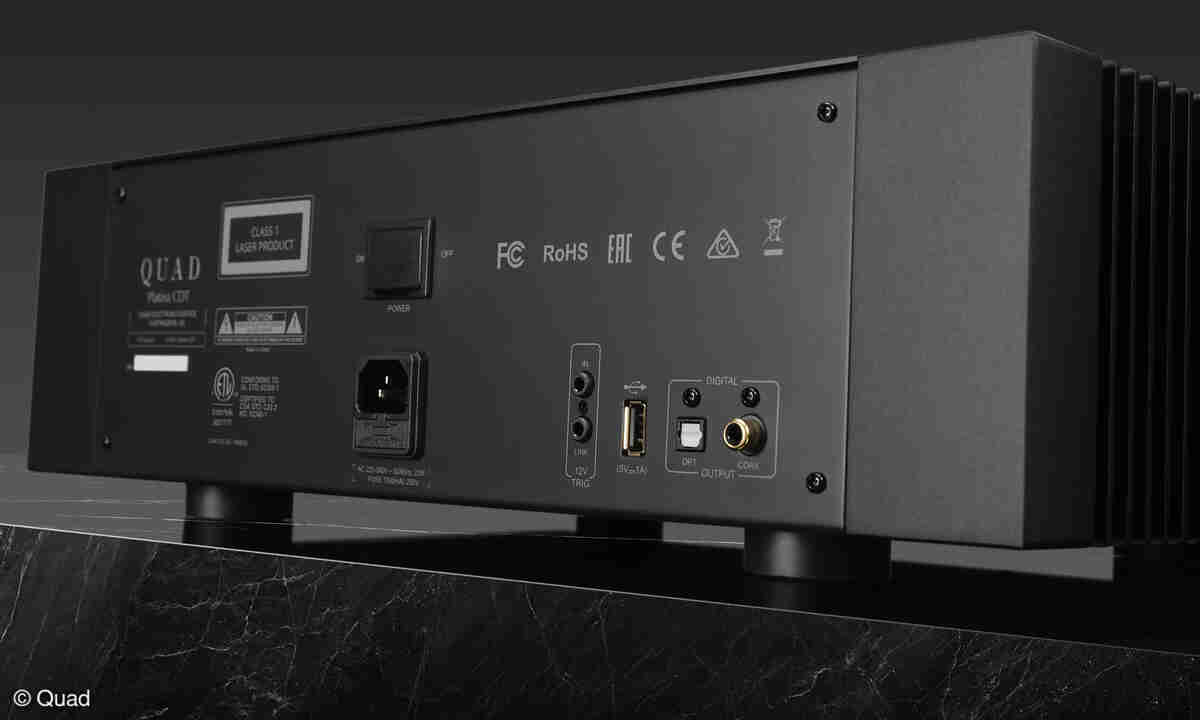
A rear USB-A port extends the product beyond disc playback. External storage devices can contain music in FLAC, WAV, WMA, AAC, MP3, and APE formats, which the CDT handles in their original resolution. USB playback uses the same internal processing and clocking systems employed for discs.
This does not turn the CDT into a network streamer: no network services or streaming-platform features are documented. Instead, USB provides a direct route for locally stored files. That can suit listeners who want file playback without adding another networked source or relying on an internet connection.
Digital outputs and system matching
The Platina CDT provides two conventional digital output options: coaxial through an RCA connector and optical. This makes its intended role unambiguous. One of these outputs must be connected to a compatible digital input because the transport has no analog outputs and no internal DAC.
Coaxial connectivity is common on standalone DACs and digitally equipped amplifiers, while optical can be helpful where electrical isolation between source and converter is preferred or where it better suits the available inputs. Providing both gives owners practical flexibility when integrating the transport into an existing system.
Prospective owners should confirm that their amplifier or DAC has a suitable optical or coaxial input. Those starting without digital conversion will need an additional component, whereas users of the Platina Integrated already have the necessary conversion stage within the matching amplifier.
Who the Quad Platina CDT is for
The strongest case for the Platina CDT is made by listeners with a meaningful CD collection and an existing external DAC or digitally equipped amplifier. It is also relevant to owners who prefer to keep transport and conversion duties separate, whether to preserve a favored DAC or to retain flexibility when changing other parts of the system.
Its CD-R, CD-RW, data-disc, and USB support broaden that audience to people whose libraries combine commercial discs, recordable media, and locally stored files. The front-panel controls and display should appeal to those who want direct, appliance-like operation rather than an experience centered on an app.
It is less suitable for someone seeking a one-box player with analog outputs, because an external conversion stage is mandatory. Nor is it presented as a substitute for the Platina Stream or another full network streamer. The CDT is best understood as a specialized physical-media transport with useful local file playback, rather than an all-purpose digital source.
Conclusion
The Quad Platina CDT is distinguished by its disciplined focus on digital source duties. Its dedicated transport mechanism, custom servo control, dual-core processing, TCXO master clock, independently powered clock section, separated power lines, and mechanically substantial enclosure all support the central task of retrieving and delivering digital audio data. Optical and coaxial outputs make it straightforward to pair with a compatible external DAC, while CD-R, CD-RW, data-disc, and USB file support add flexibility without obscuring the product’s primary purpose. It is most naturally suited to owners of established CD libraries who already have digital-to-analog conversion in their amplifier or DAC, particularly those building a coordinated Platina system or seeking a dedicated transport with direct, familiar operation.
Join the discussion
Share your thoughts, listening impressions or product experience.