

Anniversary editions can amount to little more than a new color and a commemorative badge. Bang & Olufsen’s Centennial Collection takes a more considered approach. Rather than reproducing a single historic product, the company has brought together design references from several periods of its first century and applied them to three products serving distinctly different roles.
The collection comprises the Beoplay H100 Century Brown headphones, Beosound A5 Century Weave portable speaker and Beosound A9 Century Blue wireless speaker. Their underlying functions remain contemporary, but their finishes refer to early radio grilles, the stronger colors associated with the 1970s, brushed aluminum work refined during the 1980s, and more recent uses of leather and precision-turned controls.
This makes the Centennial Collection relevant beyond its commemorative purpose. It demonstrates how established industrial-design cues can be adapted to personal audio, portable listening and a larger domestic speaker without making the products look like replicas. Each model retains its normal use case while gaining a more expressive and historically informed identity.
A collection connected by materials and color
The three products are visually related through a controlled palette of Century Red, Chestnut Brown and Century Blue. These colors do not appear in identical proportions on every model. Instead, Bang & Olufsen varies their use according to the form and materials of each product, helping the collection feel coordinated without making it overly uniform.
Other recurring details include natural or brushed aluminum, checked patterns, leather accents and anniversary engravings. Each piece also carries a B&O Est. 1925 Anniversary logo. Those details establish the products as centennial editions, but the more interesting aspect is how references to different decades have been integrated into surfaces that owners will see and touch regularly.
The checked grille pattern is rooted in the appearance of early Bang & Olufsen radios, while the bolder colors point toward the 1970s. Brushed aluminum recalls a material treatment strongly associated with the company’s 1980s work. Leather and precisely finished controls connect the collection to more recent Bang & Olufsen design. The result is a layered retrospective rather than a tribute to only one model or era.

Beoplay H100 Century Brown: personal audio with archival detail
The Beoplay H100 is the collection’s headphone component. Its technical foundation includes titanium drivers, advanced Active Noise Cancellation and optimization for Dolby Atmos. Those features position it for contemporary private listening, including situations in which isolation from surrounding noise and support for immersive audio formats are priorities.
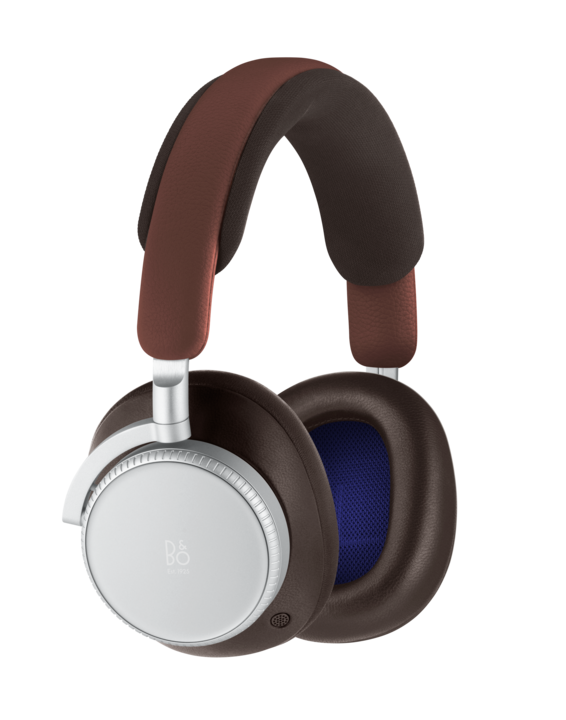
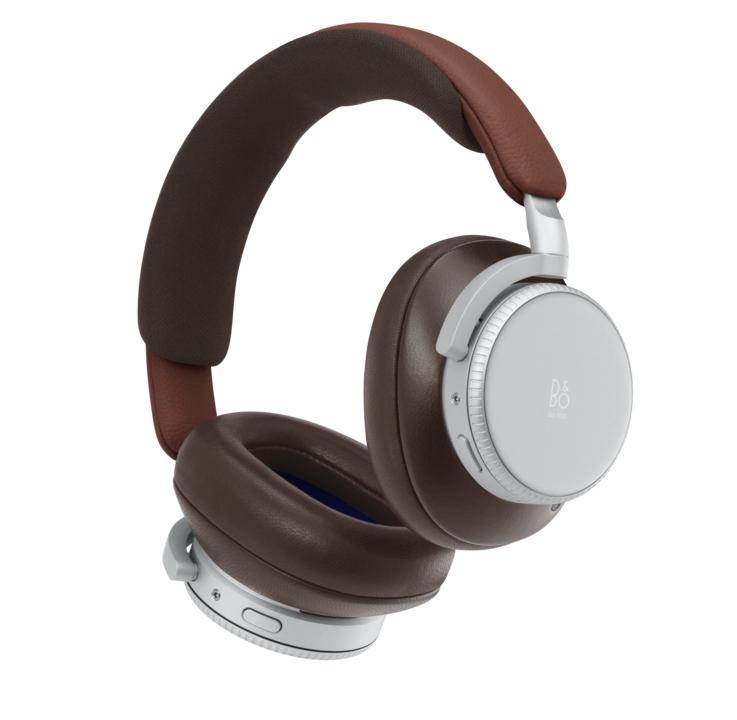
For the centennial edition, the functional headphone design is given a notably warmer finish. A Century Red leather headband is paired with a Chestnut Brown inner band and matching brown leather ear cushions. Century Blue details introduce contrast, preventing the brown and red combination from becoming visually subdued.
A natural silver glass disc carries the anniversary logo, providing a cooler material counterpoint to the leather. The supplied Century Red leather case also receives Century Blue accents. Coordinating the case with the headphones matters because it makes the complete package feel intentional, particularly for owners who expect a premium portable product’s accessories to receive the same design attention as the main device.
Among the three models, the H100 is the most personal interpretation of the centennial theme. Its leather, colored accents and glass disc are experienced at close range, while its ANC and Dolby Atmos optimization address practical modern listening requirements. It should therefore appeal to someone who wants the anniversary design in a format suited to individual rather than room-based listening.
Beosound A5 Century Weave: portability without generic styling
The Beosound A5 occupies a different role as a portable speaker equipped with both Wi-Fi and Bluetooth. That combination gives it flexibility across domestic and mobile situations: Wi-Fi can support its role around the home, while Bluetooth provides a direct connection when a suitable network is unavailable or unnecessary. Bang & Olufsen also specifies long battery life and built-in wireless charging, reinforcing the A5’s intended usefulness away from a fixed installation.
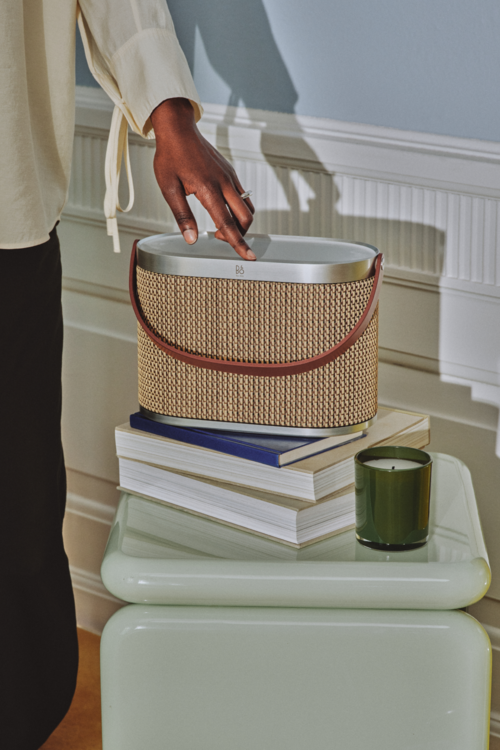
Its most distinctive centennial feature is the woven paper raffia exterior in beige and maroon. The checked weave reinterprets the grilles of 1950s speakers and the textures of the company’s early radios. Paper raffia gives the historical reference a physical dimension; it is not simply a pattern printed onto an otherwise conventional speaker covering.
A brushed aluminum frame provides structure and links the A5 to another period of Bang & Olufsen material design. A Century Red leather carrying strap serves both visual and practical purposes, while anniversary engravings identify the special edition more discreetly. Even the cable participates in the palette through its Century Blue finish.
The A5 may be the most versatile member of the collection because its portability, battery operation and two wireless connection methods allow it to move between rooms or accompany its owner elsewhere. At the same time, the raffia weave and leather strap give it the character of an interior object rather than anonymous portable electronics.
Beosound A9 Century Blue: a speaker designed to be seen
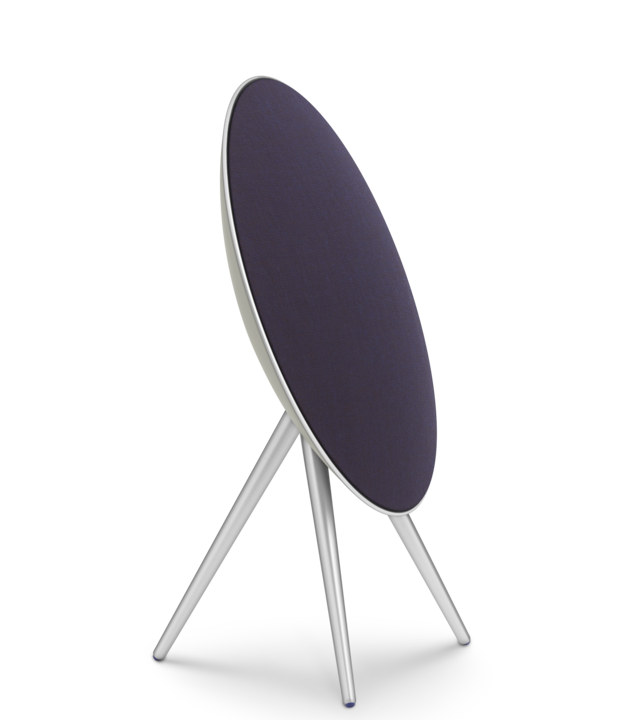
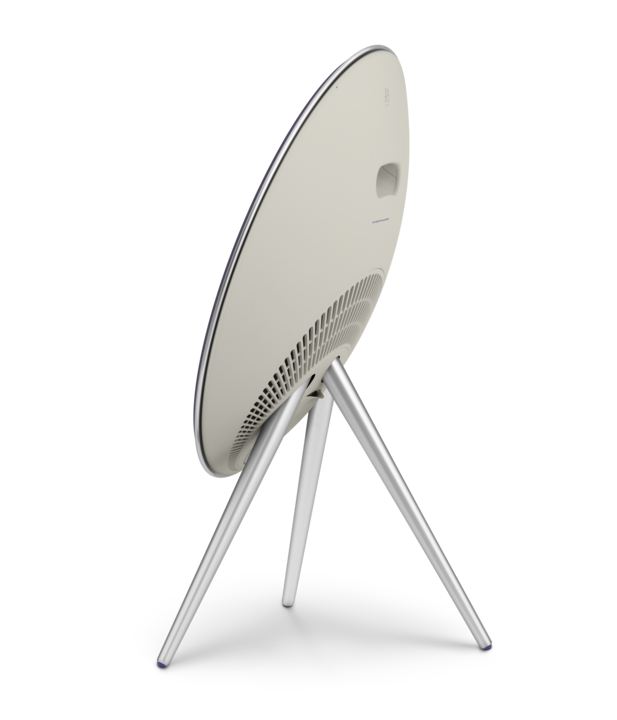
The Beosound A9 5th Gen is already defined by its circular, sculptural format. In the Centennial Collection, that large surface becomes a particularly effective canvas for the heritage treatment. Kvadrat Centennial Cadence fabric covers the front in a checked weave combining Century Blue and Chestnut Brown, producing a much more graphic appearance than a plain textile grille.
Its natural aluminum ring and legs receive a brushed finish inspired by Bang & Olufsen’s 1980s aesthetic. Century Blue feet and a matching cable add smaller but conspicuous points of color, while anniversary engravings acknowledge the company’s founders and the centennial context.
Behind that decorative treatment is a seven-driver configuration designed to provide room-filling sound. The A9 is consequently the collection’s principal room speaker as well as its largest visual statement. Its form is not intended to disappear into a conventional equipment rack, so the use of an expressive checked textile is consistent with the product’s established role as part of a room’s furnishing.
Prospective owners should pay particular attention to the Century Blue and Chestnut Brown combination. Unlike the relatively compact H100 or movable A5, the A9 has a persistent presence in an interior. Its appeal will therefore depend not only on its wireless-speaker function but also on whether its fabric, blue details and brushed metal complement the intended room.
Three different approaches to system use
Although the products share an anniversary theme, they are not three versions of the same idea. The H100 addresses private headphone listening and adds Active Noise Cancellation, titanium drivers and Dolby Atmos optimization. The A5 is the adaptable portable option, with Wi-Fi, Bluetooth, battery operation and wireless charging. The A9 is the dedicated room-oriented design, using seven drivers within a freestanding sculptural enclosure.
That breadth is useful because it allows an owner to engage with the centennial design language at an appropriate scale. Someone who does not need another room speaker can choose the headphones, while a listener seeking a product that moves between spaces may find the A5’s functional profile more relevant. The A9 is suited to buyers who want the audio product to make a deliberate contribution to an interior.
The common palette also gives the three pieces the potential to coexist visually. Nothing in the documented specifications requires them to be used together, however, and each product remains understandable as an individual purchase. The collection’s coherence comes from its colors, materials and historical references rather than from a requirement to build a matched electronic system.
Who is the Centennial Collection for?
These editions are most suitable for listeners who place substantial value on industrial design, material selection and the relationship between audio equipment and interior space. They are also likely to interest established Bang & Olufsen owners or collectors who recognize the checked grilles, aluminum treatments and archival color references.
The H100 is the natural fit for frequent headphone users who want ANC and Dolby Atmos optimization in an especially detailed commemorative finish. The A5 better suits someone prioritizing portability, flexible wireless connectivity and battery-powered operation. The A9 is aimed at an owner seeking a larger wireless speaker that is meant to function as a visible design object.
Conversely, buyers who prefer visually unobtrusive equipment or entirely neutral finishes may not find the red, blue, brown and checked elements appropriate. The collection’s historical identity is central to its appeal rather than a hidden detail. It also does not introduce a new category of product: these are special editions of existing Bang & Olufsen models. Their relevance therefore rests on the combination of established functionality and distinctive centennial presentation.
Conclusion
Bang & Olufsen’s Centennial Collection succeeds as a design exercise by doing more than placing a 100th-anniversary mark on three familiar products. It translates references from early radio grilles, 1970s colors, 1980s brushed aluminum and later leather detailing into three clearly differentiated contemporary formats.
The Beoplay H100 combines titanium drivers, Active Noise Cancellation and Dolby Atmos optimization with coordinated leather, glass and color details. The Beosound A5 brings the theme to a portable Wi-Fi and Bluetooth speaker with battery operation, wireless charging and a tactile raffia weave. The seven-driver Beosound A9 turns the archival palette into a larger interior statement through Kvadrat fabric, brushed aluminum and Century Blue accents.
Together, the products are best suited to listeners who want modern audio functionality but do not regard appearance as secondary. Each offers a different balance of personal listening, portability or room presence, while the shared materials and colors provide a coherent account of Bang & Olufsen’s design heritage.