
Dedicated portable players now cover several very different priorities.
Some emphasize flexible Android streaming, some use focused operating systems intended to minimize distractions, and others distinguish themselves through unusual conversion or amplification architectures.
Physical scale also varies considerably, from pocket-sized players to flagship designs that can double as compact desktop sources. The ranking weighs versatility, audio architecture, operating-system flexibility, portability and the clarity of each product's intended use. Several supplied articles are launch reports rather than comprehensive reviews, so manufacturer aims are treated as design claims rather than independently verified listening or measurement results. Prices were not consistently supplied and therefore do not influence the order. Nine entries are self-contained digital audio players. The HiBy WH3 is the unavoidable outlier: it is a pair of true-wireless earphones that must be connected to a phone or player, not a portable music player in its own right. It is ranked last and assessed strictly as a companion product rather than presented as equivalent to the dedicated players above it.

1. iBasso DX340
The iBasso DX340 combines a discrete 1-bit DAC with dual operating systems and modular amplification.
The DX340 takes the strongest overall position because it combines a distinctive conversion architecture with unusually broad software and hardware flexibility.
Its discrete 1-bit DAC works with iBasso's FPGA Master 3.0 system, while the cited format support extends to PCM at 32-bit/768 kHz and native DSD512.
Those specifications do not establish sonic superiority by themselves, but they show that the player was designed around demanding high-resolution playback. Its practical advantage is choice. Owners can use the playback-focused Mango OS or switch to Android 13 for applications and streaming, while the modular amplifier system provides an upgrade path beyond software features. The source does not provide comparative measurements, battery results or pricing, but the combination of dual operating systems, modular amplification and a purpose-built digital architecture makes the DX340 the most complete recommendation in this group.
Best for: Listeners seeking one flagship player for focused playback, Android applications and future amplifier changes
- Discrete 1-bit DAC architecture managed by FPGA Master 3.0
- Choice of the focused Mango OS or the more flexible Android 13 environment
- Modular amplifier design provides hardware upgrade potential
- Supports PCM up to 32-bit/768 kHz and native DSD512
Verdict: The iBasso DX340 is the strongest all-round choice here because its specialized audio design does not come at the expense of software or amplification flexibility.
2. Cayin N8iii
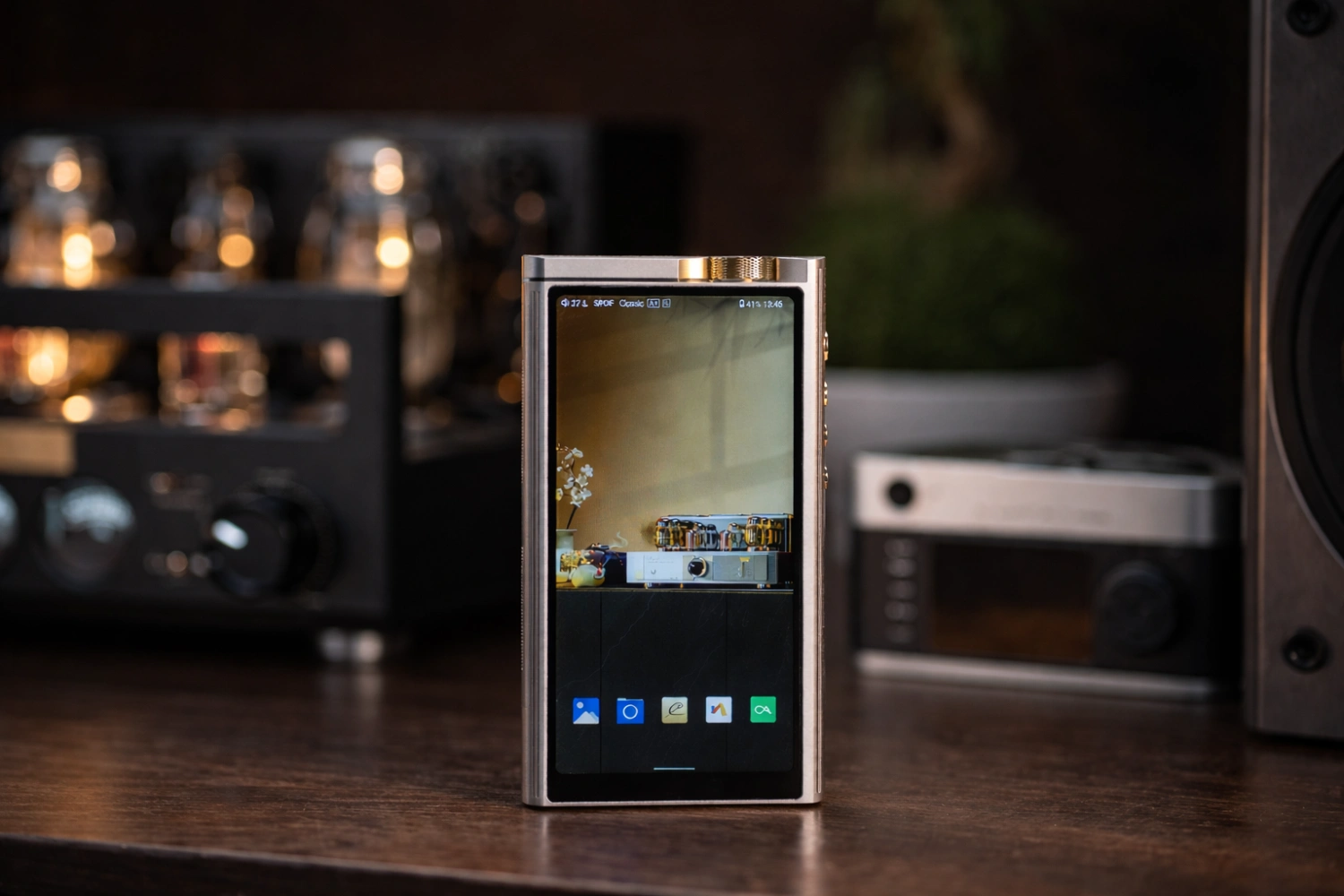
The Cayin N8iii offers Tube Classic, Tube Modern and Solid State amplification paths.
The N8iii is the most compelling option for listeners who want meaningfully different amplification approaches inside one player.
Cayin's Triple Timbre system offers Tube Classic, Tube Modern and Solid State paths.
The source characterizes these respectively around warmth and body, greater tube-stage control, and a more precise solid-state presentation; those descriptions should be understood as the intended voicing of each mode rather than independently verified conclusions. This flexibility sits within a contemporary Android platform built around a Snapdragon 665 processor, 8 GB of memory and 256 GB of internal storage. The source specifically presents it as ready for services such as Tidal and Qobuz, so the N8iii is not restricted to locally stored music. It falls just short of the DX340's overall position because the latter adds modular amplification and a dedicated alternative operating system, but Cayin's switchable tube and solid-state architecture gives the N8iii a more distinctive amplification proposition.
Best for: Listeners who want tube and solid-state amplification choices without carrying separate equipment
- Triple Timbre system provides two tube modes and one solid-state mode
- Android platform supports modern streaming use
- Snapdragon 665 platform with 8 GB of memory
- Generous 256 GB of internal storage
Verdict: The Cayin N8iii is the standout choice for exploring different amplification characters within a single streaming-capable player.

3. FiiO M33
The FiiO M33 brings fully differential R2R conversion to an Android-based portable and desktop source.
The FiiO M33 is positioned between a portable player and a compact desktop source, making it one of the most versatile designs in the ranking.
Its central feature is a 24-bit, fully differential complementary R2R conversion matrix.
That architecture is paired with FiiO's FPGA implementation, dual femtosecond oscillators and a multi-stage analog section using Texas Instruments components and eight operational amplifiers. Modern functionality has not been sacrificed for the R2R design. The M33 uses Android 13 on a Snapdragon 680 platform with 8 GB of memory and 128 GB of internal storage, while a dedicated XMOS XU316 controller handles USB audio duties. The source also emphasizes DSP flexibility and substantial output capability, although it does not provide enough comparative evidence to establish how those qualities translate across specific headphones. It earns third place by joining an uncommon conversion topology with credible portable and desktop utility.
Best for: R2R enthusiasts who want Android streaming and credible desktop-source functionality in the same device
- Fully differential complementary R2R conversion architecture
- Android 13 platform with 8 GB of memory and 128 GB of storage
- Dedicated XMOS XU316 controller for USB audio
- Designed for use as both a portable player and compact desktop source
Verdict: The FiiO M33 is the most versatile R2R proposition in the list, blending specialized conversion with modern software and USB audio support.

4. Shanling M5 Ultra
The Shanling M5 Ultra uses a focused operating system inside an angular metal-and-glass chassis.
The M5 Ultra takes a deliberately narrower route than the Android flagships above it.
Shanling uses its own operating system rather than turning the player into a general-purpose app platform, removing notifications and background services from the experience.
That makes the M5 Ultra especially appealing to people who want a dedicated playback device rather than another connected screen competing for attention. The review also supports its physical and ergonomic credentials. The chassis uses metal and glass, while asymmetric chamfers are intended to improve grip, particularly for right-handed use. Deep sound customization adds flexibility within the player-focused concept. The absence of an included case is a minor disappointment for a premium device, and the limited app environment will not suit everyone, but its clarity of purpose and stronger review-level grounding justify a high position.
Best for: Listeners who prioritize distraction-free dedicated playback over a large application ecosystem
- Focused proprietary operating system without general-purpose Android distractions
- Deep sound-customization options
- Metal-and-glass construction
- Asymmetric chamfering improves grip
Verdict: The Shanling M5 Ultra is the clearest recommendation for anyone who wants a refined music player rather than a multipurpose Android device.
5. Shanling M7T Master
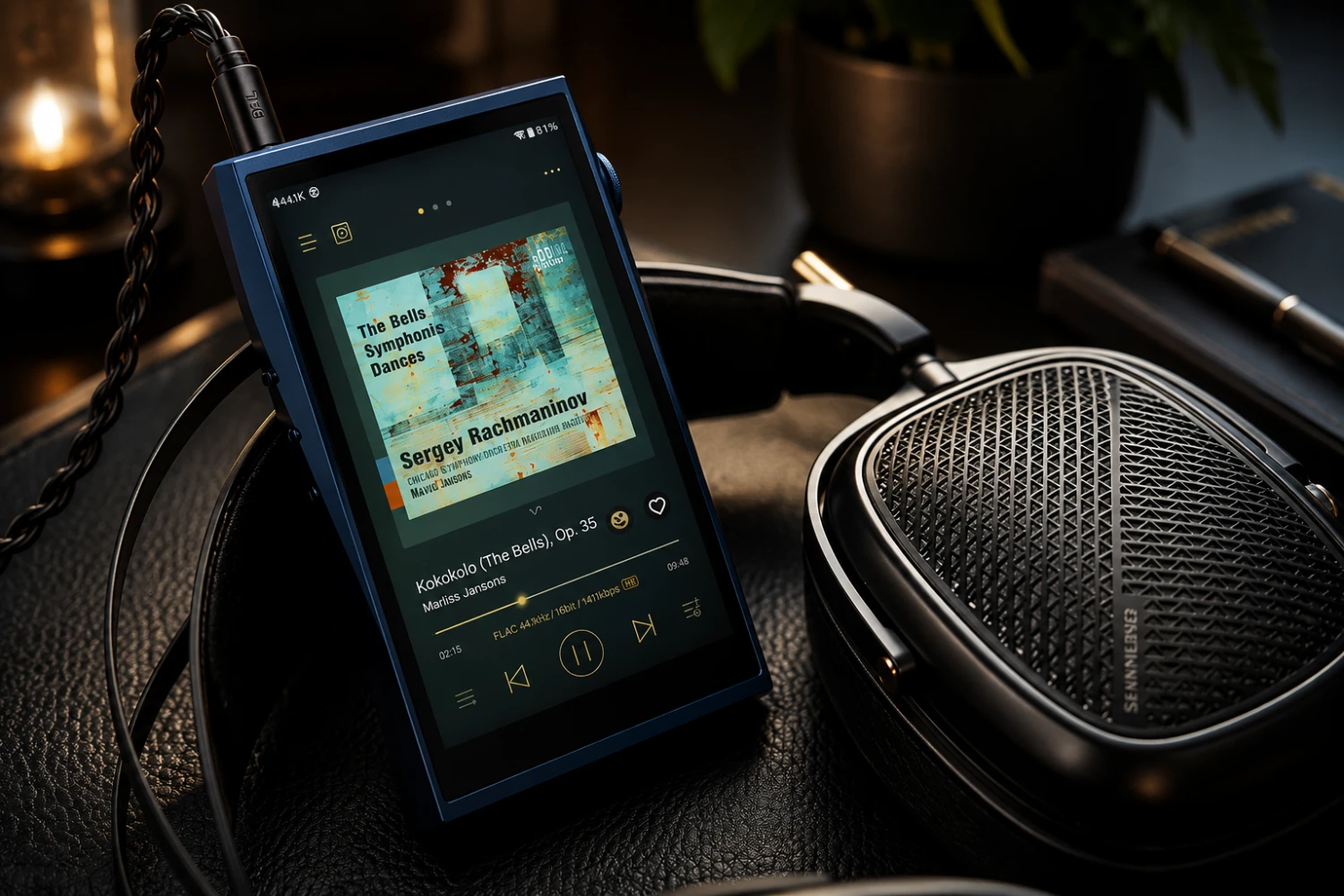
The Shanling M7T Master retains dual AK4498EX DACs while revising the audio path and balanced stage.
The M7T Master is an evolutionary product rather than a replacement built on a new platform.
It retains the M7T's dual AK4498EX DAC arrangement while revising the audio circuit and balanced output stage.
Shanling describes the objective as preserving the original model's direct character while creating a fuller, calmer balance, but the source is an announcement and does not provide independent listening or measurement confirmation. That targeted approach will make sense to buyers who value refinement of an established architecture more than a longer feature list. It also makes the M7T Master less transformative than the modular, multi-mode and R2R players ranked above it. Even so, the combination of dual AKM conversion and focused changes to the analog path gives it a clear identity within the field.
Best for: Listeners interested in a refined version of the M7T architecture rather than an entirely new platform
- Dual AK4498EX DAC architecture
- Revised internal audio path
- Updated balanced output stage
- Maintains the established M7T platform rather than introducing an unproven wholesale redesign
Verdict: The Shanling M7T Master is a focused audio-path refinement whose appeal depends more on implementation than on headline feature changes.

6. Cayin N7+
The Cayin N7+ combines a discrete DAC with selectable Class A and Class A/B amplification.
The N7+ emphasizes discrete conversion and amplifier engineering.
Its discrete DAC feeds a fully balanced headphone amplifier built with bipolar transistors, and users can select Class A or Class A/B operation.
The amplifier circuit is optimized for both balanced and unbalanced headphone outputs, giving the N7+ a technically coherent proposition rather than relying on one connection type. Cayin also identifies higher output, improved energy management and longer battery life than the preceding N7, although the supplied article does not provide the detailed runtime figures needed for direct comparison. A 5-inch Full HD touchscreen and aluminum-magnesium-alloy enclosure support the portable brief. The model's limited-edition status, with no production quantity stated in the source, reduces its reach as an evergreen recommendation and keeps it below more readily applicable choices.
Best for: Enthusiasts who want discrete conversion and selectable amplifier operating modes in a premium portable player
- Discrete digital-to-analog conversion architecture
- Fully balanced headphone amplifier using bipolar transistors
- Selectable Class A and Class A/B operation
- Balanced and unbalanced headphone outputs are both considered in the amplifier design
Verdict: The Cayin N7+ offers an ambitious discrete signal path, but limited-edition availability makes it a more specialized recommendation.

7. HiBy R6 Pro II
The HiBy R6 Pro II pairs an Android-based HiByOS platform with a 4.4 mm balanced output.
The R6 Pro II is a conventional but well-rounded Android-based player.
Its 4.4 mm balanced output is rated at 632 mW in the source, which presents the player as suitable for multi-driver in-ear monitors and a range of full-size headphones.
The absence of a cited load condition prevents that figure from being used for precise cross-product comparison, but it remains a useful indication of the product's intended capability. A Snapdragon 665 processor, 6 GB of memory and 128 GB of internal storage provide the platform for applications, streaming and local playback, with expandable storage available for larger libraries. Its Android 12-based HiByOS is designed to bypass Android's system-wide sample-rate conversion, an important distinction for high-resolution playback. It ranks below the more architecturally unusual flagships, but it may be the more straightforward choice for listeners who mainly want responsive Android operation and a balanced output.
Best for: Listeners seeking a responsive Android player for streaming, expandable local storage and balanced headphone use
- 4.4 mm balanced output rated at 632 mW by the source
- Snapdragon 665 processor with 6 GB of memory
- 128 GB of internal storage plus expansion support
- HiByOS is designed to bypass Android system-wide sample-rate conversion
Verdict: The HiBy R6 Pro II is a practical Android all-rounder with a strong balanced-output specification and an audio-conscious operating system.
8. Shanling M0 Pura
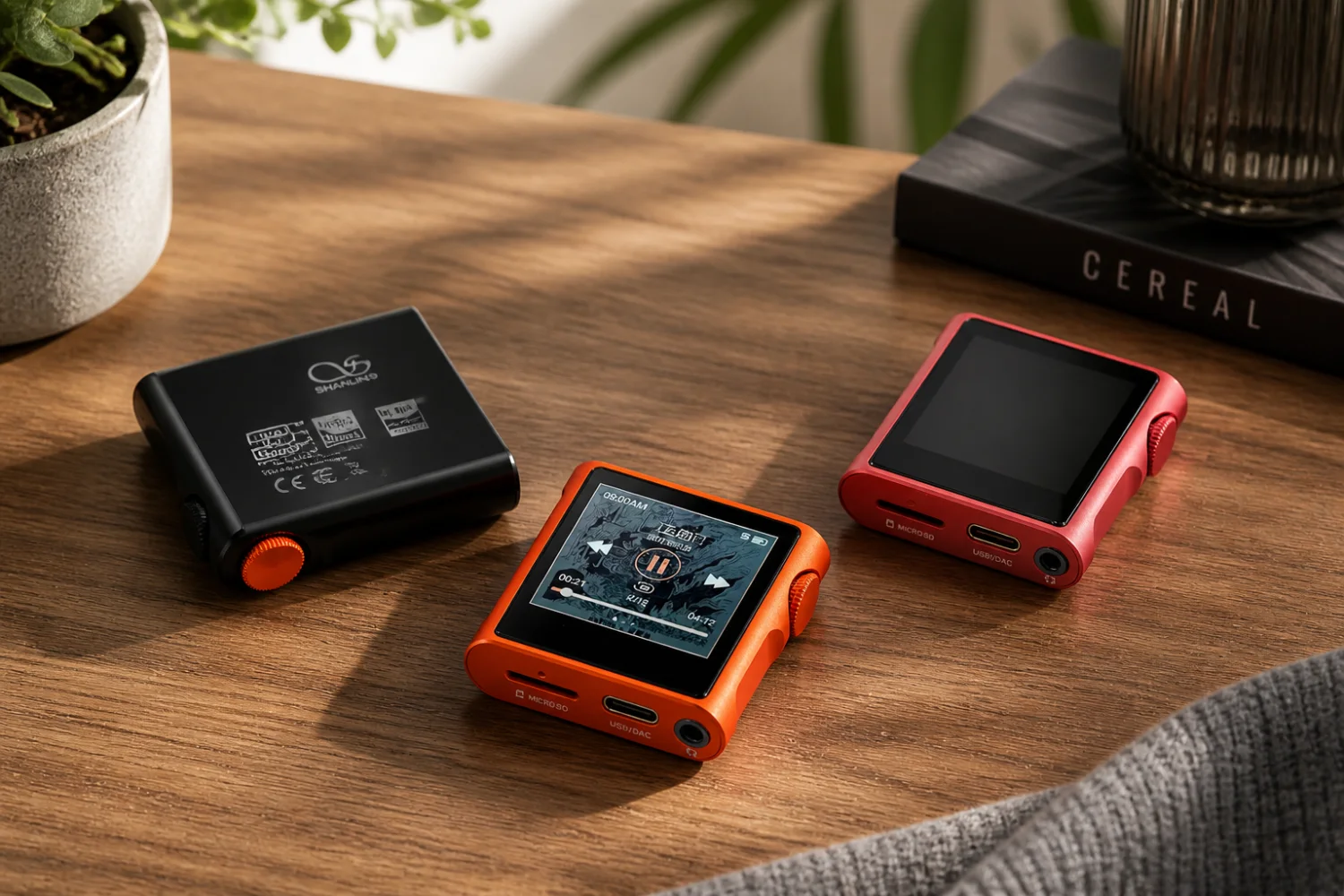
The compact Shanling M0 Pura uses a 1.54-inch touchscreen and dual CS43131 DACs.
The M0 Pura has the clearest portability advantage in the ranking.
Its 1.54-inch touchscreen and lightweight MTouch operating system are built around genuinely compact use, while dual Cirrus Logic CS43131 DACs give the tiny format a more ambitious conversion stage than its dimensions might suggest.
The inevitable trade-off is that navigation and library browsing take place on a much smaller display than those of the full-size players. Shanling also introduces an unconventional balanced-playback arrangement through the 3.5 mm connection, accessed with a 3.5 mm-to-4.4 mm adapter. The cited output is 250 mW at 32 ohms, a notable specification for such a small player, although adapter dependence adds complexity. Eighth place reflects its narrower overall usability, not a failure of purpose: for minimum pocket burden, it is the most focused option here.
Best for: Listeners who place minimal pocket size ahead of a large display and full Android functionality
- Extremely compact design centered on a 1.54-inch touchscreen
- Dual Cirrus Logic CS43131 DACs
- Balanced playback available through an adapter-based connection
- Rated at 250 mW into 32 ohms
Verdict: The Shanling M0 Pura is the best compact specialist in the ranking, offering serious audio hardware with understandable interface and adapter compromises.

9. iBasso DX320 MAX Ti
The limited-production iBasso DX320 MAX Ti uses four ROHM DACs and a dedicated FPGA.
The detailed technical content of the supplied article identifies this product as the DX320 MAX Ti, despite an inconsistent headline that refers to the DX300MAX Ti.
The described DX320 MAX Ti uses four ROHM BD34301EKV DACs in a four-channel, fully balanced conversion arrangement.
An iBasso FPGA works with two Accusilicon femtosecond clocks to reconstruct and synchronize the digital signal before conversion, while a Snapdragon 660 processor supports the main system. On architecture alone, this is a formidable player intended for use both at home and on the move. Its ninth-place position is driven primarily by practical relevance: the source states that production is limited to 888 units worldwide. That fixed run makes it difficult to recommend as an evergreen purchase regardless of its technical ambitions, and the source does not provide the current availability, price or comparative test results needed to overcome that limitation.
Best for: Collectors seeking a limited-production iBasso player with an elaborate four-DAC architecture
- Four ROHM BD34301EKV DACs arranged for four-channel conversion
- Fully balanced digital-to-analog conversion circuit
- Dedicated FPGA paired with two Accusilicon femtosecond clocks
- Distinctive limited production run of 888 units
Verdict: The iBasso DX320 MAX Ti is technically ambitious but too scarce to rank as a broadly practical evergreen recommendation.

10. HiBy WH3
The HiBy WH3 true-wireless earphones combine dynamic and balanced-armature drivers with adjustable digital crossover modes.
The WH3 is the categorical outlier because it is a set of true-wireless earphones, not a self-contained portable music player.
It must be paired with a smartphone or player, so it cannot replace any of the nine DAPs ranked above it.
Its legitimate niche is as a wireless listening endpoint for one of those source devices. Within that role, the WH3 combines a dynamic driver with a Knowles balanced-armature driver and provides three adjustable digital-crossover modes. The source also cites support for 96 kHz/24-bit input, Bluetooth 5.0, touch control and up to 24 hours of use. Those features make the WH3 an interesting companion product, but ranking it any higher would falsely equate headphones with devices that store, manage and play music independently.
Best for: Wireless listeners who want hybrid TWS earphones with adjustable digital crossover settings
- Hybrid dynamic and Knowles balanced-armature driver arrangement
- Three adjustable digital-crossover modes
- Supports 96 kHz/24-bit audio input according to the source
- Bluetooth 5.0 connectivity with touch controls
Verdict: The HiBy WH3 is a distinctive wireless accessory, but it is not an alternative to a dedicated portable music player.

Sound Off
0Join the discussion if you have something to add.