

Bose’s acquisition of McIntosh Group is not simply an expansion in scale. It brings together businesses that address markedly different parts of the audio market, from headphones, Bluetooth speakers and soundbars to amplifiers, turntables, luxury loudspeakers and automotive systems. The most encouraging aspect for existing and prospective McIntosh and Sonus faber owners is continuity: Bose says the two brands will retain their current operations, employees and production locations. At the same time, the arrangement creates scope for Bose’s research resources and automotive experience to support future development in the high-performance and luxury sectors. No specific new products or shared platforms have been announced, but the structure combines complementary areas of expertise while preserving the identities that made each brand distinctive.
A Portfolio Spanning Personal, Home and Automotive Audio
The acquisition gives Bose a presence across an unusually broad range of listening environments. Bose will continue working in established categories including headphones, speakers, soundbars and car audio, alongside technologies such as noise cancellation, hearing enhancement and immersive audio. McIntosh and Sonus faber, meanwhile, will remain focused on amplifiers, loudspeakers, turntables and other high-end products.
That breadth matters because the companies are not merely duplicating one another. Bose is widely positioned around accessible personal, wireless, home-entertainment and automotive products, while McIntosh Group operates in the performance-oriented and luxury market. Sonus faber contributes its specialization in Italian loudspeaker manufacturing, and McIntosh brings a product portfolio centered on high-end audio electronics and source components.
For consumers, the practical attraction lies in the possibility of expertise moving between categories without forcing every product into the same mold. Bose has stated its intention to integrate its research and technology into high-performance and luxury segments, but it has not announced that McIntosh or Sonus faber products will adopt particular Bose technologies. That distinction is important: the immediate value is the expanded pool of knowledge and resources, rather than a confirmed set of new features.
Continuity for McIntosh and Sonus faber
Acquisitions can raise understandable questions about manufacturing, staffing and brand direction. Here, Bose has said that there will be no changes for the time being to the way McIntosh and Sonus faber operate. Employees will continue in their roles, and production facilities will remain in their existing locations.
That commitment is especially relevant in high-end audio, where manufacturing identity and long-standing design practices often form a meaningful part of a product’s appeal. Keeping the two companies in their current locations provides a degree of reassurance that their established operations are not being immediately consolidated into Bose’s mainstream business.
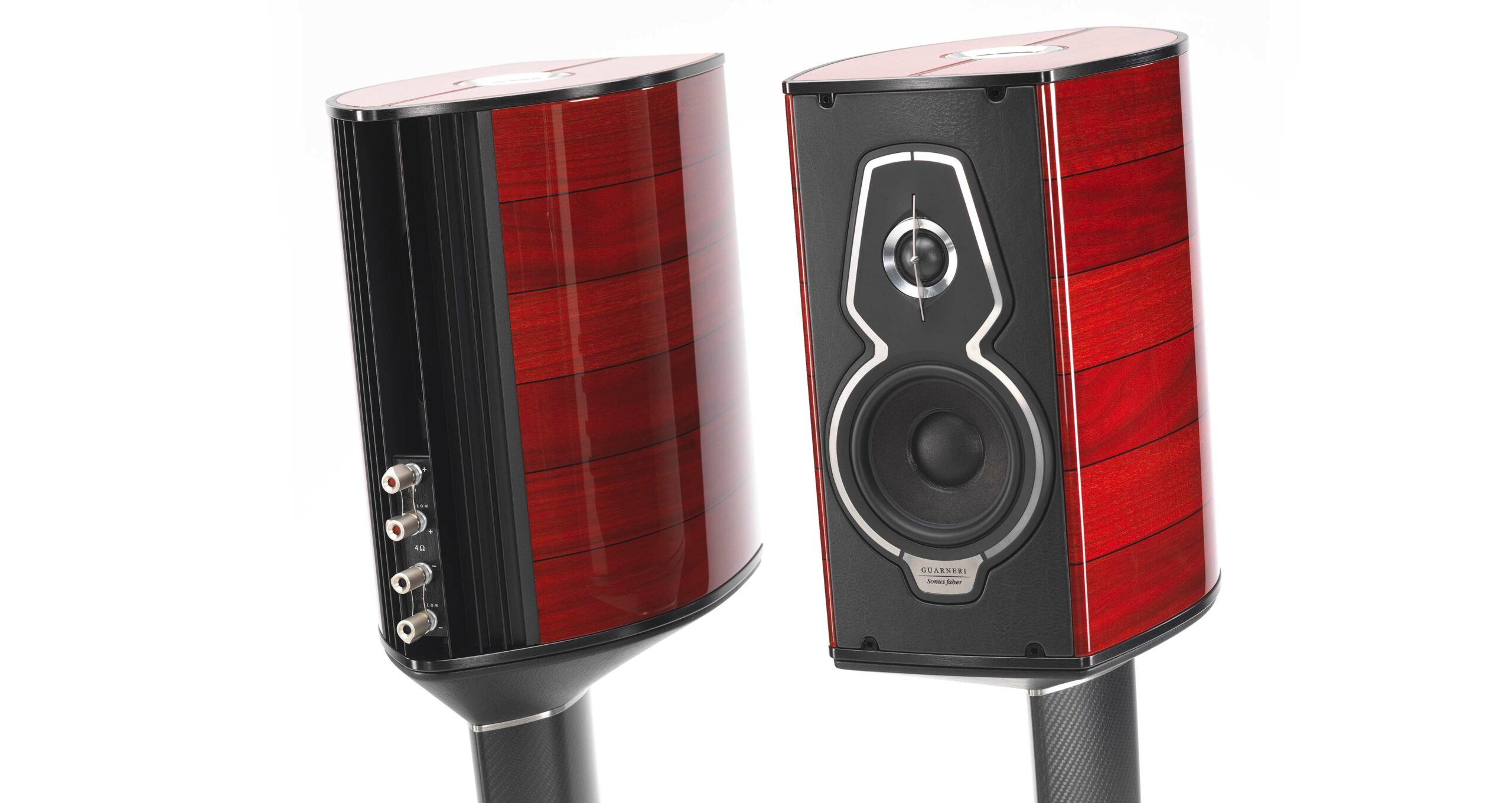
The arrangement also recognizes that the brands serve different customers and use cases. A Bose Bluetooth speaker and a Sonus faber home loudspeaker belong to very different product contexts, while McIntosh amplifiers and turntables address dedicated hi-fi systems rather than portable listening. Maintaining those distinctions gives the combined portfolio more credibility than attempting to impose a single identity across every category.
Research Resources Without an Announced Loss of Identity
Bose identifies research as a central part of the opportunity. Its ongoing work includes noise cancellation, hearing enhancement and immersive audio, while its wider portfolio covers personal listening, home audio and vehicles. Access to that research base could give McIntosh Group additional options when developing future products and listening experiences.
The potential benefit is not limited to adding technology for its own sake. In high-end equipment, any new capability must fit the intended product and the expectations of its audience. The stated plan to preserve McIntosh and Sonus faber’s operations suggests that future collaboration can be selective rather than requiring every brand to offer the same features.
There are still limits to what can be concluded. Bose has not detailed a common software environment, shared wireless standard, unified control system or timetable for jointly developed home products. Prospective owners should therefore evaluate current McIntosh, Sonus faber and Bose products on their documented capabilities rather than assume that cross-brand connectivity or compatibility will follow from common ownership.
Automotive Audio Is the Clearest Area of Collaboration
Automotive audio is the most explicitly identified opportunity. Bose brings 40 years of experience in the field, while McIntosh Group contributes its background in performance, product presentation and luxury audio. The companies plan to use those complementary strengths to expand research and develop new in-car experiences.
This is a logical meeting point for the businesses. A vehicle audio system requires close integration with the cabin and the car’s wider design, making it different from assembling a conventional home system from separate components. Bose’s experience working in that environment could help McIntosh Group accelerate its automotive presence, while the high-end brands provide established identities for vehicles aimed at luxury-oriented customers.
Even so, the announcement does not name vehicle partners, models, system specifications or launch dates. The automotive plan should be viewed as a development priority rather than as a description of a product that buyers can select today.

What the Acquisition Could Mean for Future Systems
The combined organization now covers much of the path from casual and portable listening to dedicated home hi-fi and integrated vehicle audio. That creates room for tailored products rather than a one-size-fits-all approach. Bose can continue developing headphones, soundbars, Bluetooth speakers and other popular categories, while McIntosh and Sonus faber retain their concentration on high-end components and loudspeakers.
For system owners, specialization is one of the arrangement’s strongest documented qualities. McIntosh can continue addressing amplification, turntables and related high-end equipment, while Sonus faber remains centered on loudspeakers. Bose does not need to reposition either company as a direct extension of its existing consumer range to benefit from their expertise.
The acquisition may also provide greater scope for investment in future development, which Bose has said it intends to support. However, no individual product roadmap has been disclosed. There is consequently no basis yet for assuming changes to specifications, connectivity, industrial design or system compatibility.

Who Is This Development Most Relevant To?
The acquisition is most relevant to listeners who value clearly differentiated brands but also see merit in broader research support. Existing McIntosh and Sonus faber customers may find the commitment to unchanged operations and production locations reassuring. Buyers interested in luxury automotive audio may also want to follow the collaboration, since that is where the companies have set out the clearest shared objective.
It may be less immediately significant for someone choosing a current amplifier, loudspeaker, turntable, headphone or soundbar. No new model, bundled system or cross-brand feature has been announced, so common ownership does not by itself change the documented performance or functionality of products already on the market.
The balanced view is that this acquisition offers strategic potential rather than an instant transformation. Its appeal rests on complementary expertise, operational continuity and the prospect of additional research investment. Buyers looking for confirmed new features or integrated ecosystems will need to wait for product-specific announcements.
Conclusion
Bose’s acquisition of McIntosh Group unites consumer, high-end home and automotive audio expertise within one portfolio while leaving McIntosh and Sonus faber’s operations, employees and production locations unchanged for the time being. Its strongest documented qualities are the breadth of the combined product categories, Bose’s research capabilities, McIntosh Group’s performance and design heritage, and a clearly stated interest in expanding automotive audio. The development is most compelling for existing customers who value brand continuity and for listeners interested in how these complementary specializations may shape future luxury home and in-car systems. Until specific products are announced, however, the acquisition should be understood as a foundation for future work rather than evidence of new compatibility or features today.


Sound Off
0Join the discussion if you have something to add.