
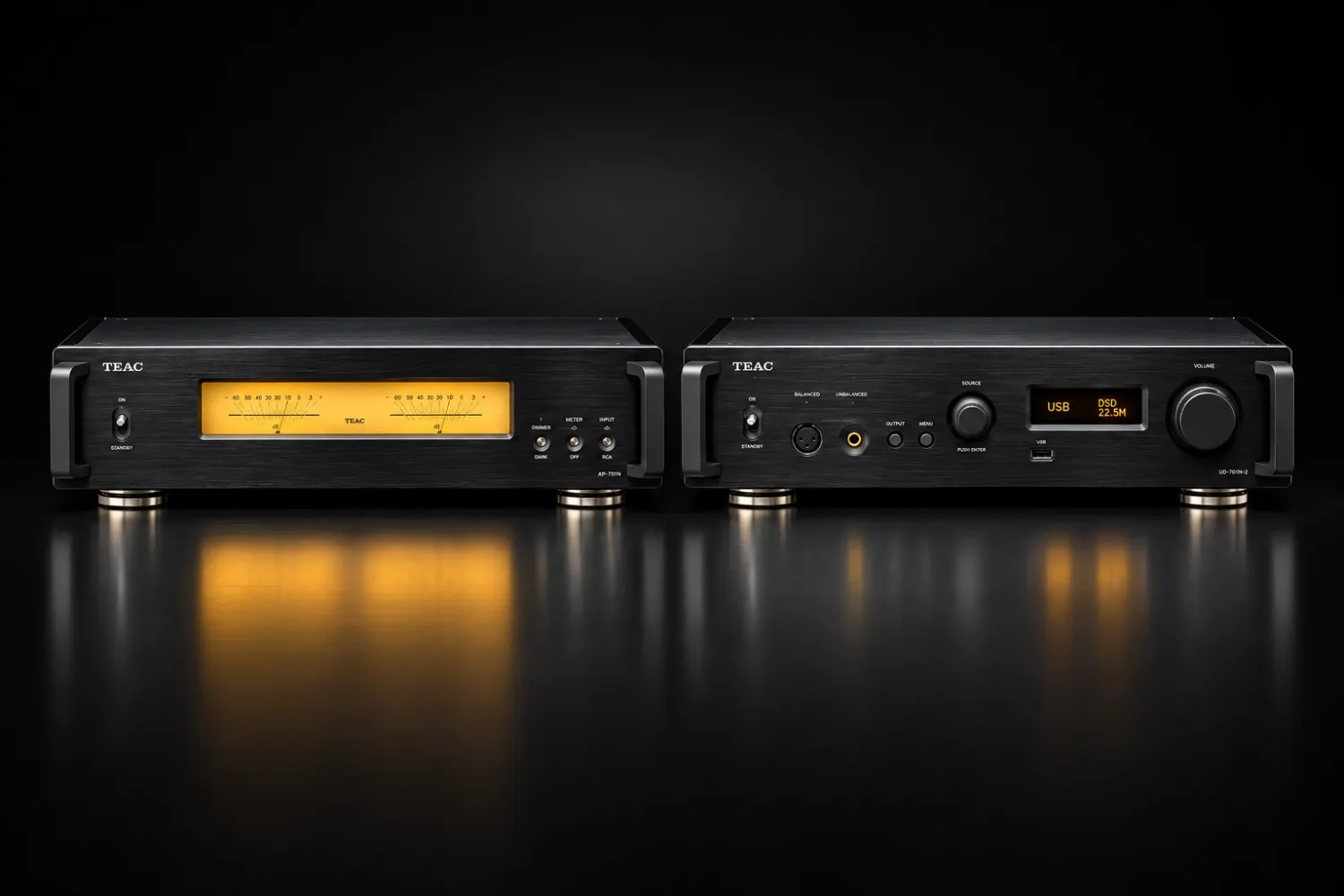
Teac has announced a new generation of its flagship Reference 700 components, built around a familiar idea: a separates system in compact, brushed-metal cases. The UD-701N-X combines network playback, digital conversion, preamplification and headphone amplification, while the partnering AP-701-X handles stereo power amplification. Much of the change is concentrated in the digital component, which gains a revised discrete DAC, a fourth-generation network engine and additional connection options. The power amplifier takes a more evolutionary route, retaining the dual-mono and Hypex-based architecture of its predecessor. Deliveries are expected to begin in late January 2027.
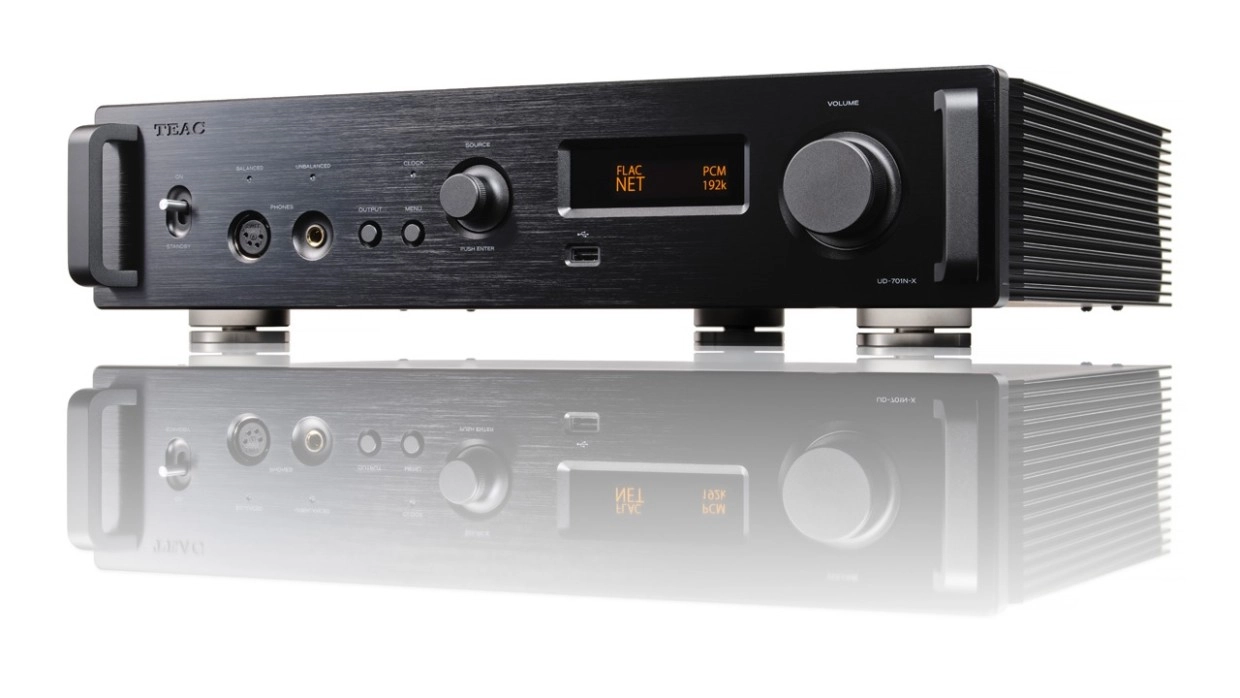
Two compact cases, distinct jobs
The Reference 700 concept divides a system’s control and playback functions from the amplifier that drives the speakers. That arrangement gives the UD-701N-X room to act as the digital and headphone hub, while the AP-701-X is dedicated to two-channel amplification. Both retain the compact brushed-metal appearance associated with Teac’s components.
For a buyer considering the pair, the appeal is not simply that the boxes match. A separate power amplifier lets the front-end component accommodate network playback, digital inputs and headphone listening without also housing the speaker amplification. It is nevertheless a two-component arrangement, rather than a single-box solution, so it calls for space and interconnection between the units.
The announcement establishes the two components as the next generation of Teac’s flagship series, but does not provide a full account of every change from the outgoing models. The clearest updates concern the UD-701N-X’s conversion and network facilities; the available details indicate greater continuity in the amplifier.
A revised DAC at the center of the UD-701N-X
Teac has fitted the front-end component with the Reference Discrete DAC7 V2, an updated version of its proprietary FPGA-based conversion system. Via USB, it is specified to handle PCM audio at up to 384 kHz and 32-bit resolution, as well as native DSD up to 22.5 MHz.
Those figures describe the formats accepted over USB rather than the capability of every input or streaming service. They give owners with compatible computer-based libraries a route for high-resolution files, without requiring a separate DAC for that connection.
Inside, the UD-701N-X retains a fully balanced, dual-mono architecture with independent left- and right-channel circuits. Four toroidal transformers provide separate power supplies for the analog audio, network and digital control sections. Separating those functions is a notable part of the component’s internal design, although the announcement does not provide measurements that establish its audible effect.
A network engine with another physical option
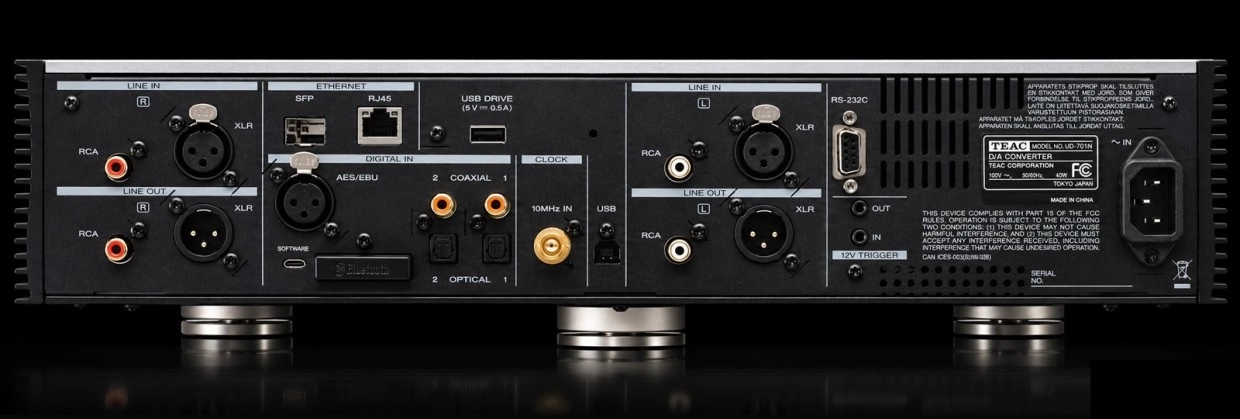
The Teac Network Engine G4 is the company’s fourth-generation network-processing architecture. Alongside the existing RJ45 Ethernet connection, the UD-701N-X adds an SFP port, giving users another physical network connection option. The announcement does not specify compatible SFP modules or detail a required network configuration.
Streaming support includes Spotify Connect, Tidal Connect and Qobuz Connect, with availability dependent on region. These options make the network player relevant to listeners who use those services, but buyers should check which are supported where they live rather than assume the same selection applies everywhere.
The digital input facilities also gain AES/EBU, adding another way to connect a compatible digital source. Bluetooth multipoint is included as well, allowing users to switch between two connected devices. Together, these additions broaden the ways the front end can receive music beyond its USB and wired-network roles.

Headphones get their own front-panel connections
The UD-701N-X is also a headphone amplifier, with two sockets on its front panel: a 6.35 mm jack and a balanced four-pin XLR output. Their presence accommodates headphones fitted with either of those connection types without making an external headphone amplifier part of the basic arrangement.
The two outputs should not be taken as evidence of identical performance or compatibility with every headphone. Teac has not supplied headphone power figures in the announcement. Still, the choice of connections reinforces the front end’s role as more than a network streamer: it can serve headphone listening as well as a system built around a separate power amplifier.

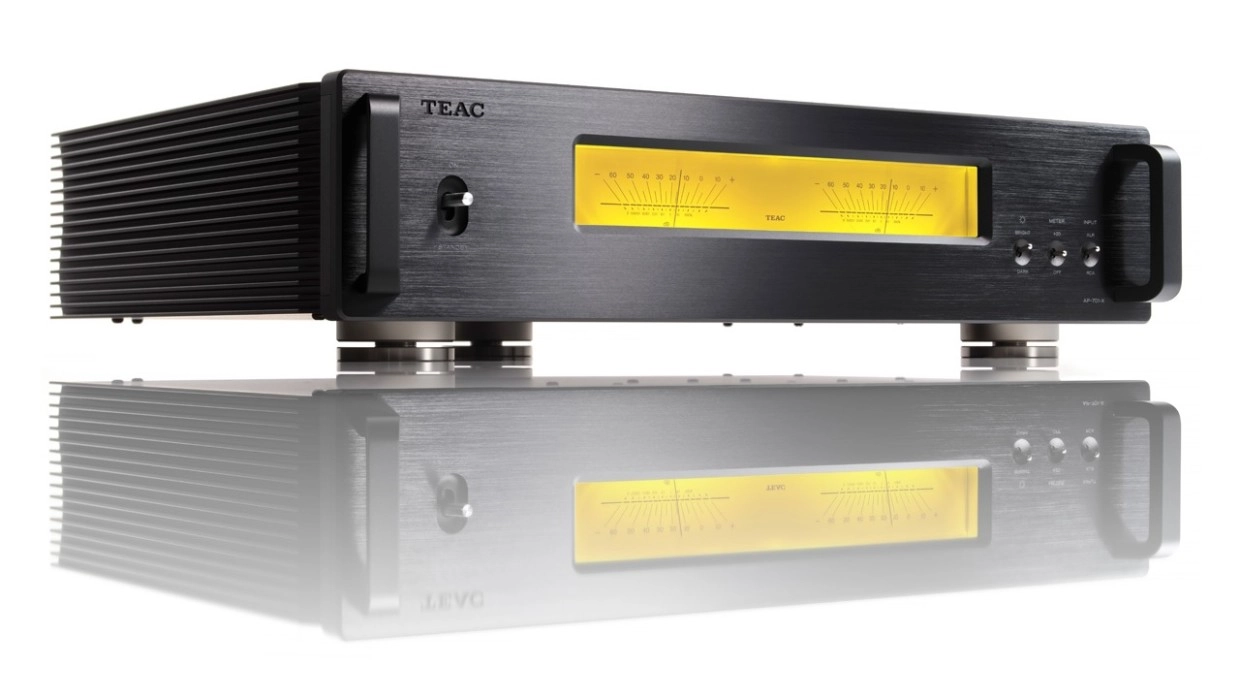
The AP-701-X stays with dual-mono Class D
For the matching stereo amplifier, Teac has retained the core approach of the original model. The AP-701-X uses a dual-mono layout, separate toroidal transformers and two specially tuned Hypex Ncore Class D amplifier modules.
Teac specifies output of 170 watts per channel into 8 ohms and 260 watts per channel into 4 ohms. Those ratings provide a starting point for assessing the amplifier against a prospective speaker’s requirements, although power alone cannot establish how the combination will perform in a particular room or system.
The continuity matters because it places the most visible functional changes on the source side of the pairing. Buyers looking at the new Reference 700 system are getting a revised network and conversion platform alongside an amplifier whose documented architecture follows its predecessor, rather than a wholesale redesign of both components.
The new pairing looks best suited to listeners who want network playback and headphone facilities within a separates system, but prefer compact components to a larger stack. Its mix of USB, network, AES/EBU and Bluetooth functions gives the UD-701N-X several roles, while the AP-701-X provides a dedicated stereo power stage. Deliveries are due to start in late January 2027, though pricing has not yet been announced. Before choosing the combination, prospective buyers will also need more detail on matters not covered in the announcement, including SFP module compatibility and headphone output power. Regional support for the listed streaming services is another point to check.



Sound Off
0Join the discussion if you have something to add.