
Home cinema systems have different demands.
A local-media library benefits from extensive format and storage support, while a speaker-based theater needs an AV receiver matched to its channel layout.
In rooms where extra speakers are impractical, a soundbar can provide a simpler route to more substantial television audio. The entries below are differentiated by those use cases rather than treated as interchangeable products. Documented channel configurations, video formats, room-correction systems, connections and placement requirements provide the basis for each recommendation; no assumptions are made about comparative sound quality. Not every entry is a conventional product choice. Sony’s Blu-ray announcement offers useful context for anyone considering optical recording, while the Onkyo and Pioneer firmware article applies only to owners of three eligible components. Those distinctions are important when deciding which information is relevant to a particular system.

1. Zidoo Z2000 Pro: High-quality media player launched
The Zidoo Z2000 Pro combines a brushed-metal front panel and large LED display with internal and external media-storage support.
The Zidoo Z2000 Pro is the specialist option for a home cinema built around locally stored video and music.
It combines a Realtek RTD1619BPD processor, 4GB of DDR4 memory, 32GB of internal storage and Android 11 with HDMI 2.1 output supporting 4K at 60 Hz.
HDR10, HDR10+, HLG and Dolby Vision are covered, alongside automatic frame-rate and resolution switching. SATA and USB drives up to 16TB, external unencrypted BD and CD drives, full Blu-ray menus and broad 3D video support give it an unusually extensive set of library-management credentials.
Best for: Large local media libraries
- SATA and USB storage support up to 16TB
- 4K 60 Hz output with multiple HDR formats
- Automatic frame-rate and resolution switching
- Full Blu-ray menu and broad 3D format support
Verdict: The Z2000 Pro is the most relevant choice here for viewers who prioritize local storage, Blu-ray structures and wide video-format compatibility.

2. Sony ends production of Blu-ray recorders as streaming takes over
Sony’s exit applies to Blu-ray recorders, while production of standard Blu-ray and DVD players continues.
This article is relevant to buyers weighing optical recording against straightforward disc playback rather than seeking a specific product recommendation.
Sony has ended production of Blu-ray recorders after demand declined as streaming, cloud storage and digital downloads became more prevalent.
The company continues to produce standard Blu-ray and DVD players, so the change affects recording and archiving hardware rather than access to physical movie collections.
Best for: Understanding the future of optical recording
- Clarifies the difference between recorders and players
- Confirms continued Blu-ray and DVD player production
- Explains the shrinking optical-recording market
Verdict: Sony’s decision makes a standard disc player the more sustainable category choice for most physical-media systems, while dedicated recording becomes increasingly niche.

3. JBL MA310: Designed to create the perfect home theater solution
The JBL MA310 supports a 5.2-channel arrangement with dedicated center and surround speakers plus two active subwoofers.
The JBL MA310 is a 5.2-channel receiver aimed at straightforward small- to medium-room systems.
Its channel layout accommodates front, center and rear speakers plus as many as two active subwoofers, providing dedicated surround and dialogue channels without the complexity of a height-speaker installation.
The all-digital amplifier is rated at 60 watts, while the EZ Set EQ app collects acoustic data from each speaker to assist with room setup.
Best for: Accessible 5.2 surround systems
- 5.2-channel speaker configuration
- Connections for two active subwoofers
- EZ Set EQ app-based calibration
- All-digital 60-watt amplification
Verdict: The MA310 provides a manageable route to conventional multichannel sound for listeners who value guided setup and dual-subwoofer support.

4. Yamaha RX-V6A: AV Receiver for a modern home theater
The Yamaha RX-V6A provides seven amplified channels, dual-subwoofer capability and a broad selection of video and audio inputs.
The Yamaha RX-V6A suits a more expansive speaker system, with a 7.2-channel configuration and support for Dolby Atmos and DTS:X.
Seven HDMI inputs accommodate multiple video sources; all support 4K Ultra HD with Dolby Vision and HLG, while three also accept 8K signals.
YPAO automatic calibration accounts for the listening room and connected speakers, and the receiver also provides analog and digital inputs for sources beyond HDMI.
Best for: Flexible 7.2-channel theaters
- 7.2-channel configuration
- Dolby Atmos and DTS:X support
- Seven HDMI inputs
- YPAO automatic room calibration
Verdict: The RX-V6A is a versatile foundation for a multichannel system that needs immersive audio, numerous HDMI sources and automatic room setup.
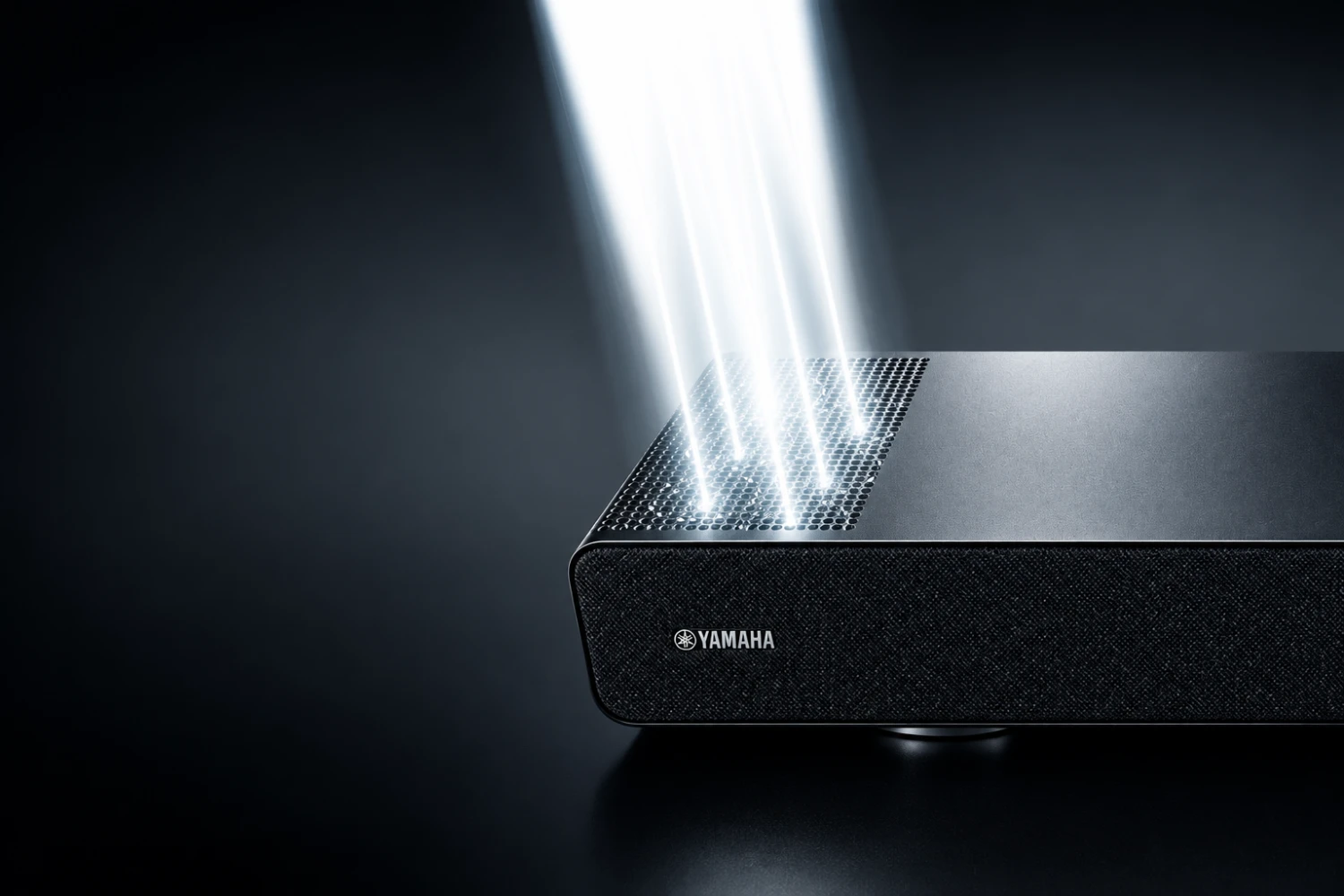
5. Yamaha True X Bar 90A Brings Cinema Sound Without Rear Speakers
The Yamaha True X Bar 90A pairs a television soundbar with a wireless subwoofer and omits separate rear speakers.
The Yamaha True X Bar 90A packages a main soundbar with a wireless subwoofer for rooms where separate rear speakers would be inconvenient.
The bar sits beneath or near the television and handles dialogue, music and effects, while the subwoofer can be placed elsewhere without a signal cable running back to the bar.
Both components still require access to power. Its defining compromise is the absence of discrete rear speakers, making this a streamlined alternative rather than a full surround arrangement.
Best for: Rooms that cannot accommodate rear speakers
- Two-piece soundbar and subwoofer package
- No separate rear speakers required
- Wireless signal connection for the subwoofer
- Simplified placement compared with full surround
Verdict: The True X Bar 90A is designed for viewers who want a cleaner installation and dedicated bass without placing loudspeakers around the room.

6. Onkyo TX-NR5100: Fully equipped AV receiver
The Onkyo TX-NR5100 powers seven channels for a 5.2.2 system and includes virtual-height processing for simpler layouts.
The seven-channel Onkyo TX-NR5100 can power a 5.2.2 system and decode Dolby Atmos and DTS:X, making it suitable for a living room with dedicated height speakers.
Dolby Atmos Height Virtualizer and DTS Virtual:X provide alternatives when ceiling or height channels cannot be installed.
AccuEQ handles automatic surround and subwoofer adjustment, while four HDMI inputs support 4K video, Dolby Vision and HDR10. Its discrete amplifiers are also designed for stable operation with 4-ohm speakers.
Best for: Practical 5.2.2 Atmos systems
- Supports 5.2.2 speaker layouts
- Dolby Atmos and DTS:X decoding
- AccuEQ room and subwoofer adjustment
- Four 4K HDMI inputs with Dolby Vision and HDR10
Verdict: The TX-NR5100 balances genuine seven-channel amplification with virtual-height modes for systems that may evolve around room and speaker-placement constraints.

7. Onkyo TX-NR696: AV receiver with plenty of bass
The seven-channel Onkyo TX-NR696 combines immersive surround decoding with a high-current amplifier design and second-room stereo output.
The Onkyo TX-NR696 is a seven-channel receiver whose amplifier design emphasizes high current, dynamics and substantial bass reproduction.
It supports Dolby Atmos and DTS:X, with Dolby Atmos Height Virtualizer and DTS Virtual:X available when a 5.2.2 speaker arrangement is not possible.
THX Select certification and stereo output to a second room broaden its appeal beyond a single conventional theater layout.
Best for: Dynamic surround sound with strong bass priorities
- Seven-channel amplification
- Dolby Atmos and DTS:X support
- Virtual-height processing modes
- Stereo output for a second room
Verdict: The TX-NR696 fits systems that need immersive-format support, assertive bass-oriented amplification and the option to serve a second room.

8. It’s time to update the firmware of ONKYO & PIONEER AV receivers
The firmware update adds streaming, spatial-music and expanded room-correction features to three specified AV components.
This firmware article applies specifically to the Onkyo TX-RZ70, Integra DRX-8.4 and Pioneer Elite VSX-LX805.
The update adds Roon Ready status and Dolby Atmos Music support, while extending Dirac Live room correction to accommodate the longer delays associated with large rooms.
Installation is available over a network or by downloading the software and transferring it with a USB flash drive, which provides an alternative when the internet connection is unreliable.
Best for: Owners of the three eligible receivers
- Adds Roon Ready status
- Introduces Dolby Atmos Music support
- Extends Dirac Live operation for large rooms
- Network and USB installation options
Verdict: This is a worthwhile functionality update for compatible hardware, but it has no relevance to other Onkyo, Integra or Pioneer models.
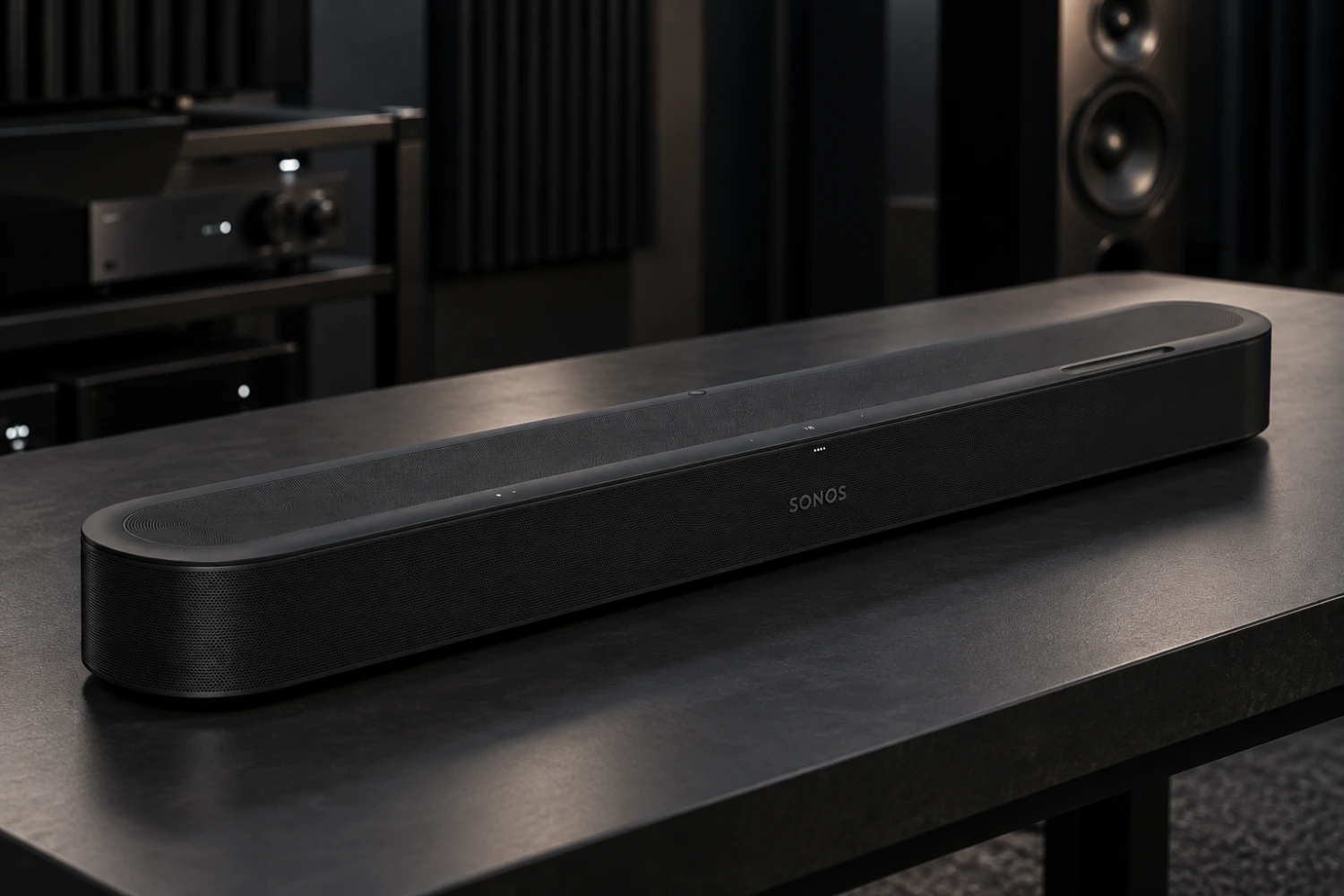
9. Sonos Beam Ultra Brings 7.1.2 Dolby Atmos to a Compact Soundbar
The Sonos Beam Ultra uses nine drivers, including two upward-angled tweeters for Dolby Atmos height information.
The Sonos Beam Ultra is a 75cm-wide soundbar built around nine drivers and 7.1.2-channel Dolby Atmos processing.
Two upward-angled tweeters reflect dedicated height information from the ceiling, while side-facing drivers widen the presentation; simulated height processing is available when the area above the bar is obstructed.
Dolby TrueHD, Dolby Digital Plus, Multichannel PCM and DTS Digital Surround are among the supported formats. Sonos multiroom streaming, selectable speech enhancement, Night Sound and Trueplay room correction address everyday use as well as film playback.
Best for: Compact Atmos and Sonos multiroom systems
- Compact 75cm-wide cabinet
- Nine-driver acoustic system
- Dedicated upward-angled height tweeters
- Trueplay, speech enhancement and multiroom streaming
Verdict: The Beam Ultra combines dedicated height drivers, broad home-cinema format support and Sonos system features in a relatively compact soundbar.

10. Yamaha RX-V385: Fully equipped AV receiver
The Yamaha RX-V385 front panel provides an information display, YPAO microphone input, headphone output, USB port and analog mobile-device connection.
The documented strengths of the Yamaha RX-V385 center on practical setup and accessible front-panel connections.
A dedicated microphone input works with Yamaha’s YPAO automatic calibration system, while a 6.3mm headphone output supports private listening.
The front USB port accepts flash drives and external hard drives containing audio files, and the analog minijack input provides a simple connection for mobile devices. Its large volume control, information display and exposed controls favor direct operation over a concealed front panel.
Best for: Simple systems needing accessible controls
- YPAO automatic calibration connection
- Front USB input for stored audio
- Analog input for mobile devices
- Dedicated headphone output
Verdict: The RX-V385 is best distinguished here by its straightforward front-panel operation, YPAO setup support and convenient connections for personal audio sources.


Sound Off
0Join the discussion if you have something to add.