
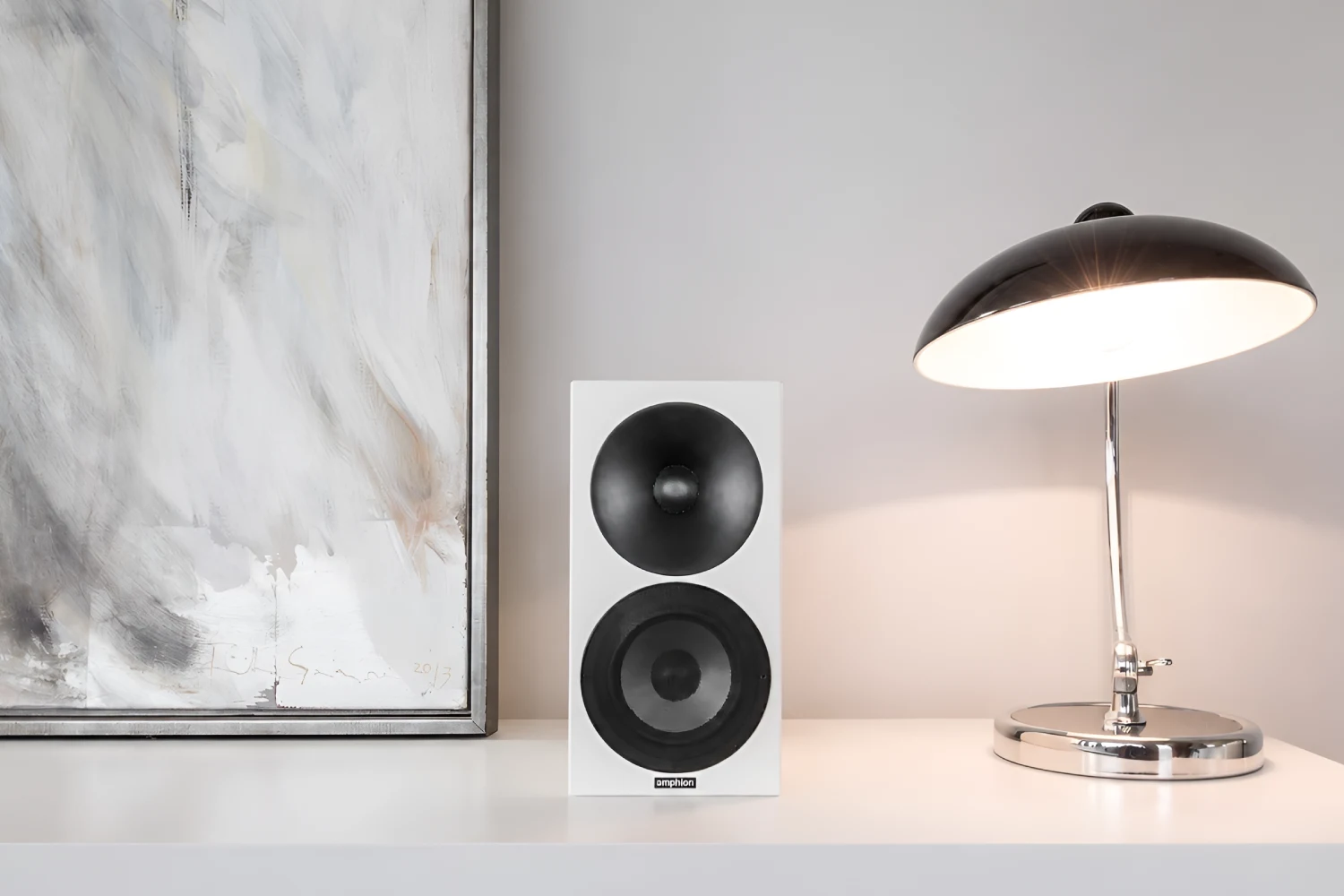
Finnish loudspeaker manufacturer Amphion has introduced the A15, a compact active two-way model created for home listeners who want built-in amplification without the software, streaming platforms and wireless protocols found in many contemporary active speakers.
Studio foundations for a home audio system
The A15 draws heavily on Amphion’s professional monitor experience. Its specifications closely parallel those of the passive One15 nearfield studio monitor, including the same driver sizes, passive-radiator arrangement, 1.6 kHz crossover frequency and cabinet dimensions.
That connection positions the A15 as more than a conventional powered lifestyle speaker. Amphion has taken an established compact acoustic platform and added amplification inside the enclosure, eliminating the need for a separate power amplifier while retaining a straightforward signal path.
The company has produced handmade loudspeakers since 1998 and operates across both domestic hi-fi and professional monitoring. Its studio range includes the One15, One18 and Two18, while the Helium, Argon and Krypton families serve home audio systems. The A15 brings elements of those two sides together in a compact active design.
Two-way design with a passive radiator
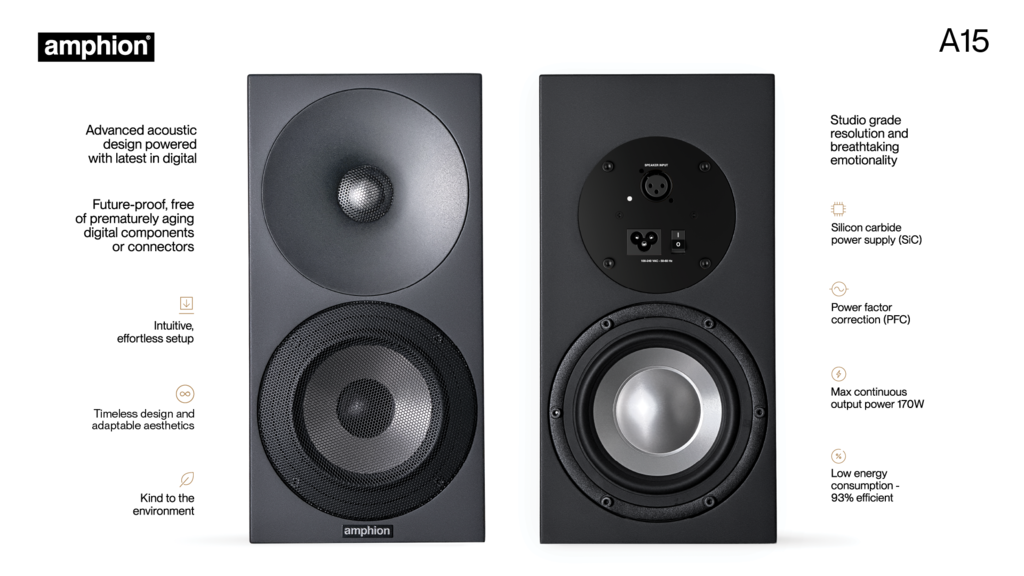
High frequencies are handled by a 25 mm titanium tweeter. A 15 cm aluminum woofer covers the midrange and bass, supported by a matching 15 cm aluminum passive radiator. The crossover between the woofer and tweeter is set at 1.6 kHz.
Amphion specifies 125 watts of amplification for the midrange and bass driver, accompanied by 22 watts for the tweeter. The stated frequency range extends from 55 Hz to 40 kHz at the -6 dB points.
Each enclosure measures 316 x 160 x 265 mm and weighs 9 kg. That is approximately 2 kg heavier than the passive One15, reflecting the additional electronics housed within the A15 cabinet. Despite the integrated amplification, the dimensions remain identical to those of its passive studio relative.
Analog XLR connectivity without apps or streaming
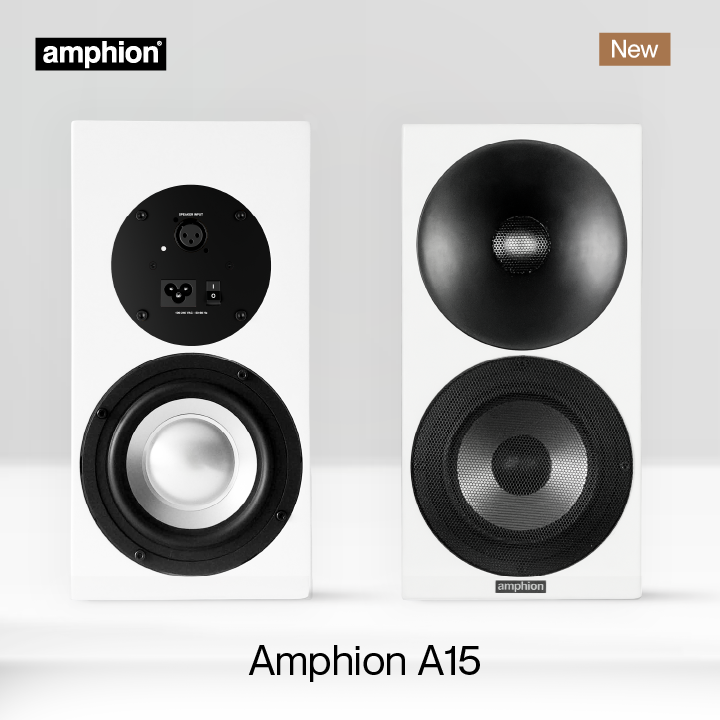
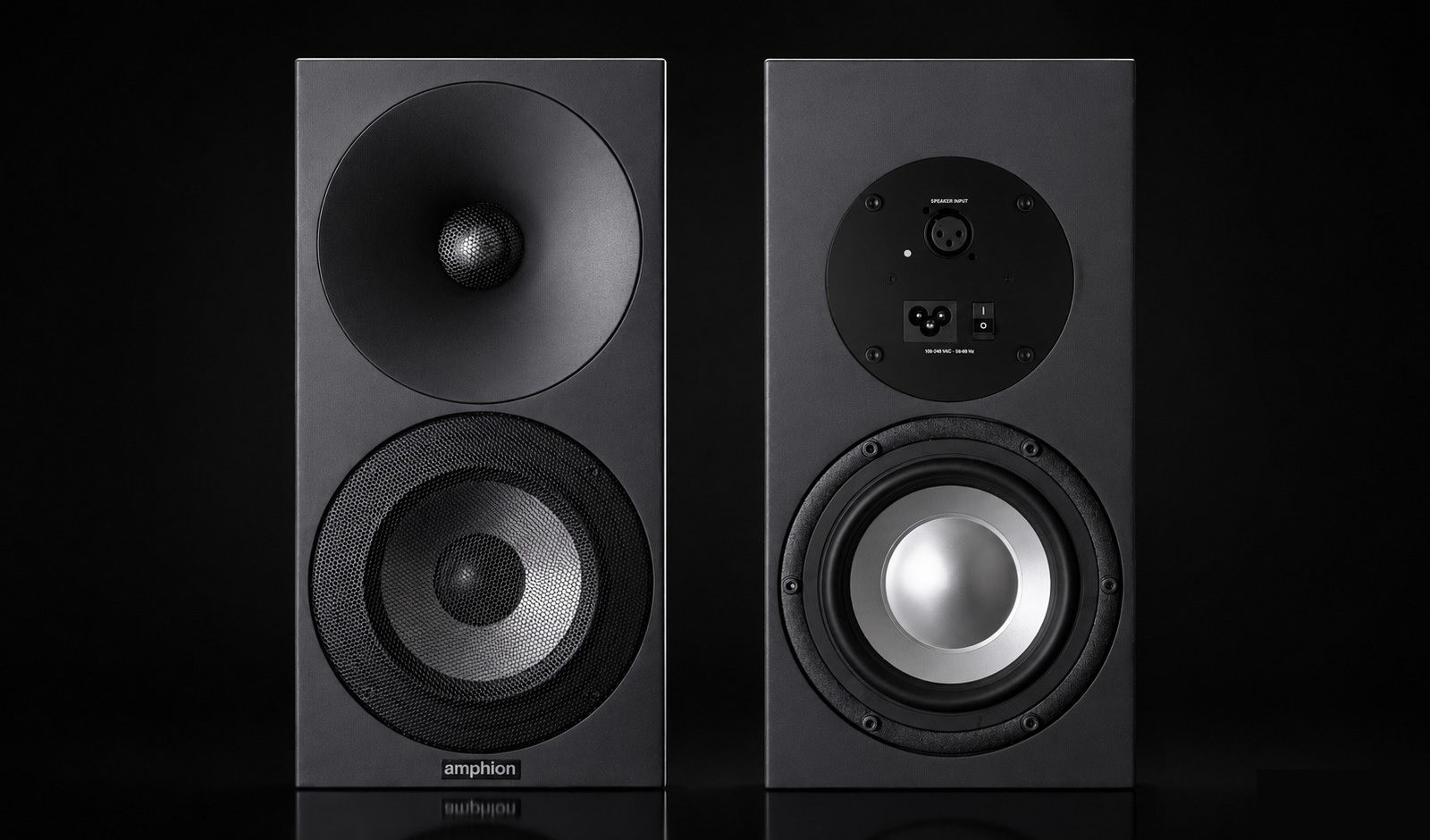
Connectivity is deliberately limited to a single analog XLR input. The A15 does not include Wi-Fi, Bluetooth or an integrated streaming platform, and there is no companion app or onboard software environment.
Owners can instead connect an appropriate preamplifier, network player or other source component that provides the required analog signal. This modular approach leaves source selection and streaming duties outside the speaker, allowing those components to be chosen and replaced independently.
The omission of DSP is also consistent with Amphion’s established preference for addressing loudspeaker behavior through acoustic engineering. Controlled dispersion, passive radiators and relatively simple electrical circuits have long been recurring elements of the company’s designs. By keeping rapidly changing digital platforms out of the enclosure, Amphion is presenting the A15 as an active speaker that is not dependent on software updates or a particular wireless ecosystem.
Minimalist styling and interchangeable grilles
Visually, the A15 follows Amphion’s familiar restrained design language. Cabinet finishes include Snow White and black, while interchangeable colored grilles provide a way to personalize the speakers without changing the underlying enclosure.
The compact proportions and internal amplification make the model relevant to listeners seeking a reduced component count, but its XLR-only connection means system planning remains important. Rather than targeting buyers who want an all-in-one wireless speaker, the A15 is aimed at systems where a separate source or preamplifier handles input selection, volume control and any network audio functions.
Amphion has not announced pricing or availability information for the A15.
The Amphion A15 combines the acoustic layout of a compact studio monitor with dedicated internal amplification for home use. Its single analog input and absence of wireless software make it an unusually focused alternative to feature-heavy active speakers.


Sound Off
0Join the discussion if you have something to add.