TOPPING DX5: A Compact DAC/Headphone Amp Built for Desktop Flexibility
The TOPPING DX5 is a desktop all-in-one DAC, preamplifier, and headphone amplifier that combines dual ES9068AS conversion, high-resolution USB decoding, Bluetooth input, and multiple operating modes in a compact system hub.

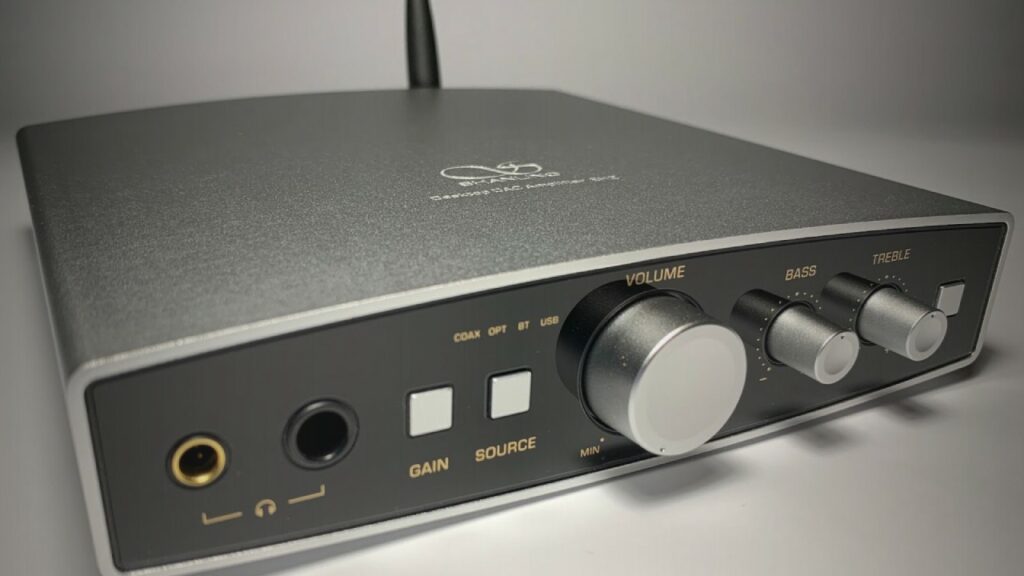
The TOPPING DX5 is aimed squarely at listeners who want a capable desktop digital hub without building a stack of separate boxes. It combines a USB DAC, headphone amplifier, preamplifier functionality, Bluetooth reception, and multiple digital inputs in one chassis, while using a dual ESS ES9068AS DAC architecture and TOPPING’s NFCA headphone amplification circuit. At $449, it sits in a part of the market where flexibility matters as much as headline decoding numbers: a prospective owner may want to connect a computer, a streamer, a television, powered speakers, a power amplifier, and several headphones without constantly rearranging cables. The DX5’s appeal is that it is designed to serve several of those roles from a single desktop component.
A dual-DAC platform for high-resolution sources
At the center of the TOPPING DX5 is a pair of ESS ES9068AS DAC chips. The use of two DAC chips is one of the product’s defining design choices, and it supports the DX5’s role as more than a basic USB-to-analog converter. The published specifications list very low THD+N figures, high signal-to-noise ratios, and wide dynamic range through both RCA and XLR outputs, which indicates that TOPPING is positioning the unit as a serious source component rather than merely a convenience accessory.
For computer-based playback, the DX5 uses a second-generation XMOS XU216 USB processor. Over USB, it supports PCM decoding up to 32-bit/768kHz, native DSD512, DSD256 via DoP, and full MQA decoding. These figures matter most to users with large high-resolution libraries or software playback chains that can output native DSD or very high sample-rate PCM. Even if many listeners will spend most of their time with standard-resolution streaming or CD-quality files, this wide format support helps ensure that the DX5 is unlikely to be a limiting factor in a modern digital system.
The unit also supports full MQA decoding not only over USB, but through coaxial and optical digital inputs. That is a useful distinction for owners who do not rely exclusively on a computer connection. A digital transport, streamer, disc player, or compatible television output can feed the DX5 through optical or coaxial, with those inputs supporting up to 24-bit/192kHz PCM, DSD64 via DoP, and MQA decoding. In practical terms, the DX5 is not confined to one style of digital playback.

Inputs that suit both desktop and living-room systems
The DX5’s input selection is one of its most useful traits. USB is the obvious route for a computer audio system, but the inclusion of coaxial and optical inputs makes the unit more adaptable. Optical input can be especially useful in systems where electrical isolation from a television, game console, or media player is desirable, while coaxial remains a common choice for dedicated digital transports and streamers.
Bluetooth is also included, with codec support listed for AAC, SBC, aptX, aptX LL, aptX HD, and LDAC. This gives the DX5 a casual-listening path that does not require a wired source. LDAC support is particularly relevant for users with compatible Android devices or digital audio players, as it allows higher-bitrate Bluetooth transmission than basic SBC. Bluetooth should not be confused with the full capability of the unit’s USB input, but it makes the DX5 more convenient as a shared desktop or room system component. A visitor, phone, or tablet can play through the same DAC and output stage without needing a cable.

Headphone amplification with useful power reserves
The DX5 is not only a DAC with a headphone jack added as an afterthought. TOPPING specifies an NFCA headphone amplification circuit, a topology the company has also used in other headphone amplification products. In the DX5, the headphone stage is documented with very low output impedance of less than 0.1 ohm, low noise figures, and output power ratings of 1800mW x 2 into 32 ohms, 1000mW x 2 into 64 ohms, and 250mW x 2 into 300 ohms.
Those figures point to a headphone section intended to handle a broad range of loads, from lower-impedance headphones that benefit from current capability to higher-impedance models that require adequate voltage swing. The DX5 provides two gain levels, allowing the user to better match the amplifier’s behavior to the headphone in use. Low gain can be useful with more sensitive headphones, where volume control range and lower noise are priorities. High gain is intended for harder-to-drive headphones that need more output level.
The front-panel headphone outputs include a 6.35mm single-ended jack and a 4-pin balanced XLR headphone connection. This gives owners flexibility depending on their headphone cables. The presence of both formats is valuable in a desktop device because many enthusiasts own more than one headphone, and those headphones may not share the same termination.

Line outputs and preamplifier use
The DX5’s value expands when it is considered as a system control component rather than only as a headphone amplifier. It offers RCA and XLR output options, with published output levels of 2.1Vrms from RCA and 4.2Vrms from XLR at 0dBFS. That makes it suitable for integration with powered speakers, a separate headphone amplifier, an integrated amplifier with analog inputs, or a power amplifier when used in an appropriate preamplifier mode.
TOPPING lists several output modes: headphone amplifier, headphone amplifier plus line output, DAC mode, and preamplifier mode. This is important because users do not always want the same behavior from an all-in-one unit. In DAC-only use, the DX5 can feed another amplifier in the system. In preamplifier use, it can control output level to downstream equipment. In headphone-plus-line mode, it can support a setup where headphones and speakers are both connected. The ability to switch modes, including via remote control, adds everyday usability and reduces the need to physically reconfigure the system.
The source specifications also list simultaneous line output through RCA and XLR ports. For some installations, that can be useful: one output could feed powered monitors while another feeds a separate amplifier, provided the connected equipment and gain structure are appropriate. This kind of routing flexibility is one reason compact DAC/preamp units have become central to many desktop systems.

Why the specifications may matter
The DX5’s published analog output specifications are notable for a compact all-in-one product. The RCA output is listed with THD+N below 0.00010% A-weighted, 125 dB signal-to-noise ratio, 125 dB dynamic range, and frequency response of 20Hz-20kHz within ±0.1dB, extending to 40kHz within ±0.3dB. The XLR output is specified with 128 dB signal-to-noise ratio and 128 dB dynamic range, with the same stated frequency response windows. Channel crosstalk is listed at -130 dB for RCA and -140 dB for XLR.
Numbers alone do not describe the entire ownership experience, and they should not be treated as listening impressions. However, they do indicate the engineering priorities behind the DX5: low measured distortion, low noise, accurate frequency response, and strong channel separation. For prospective owners, these traits can matter because a DAC/preamp often becomes the foundation of a system. If the source component adds little noise and provides appropriate output level, it gives downstream amplifiers, powered speakers, and headphones a cleaner signal path to work with.
The headphone output specifications follow the same pattern, with THD+N listed below 0.00010% at 32 ohms, 125 dB SNR, 125 dB DNR, and channel crosstalk of -114 dB. The low output impedance is also meaningful because it helps maintain predictable interaction with many headphone impedance curves. Again, these are documented specifications rather than listening claims, but they are relevant for system matching.

A practical desktop control center
One of the strongest aspects of the DX5 is that it condenses several common desktop audio needs into one device. A laptop or desktop computer can connect through USB for maximum decoding capability. A television, streamer, or digital transport can use optical or coaxial. A phone can connect through Bluetooth. Headphones can be used from the front panel, while powered speakers or an external amplifier can remain connected from the rear outputs.
This arrangement is especially attractive for smaller spaces. Instead of requiring a standalone DAC, headphone amplifier, Bluetooth receiver, and preamp, the DX5 offers a single point of control. The remote control support for output-mode switching further strengthens that role, because users can move between headphone listening and speaker playback more easily.
The design also makes sense for people who expect their system to evolve. A first-time owner might initially use the DX5 with headphones only. Later, the same unit can become a DAC feeding powered monitors, or a preamp for a more developed desktop speaker setup. Conversely, an owner with an existing amplifier can use the DX5 in DAC mode and still have its headphone amplifier available when needed.
Who the TOPPING DX5 is most suitable for
The DX5 is best suited to listeners who want a compact, measurement-focused digital hub for a desktop or small-room system. It will be particularly appealing to users who split time between headphones and speakers, or who use multiple digital sources and want them handled by one component. Its USB decoding capabilities make it a strong match for computer audio, while optical, coaxial, and Bluetooth inputs broaden its role beyond the desk.
It is also a logical choice for headphone owners who want both single-ended and balanced connection options, two gain levels, and enough documented power for a range of headphone impedances. The stated 250mW x 2 into 300 ohms is especially relevant for users considering higher-impedance headphones, while the low output impedance may be useful with a variety of lower-impedance models.
The DX5 may be less appropriate for someone who wants an analog-input preamplifier, an integrated speaker amplifier, or a purely network-based streamer, since those functions are not part of the documented feature set. It is also not aimed at users who need an expandable modular platform. Its strength is integration: digital conversion, headphone amplification, Bluetooth reception, and line-level output control in one relatively compact component.
Conclusion
The TOPPING DX5 stands out as a versatile desktop DAC, preamplifier, and headphone amplifier built around dual ES9068AS DAC chips, an XMOS XU216 USB stage, full MQA decoding, high-resolution PCM and DSD support, LDAC-capable Bluetooth, and TOPPING’s NFCA headphone amplification circuit. Its most attractive qualities are not any single feature in isolation, but the way its inputs, output modes, headphone connections, RCA and XLR line outputs, dual gain levels, and remote-controlled operation allow it to serve as the center of a compact digital audio system. For listeners who want one component to manage computer audio, digital sources, wireless playback, headphone listening, and speaker output, the DX5 offers a carefully specified and flexible solution at $449.