StormAudio Impulsion 8: Networked Power for Ambitious Cinema Systems
The StormAudio Impulsion 8 is an eight-channel Class D power amplifier designed for advanced home cinema and custom installation, combining high output, Audio-over-IP connectivity, ecosystem integration, and planned onboard DSP.
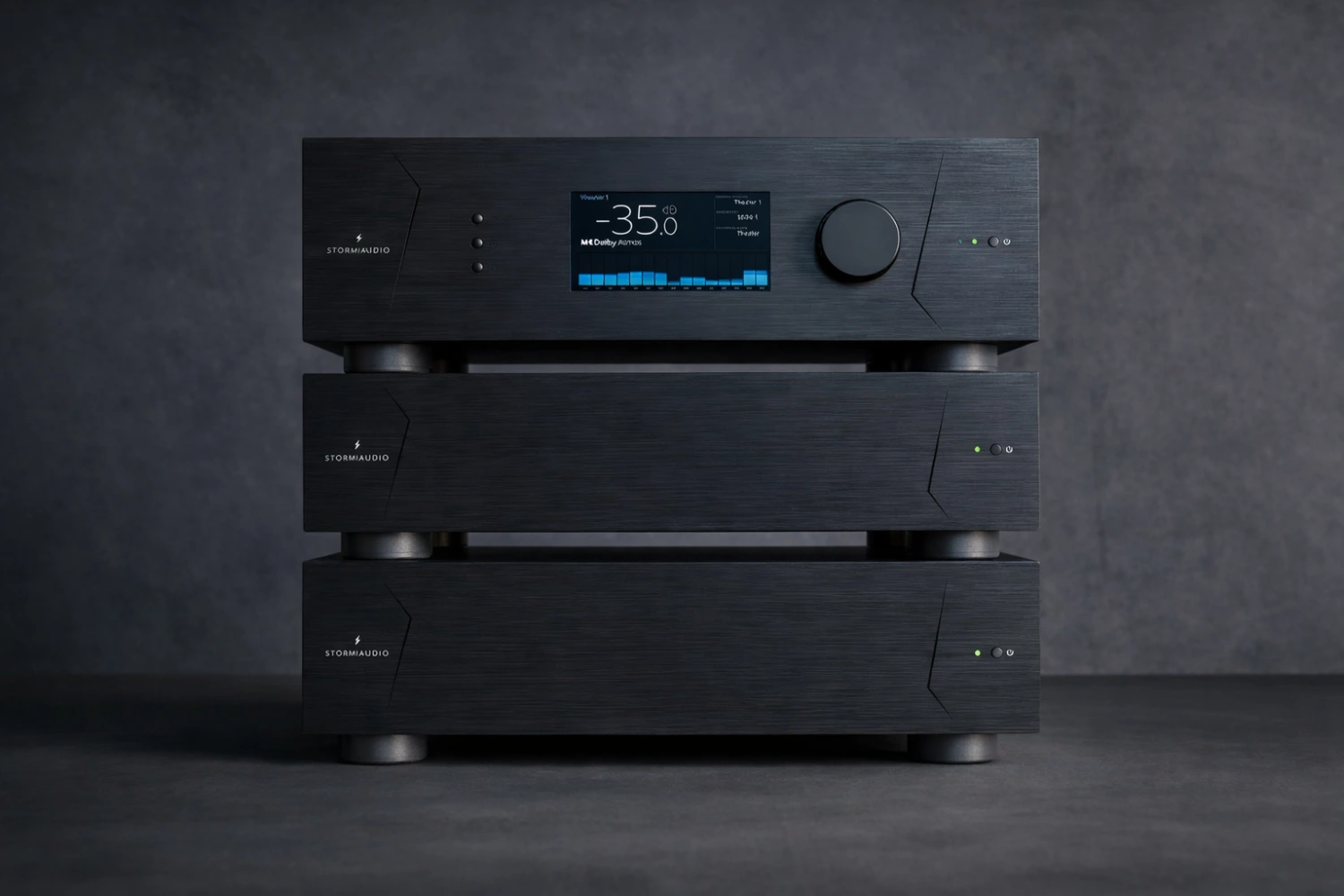
StormAudio’s Impulsion 8 is not positioned as a conventional multi-channel power amplifier with a few modern conveniences added on. It is designed as a connected, system-aware amplification platform for complex home cinema and custom installation environments, where channel counts are rising, equipment racks are becoming more sophisticated, and installers increasingly need reliable ways to route, monitor, configure, and support large systems. Building on StormAudio’s earlier PA 8 amplifier platform, the Impulsion 8 adds native Audio-over-IP support, substantial bridge-mode capability, and a roadmap for deeper DSP integration. The result is an amplifier concept that focuses as much on installation architecture and long-term system management as it does on raw power delivery.
Eight Channels in a Compact 2U Chassis
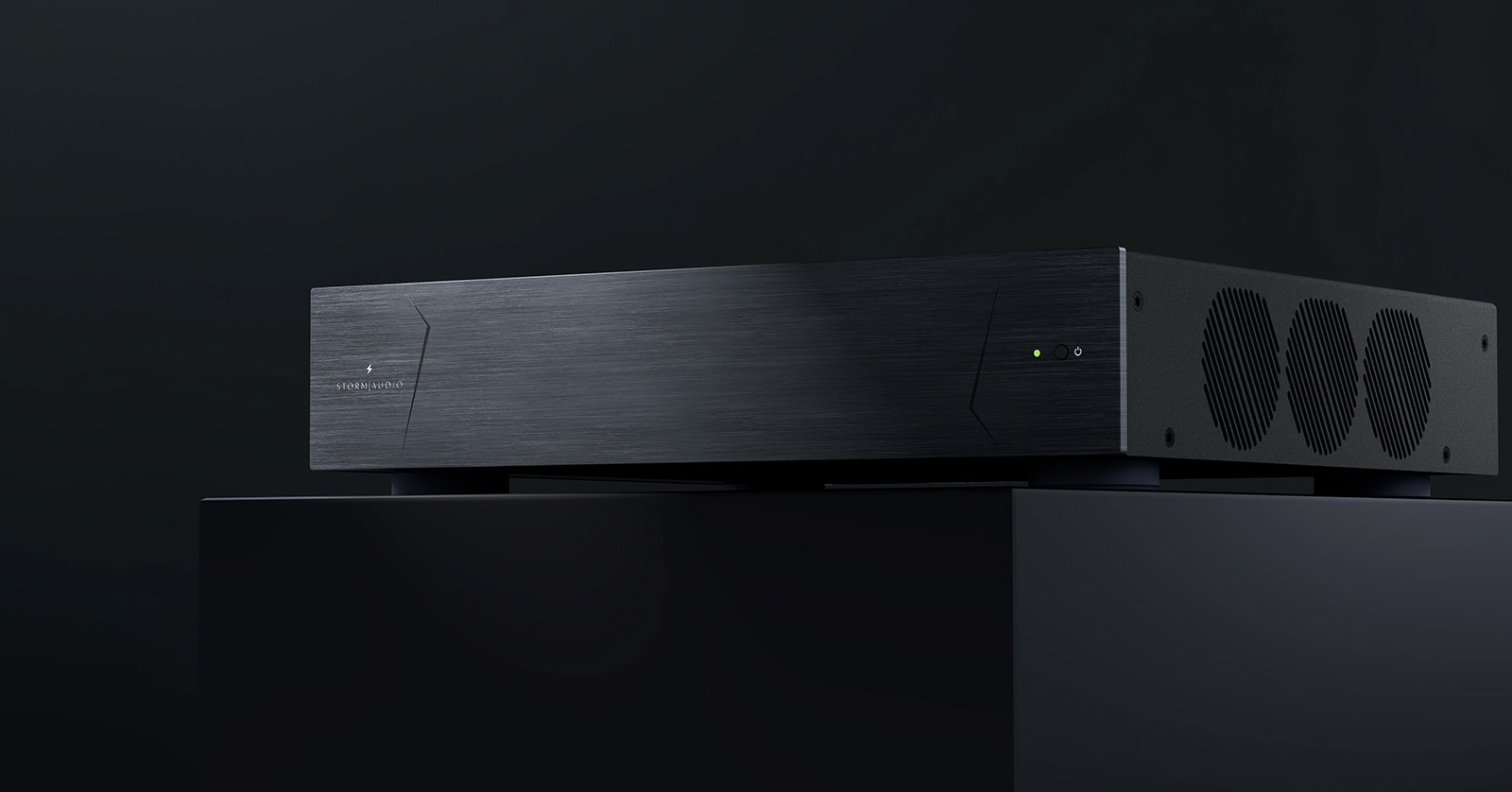
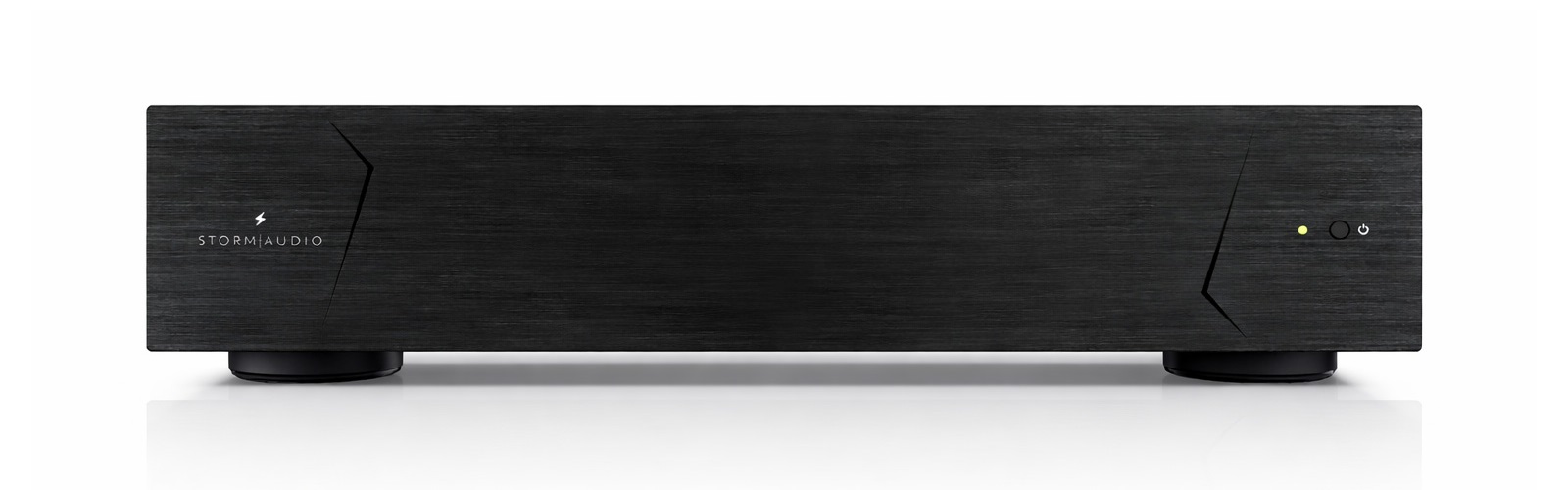
At the core of the Impulsion 8 is an eight-channel Class D amplifier architecture housed in a compact 2U enclosure. That format matters in custom cinema installations, where rack space is often planned carefully and every component must justify its footprint. Eight channels in 2U allows an installer to support multiple loudspeakers without spreading amplification across a larger number of chassis, which can help keep systems tidier and easier to service.
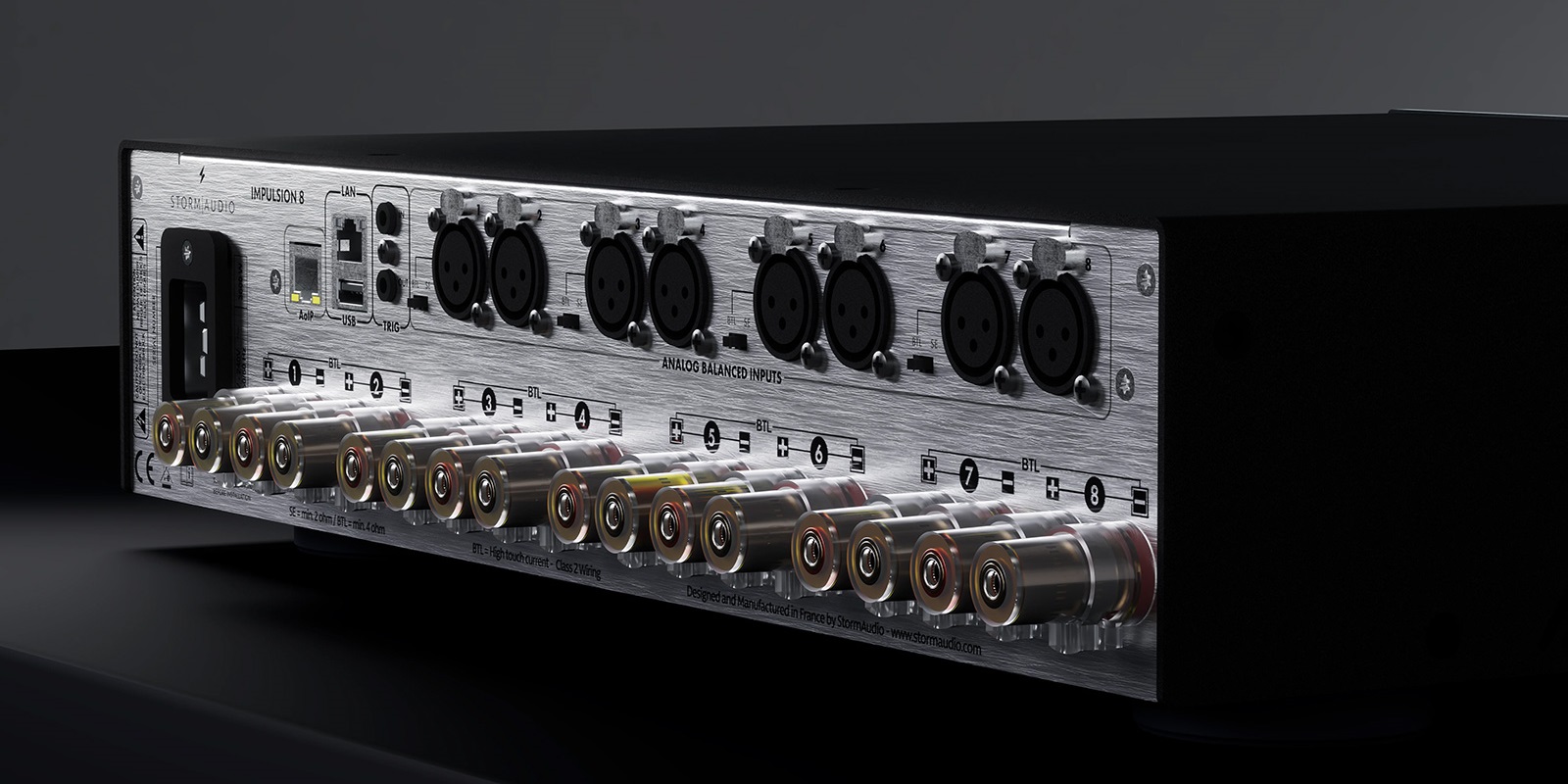
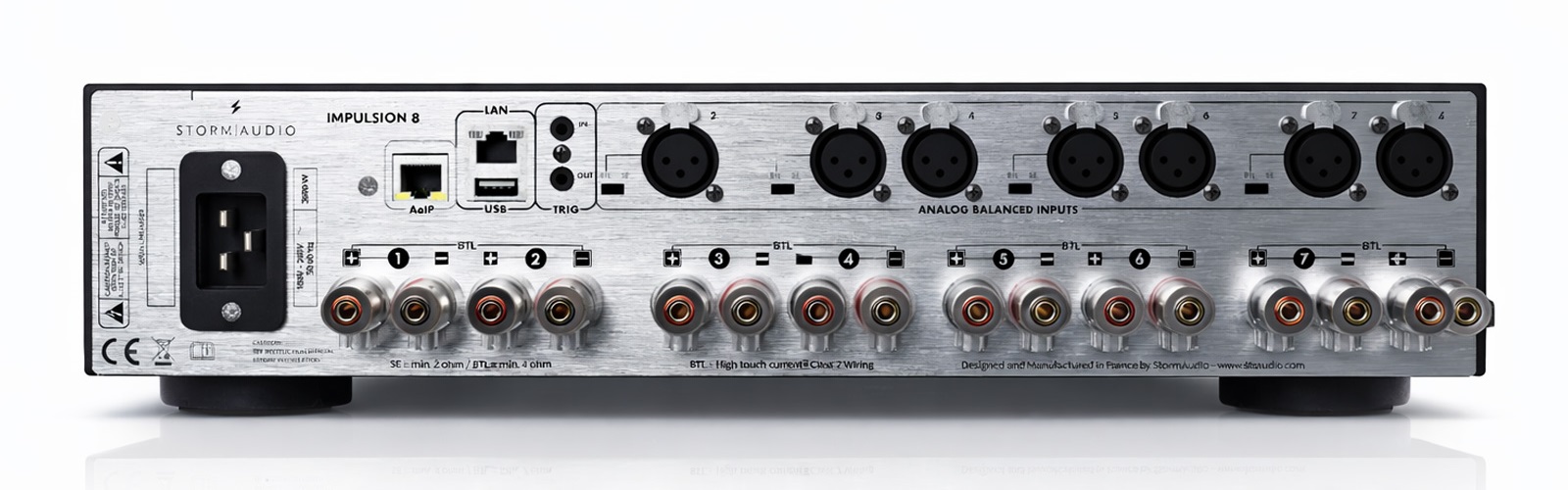
StormAudio specifies up to 200 watts per channel into eight ohms. For installations that need fewer channels but higher output for particular speakers, the amplifier can also be used in bridge mode, with stated output up to 800 watts into eight ohms or 1,200 watts into four ohms. That gives the Impulsion 8 a useful degree of flexibility: it can serve as a multi-channel amplifier for surround, height, or effects speakers, or be configured to deliver greater power to more demanding channels where the system design calls for it.
The amplifier uses Pascal Audio’s UMAC Class D amplification technology together with a UREC 3,600-watt power supply. StormAudio describes the architecture as being designed for dynamic performance, efficiency, and low noise. Those design priorities are particularly relevant in home cinema environments, where amplifiers may be installed either in dedicated equipment rooms or closer to living spaces, and where heat, fan noise, and electrical efficiency can affect the practicality of a system as much as headline power figures.
Audio-over-IP Moves the Amplifier into the Network
One of the most distinctive elements of the Impulsion 8 is its native Audio-over-IP connectivity. The amplifier supports both Dante and AES67, allowing it to function as an endpoint within a modern AV network rather than relying only on traditional analog signal distribution. This is a significant design choice for contemporary custom installations, where systems may include many channels, long cable runs, multiple equipment locations, and increasingly digital signal paths.
With AoIP built into the amplifier, system designers can create a more direct digital signal chain and reduce dependence on bulky analog cabling between processors, racks, and amplification zones. Digital network cabling can also make distance less restrictive than it tends to be with analog interconnects, which is useful in large homes, dedicated theaters, and distributed technical spaces. The practical benefit is not simply fewer cables; it is a cleaner infrastructure that can be easier to plan, document, expand, and troubleshoot.
Dante and AES67 support also gives the Impulsion 8 relevance beyond a single closed configuration. Dante is widely used in professional and installed audio environments, while AES67 provides an interoperability framework for networked audio. For integrators already working with networked AV, this makes the amplifier a more natural fit within digital routing schemes, especially where the goal is to keep audio in the digital domain for as much of the chain as possible.
Designed to Work Inside the StormAudio Ecosystem
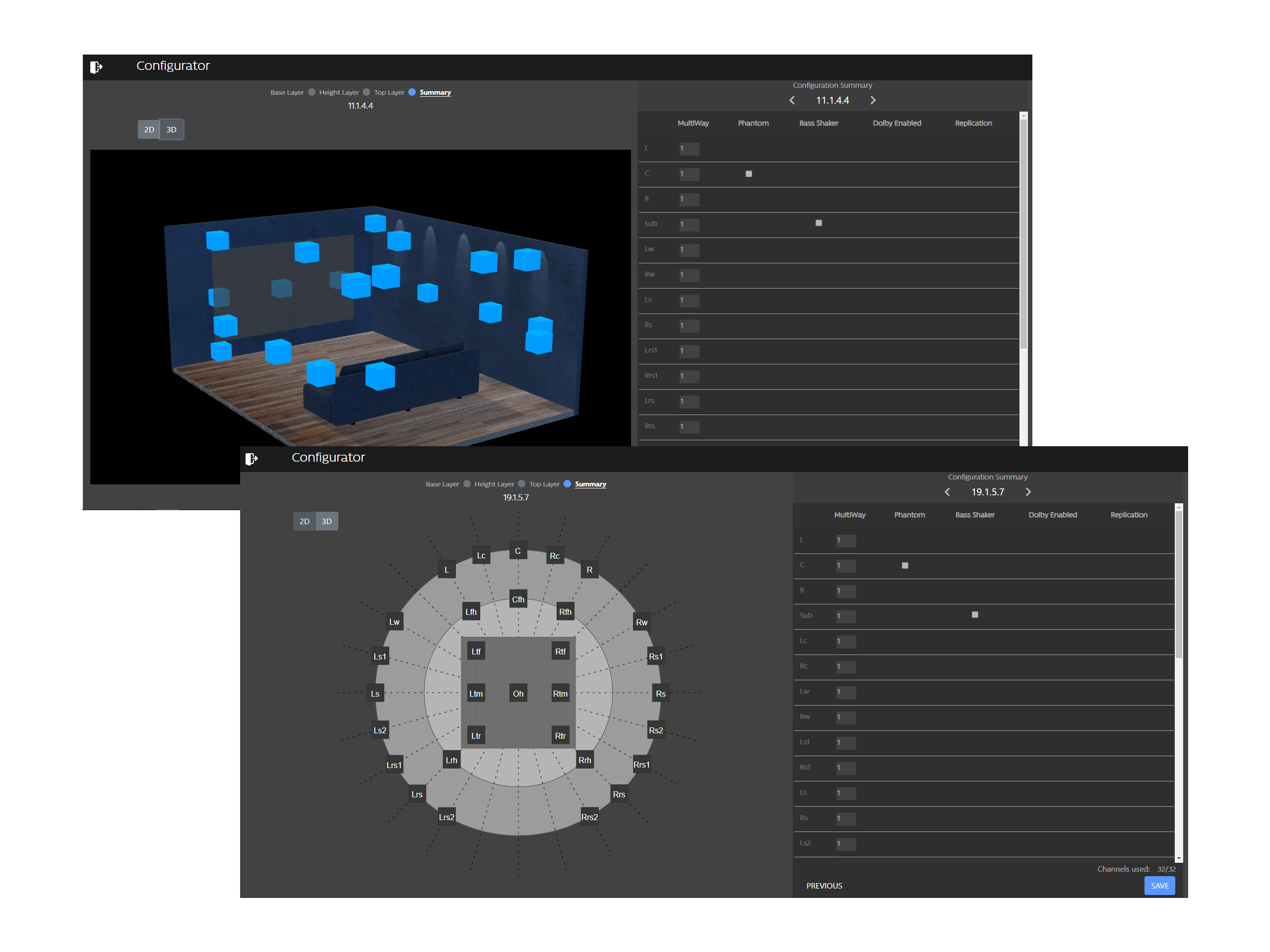
The Impulsion 8 is intended to integrate closely with StormAudio’s broader home cinema platform. When used with a StormAudio AV processor, the amplifier can be automatically detected and configured. In a simple two-channel system, manual setup may be manageable; in a large immersive cinema system, however, channel assignment, gain structure, routing, and verification can become time-consuming. Automatic detection and configuration are therefore meaningful installation features, not just conveniences.
This kind of ecosystem integration can reduce setup time and help minimize configuration errors, especially in systems with many loudspeakers and multiple amplifiers. It also supports a more coherent workflow for installers who are already building around StormAudio processing. The amplifier is not merely receiving a signal at the end of the chain; it is designed to communicate with the system around it.
StormAudio also connects the Impulsion 8 to its StormMonitoring platform. Through a built-in web interface, installers can view system status and diagnostics, supporting remote management and long-term maintenance. For the end user, the value is indirect but important: a well-monitored system can be easier for professionals to support after installation, particularly when a cinema room is part of a larger residential technology project.
Planned DSP Adds Calibration and Protection Potential
StormAudio has confirmed that full DSP functionality is planned for the Impulsion 8 later in 2026. The announced tools include parametric equalizers, FIR filters, limiters, and per-channel gain control. These are not casual add-ons; they are the kind of processing functions that can help an installer fine-tune speaker behavior, manage channel levels, and protect loudspeakers within an advanced cinema system.
Parametric equalization can be useful for targeted tonal and room-related adjustments. FIR filters can support more advanced filtering strategies, depending on the system design. Limiters can help protect loudspeakers from being overdriven, while per-channel gain control provides granular adjustment at the amplifier stage. Bringing these functions into the amplifier can reduce the need for additional external processing hardware in certain installations.
It is important to note that this DSP capability is described as upcoming rather than present at initial announcement. For prospective owners and integrators, that makes the Impulsion 8 both a defined amplifier platform and part of a developing ecosystem roadmap. Its appeal will be strongest where the planned DSP features align with a professional installation strategy and where future firmware-based expansion is considered part of the system plan.
Why the Power Architecture Matters
The Impulsion 8’s published power figures give it a broad range of possible roles in a home cinema. Eight channels at up to 200 watts into eight ohms can be applied to multi-speaker immersive layouts, while bridge mode can reallocate the amplifier’s capability toward channels that need substantially higher output. That flexibility can be valuable in systems where not every loudspeaker has the same sensitivity, placement, or output requirement.
Rather than forcing a single use case, the amplifier’s configuration options allow designers to decide whether channel density or higher per-channel power is the priority. For example, a system might use the Impulsion 8 for several surround and height channels, or bridge selected outputs for speakers that require more amplifier headroom. The source information does not define specific recommended speaker pairings, but the published architecture clearly supports multiple deployment strategies.
The 3,600-watt power supply is another important part of the design. In a multi-channel amplifier, the power supply must support simultaneous demands across channels, particularly in movie playback where dynamic peaks can arrive suddenly and across several speakers. StormAudio’s emphasis on efficiency and low noise also reflects the realities of installed systems, where thermal behavior and quiet operation can influence where the amplifier can be located.
Who the Impulsion 8 Is Best Suited For
The Impulsion 8 is most clearly aimed at custom installers, cinema designers, and owners planning serious immersive audio systems rather than casual plug-and-play setups. Its strengths are tied to networked signal distribution, multi-channel flexibility, integration with StormAudio processors, and professional monitoring. Those qualities are most useful when a system has enough complexity to benefit from them.
It may be especially attractive for projects built around a centralized rack, a StormAudio AV processor, and a desire to use Dante or AES67 networking as part of the audio infrastructure. In that context, the amplifier’s network endpoint role can simplify routing and make the system more scalable. The planned DSP tools also make sense for installations where detailed calibration and loudspeaker management are handled by professionals.
Conversely, the Impulsion 8 is likely more amplifier than a straightforward stereo or small media-room system requires. Buyers who only need a basic analog multi-channel amplifier, who are not using networked audio, or who do not plan to integrate with StormAudio processing may not make full use of what makes this model distinctive. Its value is tied less to simplicity for its own sake and more to controlled complexity: making large, advanced systems easier to configure, monitor, and expand.
Market Position and Timing
StormAudio expects the Impulsion 8 to become available in April 2026, with pricing not yet announced. Its positioning is clearly within the advanced home cinema and custom installation market, not the mass-market receiver or conventional hi-fi amplifier category. The inclusion of Dante, AES67, web-based diagnostics, ecosystem auto-configuration, and planned onboard DSP points toward professional deployment in carefully designed systems.
That market position is important because it explains the product’s priorities. The Impulsion 8 is not focused only on adding more amplifier channels to a rack. It is designed to address the practical realities of modern immersive cinema: more speakers, more routing complexity, longer cable paths, more need for remote support, and more expectation that components should communicate intelligently with the system around them.
For StormAudio, the Impulsion 8 appears to extend the company’s processor-centered ecosystem deeper into the amplification stage. For installers, that could mean fewer separate boxes, less analog routing, and more unified control. For end users, the benefit is a system architecture that may be easier for professionals to maintain over time, especially in high-channel-count theaters where reliability and serviceability matter.
Conclusion
The StormAudio Impulsion 8 stands out for its combination of eight-channel Class D amplification, native Dante and AES67 Audio-over-IP support, substantial bridge-mode output, compact 2U construction, StormAudio ecosystem integration, remote monitoring, and planned DSP functions. Its strongest documented qualities are not only power and channel count, but also its role as an intelligent networked amplifier for complex cinema installations. It is best suited to professionally designed home theaters and custom AV systems where scalability, digital routing, detailed configuration, and long-term support are central to the project.