
A home cinema component must do more than carry a long feature list.
Channel capacity determines how far a system can expand, HDMI capabilities affect compatibility with modern displays and game sources, and room calibration can be as important as amplification in a real listening space.
Nine products in this ranking are AV receivers, ranging from accessible 5.2-channel models to a 15-channel flagship. The Magnetar UDP800 is the exception: it is a 4K UHD Blu-ray and media player rather than the control and amplification center of a theater. Its position reflects that narrower but still valuable role. The order prioritizes system-building headroom, surround-format flexibility, video connectivity, calibration and ease of integration. A lower-ranked receiver may still be the more rational choice for a compact 5.1 room, while the highest positions are reserved for products capable of supporting substantially larger systems.

1. Denon AVC-A1H
The Denon AVC-A1H combines 15 amplification channels with four independent subwoofer outputs.
The Denon AVC-A1H takes first place because it offers the most extensive home cinema architecture in the group.
Its 15 discrete amplification channels can support a 9.1.6 Dolby Atmos configuration without requiring extra power amplifiers, while four independent subwoofer outputs allow unusually ambitious bass-system layouts.
Video connectivity is comparably comprehensive. There are eight HDMI inputs and three outputs, with seven inputs and all three outputs operating at up to 40 Gbps. Support includes 8K at 60 frames per second, 4K at 120 frames per second, VRR, ALLM, eARC, QMS and QFT. That scale is unnecessary for a conventional 5.1 installation, but it provides the greatest expansion headroom of any receiver here.
Best for: Large, highly immersive theaters requiring maximum built-in channel capacity
- Fifteen discrete amplification channels support a 9.1.6 Dolby Atmos system
- Four independent subwoofer outputs provide extensive bass-layout flexibility
- Seven 40 Gbps HDMI inputs and three 40 Gbps outputs
- Supports 8K/60, 4K/120, VRR, ALLM, eARC, QMS and QFT
Verdict: The AVC-A1H is the strongest overall choice for an uncompromising multichannel system, provided its exceptional scale will actually be used.

2. Pioneer VSA-LX805
The Pioneer VSA-LX805 provides 11 amplified channels for layouts up to 7.2.4.
The Pioneer VSA-LX805 is a more focused flagship proposition, supplying 11 channels of Class AB amplification for a complete 7.2.4 theater.
Its quoted 150-watt output is specified into 8 ohms with two channels driven, so that figure should not be interpreted as simultaneous output across all 11 channels.
Even with that qualification, its native channel count avoids the external amplification required by many lower-ranked receivers for four height speakers. Full Dirac Live room calibration is a major differentiator, particularly in spaces where speaker placement and room acoustics are imperfect. Optional Dirac Live Bass Control modules can extend calibration to one or two subwoofers, although that functionality is not included as standard. Dual ESS Sabre ES9026PRO DACs and dedicated attention to power-supply and cooling components reinforce the receiver's premium positioning.
Best for: Premium 7.2.4 systems that benefit from advanced room correction
- Eleven amplification channels can power a complete 7.2.4 system
- Includes Dirac Live room calibration
- Optional Dirac Live Bass Control supports one or two subwoofers
- Uses dual ESS Sabre ES9026PRO DACs across its multichannel architecture
Verdict: The VSA-LX805 pairs native 11-channel amplification with Dirac Live, making it one of the most complete single-chassis theater solutions in the ranking.

3. Denon AVC-X3700H
The Denon AVC-X3700H offers nine amplifier channels and expansion to a 7.2.4 layout.
The Denon AVC-X3700H earns its high position by balancing nine built-in amplification channels with broad format and video support.
It can run a 7.2.2 system directly or expand to 7.2.4 with an external stereo power amplifier.
Dolby Atmos, DTS:X, IMAX Enhanced and the corresponding height-virtualization technologies cover both physical height-speaker systems and simpler rooms without overhead channels. Of its seven HDMI inputs, one is dedicated to 8K signals, while two HDMI outputs can carry 8K video. It supports 8K at up to 60 Hz, 4K at up to 120 Hz, HDR10+ and Dynamic HDR, and it can upscale 4K or Full HD sources to 8K. The single 8K input is less flexible than the wider high-bandwidth provision of the two receivers above, but the overall package remains highly adaptable.
Best for: Versatile immersive theaters that may expand from 7.2.2 to 7.2.4
- Nine discrete amplifier channels support 7.2.2 without additional amplification
- Can expand to 7.2.4 with an external stereo power amplifier
- Supports Dolby Atmos, DTS:X and IMAX Enhanced
- Handles 8K/60, 4K/120, HDR10+ and Dynamic HDR
Verdict: The AVC-X3700H is a well-rounded receiver with meaningful expansion potential and strong support for immersive audio and high-resolution video.

4. JBL MA710
The JBL MA710 supports 7.2-channel surround or a 5.2.2 immersive-audio configuration.
The JBL MA710 is a practical middle-ground receiver built around seven amplification channels.
It can operate as a conventional 7.2 system or redirect two channels to height speakers for a 5.2.2 Dolby Atmos or DTS:X installation.
That makes it suitable for rooms where a compact immersive layout matters more than the extensive height arrays supported by the top three models. Connectivity is another strength. The MA710 provides six HDMI ports, including three inputs compatible with 8K video, as well as a turntable input. Its seven-channel ceiling limits future expansion compared with nine-, 11- and 15-channel receivers, but its combination of immersive decoding, current video compatibility and analog source support is sensibly balanced.
Best for: Modern 5.2.2 systems combining movies, games and vinyl playback
- Seven-channel amplification supports either 7.2 or 5.2.2 layouts
- Decodes Dolby Atmos and DTS:X
- Provides three 8K-compatible HDMI inputs
- Includes six HDMI ports and a turntable input
Verdict: The MA710 is a balanced seven-channel receiver for buyers who want genuine height-speaker playback without moving into a much larger system.

5. Arcam AVR10
The Arcam AVR10 combines seven Class AB amplifier channels with 12-channel processing and Dirac Live.
The Arcam AVR10 approaches home cinema from an audio-led perspective.
It combines 12-channel surround processing and calibration with seven channels of Class AB amplification, rated at 60 watts per channel into 8 ohms.
The built-in amplifiers can support a 5.1.2 Dolby Atmos layout, while reaching 7.1.4 requires an additional four-channel power amplifier or two stereo amplifiers. Full 12-channel Dirac Live calibration gives the AVR10 a significant tool for adapting the system to the room, with measurements taken across nine positions. Apple AirPlay 2 and Google Chromecast provide integrated streaming options. The supplied information describes DTS:X access as dependent on a software update, and the need for external amplification at 7.1.4 makes this a more involved proposition than the Pioneer VSA-LX805.
Best for: Audio-focused theaters built around Dirac Live and separate power amplification
- Twelve-channel surround processing supports an expandable theater system
- Full 12-channel Dirac Live calibration is included
- Seven channels of Class AB amplification support 5.1.2 directly
- Apple AirPlay 2 and Google Chromecast provide network streaming
Verdict: The AVR10 is a compelling foundation for an expandable, room-corrected system, although its largest layouts depend on external amplifiers.

6. Pioneer VSX-835
The Pioneer VSX-835 can operate as a 7.2 receiver or power a 5.2.2 height-speaker system.
The Pioneer VSX-835 is the more capable of the two Pioneer receivers discussed in its source and is treated here as a distinct product rather than being merged with the VSX-535.
Its 7.2-channel architecture can support either a traditional seven-channel layout or a 5.2.2 system with two height speakers.
Dolby Atmos, DTS:X, Dolby Atmos Height Virtualizer and DTS Virtual:X provide options for both physical and virtualized immersive sound. HDMI 2.1 connectivity brings support for 8K and 4K signals, while IMAX certification broadens its home cinema format credentials. Pioneer also includes MCACC automatic room tuning with a dedicated calibration microphone. It cannot match the expansion potential of the receivers above, but its combination of modern video handling, calibration and seven-channel amplification is coherent.
Best for: Straightforward 5.2.2 theaters with modern HDMI requirements
- Supports 7.2 and 5.2.2 speaker configurations
- Includes Dolby Atmos, DTS:X and height-virtualization technologies
- HDMI 2.1 connectivity supports 8K and 4K video
- MCACC provides microphone-based automatic room tuning
Verdict: The VSX-835 offers a useful combination of immersive audio, HDMI 2.1 video support and automated calibration within a seven-channel design.

7. Onkyo TX-RZ840
The Onkyo TX-RZ840 is a 9.2-channel receiver with IMAX Enhanced support.
The Onkyo TX-RZ840 stands out as a 9.2-channel receiver, giving it more native channel capacity than the seven-channel models immediately around it.
Its addition of IMAX Enhanced support is the defining update, using the associated DTS:X-based audio processing for compatible home cinema material.
Its lower placement reflects the more limited comparative evidence available for video bandwidth, room correction and amplifier configuration. The source also identifies reduced legacy connectivity compared with its predecessor, including a reduction to one optical input and the removal of a component input. Those changes may be inconsequential in an HDMI-centered system but are relevant when older sources remain in use.
Best for: Nine-channel systems centered on HDMI sources and IMAX Enhanced material
- 9.2-channel architecture provides substantial surround-system capacity
- Supports IMAX Enhanced playback and its associated immersive audio processing
Verdict: The TX-RZ840 offers useful 9.2-channel scale and IMAX Enhanced support, though its documented advantages are narrower than those of the leaders.
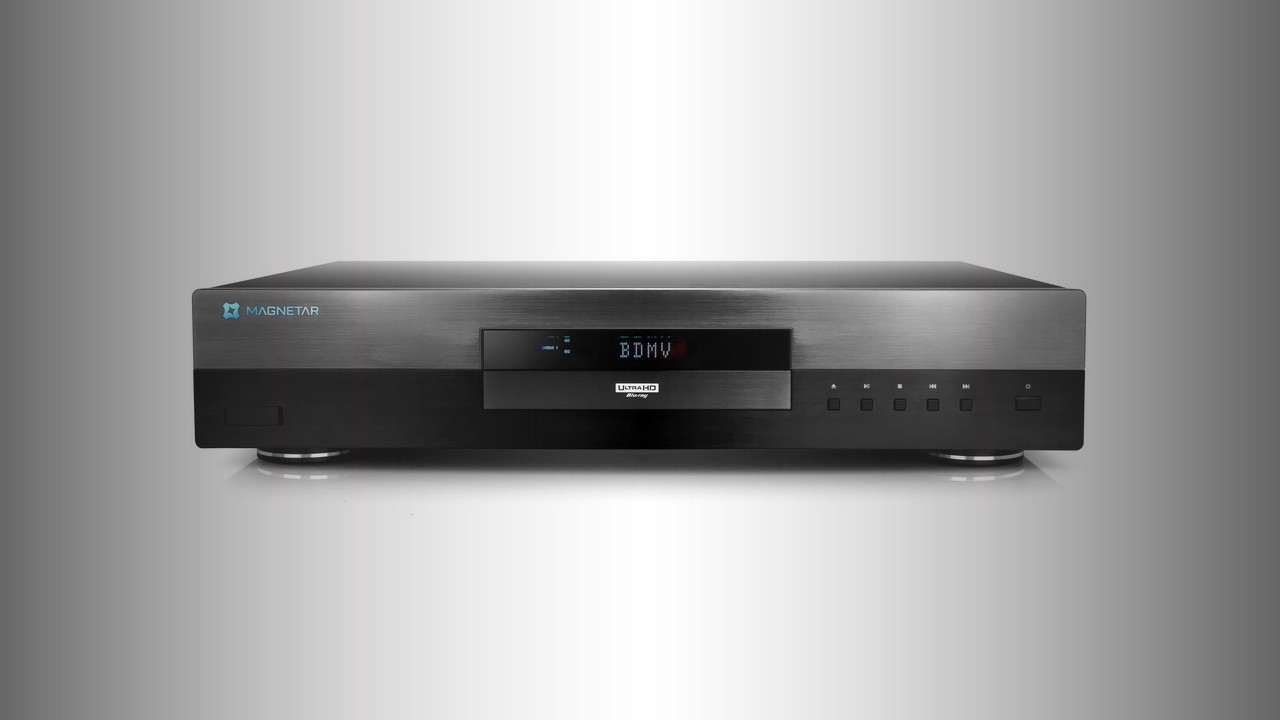
8. Magnetar UDP800
The Magnetar UDP800 is a full-size 4K UHD Blu-ray and media player with broad HDR support.
The Magnetar UDP800 is the ranking's specialist source component rather than an AV receiver.
It plays DVD, Blu-ray and 4K UHD discs and also handles H.265, H.264 and other media files.
HDR support includes Dolby Vision, HDR10 and HDR10+, alongside HDR-to-SDR conversion and BT., BT.709 and BT.601 color profiles. Its MediaTek MT8581 processor can upscale video to 4K at up to 50 or 60 frames per second. Audio-file support includes DSD64, DSD128, multichannel DSD64 and PCM up to 192 kHz/24-bit, while the full-size metal chassis contains a custom transformer and dedicated audio components. Its eighth-place position does not imply that it is an inferior disc player; it reflects the fact that it cannot replace the switching, decoding and amplification functions of a receiver.
Best for: Disc collectors seeking a dedicated 4K UHD and media player
- Plays DVD, Blu-ray, 4K UHD and supported media files
- Supports Dolby Vision, HDR10 and HDR10+
- Provides 4K upscaling at up to 50 or 60 frames per second
- Handles DSD and PCM high-resolution audio files
Verdict: The UDP800 is a feature-rich physical-media source, but it complements rather than replaces the AV receivers in this ranking.

9. Onkyo TX-SR494
The Onkyo TX-SR494 combines seven channels with automatic calibration and virtual height processing.
The Onkyo TX-SR494 is designed for smaller and less elaborate installations, but its seven-channel architecture still allows more flexibility than a basic 5.2 receiver.
Dolby Atmos Height Virtualizer and DTS Virtual:X can simulate height and surround effects when the corresponding physical speakers are absent, reducing the installation demands of a three-dimensional sound field.
Four HDMI inputs and one output can carry 4K UHD video, including Dolby Vision and HDR10. Automatic calibration helps adapt the speaker system to the room, while the straightforward feature set suits an average apartment or compact theater. It ranks below the more advanced seven-channel receivers because its documented connectivity and expansion options are more limited.
Best for: Compact rooms needing seven channels and virtualized height effects
- Seven-channel architecture suits compact surround and immersive systems
- Dolby Atmos Height Virtualizer and DTS Virtual:X reduce the need for height speakers
- Automatic calibration simplifies speaker setup
- Four HDMI inputs support 4K UHD, Dolby Vision and HDR10
Verdict: The TX-SR494 is a sensible small-room receiver with useful virtual-surround tools and uncomplicated 4K connectivity.

10. Denon AVR-X550BT
The Denon AVR-X550BT provides five discrete amplifier channels and five HDMI inputs.
The Denon AVR-X550BT is the entry-level choice in this group.
Its five discrete amplifier channels and dual-subwoofer configuration provide the foundation for a conventional 5.2 home theater, but there are no additional channels available for rear surrounds or physical height speakers.
That makes it less expandable than every other receiver in the ranking. It nevertheless covers the essentials for a straightforward system. Five HDMI 2.0 inputs support HDCP 2.2, 4K UHD and HDR, while the HDMI output provides ARC. HD surround-format decoding, microphone-based automatic calibration and Denon's Setup Assistant reduce the complexity of initial installation. Four front-panel function buttons also provide direct access to sources and stored settings.
Best for: First-time owners building a straightforward 5.2 home theater
- Five discrete amplifier channels support a conventional 5.2 system
- Five HDMI 2.0 inputs handle HDCP 2.2, 4K UHD and HDR
- Microphone-based automatic calibration assists speaker setup
- Setup Assistant and front-panel shortcuts simplify operation
Verdict: The AVR-X550BT is an accessible and easy-to-configure 5.2 receiver, but its limited channel count leaves little room for expansion.


Sound Off
0Join the discussion if you have something to add.