
Amplification covers more than one system role, and these ten products range from full-featured integrated amplifiers to standalone power amplifiers, line-level control components and dedicated headphone designs.
The leading positions favor models that can serve the widest range of conventional hi-fi systems without requiring numerous additional components.
That emphasis puts versatile integrated amplifiers first, followed by scalable power amplifiers and increasingly specialized designs. Output figures are considered in context: substantial power can help with demanding loudspeakers, while the 10-watt GEN-300B is intentionally designed around high-sensitivity speakers. Headphone amplifiers and the CH Precision line preamplifier rank lower because they perform narrower jobs, not because their engineering is inherently inferior. The ranking is based strictly on the architectures, connections, specifications and intended applications documented in the supplied source articles. Those articles do not provide directly comparable listening tests, prices or independent measurements, so the order should be read as an assessment of documented versatility and system fit rather than a definitive hierarchy of sound quality or value.
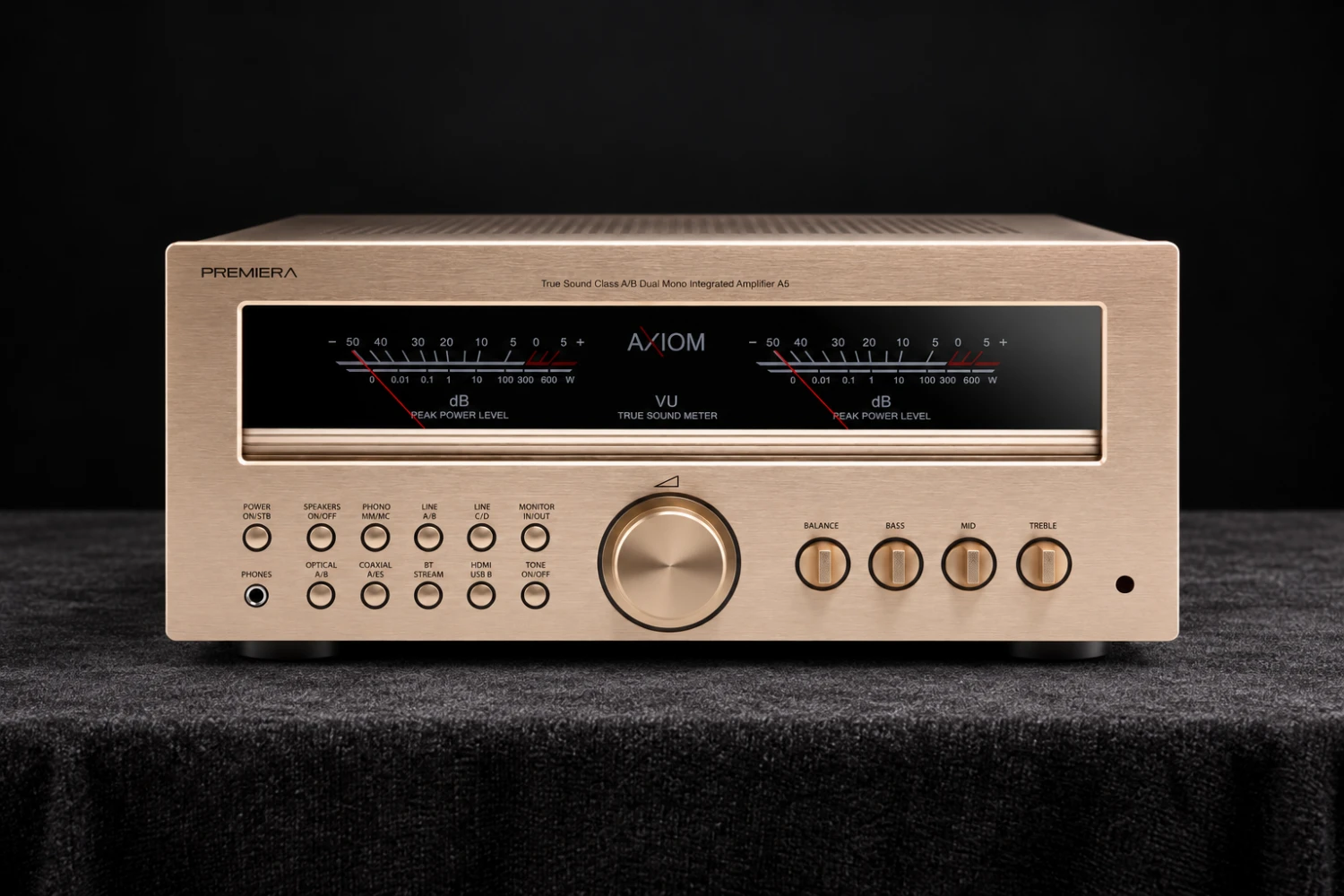
1. Premiera A5 Axiom
The Premiera A5 Axiom combines a dual-mono Class AB output stage with digital conversion, HDMI ARC and phono support.
The Premiera A5 Axiom takes first place by combining substantial Class AB output with the broadest collection of source and system features in the group.
It is rated at 170 watts per channel into 8 ohms and 275 watts per channel into 4 ohms, with separate transformers, rectification stages and filtering for the two channels.
Three complementary pairs of bipolar output transistors are used per channel. An ESS Sabre DAC, HDMI ARC, moving-magnet and moving-coil phono support and bidirectional Bluetooth allow the A5 Axiom to accommodate televisions, digital sources, turntables and wireless devices without immediately requiring separate conversion or phono components. The source does not establish how it sounds or how it compares on price, but its documented combination of power, dual-mono construction and connectivity makes it the strongest overall system centerpiece here.
Best for: A powerful, versatile integrated hi-fi system
- Rated at 170 watts per channel into 8 ohms and 275 watts per channel into 4 ohms
- Dual-mono Class AB design with independent channel power supplies
- ESS Sabre digital-to-analog conversion and HDMI ARC
- Supports MM and MC cartridges as well as bidirectional Bluetooth
Verdict: The A5 Axiom is the most complete all-rounder in the ranking, pairing high-output Class AB amplification with unusually broad analog and digital connectivity.
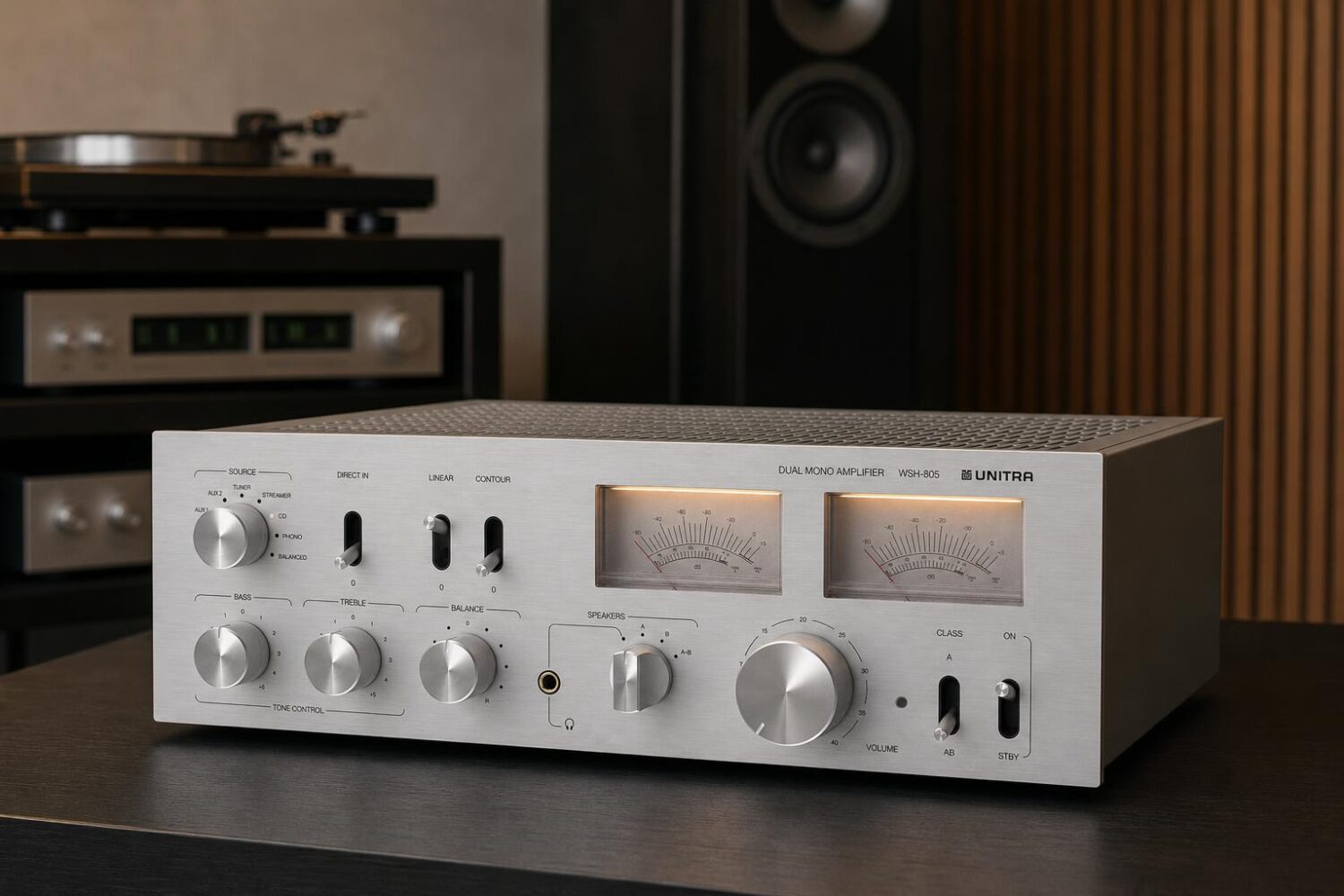
2. Unitra WSH-805
The Unitra WSH-805 uses retro-inspired controls around a dual-mono amplifier with switchable Class A and Class AB operation.
The Unitra WSH-805 is the strongest choice for an analog-centered system.
Its retro-influenced meters and physical controls conceal a contemporary dual-mono design with separate basket-type transformers for the left and right channels.
Current-feedback arrangements are used in the preamplifier and power-amplifier stages, while the power section is fully discrete. Switchable Class AB and pure Class A operation gives the owner two operating modes, and the inclusion of both moving-magnet and moving-coil cartridge support makes the WSH-805 particularly accommodating for vinyl systems. It does not match the A5 Axiom's documented digital and television connectivity, but it offers a distinctive combination of analog flexibility, substantial construction and modern circuitry rather than merely reproducing a vintage design.
Best for: Analog systems and vinyl listeners who value traditional controls
- Dual-mono construction with separate transformers for each channel
- Switchable Class AB and pure Class A operation
- Fully discrete power-amplifier stage
- Supports moving-magnet and moving-coil cartridges
Verdict: The WSH-805 is a thoughtfully modern analog integrated amplifier presented through an appealing vintage-inspired interface.

3. Eversolo AMP-F8
The compact Eversolo AMP-F8 can operate as a two-channel power amplifier or a 500-watt bridged monoblock.
The Eversolo AMP-F8 is the most adaptable conventional power amplifier in the ranking.
One chassis delivers a stated 180 watts per channel into 8 ohms or 280 watts per channel into 4 ohms, while bridged operation converts it into a 500-watt monoblock for an 8-ohm load.
That creates a clear upgrade path from a single stereo amplifier to a pair of higher-powered mono units. Its Class AB output stage is supported by a custom 800-watt toroidal transformer, and the 265-millimeter-wide chassis is relatively compact for the published output. Unlike the two integrated amplifiers above it, the AMP-F8 still needs a preamplifier or another source component with suitable level control. For systems that already have those functions covered, its stereo-to-mono flexibility is a persuasive advantage.
Best for: Systems needing scalable standalone speaker power
- Rated at 180 watts per channel into 8 ohms
- Output rises to 280 watts per channel into 4 ohms
- Bridged mode provides a rated 500 watts into 8 ohms
- Can support either a one-chassis stereo system or a two-unit monoblock configuration
Verdict: The AMP-F8 is a flexible Class AB power amplifier that can begin in stereo and later be redeployed as one half of a 500-watt monoblock pair.
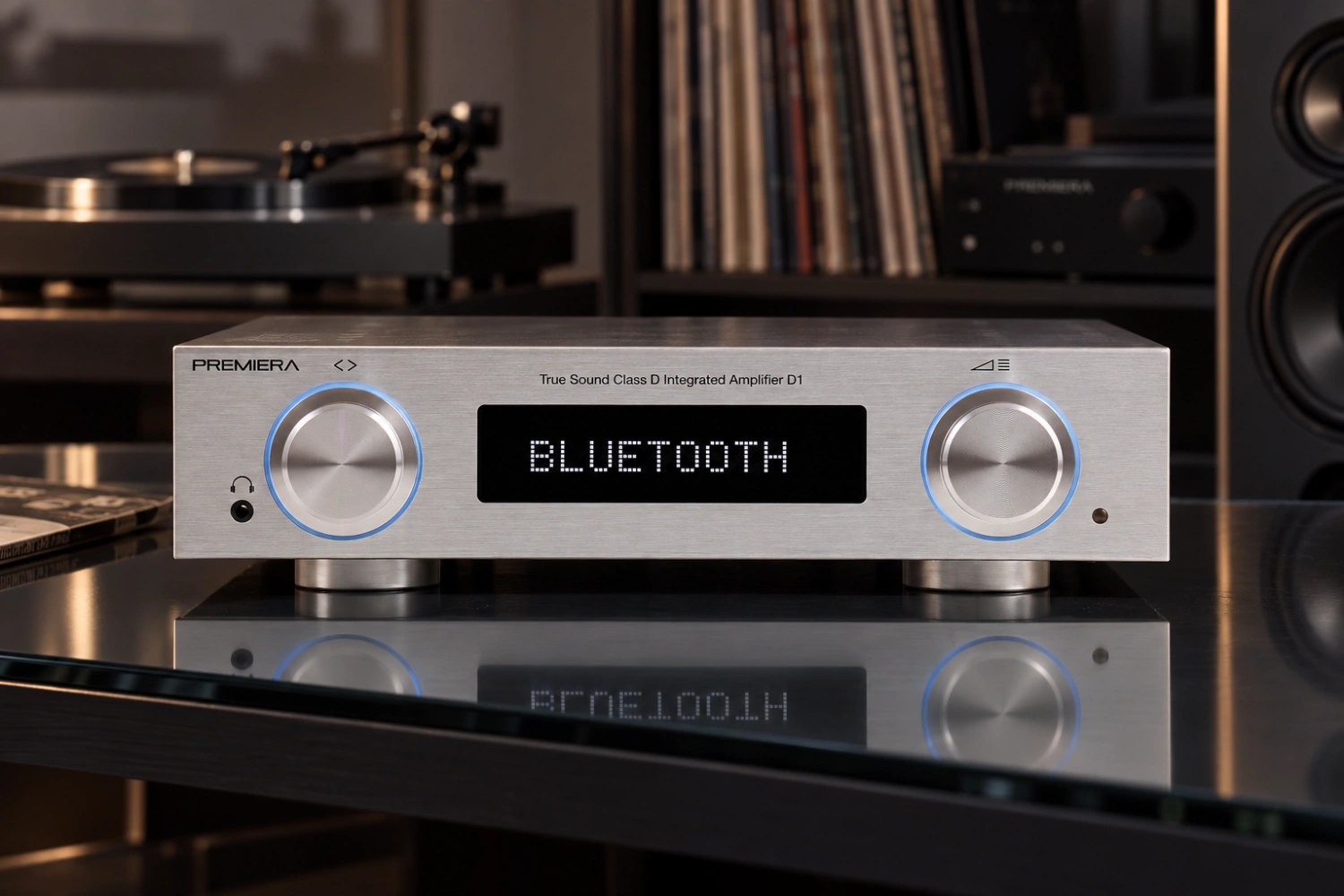
4. Premiera D1
The Premiera D1 combines compact Class D amplification with an ESS Sabre DAC, HDMI ARC and moving-magnet phono input.
The Premiera D1 concentrates integrated amplification, digital conversion and practical source connectivity into a chassis only 270 millimeters wide.
Its Class D module is rated at 101 watts per channel into a 4-ohm load, and the speaker terminals are specified for one pair of speakers with nominal impedance between 4 and 8 ohms.
An ESS Sabre DAC, HDMI ARC, Bluetooth 5.0 and a moving-magnet phono stage make the D1 suitable for mixed digital, television and vinyl use. Dedicated outputs for a separate power amplifier and an active subwoofer also leave room for system expansion. It does not provide the A5 Axiom's higher output or moving-coil phono support, but its compact dimensions and functional breadth make it one of the most broadly useful products on the list.
Best for: Compact systems combining television, digital audio and MM vinyl
- Compact 270-millimeter-wide enclosure
- Class D output rated at 101 watts per channel into 4 ohms
- ESS Sabre DAC, HDMI ARC and Bluetooth 5.0
- Includes MM phono, power-amplifier and active-subwoofer connections
Verdict: The D1 fits an unusually complete set of integrated-amplifier functions into a space-conscious chassis.
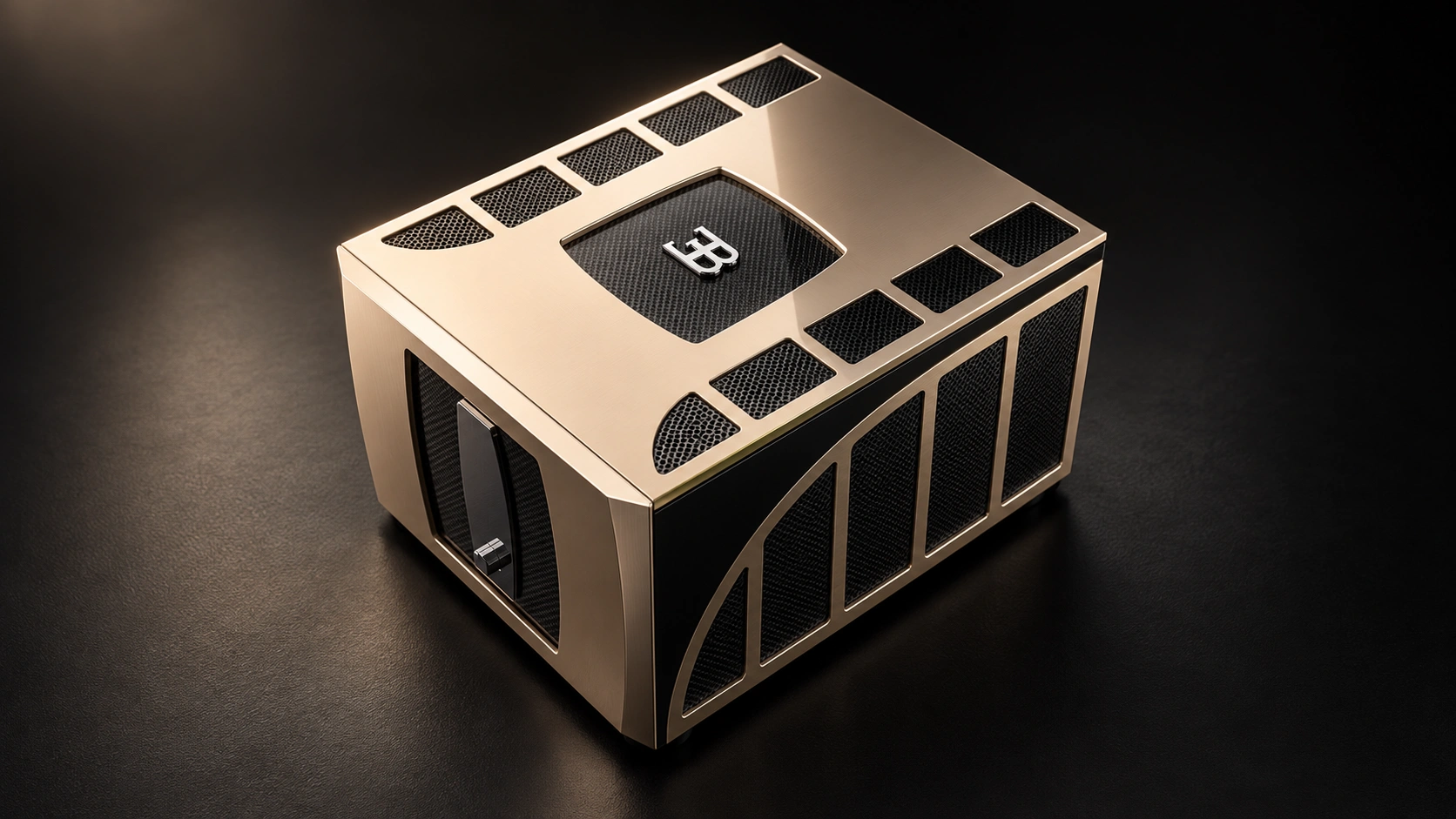
5. TIDAL x BUGATTI MA1
The TIDAL x BUGATTI MA1 is a bespoke monoblock rated from 420 watts into 8 ohms to 1,500 watts into 2 ohms.
The TIDAL x BUGATTI MA1 has the most formidable published output figures in the group.
This is a true monoblock, so one chassis is required for each channel, with continuous output rated at 420 watts into 8 ohms, 840 watts into 4 ohms and 1,500 watts into 2 ohms.
Three magnetically shielded and mechanically decoupled 1,000 VA transformers support the linear power supply, accompanied by a stated 800,000 µF of stabilization capacity. Active power-supply regulation and a fully DC-coupled input circuit further define the design. TIDAL states that no coupling capacitors or relays sit in the signal path between input and output, with protection handled separately. The MA1 ranks below the more broadly applicable models because it requires two chassis for stereo and still needs upstream control and source components, but it is the standout option here for systems built around exceptionally high power and low-impedance capability.
Best for: Reference systems built around demanding loudspeaker loads
- Rated at 420 watts into 8 ohms and 840 watts into 4 ohms
- Specified to deliver 1,500 watts into a 2-ohm load
- Linear supply uses three 1,000 VA transformers
- Active regulation and a fully DC-coupled input circuit
Verdict: The MA1 is the ranking's uncompromising high-power option, provided the system can accommodate two monoblocks and separate source control.

6. Esoteric F-01 Black Edition
The Esoteric F-01 Black Edition retains the standard amplifier's circuitry and 30-watt Class A specification.
The Esoteric F-01 Black Edition is a limited black-anodized version of the company's established Class A integrated amplifier.
Its internal circuitry and technical specifications are unchanged from the standard silver model, so the edition is principally about providing a darker finish rather than introducing a performance redesign.
The F-01 is rated at 30 watts per channel. A matching black version of the optional PS-01F external power supply allows the two components to retain a coordinated appearance. The associated F-02 covered by the same source is a separate amplifier and is not folded into this entry. The F-01 earns its place as a genuine Class A integrated option, although the source's emphasis on finish rather than new engineering limits how strongly it can be differentiated from the established standard version.
Best for: Class A integrated systems requiring a coordinated black finish
- Class A integrated-amplifier design
- Rated at 30 watts per channel
- Black-anodized limited-edition enclosure
- Compatible with a finish-matched optional PS-01F external power supply
Verdict: The F-01 Black Edition offers established Esoteric Class A amplification in a limited darker finish rather than a technically revised design.
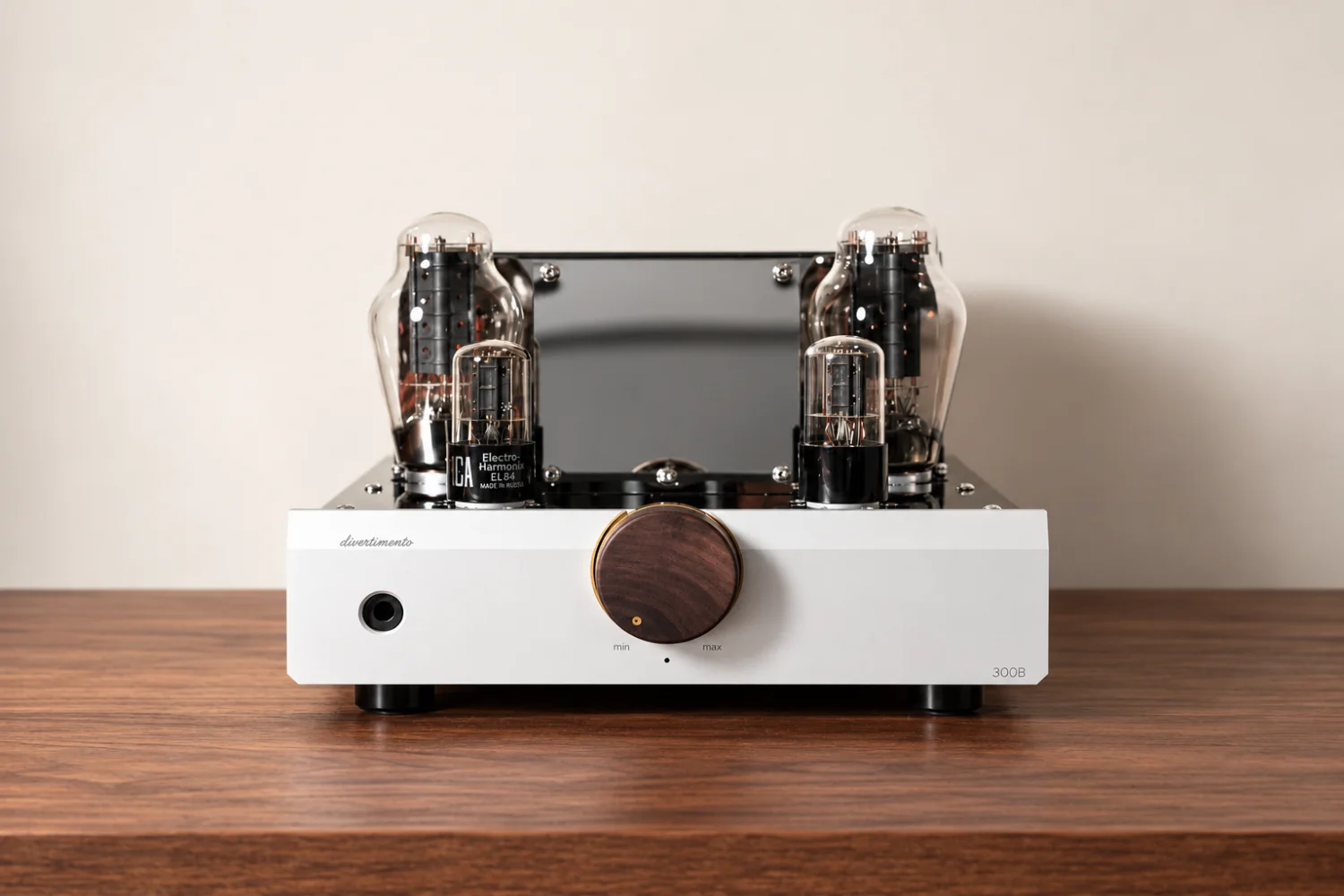
7. Layer Audio Design GEN-300B
The Layer Audio Design GEN-300B uses single-ended 300B output tubes to drive high-sensitivity speakers or headphones.
The Layer Audio Design GEN-300B is deliberately different from the higher-powered solid-state amplifiers above it.
Its fully discrete, all-tube signal path uses two 6N8P driver tubes, two 300B output tubes and a 5AR4 rectifier.
The single-ended Class A circuit is rated to provide up to 10 watts per channel into an 8-ohm load. That output makes appropriate speaker matching essential, and Layer explicitly intends the amplifier for high-sensitivity loudspeakers rather than difficult loads. Separate 4- and 8-ohm speaker connections assist with nominal impedance matching, while direct headphone drive gives the integrated amplifier a second role in a personal listening system. Its limitations are clear, but so is its purpose.
Best for: High-sensitivity loudspeakers and headphones in an all-tube system
- Fully discrete, all-tube signal path
- Single-ended Class A operation with 300B output tubes
- Dedicated speaker connections for 4- and 8-ohm loads
- Designed to drive both headphones and high-sensitivity speakers
Verdict: The GEN-300B is a focused 10-watt tube amplifier whose direct headphone capability broadens an otherwise highly specialized design.
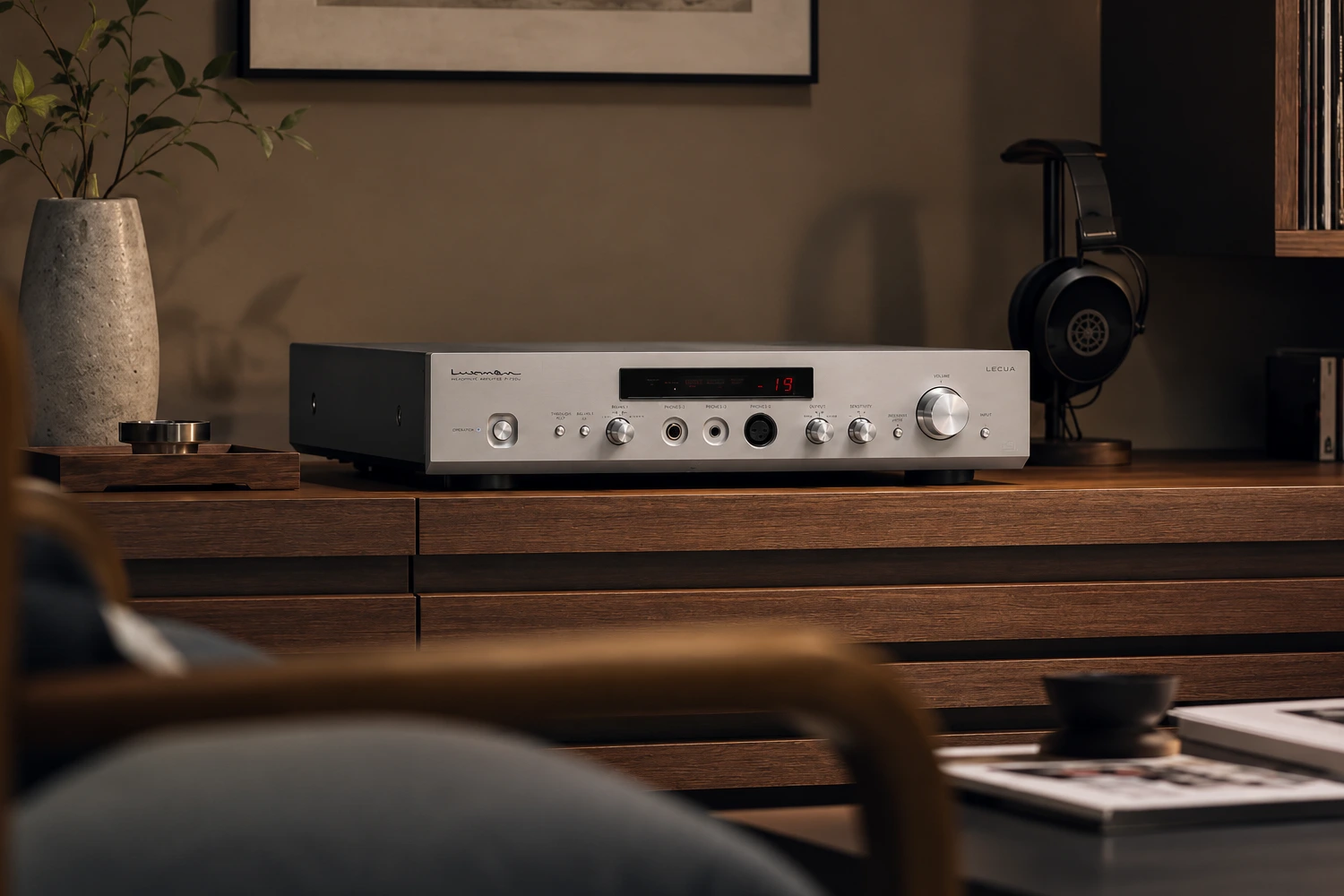
8. Luxman P-800u
The Luxman P-800u provides balanced 4.4-millimeter and XLR connections alongside a conventional 6.35-millimeter headphone output.
The Luxman P-800u treats headphone listening as the sole purpose of a full-width analog component.
Its four-channel amplification architecture operates in bridged balanced form through the 4.4-millimeter and four-pin XLR outputs, while the 6.35-millimeter connection uses parallel unbalanced drive.
The design draws on expertise developed for Luxman's P-100 Centennial while occupying a separate place in the range. There is no onboard digital conversion or streaming, so the P-800u must receive a line-level analog signal from a DAC, disc player, preamplifier or another suitable source. A rear pass-through output can help integrate it into a larger system without making it a speaker amplifier. It ranks below products that can drive both headphones and speakers, but its connection options and exclusively analog remit make it a clearly defined specialist.
Best for: Dedicated balanced and unbalanced wired-headphone systems
- Four-channel amplification architecture
- Bridged balanced operation through 4.4-millimeter and four-pin XLR outputs
- Parallel unbalanced drive through the 6.35-millimeter output
- Analog pass-through supports integration with a wider component system
Verdict: The P-800u is a purpose-built analog headphone amplifier for listeners who already have digital conversion and source components in place.
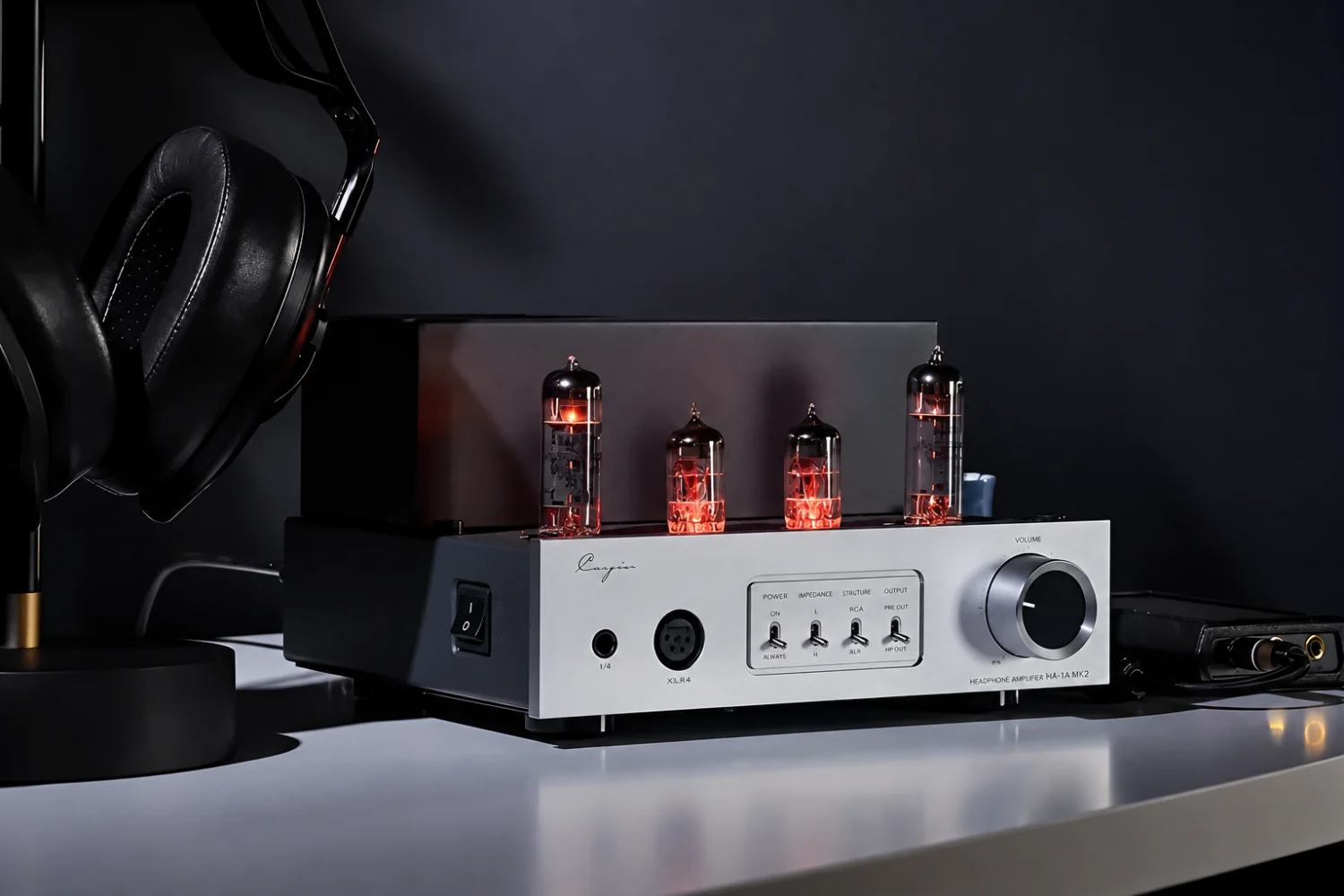
9. Cayin HA-1A Mk3
The compact Cayin HA-1A Mk3 uses two 12AU7-type valves and two EL84-type output valves in a Class A headphone circuit.
The Cayin HA-1A Mk3 is the most compact model in Cayin's HA headphone-amplifier range and is intended for desktop audio systems.
Importantly, Cayin has retained a fully tube-amplified circuit rather than adopting a hybrid topology simply to reduce the enclosure size.
The Class A design uses two JJ 12AU7/ECC82 valves and two Electro-Harmonix EL84EH/6BQ5 output valves. That documented architecture gives the HA-1A Mk3 a distinct identity among compact headphone components, but the supplied source excerpt does not establish its output ratings, supported headphone loads or comparative performance. It therefore receives a carefully limited recommendation below the more thoroughly specified P-800u.
Best for: Compact desktop systems centered on an all-valve headphone amplifier
- Fully tube-amplified rather than hybrid circuitry
- Class A operation
- Uses identified JJ and Electro-Harmonix valves
- Smallest component in Cayin's HA headphone-amplifier range
Verdict: The HA-1A Mk3 brings a genuine Class A tube circuit to a compact desktop format, although the available source details leave its practical matching range less defined.
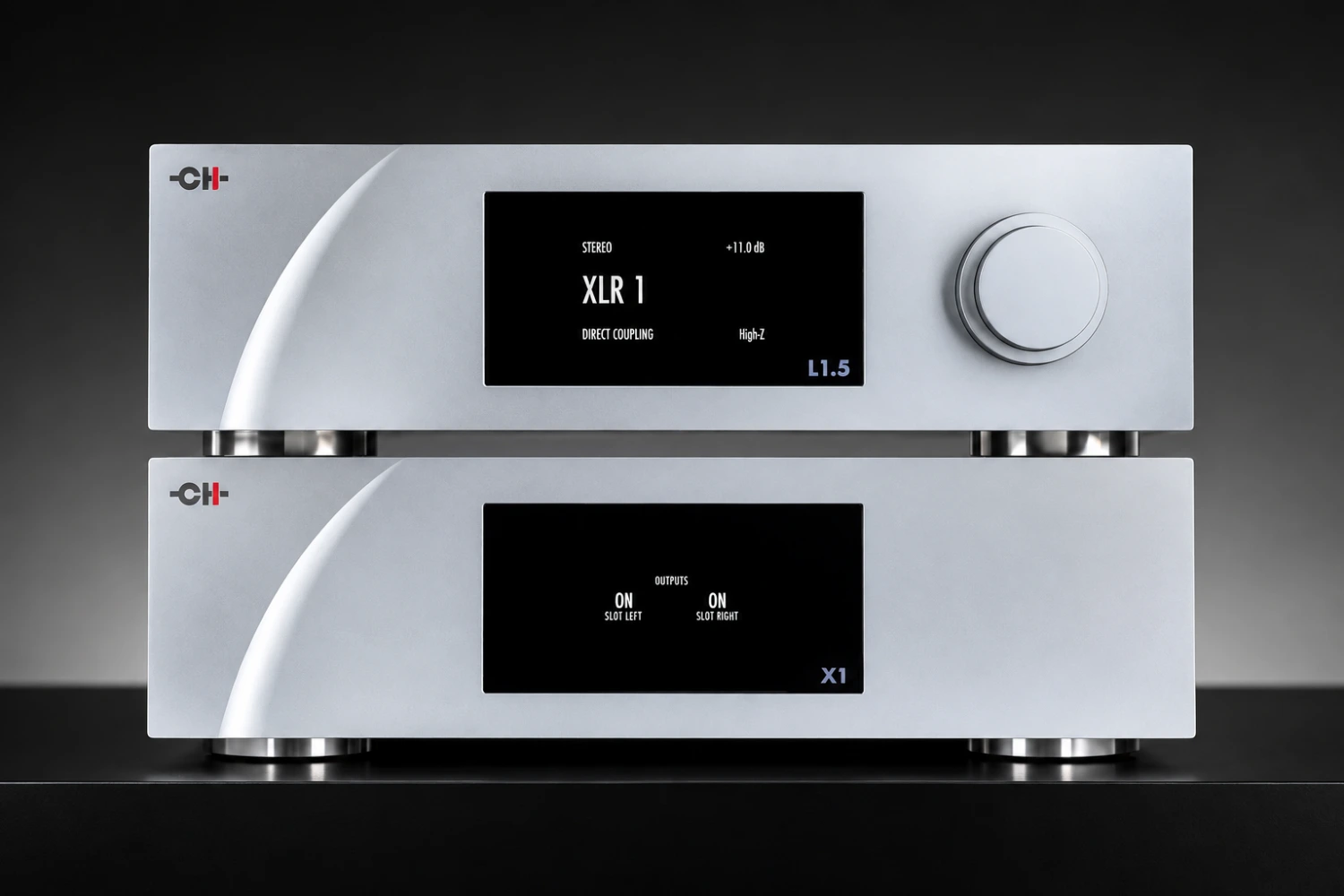
10. CH Precision L1.5
The CH Precision L1.5 applies architecture derived from the reference L10 to a revised line preamplifier.
The CH Precision L1.5 is a line preamplifier rather than an integrated or power amplifier, making it the least directly comparable product in this ranking.
Its revised signal architecture draws on circuitry developed for the reference L10, with CH Precision identifying lower noise, improved electrical stability and greater isolation from the control system as central objectives.
The source also covers the separate P1.5 phono stage, but that model is not combined with the L1.5 here. CH Precision retains an upgrade route for owners of the earlier L1, reflecting the company's modular philosophy. The L1.5 can provide control at the front of a separates system, but it cannot drive speakers by itself, and the supplied excerpt offers fewer operational details than are available for the other entries. Its final position reflects that narrower role and limited comparability rather than an unsupported judgment about sound quality.
Best for: Existing CH Precision systems and separates installations requiring a line stage
- Signal architecture draws on the reference L10 line preamplifier
- Redesign focuses on noise reduction and electrical stability
- Control-system isolation is part of the revised architecture
- Upgrade route retained for owners of the earlier L1
Verdict: The L1.5 is a specialized line-level control component whose lack of speaker-driving capability makes it the least direct fit in this broader amplifier ranking.


Sound Off
0Join the discussion if you have something to add.