
Streaming has become central to many serious hi-fi systems, but the right solution depends heavily on what you already own.
Some listeners need a pure network transport for an existing DAC, others want a streamer with conversion and preamplifier functions, and some prefer a compact component that brings services, local files and app control into one box.
This editor’s selection focuses on the distinctions that matter in practice: DAC architecture, network platform, input and output flexibility, app and service support, system matching, and whether the product is meant to simplify a setup or sit inside a more ambitious separates system. The recommendations below are based only on the supplied source material, so the emphasis is on clearly stated design choices rather than unverified performance claims. The list also includes one service-format entry because streaming hardware and streaming libraries are now inseparable. Knowing how a service handles formats such as FLAC, MQA, Dolby Atmos and 360 Reality Audio can be just as important as choosing the right network player.

1. Leak TruStream
Leak TruStream network streamer with the brand’s vintage-inspired styling and modern digital architecture.
Leak’s first dedicated music streamer is aimed at listeners who want modern network audio without losing the brand’s established visual identity.
The TruStream combines Leak’s vintage design language with a digital section built around the ESS Sabre ES9038Q2M DAC, including ESS HyperStream II architecture and Time Domain Jitter Eliminator technology.
The source also notes an active post-filter stage tuned to draw more from the DAC, along with a streaming platform developed in partnership with Silent Angel.
Best for: Leak system owners and style-conscious audiophiles
- ESS Sabre ES9038Q2M DAC
- Vintage Leak design language
- Active post-filter stage
- Silent Angel streaming platform
Verdict: The TruStream is the natural streaming step for Leak, pairing a heritage look with a modern DAC-led digital platform.
2. Arcam ST5
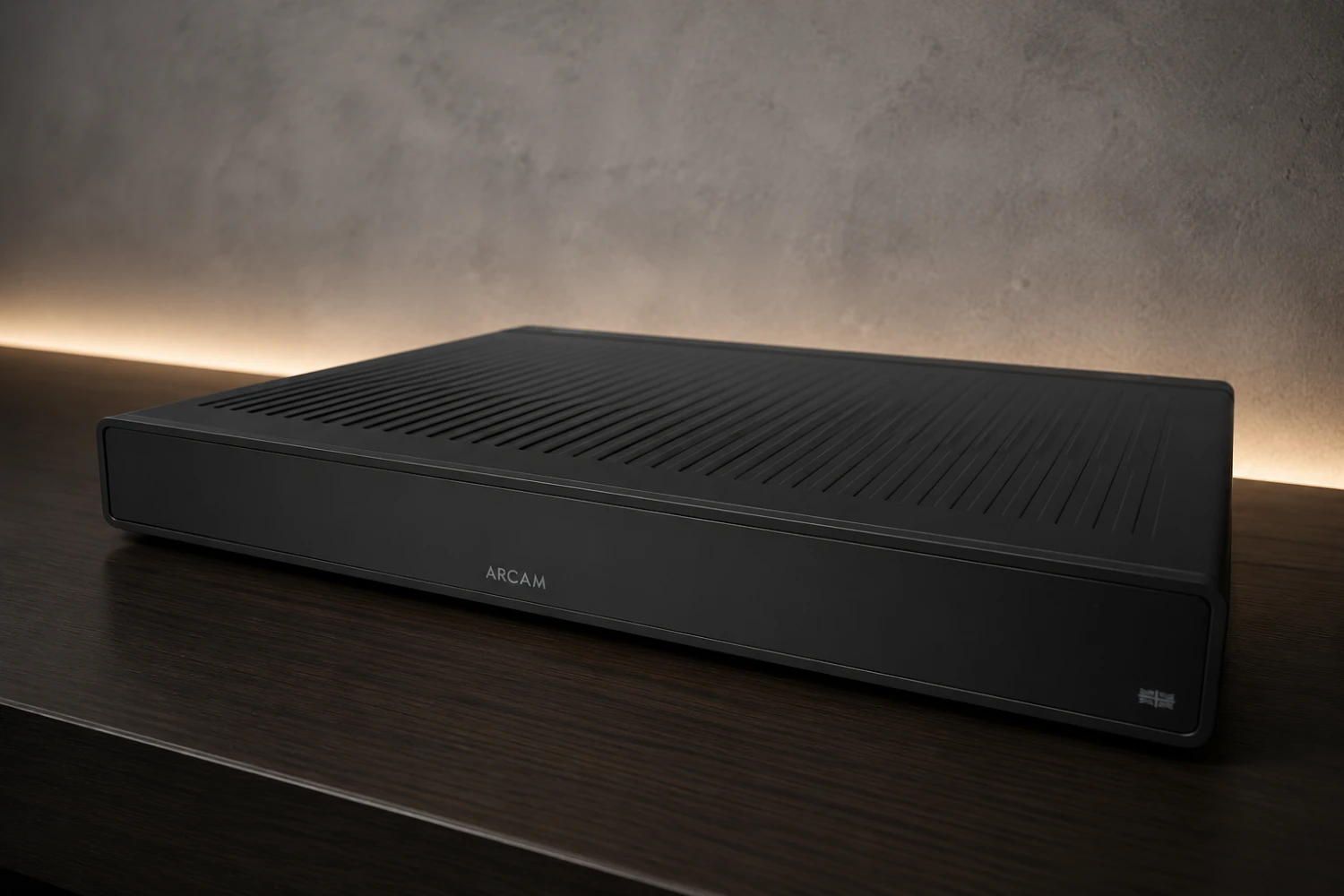
Arcam ST5 music streamer in the Radia Series design language with a minimalist black chassis.
The Arcam ST5 is presented as a dedicated network streamer for listeners who want streaming convenience inside a serious hi-fi system.
It belongs to Arcam’s Radia Series and is intended to partner with the A5, A15 and A25 integrated amplifiers, making it especially relevant for existing Arcam users.
The source highlights its understated matte-black anodized aluminum chassis, slim monochrome display and access to major streaming platforms, while the review conclusion is broadly positive after extended listening.
Best for: Arcam Radia-based systems
- Designed for Arcam Radia amplifiers
- Matte-black anodized aluminum chassis
- Access to major streaming platforms
- Understated front-panel display
Verdict: The ST5 makes the most sense as a clean, system-matched streamer for Arcam owners who want dedicated network playback without visual clutter.
3. Kalista DreamPlay S and DreamPlay SC
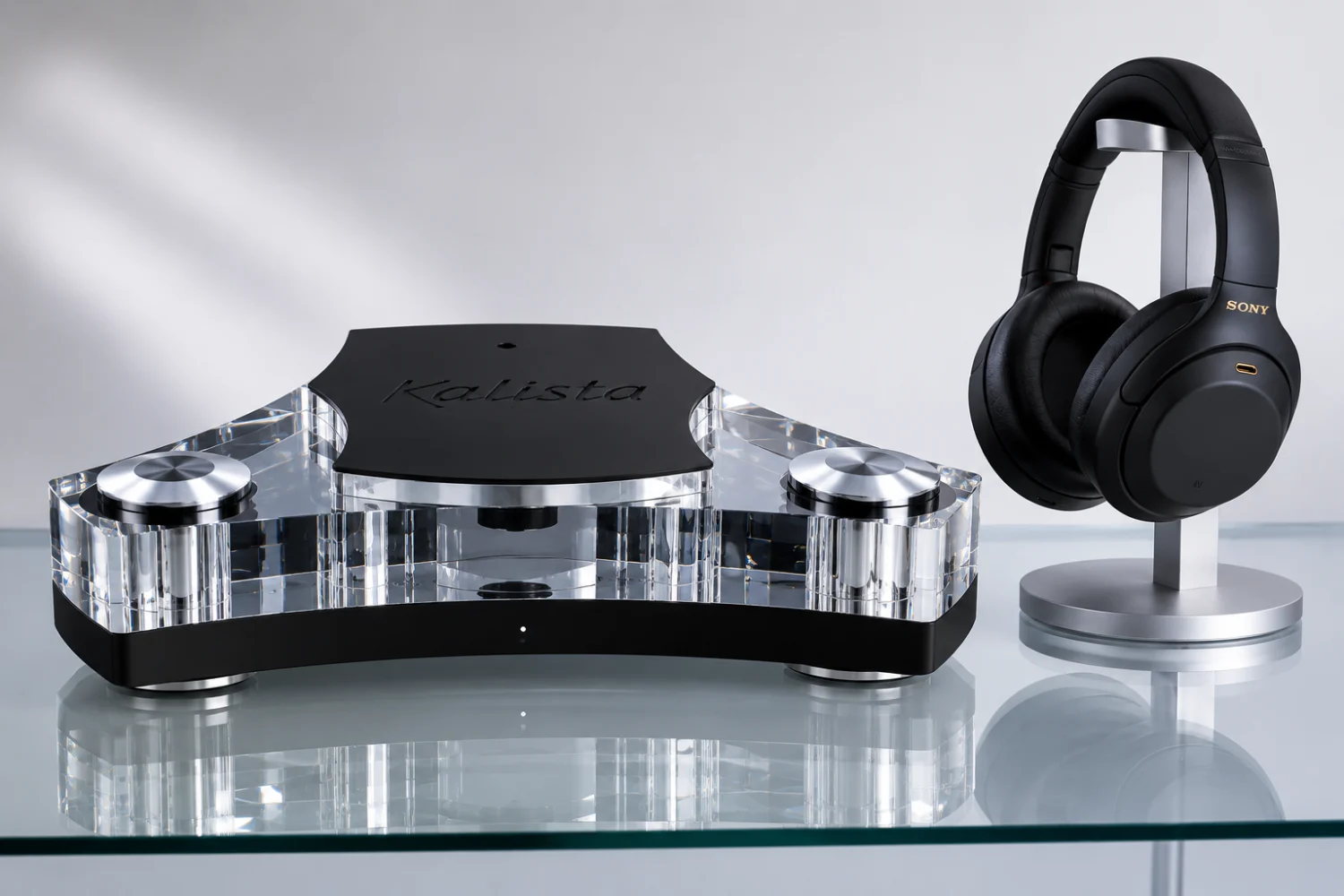
Kalista DreamPlay S and DreamPlay SC network players, offered in transport-only and DAC-equipped configurations.
Métronome Technologie positions the Kalista DreamPlay S and DreamPlay SC as high-end streaming sources under its Kalista sub-brand.
The DreamPlay S is a network player without an onboard DAC, intended for users who already own a high-quality converter, while the DreamPlay SC adds an integrated DA converter.
Both are described as handcrafted in France, with advanced power supplies, broad protocol support and Kalista’s characteristic materials, framing network audio as a dedicated reference source rather than an add-on feature.
Best for: High-end systems with carefully chosen digital front ends
- Choice of DAC-free or DAC-equipped versions
- Handcrafted in France
- Advanced power-supply approach
- Broad protocol support
Verdict: The DreamPlay S and SC are for systems where streaming is treated as a primary source and the DAC strategy is part of the system design.

4. SimAudio Moon Neo 390
SimAudio Moon Neo 390 network player and preamplifier with streaming, DAC, headphone and phono functions.
The SimAudio Moon Neo 390 is one of the most versatile components in this selection, combining a DAC, preamplifier, headphone amplifier, MM/MC phono preamplifier and streaming section in a compact unit.
It does not include a power amplifier, so it must be used with active speakers or an external amplifier.
The source notes support for services including Tidal Masters, Qobuz Sublime+ and Deezer Hi-Fi, plus PCM up to 32-bit/384 kHz, DSD256 and MQA handling. Roon Ready certification, Bluetooth with aptX and the MiND2 streaming module broaden its system role further.
Best for: Listeners reducing box count without moving to an integrated amplifier
- DAC, preamp, headphone amp and phono stage
- Roon Ready certified
- Bluetooth with aptX
- MiND2 streaming module
Verdict: The Moon Neo 390 is a flexible streaming preamplifier for systems built around active speakers or a separate power amplifier.

5. Lumin T3X
Lumin T3X network player with linear power supply, RJ45 and fiber-optic network connectivity.
The Lumin T3X builds on the existing T3 network player with changes targeted at audiophile system integration.
Its most notable update is a linear power supply with a substantial toroidal transformer, replacing the switching supply used in the earlier model.
Lumin also adds a second USB-A port and includes both RJ45 LAN and fiber-optic network connections, with the latter providing galvanic isolation from network electrical noise. The dual ES9028Pro SABRE DAC chips in dual-mono operation are retained.
Best for: Lumin users and network-audio systems where isolation matters
- Linear power supply with toroidal transformer
- Fiber-optic network connection
- Second USB-A port
- Dual ES9028Pro SABRE DAC chips
Verdict: The T3X is a refinement-focused network player built around cleaner power and more flexible network connectivity.
6. Shanling SM90
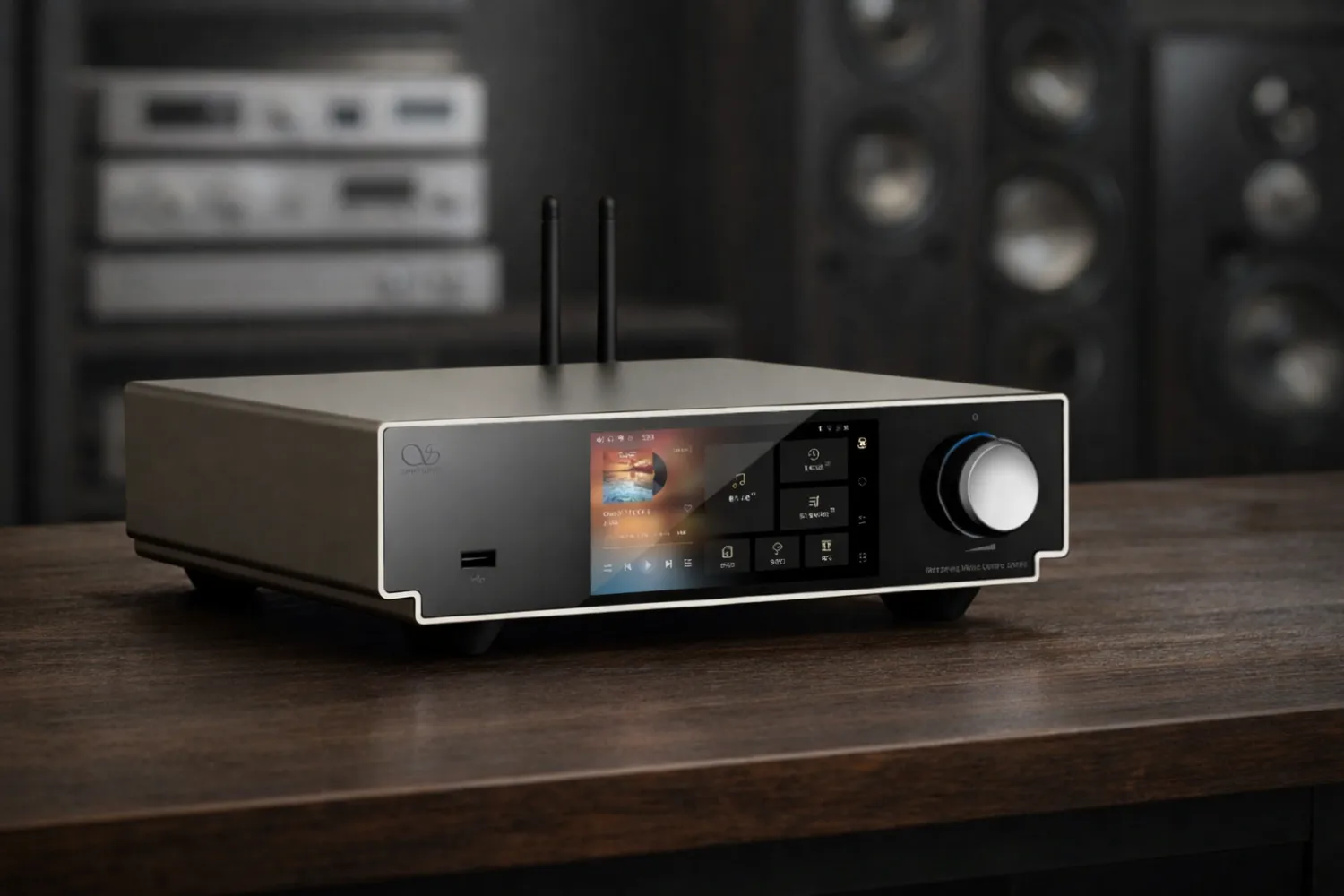
Shanling SM90 compact streaming hub with DAC, digital pre-stage and Android-based app support.
The Shanling SM90 is described as a compact all-in-one digital hub rather than a simple streamer.
It combines streaming, DAC duties, a digital pre-stage and network-bridge functions in an aluminum chassis.
The source highlights a dual AKM AK4493S DAC configuration, an analog stage using OPA1612 op-amps and a linear power supply with a toroidal transformer. Its open Android-based platform allows native apps for Spotify, TIDAL, Qobuz, Apple Music and Amazon Music to run directly on the device.
Best for: Listeners wanting app flexibility in a compact digital hub
- Streamer, DAC and digital pre-stage in one unit
- Dual AKM AK4493S DAC configuration
- Linear power supply with toroidal transformer
- Open Android app platform
Verdict: The SM90 is for users who want fewer boxes and direct access to major music apps from the streamer itself.

7. Atoll MS120
Atoll MS120 compact network player with color TFT display and front USB input.
The Atoll MS120 is a compact network player from Atoll’s MINI LINE series, using the same network platform found in the company’s other player lines.
It includes a TI Burr-Brown DAC and can handle hi-res files up to 24-bit/192 kHz through a local network or USB.
The all-metal enclosure includes a color TFT display for album artwork, file names and playback information, while front and rear USB ports support external storage. LAN, Wi-Fi and vTuner internet radio support make it a straightforward streaming component for smaller systems.
Best for: Compact systems needing practical network and USB playback
- Compact MINI LINE format
- TI Burr-Brown DAC
- LAN and Wi-Fi connectivity
- Front and rear USB ports
Verdict: The MS120 is a no-nonsense network player for listeners who value compact size, local-file support and internet radio access.

8. Eversolo DMP-A6 Gen 2
Eversolo DMP-A6 Gen 2 network streamer, DAC and preamplifier with CNC aluminum construction.
The Eversolo DMP-A6 Gen 2 updates the original DMP-A6 as a streamer, DAC and preamplifier.
The source highlights a premium linear power supply with a claimed noise level under 40uV, plus Wake-on-LAN functionality over a wired network connection so the unit can be activated through the app.
Its chassis is made from aerospace-grade aluminum using seamless CNC construction, intended to improve durability and help protect against unwanted interference.
Best for: Users wanting a modern streamer with DAC and preamp capability
- Streamer, DAC and preamplifier functions
- Linear power supply
- Wake-on-LAN support
- CNC aluminum chassis
Verdict: The DMP-A6 Gen 2 focuses on power-supply refinement, app-friendly network use and a robust chassis in a multifunction streaming component.

9. Tidal says “bye bye” to MQA and here’s what that means for subscribers
Tidal’s streaming-format transition from MQA toward FLAC affects how subscribers should assess hardware compatibility.
This entry is not a hardware recommendation, but it is essential context for streaming-system buyers.
Tidal is moving away from MQA and replacing MQA streams with FLAC versions, after having identified FLAC as its preferred format for high-resolution audio.
The service is also dropping 360 Reality Audio while retaining Dolby Atmos as its multichannel format. For subscribers, the key point is that streamer compatibility should now be considered with FLAC and Dolby Atmos in mind rather than MQA or 360 Reality Audio access.
Best for: Tidal subscribers checking format compatibility
- FLAC replaces MQA streams
- FLAC is Tidal’s preferred hi-res format
- Dolby Atmos remains for multichannel audio
- 360 Reality Audio is being removed
Verdict: Tidal’s format shift makes FLAC support more important than MQA capability for future-minded streaming setups.

10. Cambridge Audio EXN100
Cambridge Audio EXN100 music streamer with StreamMagic platform support and extensive digital connectivity.
The Cambridge Audio EXN100 is an EX Series music streamer built around the ESS ES9028Q2M SABRE32 reference DAC and the fourth generation of Cambridge’s StreamMagic platform.
It supports PCM digital inputs up to 32-bit/768 kHz and DSD512, and its StreamMagic module handles network-player control, app integration, third-party software and streaming-service access.
Connectivity is broad, with Spotify Connect, Tidal Connect, Deezer, Qobuz, Roon Ready, UPnP, internet radio, Chromecast, AirPlay 2 and Bluetooth aptX HD listed in the source. Physical connections include HDMI eARC, USB, coaxial, optical TOSLINK and balanced XLR outputs.
Best for: Systems needing broad streaming and connection options
- ESS ES9028Q2M SABRE32 DAC
- Fourth-generation StreamMagic platform
- Roon Ready, Chromecast and AirPlay 2 support
- HDMI eARC and balanced XLR outputs
Verdict: The EXN100 is a well-specified network streamer for listeners who want Cambridge’s StreamMagic ecosystem and wide digital connectivity.
How to choose the right streaming source
Start with the role the streamer must play in your system.
If you already own a DAC you trust, a DAC-free or transport-focused option such as the Kalista DreamPlay S concept may be the cleaner route.
If you want the streamer to handle conversion as well, models such as the Leak TruStream, Lumin T3X, Atoll MS120, Shanling SM90, Eversolo DMP-A6 Gen 2 and Cambridge Audio EXN100 all place DAC functionality at the center of the product brief. System architecture matters just as much as format support. The SimAudio Moon Neo 390 is the most obviously multifunctional choice here because it adds preamplifier, headphone and phono functions but requires active speakers or a separate power amplifier. The Shanling SM90 and Eversolo DMP-A6 Gen 2 also suit simplified digital systems, while the Arcam ST5 is most compelling when matched with Arcam’s Radia amplifiers. The Atoll MS120 keeps the brief more traditional: compact network playback, USB support, internet radio and a practical display. Network design is another useful separator. Lumin’s T3X stands out in the source material for adding a linear power supply and fiber-optic network connection with galvanic isolation, while Cambridge’s EXN100 emphasizes breadth of platform support through StreamMagic, multiple streaming protocols and extensive physical connections. Leak’s TruStream leans on its ESS Sabre DAC implementation and Silent Angel streaming platform, making it especially relevant for listeners attracted to Leak’s design language as well as its digital direction. Finally, do not buy around obsolete or declining formats. The Tidal source makes the shift away from MQA clear, with FLAC taking priority for high-resolution playback and Dolby Atmos remaining the multichannel option. In practical terms, a streamer that handles FLAC confidently and supports the services you actually use is likely to be more useful than one chosen mainly for legacy format claims.


Sound Off
0Join the discussion if you have something to add.