
Choosing an amplifier starts with defining the job it must perform.
An integrated amplifier combines source selection, volume control and power amplification, while a power amplifier requires a separate preamplifier.
A monoblock handles one channel, and a multi-zone model is designed to distribute and manage music throughout several rooms. These formats are not interchangeable, even when their power figures appear similar. Speaker compatibility comes next. Consider the loudspeaker’s nominal impedance, how difficult its load may be, and the output the amplifier can provide at that impedance. Power is only one part of the decision: input selection, phono support, digital conversion, room correction, subwoofer management and system-control connections may matter more in a particular installation. The products below represent sharply different approaches, from compact Class D amplification and hybrid integrated designs to tube amplification, high-power separates and whole-home distribution. The right choice is therefore not the model with the longest specification sheet, but the one whose architecture, connections and intended role match the rest of the system.
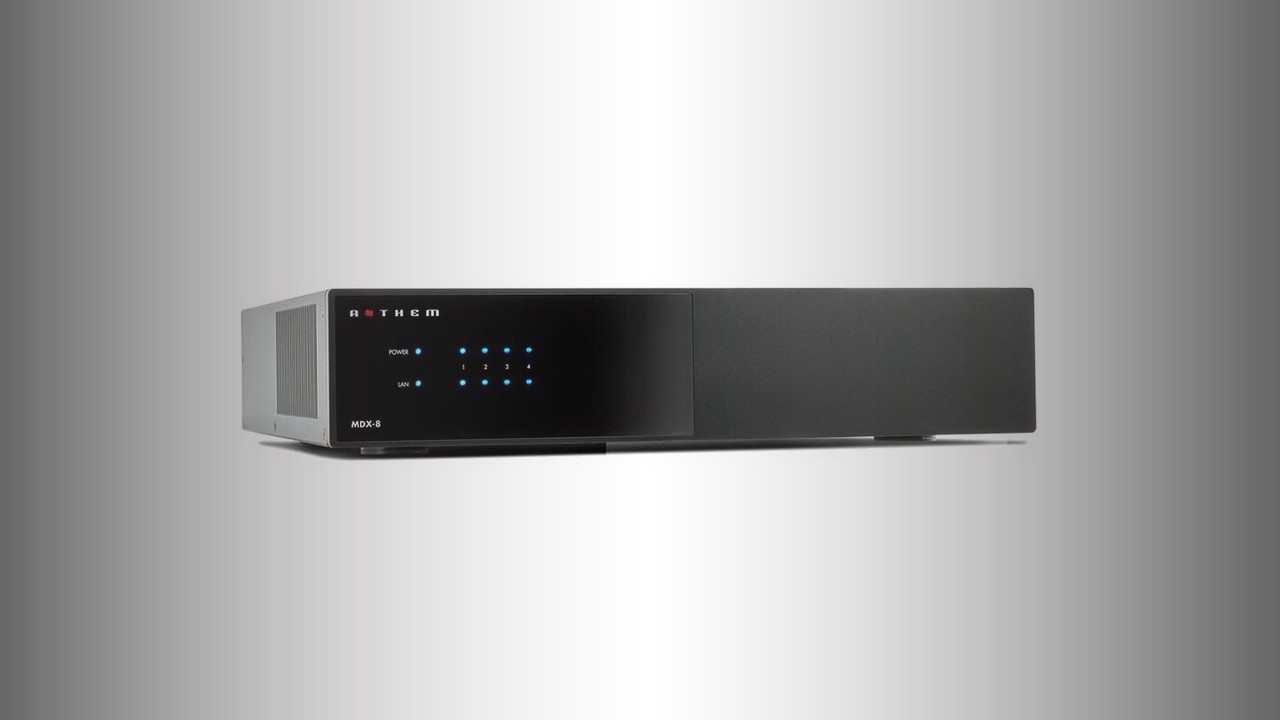
1. Anthem MDX-8: Audiophile-graded multi-channel amplifier
Anthem MDX-8 multi-channel amplifier with per-zone processing, subwoofer management and network configuration.
The Anthem MDX-8 is built for installations that need independent control of several music zones rather than conventional two-channel amplification alone.
It supplies 60 W per channel into 8 ohms or 120 W into 4 ohms, with bridging available for 200 W into 8 ohms.
Each zone receives independent Anthem Room Correction, a separate subwoofer output, and its own tone and volume settings. A 24-bit/192 kHz DAC, input-to-output matrix switching and web-based configuration add useful flexibility, although the single optical input should be considered when planning digital sources.
Best for: Custom multi-room music systems
- Independent room correction for each zone
- Per-zone subwoofer, tone and volume control
- Flexible analog and digital matrix switching
- Ethernet-based configuration and automation support
Verdict: The MDX-8 is a capable choice when independent zone management, room correction and installation control matter more than a traditional stereo layout.
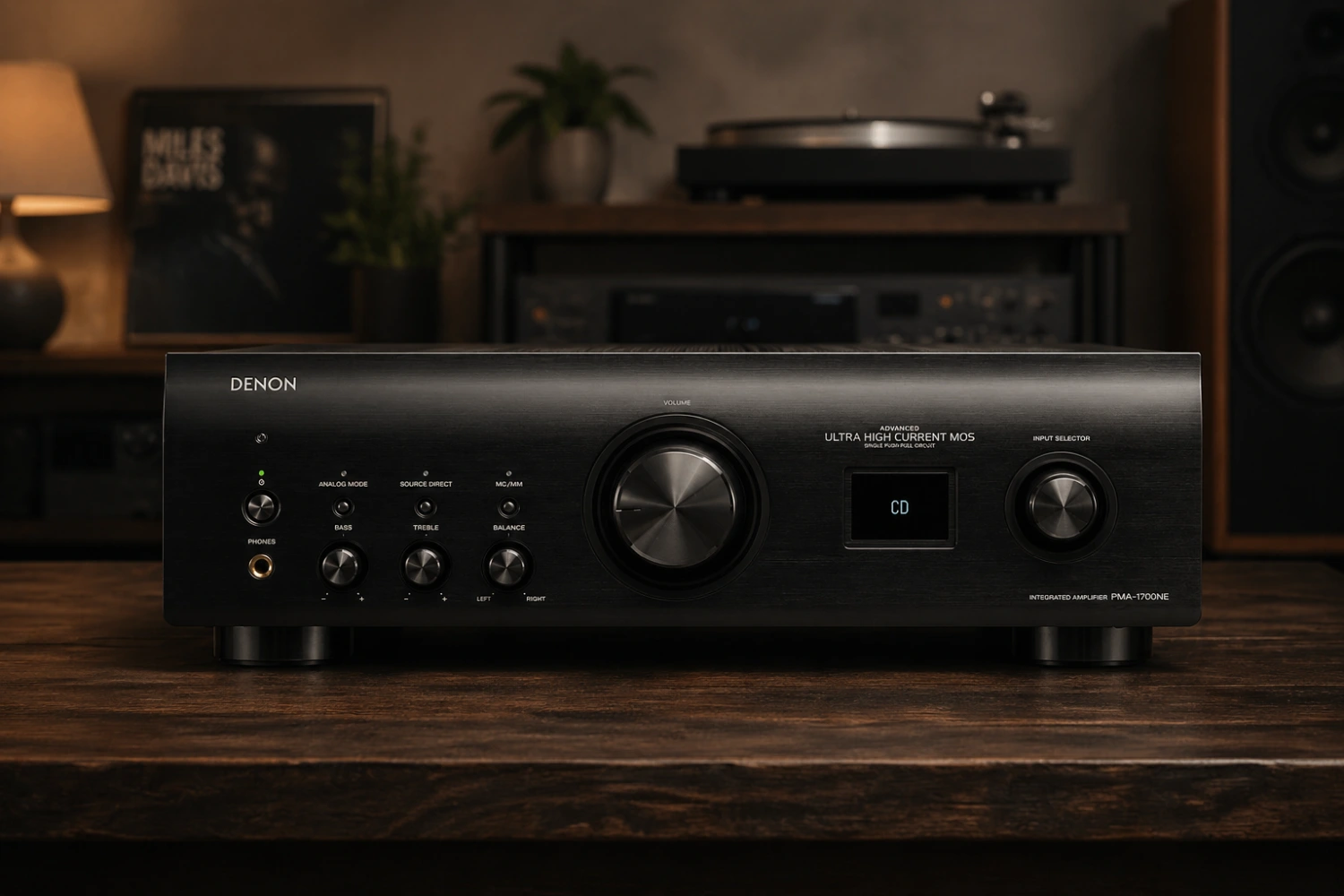
2. Denon PMA-1700NE: A Modern Classic Integrated Amplifier with Pure Audiophile DNA
Denon PMA-1700NE integrated amplifier with a central volume control and dedicated tone and balance adjustments.
The Denon PMA-1700NE takes a traditional integrated-amplifier approach, pairing tactile tone and balance controls with substantial internal engineering.
Its circuitry is divided into separate functional blocks to reduce interference, while steel reinforcement and component damping address mechanical stability.
The UHC MOSFET output stage uses a single push-pull configuration and delivers up to 140 W into 4 ohms, giving this model a clear role in systems that need a powerful, full-size integrated amplifier without abandoning hands-on controls.
Best for: Traditional two-channel systems needing a powerful integrated amplifier
- Up to 140 W into 4 ohms
- UHC MOSFET output stage
- Separated internal circuit blocks
- Tone and balance controls
Verdict: The PMA-1700NE combines familiar physical controls with a carefully partitioned chassis and a substantial MOSFET power stage.
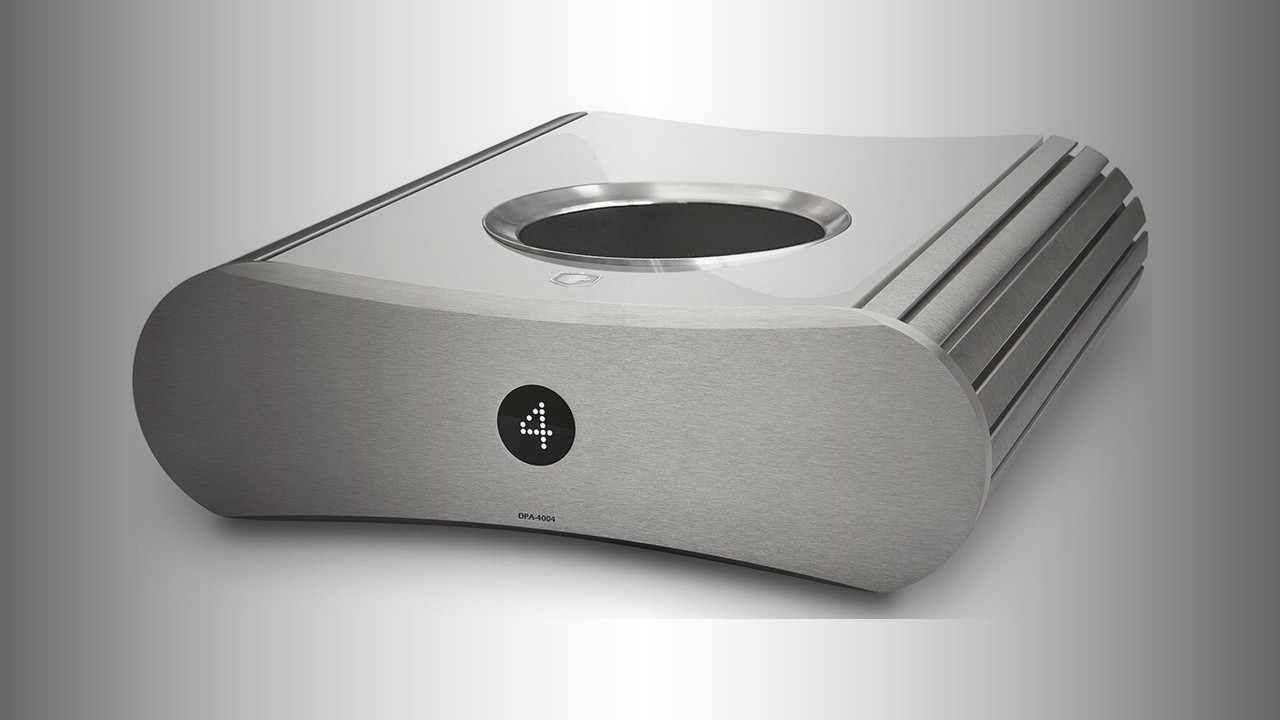
3. Gato Audio PWR-222: Single-channel power amplifier for true dual mono
Gato Audio PWR-222 single-channel power amplifier designed for a two-chassis dual-mono stereo configuration.
The Gato Audio PWR-222 is a monophonic Class A/B MOSFET power amplifier, so a stereo system requires one unit for each channel as well as a separate preamplifier.
Each amplifier delivers 250 W into 8 ohms and contains a 700 W toroidal transformer, more than 44,000 uF of power-supply capacitance and WBT NexGen connectors.
A Link input provides 12 V trigger control when used with the matching Gato Audio PRD-3S NPM preamplifier/DAC.
Best for: High-power stereo systems built around separate monoblocks
- 250 W output into 8 ohms
- True monoblock system architecture
- Large toroidal transformer and capacitor bank
- 12 V trigger control through the Link input
Verdict: The PWR-222 is intended for listeners who want a dedicated 250 W amplifier for each stereo channel and are prepared to build a full separates system.

4. Westend Monaco: A No-Compromise German Tube Integrated Amplifier
Westend Monaco tube integrated amplifier using E130L valves in a push-pull Class AB configuration.
The Westend Monaco is a tube-only integrated amplifier designed on a scale closer to a separate preamplifier and power-amplifier combination.
Its push-pull Class AB circuit delivers 100 W per channel into 4 ohms, an unusually substantial output for the tube-integrated format described in the source.
Four E130L valves are used per unit, placing the Monaco firmly in the specialist category for buyers who specifically want a high-output valve design rather than a compact or low-powered tube amplifier.
Best for: High-output tube-based stereo systems
- 100 W per channel into 4 ohms
- Tube-only signal path
- Push-pull Class AB operation
- Integrated preamplifier and power-amplifier functions
Verdict: The Monaco brings tube circuitry and 100 W-per-channel output together in a single, uncompromising integrated design.
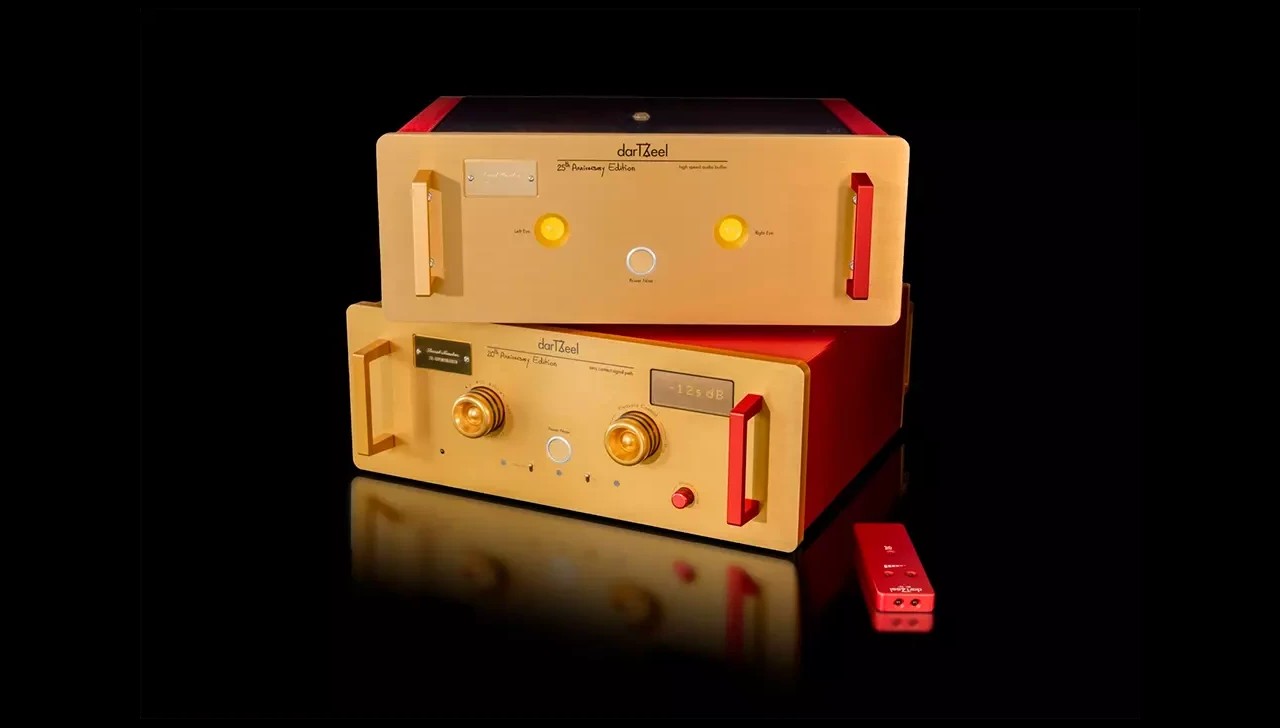
5. Anniversary edition of the Dartzeel NHB-18NS preamp and NHB-108 Model Two power amplifier
Anniversary editions of the Dartzeel NHB-18NS preamplifier and NHB-108 Model Two stereo power amplifier presented as a matched pair.
This Dartzeel package combines anniversary versions of the NHB-18NS preamplifier and NHB-108 Model Two stereo power amplifier as a matched separates system.
Production is limited to 108 pairs, with premium interconnect and speaker cables included in each package.
The source emphasizes Dartzeel’s listening-led development philosophy and identifies both components as redesigned limited editions, making exclusivity and coordinated system presentation central to their appeal.
Best for: Collectors seeking a limited matched Dartzeel separates package
- Matched preamplifier and stereo power amplifier
- Limited production of 108 pairs
- Interconnect and speaker cables included
- Redesigned anniversary-edition components
Verdict: This package is defined by its coordinated pre/power configuration, included cables and tightly limited production rather than broad system flexibility.

6. Dayton Audio HTA100BT: Hybrid Stereo Integrated Amplifier
Dayton Audio HTA100BT hybrid integrated amplifier with exposed tubes, twin VU meters and front-panel tone controls.
The Dayton Audio HTA100BT combines a tube preamplifier stage with a Class AB power stage, giving it a hybrid architecture rather than an all-valve signal path.
Its connection set covers USB, Bluetooth 5, SPDIF, auxiliary and phono sources, making it suitable for systems that mix digital playback, wireless streaming and records.
Front-panel bass, treble and volume controls sit alongside two channel-specific VU meters and exposed valves, giving the amplifier a deliberately retro visual identity.
Best for: Mixed analog, digital and wireless source systems
- Tube preamplifier and Class AB power stage
- USB, Bluetooth 5 and SPDIF connectivity
- Auxiliary and phono inputs
- Front-panel tone controls and VU meters
Verdict: The HTA100BT is a flexible hybrid integrated amplifier for buyers who want broad connectivity and visible tube styling in one component.

7. PS Audio BHK Signature 250: Minimalistic powerhouse
PS Audio BHK Signature 250 stereo power amplifier combining paired 6922 input tubes with a MOSFET output stage.
The PS Audio BHK Signature 250 is a high-output stereo power amplifier that combines a valve input stage with a MOSFET output stage.
It provides 250 W per channel into 8 ohms and 500 W per channel into 4 ohms, and the source states that it operates stably into a 2-ohm load.
Its manually paired Gold Lion 6922 input tubes run in constant-bias mode, while balanced and unbalanced inputs allow connection to different preamplifiers or DACs equipped with volume control.
Best for: Demanding loudspeakers requiring substantial power
- 250 W per channel into 8 ohms
- 500 W per channel into 4 ohms
- Stable operation into a 2-ohm load
- Balanced and unbalanced inputs
Verdict: The BHK Signature 250 suits systems that need high stereo output and low-impedance stability from a hybrid tube-and-MOSFET design.

8. TAD A1000: Impressive Integrated Amplifier with Symmetrical Class D Design
TAD A1000 integrated amplifier built around balanced bridge-tied-load circuitry and an analog Class D output stage.
The TAD A1000 is the company’s first integrated amplifier and combines current-feedback preamplification, resistive-ladder electronic volume control and an analog Class D power stage.
Its bridge-tied-load architecture uses two amplifiers in a balanced configuration for each channel, extending from input to output.
Separate transformer coils and separate rectification, smoothing and stabilization circuits for each channel reinforce the design’s emphasis on symmetry between channels and between positive and negative signals.
Best for: Systems prioritizing symmetrical integrated-amplifier architecture
- Balanced bridge-tied-load architecture
- Analog Class D power amplification
- Resistive-ladder electronic volume control
- Separate power-supply circuits for each channel
Verdict: The A1000 is distinguished by an unusually thorough commitment to balanced signal paths, channel symmetry and separated power supplies.

9. FX-AUDIO 502E-L: Class D amplifier with Bluetooth 5.0
FX-AUDIO 502E-L compact Class D amplifier with Bluetooth, stereo RCA input and front-panel tone controls.
The FX-AUDIO 502E-L is a compact Class D amplifier with a focused connection set: stereo RCA for a wired source and Bluetooth for wireless playback.
Its CS8673E amplifier stage is rated at 2 x 65 W into 4 ohms at 1 percent THD+N with a 24 V supply.
Front-panel bass and treble controls provide adjustment over a range of plus or minus 7 dB, while speaker terminals accept banana plugs. Buyers should note that it does not offer the broader switching or source-management functions of a full-size integrated amplifier.
Best for: Simple compact systems with one wired source and Bluetooth
- 2 x 65 W into 4 ohms at the stated test condition
- Stereo RCA and Bluetooth inputs
- Front-panel bass and treble controls
- Compact Class D architecture
Verdict: The 502E-L is a practical option when compact dimensions, basic tone adjustment and straightforward wired or wireless playback are the priorities.

10. Copland CTA-305: Preamplifier featuring extensive switching capabilities
Copland CTA-305 valve preamplifier with five line inputs, a tape loop and an RIAA-equalized phono stage.
Despite its placement in an amplifier guide, the Copland CTA-305 is specifically a valve preamplifier and must be connected to a separate power amplifier.
It provides five line inputs, a Tape Monitor Loop with input and output, and an RIAA-equalized phono input.
Its amplification section uses low-noise 6922 tubes, with high input impedance and low output impedance intended to ease matching with sources, connecting cables and power amplifiers. Polypropylene and polystyrene signal-path capacitors, close-tolerance film resistors and a stabilized power supply complete the design described in the source.
Best for: Source-rich separates systems requiring a valve preamplifier
- Five line-level inputs
- Tape Monitor Loop input and output
- RIAA-equalized phono input
- Low-noise 6922 valve amplification
Verdict: The CTA-305 is a useful control center for analog-heavy systems, provided a separate power amplifier is already available or planned.
Frequently asked questions
Should I choose an integrated amplifier or separate preamplifier and power amplifier?
Choose an integrated amplifier when you want source selection, volume control and speaker power in one chassis.
Separates are appropriate when you need a particular preamplifier, greater power flexibility or monoblock operation.
Remember that products such as the Copland CTA-305 and Gato Audio PWR-222 cannot form a complete stereo amplification chain on their own.
How should amplifier power be matched to loudspeakers?
Check the amplifier’s rated output at the loudspeaker’s nominal impedance and consider whether the speaker presents a difficult low-impedance load.
Figures quoted into 4 and 8 ohms are more useful than an isolated maximum-power claim.
Models explicitly described as stable into lower impedances may be more suitable for demanding loads, but the speaker manufacturer’s guidance still matters.
Which connections should I identify before buying an amplifier?
List every current and planned source, including RCA, optical, USB, Bluetooth and phono equipment.
Also account for subwoofers, balanced connections, tape loops, 12 V triggers, Ethernet control and room-correction requirements.
A simple amplifier may be sufficient for one wired source, while a mixed-source or installed system requires more careful input planning.
Are Class D, Class A/B, tube and hybrid amplifiers directly comparable?
They can perform the same broad task, but their architecture affects size, efficiency, heat, maintenance and system configuration.
A hybrid model may use tubes only in its input or preamplifier stage, while a tube-only integrated amplifier uses valves throughout the stated signal path.
Judge the complete design and its compatibility rather than selecting on topology alone.
Match the Amplifier to the System, Not the Specification Sheet
Begin by deciding whether the system needs an integrated amplifier, a stereo power amplifier, monoblocks, a preamplifier or multi-zone distribution.
This immediately separates products that may look comparable on paper but perform fundamentally different jobs.
The Anthem MDX-8 is designed around independent zones, for example, while the Copland CTA-305 handles source switching and volume control without powering speakers. The Gato Audio PWR-222 goes in the opposite direction, supplying power for only one channel and requiring both a second monoblock and a preamplifier for stereo use. Next, check loudspeaker impedance and the amplifier’s output under the relevant load. High power may be important for difficult speakers, but it should not displace practical considerations such as the number and type of inputs, phono support, subwoofer management, room correction, physical size, ventilation and system-control connections. Tube and hybrid amplifiers also introduce valve-related ownership considerations that do not apply in the same way to fully solid-state designs. Finally, plan for the whole signal chain. Confirm how volume will be controlled, whether digital sources require an external DAC, and whether every source can be connected without relying on unspecified adapters or features. The strongest long-term choice is the amplifier whose role, load compatibility and connections are clearly aligned with the equipment already in the system.

Sound Off
0Join the discussion if you have something to add.