A music-minded home cinema system is not defined by surround decoding alone.
The strongest setups balance format support, room adjustment, source flexibility, amplification, bass management and everyday usability, so that film soundtracks, concerts and stereo listening all feel coherent rather than merely loud.
The source material here spans true AV receivers, an AV processor, soundbars, a preamplifier, speakers, a subwoofer, a turntable and a brand profile. That mix is useful because many real systems are built from more than a single box: an AV receiver may anchor the room, while a subwoofer adds scale, a turntable expands source choice, and a processor or preamplifier suits more ambitious separates-based installations. Rather than forcing every entry into the same role, this guide explains where each article genuinely fits. The Pioneer AV receivers are the clearest receiver recommendations; the Yamaha CX-A5200 is for processor-led systems; the remaining products are best understood as system partners or alternatives for listeners who want better music playback, simpler TV sound or more flexible source integration.

1. Naim NAC 202: Versatile and elegant preamplifier
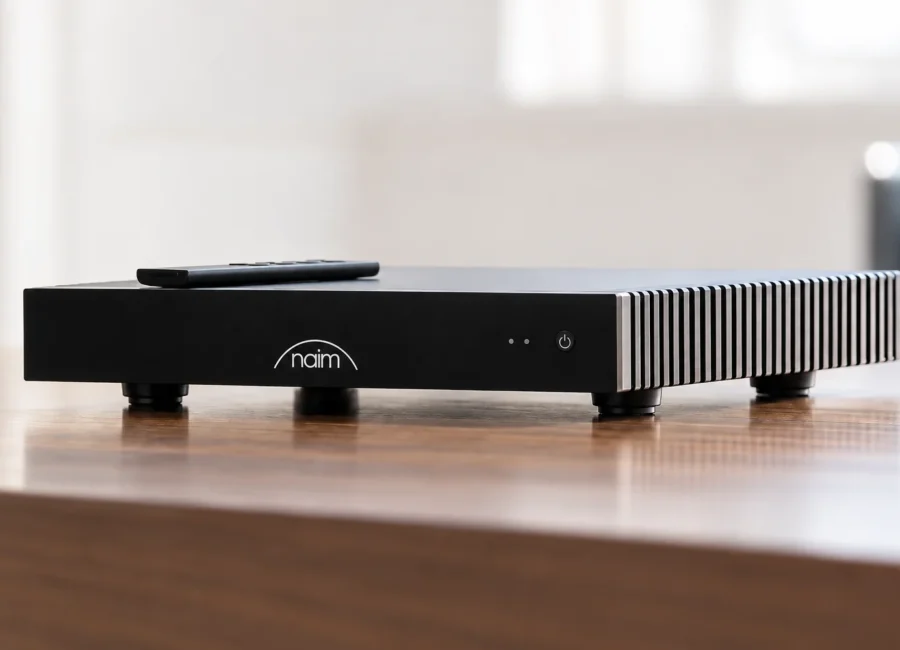
Naim NAC 202 preamplifier with front-panel input access and remote-control system integration.
The Naim NAC 202 is not an AV receiver, but it is relevant to listeners building a higher-grade stereo front end that also needs to coexist with home cinema equipment.
The source highlights Naim’s emphasis on musicality, power, versatility and affordability, with the NAC 202 able to be powered by a NAP 155 XS, NAP 200 or an external Naim power supply.
Its anti-resonance design addresses vibration and microphonics, while six selectable inputs provide useful system flexibility, including DIN and RCA options on two inputs. For an AV-minded music system, it is best viewed as a dedicated analogue preamplifier rather than a surround hub.
Best for: Stereo-first systems that must integrate with AV equipment
- Can be powered by compatible Naim amplifiers or an external Naim power supply
- Anti-resonance design reduces vibration and microphonics
- Six inputs selectable from the front panel or remote
- DIN and RCA options support broader system matching
Verdict: Choose the Naim NAC 202 when musical stereo control and flexible analogue integration matter more than surround processing.

2. Velodyne DB-10: Reliable subwoofer that packs a punch
Velodyne DB-10 active subwoofer with a compact closed cabinet and forward-facing driver.
The Velodyne DB-10 is a system partner rather than an AV receiver, but it addresses one of the most important parts of home cinema and music playback: low-frequency authority.
The source describes it as an active subwoofer from Velodyne’s Deep Blue line, built in a closed cabinet with a forward-firing 10-inch driver and a 350 W RMS amplifier, rising to 850 W of dynamic power.
Despite not being the smallest model in the range, it is described as compact, with a thick MDF enclosure and a notably substantial front panel. The article states that it can fully sound a room of about 20 square meters.
Best for: Compact rooms needing stronger bass support
- Closed cabinet with forward-firing 10-inch driver
- 350 W RMS and 850 W dynamic amplifier output stated in the source
- Compact cabinet dimensions for its class
- Thick MDF construction with a 52 mm front panel
Verdict: The Velodyne DB-10 is a practical bass upgrade for receiver-based systems where room-filling low end is needed without a large enclosure.

3. Yamaha YSP-1600: Slim and powerful soundbar
Yamaha YSP-1600 slim soundbar designed for TV connection, app control and wireless music playback.
The Yamaha YSP-1600 is an AV receiver alternative for spaces where a full separates system is impractical.
The source presents it as a slim soundbar with Bluetooth and Wi-Fi, plus AirPlay and DLNA for wireless audio transmission.
For TV use, it adds HDMI with HDCP 2.2 support alongside optical input, and it can be controlled by the supplied remote, a learned TV remote function or an app for iOS and Android. Four listening modes cover Cinema, Music, Sports and Game, while UniVolume is intended to smooth level changes between sources. MusicCast compatibility also makes it part of Yamaha’s multi-room ecosystem.
Best for: Simple TV sound with wireless music features
- Built-in Bluetooth and Wi-Fi
- AirPlay and DLNA wireless audio support
- HDMI input with HDCP 2.2 support
- MusicCast multi-room compatibility
Verdict: The Yamaha YSP-1600 suits listeners who want a low-profile soundbar with networked music convenience rather than a full AV receiver setup.

4. Pioneer PL-30: Fully automatic vinyl record player
Pioneer PL-30 fully automatic turntable with aluminium platter and switchable built-in phono equalizer.
The Pioneer PL-30 is a source component, not an AV receiver, but it matters for systems where vinyl playback remains part of the listening brief.
The source describes a fully automatic stereo turntable with a die-cast aluminium platter, tonearm and detachable head carrying a high-performance MM pickup.
Operation is designed to be easy: one button positions and lowers the tonearm, and the arm returns automatically at the end of a side. A built-in equalizer-corrector can be switched on for amplifiers without a phono stage or bypassed for an external equalizer-corrector, making the PL-30 adaptable to different receiver and amplifier inputs.
Best for: Adding easy vinyl playback to an AV or stereo system
- Fully automatic tonearm operation
- Die-cast aluminium platter
- Built-in equalizer-corrector with On and Through modes
- Detachable head with MM pickup
Verdict: The Pioneer PL-30 is a convenient turntable choice for listeners who want vinyl access without manual setup complexity.

5. Yamaha CX-A5200: Ultimate AV processor
Yamaha CX-A5200 AV processor built for HDMI switching, surround processing and room-calibrated playback.
The Yamaha CX-A5200 is an AV processor rather than an AV receiver, so it belongs in a separates system with external amplification.
Its appeal lies in control, processing and room adaptation.
The source says it analyzes audio characteristics in real time and adjusts dynamic range, dialogue, effects, background music and channel balance against reference values. Connectivity is extensive, with seven HDMI inputs, three HDMI outputs and HDCP 2.2 support. It recognizes BT. and HDR10, Dolby Vision and HLG video formats, and the article notes DTS:X support in 7.2.4 variations. Yamaha’s YPAO room optimization and RSC reflected-sound control are also included.
Best for: Processor-led home cinema systems with external amplifiers
- Seven HDMI inputs and three HDMI outputs
- YPAO room optimization with RSC reflected-sound control
- Supports BT. plus HDR10, Dolby Vision and HLG video formats
- Updated Cinema DSP HD algorithms for vertical source positioning
Verdict: The Yamaha CX-A5200 is the source set’s strongest option for a serious separates-based surround system rather than a one-box receiver installation.

6. Onkyo
Onkyo brand context emphasizing sound, harmony and long-running hi-fi development.
The Onkyo article is a brand profile rather than a receiver recommendation, but it provides useful context for anyone considering the company’s place in hi-fi and home cinema.
The source explains that the name combines words associated with sound and harmony, and it presents the company’s early identity as deeply tied to musical understanding.
It also notes work on a phono cartridge and a non-pressed paper loudspeaker cone, along with expansion into global markets. The most relevant takeaway is not a specific feature list, but a consistent emphasis on sound quality across stereo equipment and loudspeaker development.
Best for: Readers comparing AV receiver brand heritage
- Brand identity centered on sound and harmony
- Early work included phono cartridge development
- Loudspeaker cone development is highlighted in the source
- Stereo equipment with high sound quality remained part of the company’s program
Verdict: The Onkyo profile is useful background for brand-minded buyers, but it should be paired with a specific model article before making a purchase decision.

7. Harman/Kardon Citation Tower: Floorstanding speakers with concert-quality sound
Harman/Kardon Citation Tower wireless floorstanding speaker system with touchscreen and fabric finish.
The Harman/Kardon Citation Tower is a smart wireless speaker system rather than an AV receiver, but it is relevant where music playback, design and simplified operation take priority.
The source positions it as a premium smart hi-fi speaker system for music lovers and a next-generation wireless speaker system for movies and music.
It is described as delivering 2-channel stereo sound with ringing highs and deep bass, and it includes a full-color touchscreen. Chromecast built-in opens access to more than 300 music services, while Google Assistant voice control supports hands-free operation and smart-home interaction. The fabric finish is also part of the design appeal.
Best for: Design-conscious listeners wanting wireless stereo convenience
- Smart wireless speaker system for movies and music
- 2-channel stereo presentation with deep bass described in the source
- Chromecast built-in with access to more than 300 music services
- Google Assistant voice control
Verdict: The Harman/Kardon Citation Tower is best treated as a stylish wireless stereo alternative, not a substitute for a full AV receiver and speaker package.

8. Pioneer VSX-535: Powerful AV receiver that won’t break the bank
Pioneer VSX-535 AV receiver with 5.2-channel layout, Dolby processing and MCACC calibration.
The Pioneer VSX-535 is the most straightforward AV receiver entry in this set.
The source describes a 5.2-channel receiver with a metal chassis, lower-profile design and a user-friendly layout.
Its proprietary Direct Energy amplifiers are said to deliver up to 135 W, and the receiver includes Dolby Atmos and Dolby Surround decoding within its 5-channel configuration. The article is careful to note the flexibility of a 3.2.1 front-channel arrangement or Dolby Atmos Height Virtualizer in a 5.1 setup, while also acknowledging that this differs from true Atmos systems. MCACC auto-calibration adjusts sound output to the speaker type and arrangement.
Best for: Value-oriented 5-channel home cinema systems
- 5.2-channel AV receiver configuration
- Dolby Atmos and Dolby Surround decoding
- Dolby Atmos Height Virtualizer support in a 5.1 setup
- MCACC auto-calibration for speaker arrangement and room matching
Verdict: The Pioneer VSX-535 is the clearest recommendation here for buyers wanting an accessible AV receiver with modern surround processing and calibration.

9. Pioneer VSX-835 and VSX-535 AV receivers: Ultra HD, IMAX, and 165-watt amplifiers
Pioneer VSX-835 and VSX-535 AV receivers positioned as related models with different channel configurations.
This Pioneer article is useful because it places the VSX-535 beside the more capable VSX-835.
The source states that the VSX-835 offers a 7.2-channel configuration, while the VSX-535 is a 5.2-channel model.
Both are described with the same terminals and a stated peak output of 165 W into 6-ohm speakers, or 80 W with two channels driven into 8 ohms in stereo mode. The VSX-835 adds IMAX certification, Dolby Atmos, Dolby Surround, DTS Virtual:X and HDMI 2.1 with 8K and 4K support. It can be configured as 7.2 or 5.2.2 and calibrated with Pioneer’s MCACC system.
Best for: Choosing between compact 5.2 and expanded 7.2 Pioneer systems
- VSX-835 supports 7.2 or 5.2.2 system layouts
- VSX-835 includes IMAX certification
- Dolby Atmos, Dolby Surround and DTS Virtual:X support are stated for the VSX-835
- MCACC calibration with a dedicated Auto Room Tuning microphone
Verdict: Use this article to decide whether the VSX-535 is enough or whether the VSX-835’s expanded channels and IMAX-certified feature set better suit the room.

10. Denon DHT-S517: Soundbar with Dolby Atmos, eARC and proprietary dialogue enhancement
Denon DHT-S517 soundbar with wireless subwoofer, up-firing Atmos speakers and HDMI eARC connectivity.
The Denon DHT-S517 is another soundbar alternative rather than an AV receiver, but it borrows a music-minded idea from Denon receiver design.
The source describes a 3.1.2 configuration with a wireless subwoofer and up-firing Dolby Atmos speakers.
TV connection is handled through HDMI eARC, with digital optical input and an additional HDMI port also available. Bluetooth is included for music, and the soundbar provides Cinema, Music and Night modes. For film dialogue, Denon Dialogue Enhancer offers three adjustment levels. For music, Pure Mode turns off unused electronics for sound purity, a function described as taken from Denon AV receivers.
Best for: Simple Atmos-capable TV sound with clearer dialogue
- 3.1.2 layout with wireless subwoofer
- Up-firing Dolby Atmos speakers
- HDMI eARC plus optical and additional HDMI connections
- Dialogue Enhancer with three adjustment levels
Verdict: The Denon DHT-S517 is a practical pick when a full receiver system is too much, but dialogue clarity and Atmos-style presentation still matter.
How to choose the right AV receiver path for music and movies
Start by deciding whether you truly need an AV receiver or whether another route in this guide better fits the room.
If you want the central hub for speakers, sources and surround formats, the Pioneer VSX-535 is the most direct option here, particularly for a 5.2-channel installation with Dolby Atmos processing, Dolby Surround and MCACC calibration.
If the room or speaker plan calls for more channels, the Pioneer VSX-835 article is the more useful reference because it covers 7.2 and 5.2.2 layouts, IMAX certification, DTS Virtual:X and HDMI 2.1 support. For more ambitious systems, the Yamaha CX-A5200 points toward an AV processor approach. That means separating processing from amplification, which can suit installations where HDMI switching, room optimization, surround processing and external power amplifiers are preferred over a conventional one-box receiver. It is not the simpler choice, but the source material makes clear that it is built around advanced processing, multiple HDMI connections and Yamaha room-correction features. If music is the priority, do not ignore the surrounding components. The Naim NAC 202 suits a stereo-first system that needs thoughtful analogue integration. The Velodyne DB-10 can add the low-frequency foundation that small speakers or soundbars may lack. The Pioneer PL-30 adds automatic vinyl playback with a switchable built-in phono equalizer. The Harman/Kardon Citation Tower favors wireless stereo convenience and streaming access, while the Yamaha YSP-1600 and Denon DHT-S517 are sensible soundbar alternatives when space, simplicity or installation limits rule out a receiver and speaker package. The safest buying strategy is to match the product role to the system you are actually building. Choose a Pioneer receiver if surround speaker management is the requirement. Choose the Yamaha processor if you are planning separates. Choose the Naim, Velodyne or Pioneer turntable as supporting components around a receiver or stereo amplifier. Choose a soundbar or wireless speaker only when simplicity is more important than the expandability of a full AV receiver system.