
AVM Expands Evolution Series With PH 3.3 and PH 5.3 Phono Preamps
AVM’s new Evolution-series phono preamps combine extensive cartridge adjustment with a choice of transistor or tube-based final gain stages.
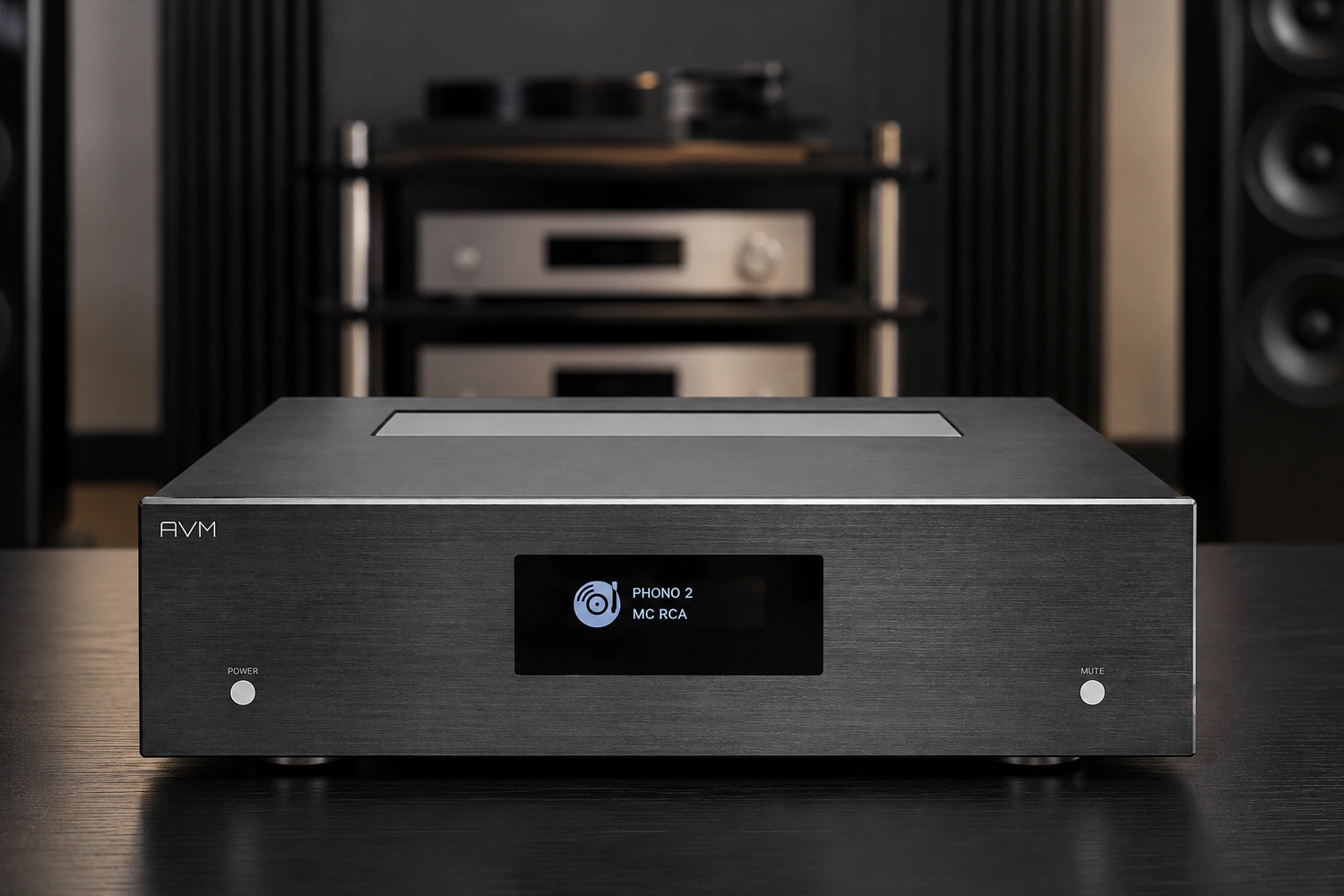
German manufacturer AVM Audio has added two configurable phono preamplifiers to its Evolution range. The PH 3.3 and PH 5.3 share the same core controls, connection options and modular expansion system, but use different approaches for their final gain stages.
Transistor and tube designs offer two circuit options
The principal distinction between the two models lies in their amplification architecture. AVM equips the PH 3.3 with a transistor-based final stage developed with a particular focus on maintaining low noise, an important consideration when handling the small signals generated by phono cartridges.
The PH 5.3 instead uses a tube circuit developed by AVM for its final amplification stage. The company says the fitted tubes are designed to provide a service life extending to several tens of thousands of hours. Beyond this circuit-level difference, the two phono preamps are largely aligned in their features and operation.
This approach gives buyers a straightforward choice between transistor and tube implementations without requiring them to select between substantially different control sets or connectivity arrangements. Both models are intended to accommodate a broad selection of turntable cartridges through adjustable settings and optional input modules.
Cartridge settings can be changed from the listening seat
Both the PH 3.3 and PH 5.3 include five sensitivity settings, allowing their gain behavior to be matched more closely to the connected cartridge. A switchable subsonic filter is also provided to reduce very low-frequency signals that can arise during vinyl playback.
Additional controls include mono and stereo operation as well as phase inversion. These functions can be adjusted from the front of the component or from the listening position using the supplied RC 3 PH infrared remote control. AVM manufactures the remote from aluminum.
The remote provides access to gain, cartridge loading, phase inversion and subsonic-filter settings. Remote adjustment should make comparisons between configurations more convenient because users do not need to return to the equipment rack whenever they change a parameter.
Optional modules support MM and MC cartridges
A rear-panel expansion slot allows each phono preamp to accept one of three optional modules: MC-XLR, MC-RCA or MM-RCA. The modular arrangement lets owners configure the unit for their preferred cartridge and connection format, while retaining the option to expand or alter the setup after purchase.
When fitted for moving-coil cartridges, the system offers six sensitivity levels and six impedance values. For moving-magnet cartridges, users can select from six capacitance values. These adjustments are designed to help match the phono stage to the electrical requirements of different cartridges rather than relying on a single fixed input configuration.
Signal output is available through balanced XLR and unbalanced RCA connections on both models. Together with the interchangeable input modules, this gives the PH 3.3 and PH 5.3 flexibility at both ends of the signal path.
Aluminum construction and finish choices
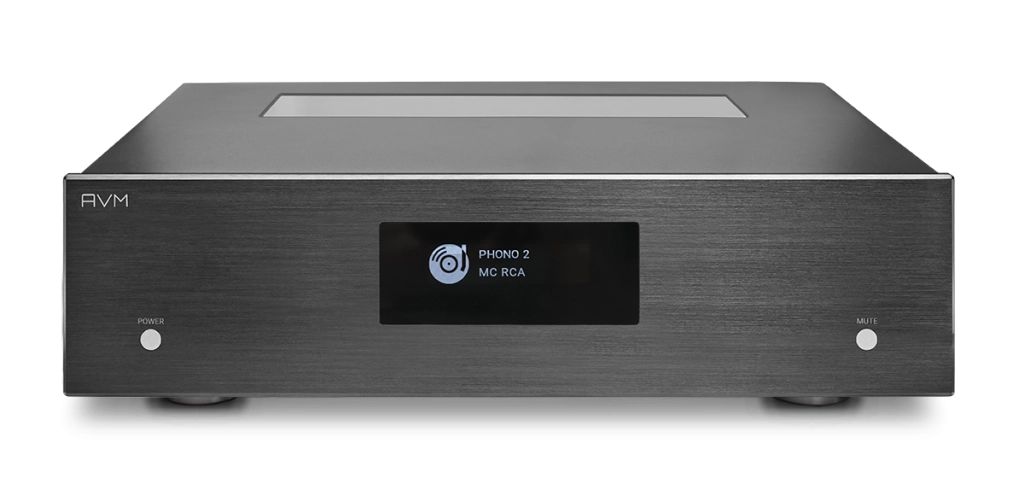
AVM houses the electronics in a precision-made aluminum enclosure with a screwless exterior. The PH 3.3 and PH 5.3 are manufactured at the company’s facility in Malsch, Baden-Württemberg, Germany.
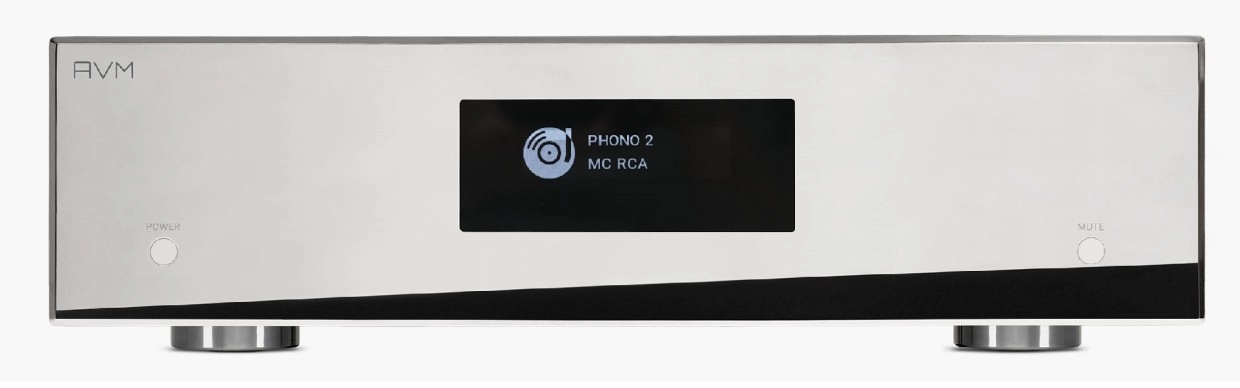
Standard finish options comprise silver aluminum and brushed black aluminum. AVM also offers an optional Cellini chrome front panel that is polished by hand.
Both Evolution-series phono preamps are available in the stated finishes. No USD pricing was provided for either model, and pricing for the optional input modules and Cellini chrome front panel was not specified.
With matching controls, balanced and unbalanced outputs, remote operation and upgradeable cartridge modules, the PH 3.3 and PH 5.3 cover similar system requirements. Their defining difference is the choice between the PH 3.3’s low-noise transistor stage and the PH 5.3’s AVM-developed tube circuit.

















 VS
VS VS
VS VS
VS VS
VS VS
VS VS
VS VS
VS VS
VS

Comments 0
Share your experience, questions and perspective with other hi-fi enthusiasts.