
An AV receiver should be chosen around the system it will run, not simply by selecting the longest feature list.
Amplification channels, supported speaker layouts, room correction, video handling, streaming options and upgrade flexibility all affect whether a receiver is a sensible fit.
The supplied material spans more than AV receivers alone. The NAD T778 and the receiver comparison provide the clearest direct recommendations, while Anthem offers useful manufacturer context. The other entries cover a Bluetooth DAC, active and passive speakers, subwoofers and brand histories that may inform a wider home-cinema system but should not be mistaken for receiver alternatives. This guide preserves that distinction. Each entry explains what the source actually covers, where it could fit and whether it belongs on an AV receiver shortlist or is better treated as supporting research.

1. Technics
Technics is represented by a brand-history feature rather than a current AV receiver review.
This feature is a historical profile of Technics rather than a review of a current AV receiver.
It traces the brand’s development through Matsushita Electric, discusses founder Konosuke Matsushita and recalls the visual appeal of classic Technics amplifiers.
It is useful background for readers interested in the company’s place in audio history, but the source supplies no specific receiver features or performance findings on which to base a purchase recommendation.
Best for: Readers exploring Technics heritage
- Historical perspective on Technics
- Background on founder Konosuke Matsushita
Verdict: Worth reading for brand context, but it does not provide enough information to recommend a Technics AV receiver.

2. Aune Flamingo BD
The Aune Flamingo BD combines Bluetooth reception, a tube stage and multiple digital output options.
Despite the word receiver in its description, the Aune Flamingo BD is a compact tube-equipped Bluetooth DAC, not an AV receiver.
Bluetooth 5.1, LDAC and aptX HD allow it to receive music wirelessly, while seven selectable digital filters provide a degree of sound tailoring.
Adjustable line output and coaxial and optical outputs give it several ways to feed powered speakers, an amplifier, an external DAC or an existing AV receiver. It is therefore a source upgrade or wireless bridge rather than the control and amplification center of a surround system.
Best for: Adding wireless audio to an existing system
- Bluetooth 5.1 with LDAC and aptX HD
- Seven selectable digital filters
- Adjustable line output
- Coaxial and optical outputs
Verdict: A flexible Bluetooth DAC for expanding an established setup, but not a substitute for an AV receiver.
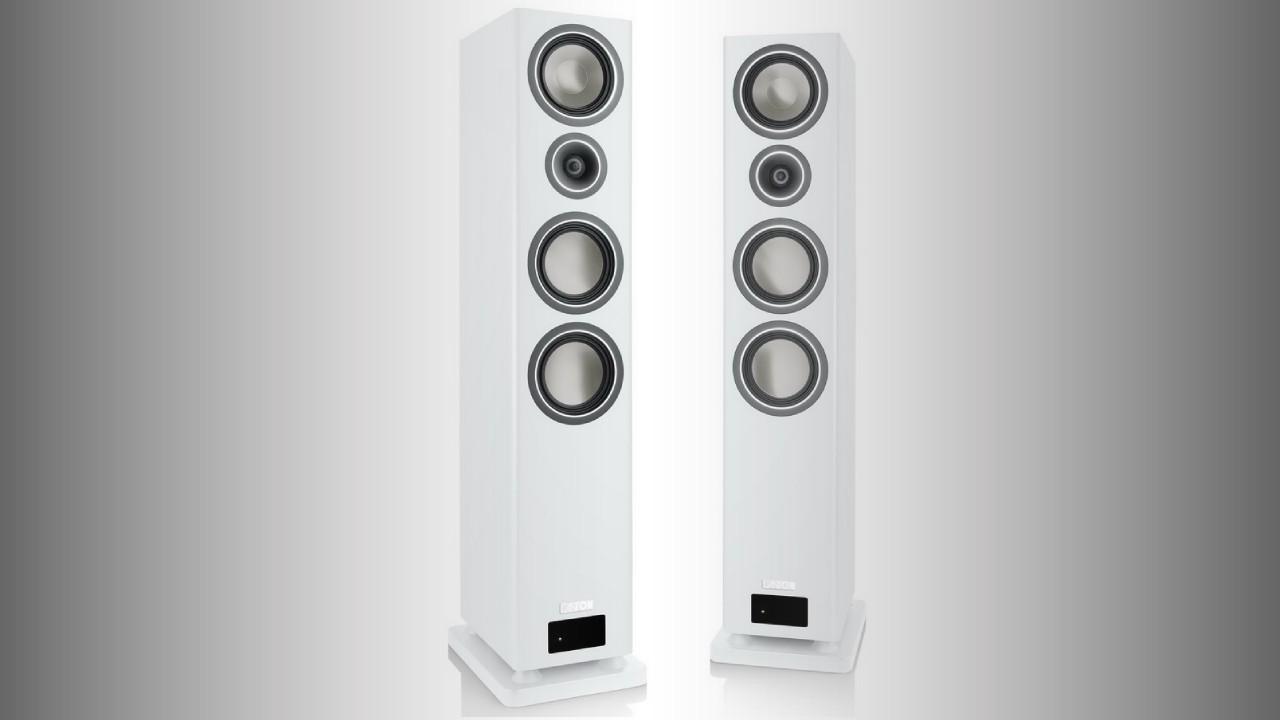
3. Canton Smart Townus 8
The Canton Smart Townus 8 is an active three-way floorstander with analog, USB and digital inputs.
The Canton Smart Townus 8 is a three-way active floorstanding speaker with internally reinforced cabinets, a 25 mm ceramic-dome tweeter and 174 mm drivers with titanium diaphragms and Wave suspensions.
Its extensive connection panel accepts balanced XLR, line-level RCA, USB, optical and coaxial sources, allowing many components to connect directly.
That flexibility can simplify a music or TV system, although the supplied source does not position the Townus 8 as the switching and decoding center for a conventional multichannel theater.
Best for: Active-speaker systems with varied sources
- Reinforced three-way cabinets
- 25 mm ceramic-dome tweeter
- XLR, RCA, USB, optical and coaxial inputs
- White, walnut and black finish choices
Verdict: A highly connected active floorstander that may streamline a system, though it is not presented as an AV receiver replacement.

4. DALI Fazon SUB 1
The DALI Fazon SUB 1 uses a down-firing 165 mm driver in a compact sealed enclosure.
The compact DALI Fazon SUB 1 is described as producing lively, controlled bass without booming resonances or obvious distortion.
Its sealed enclosure and down-firing 165 mm driver support relatively flexible placement, including near walls and corners, while the source also reports easy integration at both low and high filter settings.
There is an important limitation: it may not provide enough gain with highly sensitive speakers, even at its maximum setting. Mini-monitors and Fazon-series satellites are identified as more natural partners.
Best for: Compact speakers and designer satellite systems
- Lively, controlled bass
- 165 mm down-firing driver
- Sealed enclosure
- Flexible near-wall placement
Verdict: A compact, placement-friendly subwoofer whose available gain makes careful speaker matching essential.

5. Anthem
Anthem’s product scope includes AV receivers, surround processors and multichannel power amplifiers.
Anthem is one of the most relevant names here because its range includes AV receivers, AV processors and multichannel power amplifiers.
The profile emphasizes Canadian design and manufacturing, consistent component architecture within amplifier families and a focus on both stereo and multichannel reproduction.
It also discusses the company’s support for D1 processor owners through a modular upgrade that added HDMI inputs and video processing. This is useful evidence of Anthem’s home-theater focus, but it remains a brand overview rather than a review of a specific current receiver.
Best for: Researching a home-theater electronics brand
- AV receivers, processors and power amplifiers
- Designed and made in Canada
- Unified component architecture within amplifier families
- Documented modular upgrade support
Verdict: Anthem warrants consideration from serious home-cinema buyers, although this source alone cannot identify the right model.

6. Tannoy Mercury 7.2
The Tannoy Mercury 7.2 is the larger bookshelf model in a range that also includes a center speaker and subwoofer.
The Tannoy Mercury 7.2 is the larger bookshelf speaker in the redesigned Mercury 7 range.
The source presents the series as an affordable route into stereo and home-theater systems, with revisions intended to improve articulation and engagement over the preceding generation.
It also notes that the 7.2 has larger dimensions and a richer sound than the smaller bookshelf model. A matching center speaker and powered subwoofer elsewhere in the range make it relevant to surround-system planning, but an AV receiver would still be required to drive and manage the speakers.
Best for: Building a matching passive speaker package
- Redesigned Mercury-series platform
- Richer presentation than the smaller bookshelf model
- Suitable for stereo or home-theater systems
- Three finish options
Verdict: A practical bookshelf option for a receiver-based system, particularly when matching speakers from the wider Mercury 7 range.

7. Best AV Receivers Compared: Pioneer, Anthem and
The comparison contrasts Pioneer’s seven- and nine-channel receivers with Anthem’s five-channel MRX 540.
This comparison supplies the clearest receiver shortlist in the source set.
It identifies the Pioneer VSX-LX305 as the most complete all-round choice, citing nine amplification channels, support for 5.2.4 or 7.2.2 layouts, broad streaming and strong video connectivity.
The seven-channel Pioneer VSX-935 is framed as the more accessible option while retaining Dolby Atmos, DTS:X, room correction, two HDMI outputs and network playback. Anthem’s MRX 540 is the alternative for buyers prioritizing rich, dynamic sound, deep bass and advanced room correction within a five-channel design. The right choice therefore depends on speaker count and system priorities rather than a single specification.
Best for: Creating a focused AV receiver shortlist
- Nine-channel Pioneer VSX-LX305 coverage
- Seven-channel Pioneer VSX-935 value option
- Anthem MRX 540 room-correction focus
- Clear differentiation by speaker layout
Verdict: Start with the VSX-LX305 for a larger immersive system, then consider the VSX-935 or MRX 540 when value or five-channel performance matters more.

8. Canton Ergo 690
The Canton Ergo 690 continues the series’ rounded wooden cabinet and metal-grille design.
The Canton Ergo 690 is a floorstanding speaker, not an AV receiver, but it is relevant when planning the front channels of a system.
The article concentrates on the long-running Ergo design language, including wooden cabinets with rounded edges, metal grilles and a narrow front section.
It also discusses S-shaped driver suspensions and Canton’s use of similarly sized midrange and bass drivers to make integration easier at the crossover. The supplied information offers design and engineering context rather than a complete assessment of system matching or receiver requirements.
Best for: Traditional floorstanding front channels
- Long-established Ergo design platform
- Wooden cabinets with rounded edges
- Metal protective grilles
- Closely sized drivers intended for easier matching
Verdict: An established passive floorstander to investigate separately when assembling a receiver-led stereo or theater system.

9. NAD T778
The NAD T778 combines nine-channel amplification, Dirac Live and two modular MDC expansion slots.
The NAD T778 is the strongest single-product AV receiver candidate in this collection.
Its nine-channel hybrid digital amplifier is rated at 9 x 100 W, while support for Dolby Atmos, DTS:X and DTS Master Audio extends to theater configurations up to 7.1.4 channels.
Dirac Live handles automatic room correction, and the receiver can pass 4K Ultra HD video. Two user-accessible MDC slots are central to its appeal because installed modules can be replaced. Apple AirPlay 2, aptX HD Bluetooth, MQA decoding across the digital inputs, touchscreen operation and control-system connections broaden its role in connected home cinema.
Best for: Expandable immersive home theaters
- 9 x 100 W hybrid digital amplification
- Two user-replaceable MDC slots
- Dirac Live room correction
- Dolby Atmos and DTS:X support
Verdict: A feature-rich nine-channel receiver distinguished most clearly by Dirac Live and its replaceable MDC modules.

10. Sunfire
Sunfire is represented by its compact subwoofer concepts and Tracking Downconverter amplifier technology.
Sunfire is covered through its subwoofer and power-amplifier engineering rather than an AV receiver.
The profile explains how founder Bob Carver pursued compact subwoofers capable of high sound pressure by greatly increasing bass-driver excursion.
It also describes the Tracking Downconverter power supply used in Sunfire amplifiers, which adjusts energy delivery to the instantaneous load to improve efficiency while maintaining low signal distortion. Those technologies may be relevant when adding bass or external amplification to a theater, but the source gives no basis for choosing a Sunfire receiver.
Best for: Researching subwoofers and external amplification
- Compact high-output subwoofer approach
- Long-excursion bass-driver design
- Tracking Downconverter power supplies
- Home-theater speaker offerings
Verdict: Useful system-building context for bass and power amplification, but not a direct AV receiver recommendation.


Sound Off
0Join the discussion if you have something to add.