
Amplifier matching begins with the system rather than a league table.
Speaker demands, preferred sources, listening levels and the need for streaming or analog connectivity determine whether an integrated amplifier, a separate preamplifier and power amplifier, or a more specialized design makes sense.
More power can provide useful headroom, but it is not automatically the answer to every limitation. The products here represent several distinct approaches. Musical Fidelity and Canor combine source control and speaker amplification in integrated designs, while Accuphase and SimAudio address systems built around separate components. NAD adds network streaming to a compact integrated amplifier, whereas the PS Audio and Ladder models concentrate on line-level control. The supplied material also includes a subwoofer, a loudspeaker and an amplifier-upgrade article. These are retained in their original positions because each can inform system planning, but they are identified clearly rather than being presented as amplifiers. Where the source does not provide enough information for a firm compatibility judgment, the guidance remains deliberately limited.

1. Musical Fidelity Nu-Vista 600.2: Powerful Integrated Amplifier
The Musical Fidelity Nu-Vista 600.2 combines dual-mono construction, a NuVistor stage and high-output integrated amplification.
The Nu-Vista 600.2 suits an ambitious all-analog system that needs substantial output from one integrated component.
Its dual-mono architecture combines a Class A NuVistor tube stage with separate filtering for the preamplifier and power-amplifier sections.
Rated output is 160 watts per channel into 8 ohms and 300 watts into 4 ohms, with stated peaks of 500 watts into 2 ohms. Relay input switching and a laser-trimmed volume control specified for a gain error of plus or minus 0.5 dB, including at low settings, add practical appeal for systems used across a wide volume range.
Best for: High-power all-analog integrated systems
- 160 watts per channel into 8 ohms
- Dual-mono analog architecture
- Class A NuVistor tube stage
- Laser-trimmed volume control
Verdict: A strong match for listeners seeking substantial speaker drive, analog-only operation and NuVistor-based circuitry in one chassis.

2. Canor TP101 A30 Anniversary Edition: Handcrafted Tube Integrated Amplifier
The Canor TP101 A30 pairs an EL34-based amplifier circuit with a stainless-steel and real-wood enclosure.
Canor's TP101 A30 is aimed at an analog system built around traditional tube amplification rather than streaming or digital inputs.
The ultra-linear Class AB push-pull circuit uses four EL34 output tubes, four ECC81 driver tubes and Permalloy output transformers.
It is rated at 35 watts per channel with 4- and 8-ohm speakers and provides five analog RCA inputs. The stainless-steel and real-wood enclosure makes it particularly suitable for a living space in which the amplifier will remain visible.
Best for: Analog systems centered on tube amplification
- EL34 push-pull tube design
- 35 watts per channel
- Five analog RCA inputs
- Stainless-steel and real-wood cabinet
Verdict: A focused choice for listeners who value classic tube architecture, multiple line-level inputs and handcrafted presentation over digital facilities.

3. REL Acoustics unveils new Classic 98 active subwoofer
The REL Classic 98 is an active subwoofer with a downward-facing 10-inch cellulose-cone driver and internal Class D amplification.
The REL Classic 98 is not a primary amplifier; it is an active subwoofer intended to supplement an existing stereo system.
Its internal Class D amplifier drives a downward-facing 10-inch driver with a cellulose cone.
REL frames the design around the character of its earlier subwoofers while claiming improvements in detail and speed. It therefore belongs in this guide as a bass-extension option, not as a replacement for an integrated or power amplifier.
Best for: Adding active bass to a vintage-leaning stereo system
- Built-in Class D amplification
- Downward-facing 10-inch driver
- Cellulose-cone construction
- Vintage-inspired cabinet and sound concept
Verdict: A system-expansion component for listeners seeking REL's classic design direction, rather than an amplifier for driving the main speakers.

4. NAD C338: One of the Best Compact Streaming Amplifiers You Can Buy
The compact NAD C338 combines 50-watt-per-channel stereo amplification with Chromecast and Bluetooth connectivity.
The NAD C338 fits a compact system that needs amplification and network playback without separate source boxes.
It provides Chromecast built-in for direct streaming from compatible services and apps, while Bluetooth offers a quick connection for guests or informal listening.
Its rated output is 50 watts per channel. This combination makes it the most clearly convenience-led integrated amplifier in the supplied group, although speaker matching should still account for the available power.
Best for: Compact stereo systems with everyday streaming
- Chromecast built-in
- Bluetooth connectivity
- 50 watts per channel
- Compact, understated design
Verdict: A practical integrated solution when simple network playback and a space-conscious design matter more than very high stated output.
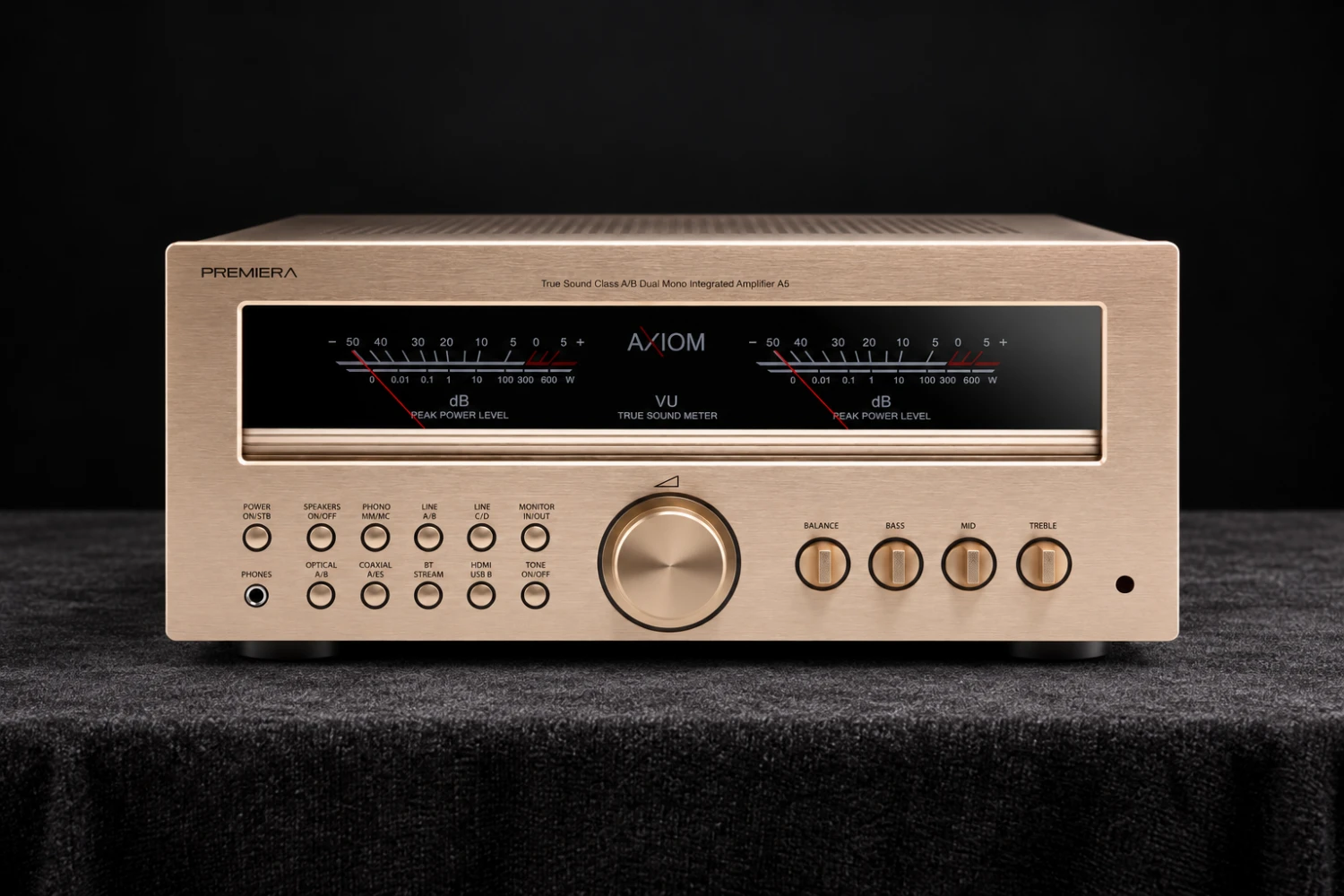
5. Is Your Hi-Fi Amplifier Holding Back Your Sound? Here’s When You Should Upgrade
The amplifier-upgrade guide separates genuine power, control and connectivity problems from limitations elsewhere in the hi-fi system.
This is an upgrade guide rather than a specific amplifier, and its value lies in diagnosing the system before replacing hardware.
It identifies hard or compressed sound at higher levels as a possible sign of clipping, while poorly defined bass with demanding speakers may indicate limited current delivery, insufficient power-supply reserves or an awkward impedance interaction.
It also recognizes connectivity as a valid reason to change amplifiers. Crucially, the article notes that speaker positioning, room acoustics, source quality or modest listening levels may leave an amplifier upgrade with little audible benefit.
Best for: Diagnosing whether an amplifier upgrade is justified
- Symptom-led upgrade framework
- Considers clipping and speaker control
- Treats connectivity as a practical factor
- Acknowledges room and positioning limits
Verdict: The most useful starting point for anyone unsure whether the amplifier, rather than the room or speakers, is restricting the system.

6. PS Audio PMG Signature Series: Next-Gen DSD512 DACs, Folded Cascode Preamps, and Zero-Feedback Analog Design
The PS Audio PMG Signature range includes the dual-chassis 512 Preamplifier alongside digital and phono source components.
The PMG Signature Series is a family of source and control components, not a single integrated amplifier.
For system matching, the relevant model is the 512 Preamplifier, which requires separate power amplification to drive speakers.
Its signal path is fully balanced from input to output, while the dual-chassis construction is intended to shield the circuitry from noise and interference. The power supply substitutes film capacitors for conventional electrolytic types, and the gain stage combines FET and BJT devices.
Best for: Flagship separates built around balanced preamplification
- Fully balanced signal path
- Dual-chassis construction
- Film-capacitor power supply
- Combined FET and BJT gain stage
Verdict: A specialized control component for a high-level separates system, not an all-in-one amplifier or direct speaker-driving solution.

7. Accuphase P-4600: New impressive power amplifier launched
The Accuphase P-4600 power amplifier provides analog meters, RCA and XLR connections, and selectable bridge or dual-mono operation.
The Accuphase P-4600 is designed for a separates system in which source selection and volume control are handled by a preamplifier.
It delivers 150 watts into 8 ohms and 300 watts into 4 ohms, supported by a large toroidal transformer and 50,000 microfarads of filter capacitance.
Bridge operation raises the stated output to 600 watts into 8 ohms and 900 watts into 4 ohms. RCA and XLR inputs, two sets of speaker terminals, and bridge and dual-mono modes provide several installation options, including bi-amplification.
Best for: Powerful separates with flexible configuration needs
- 150 watts into 8 ohms
- RCA and XLR inputs
- Bridge and dual-mono modes
- Two sets of speaker terminals
Verdict: A versatile stereo power amplifier for systems requiring substantial output, balanced connectivity or bridge and bi-amplification options.

8. Wilson Audio Sasha V Officially Presented
The Wilson Audio Sasha V uses separate bass and midrange-treble modules with proprietary cabinet materials and driver technology.
The Wilson Audio Sasha V is a loudspeaker, so it informs amplifier selection without answering it.
Its two-section modular enclosure places the bass drivers in the lower cabinet and the midrange and treble drivers in the upper module.
The design uses Wilson's proprietary X-Material, S-Material and V-Material, together with carbon, aluminum and stainless-steel parts. Because the supplied source gives no sensitivity, impedance or recommended amplifier-power figures, a responsible amplifier match cannot be specified from this material alone.
Best for: Systems planned around Sasha V loudspeakers
- Two-section modular construction
- Convergent Synergy Carbon tweeter
- AlNiCo QuadraMag midrange driver
- Proprietary composite cabinet materials
Verdict: An important system-matching reference, but the supplied information is insufficient to recommend a particular amplifier type or output level.
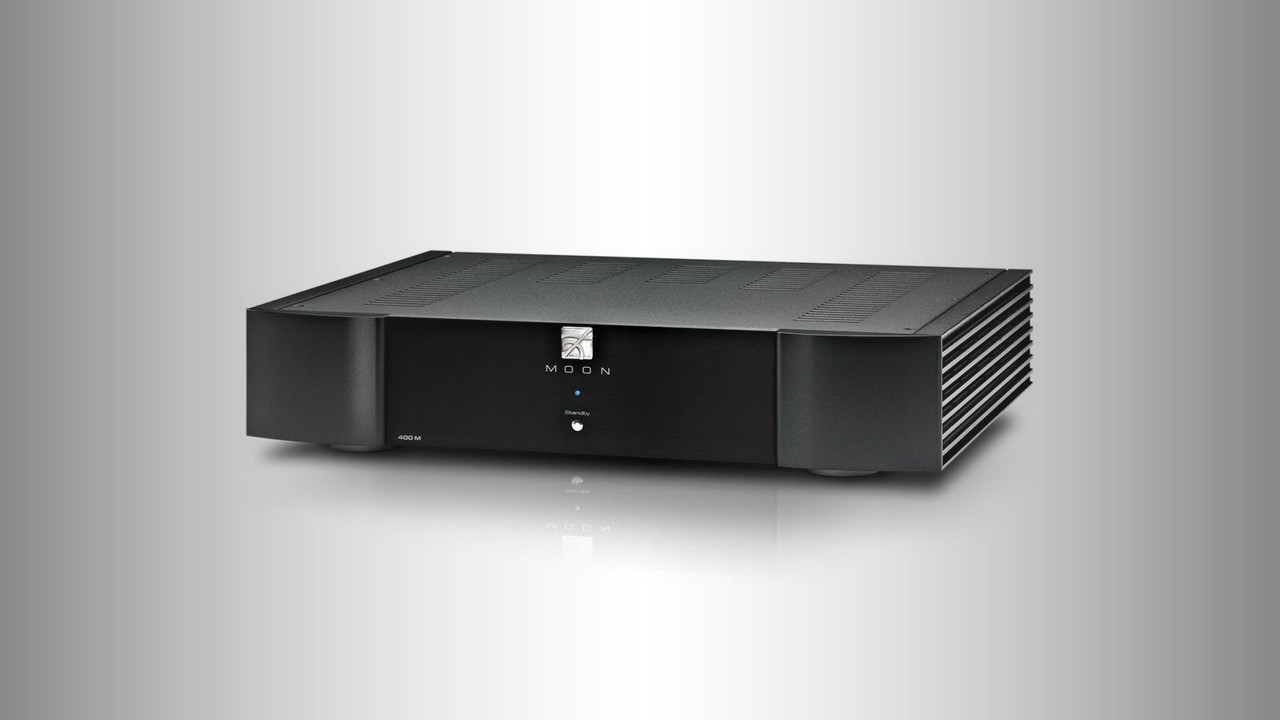
9. SimAudio Moon Neo 400M: Powerful monoblock amplifier
The SimAudio Moon Neo 400M is a monoblock power amplifier with XLR and RCA inputs and a substantial toroidal power supply.
The Moon Neo 400M is a monoblock power amplifier for a separates system, with one amplifier channel housed in each unit.
The supplied source emphasizes high output and operation at elevated listening levels but does not provide a numerical power rating.
Its power supply includes a large toroidal transformer and capacitance approaching 100,000 microfarads, while the chassis geometry is designed to manage operating temperature. Balanced XLR and unbalanced RCA inputs allow it to work with different preamplifier connection formats.
Best for: High-output stereo systems using separate monoblocks
- Dedicated monoblock architecture
- Balanced XLR input
- Unbalanced RCA input
- Large toroidal power supply
Verdict: A separates-oriented option for listeners prioritizing dedicated amplification per channel and a choice of balanced or unbalanced connections.

10. Ladder Bach II: High-End Class A Balanced Preamplifier
The Ladder Bach II is a fully balanced Class A preamplifier with relay volume control, dual rotary encoders and an aluminum enclosure.
The Ladder Bach II is a line-level preamplifier rather than a speaker-driving amplifier, making it suitable for systems that already include a separate power amplifier or active speakers with compatible inputs.
Its fully discrete, balanced Class A circuit uses a unity-gain buffer stage and an 80-watt low-noise toroidal transformer.
A 60-step relay attenuator with precision-matched resistors is designed to avoid channel imbalance and remain stable at low volume settings. Two XLR inputs, one RCA input and both balanced and unbalanced outputs support mixed-connection systems.
Best for: Balanced separates needing precise line-level control
- Fully discrete Class A circuit
- 60-step relay attenuator
- Two XLR and one RCA input
- Balanced and unbalanced outputs
Verdict: A focused analog preamplifier for systems that value relay-based volume adjustment and both balanced and unbalanced connectivity.


Sound Off
0Join the discussion if you have something to add.