
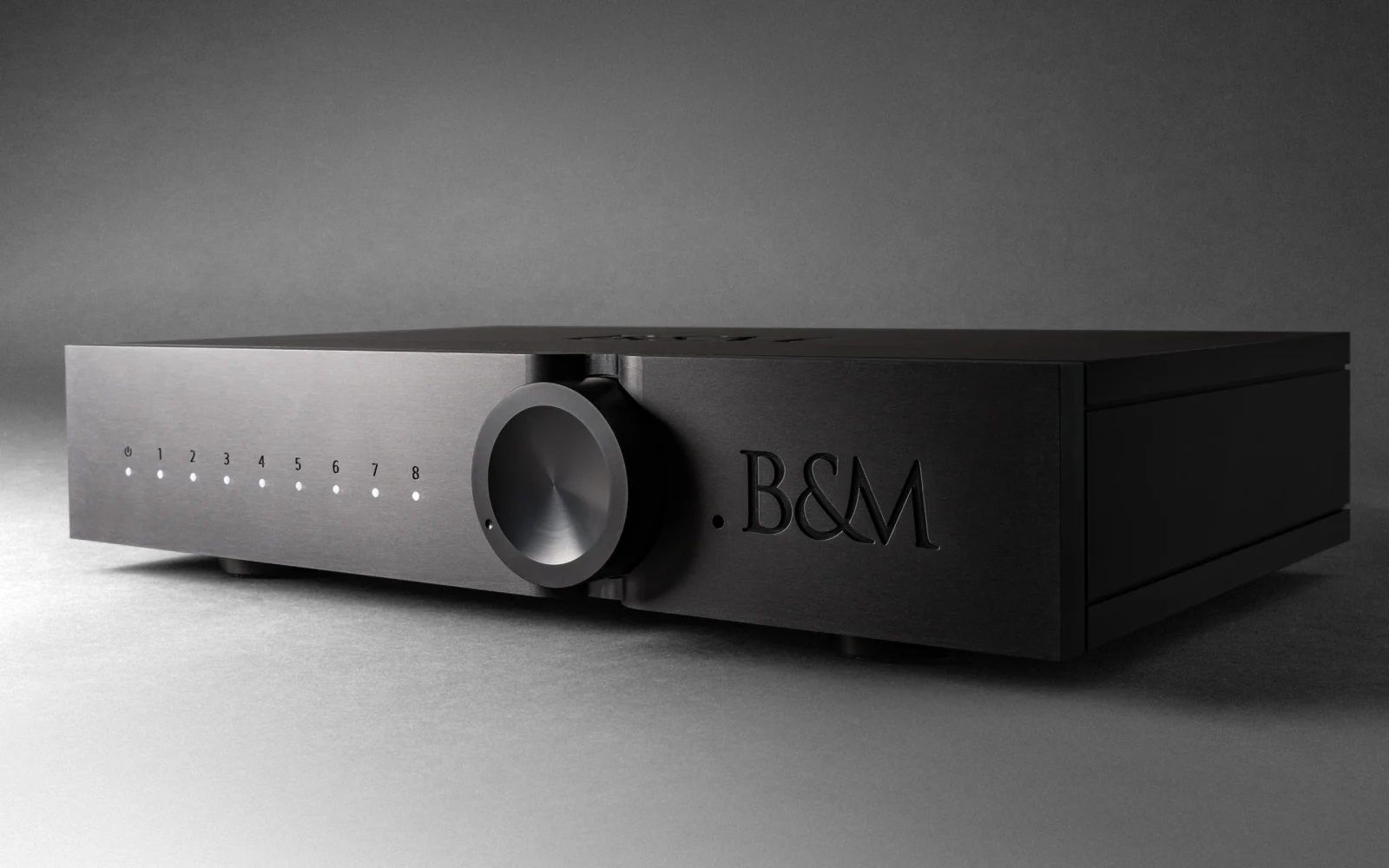
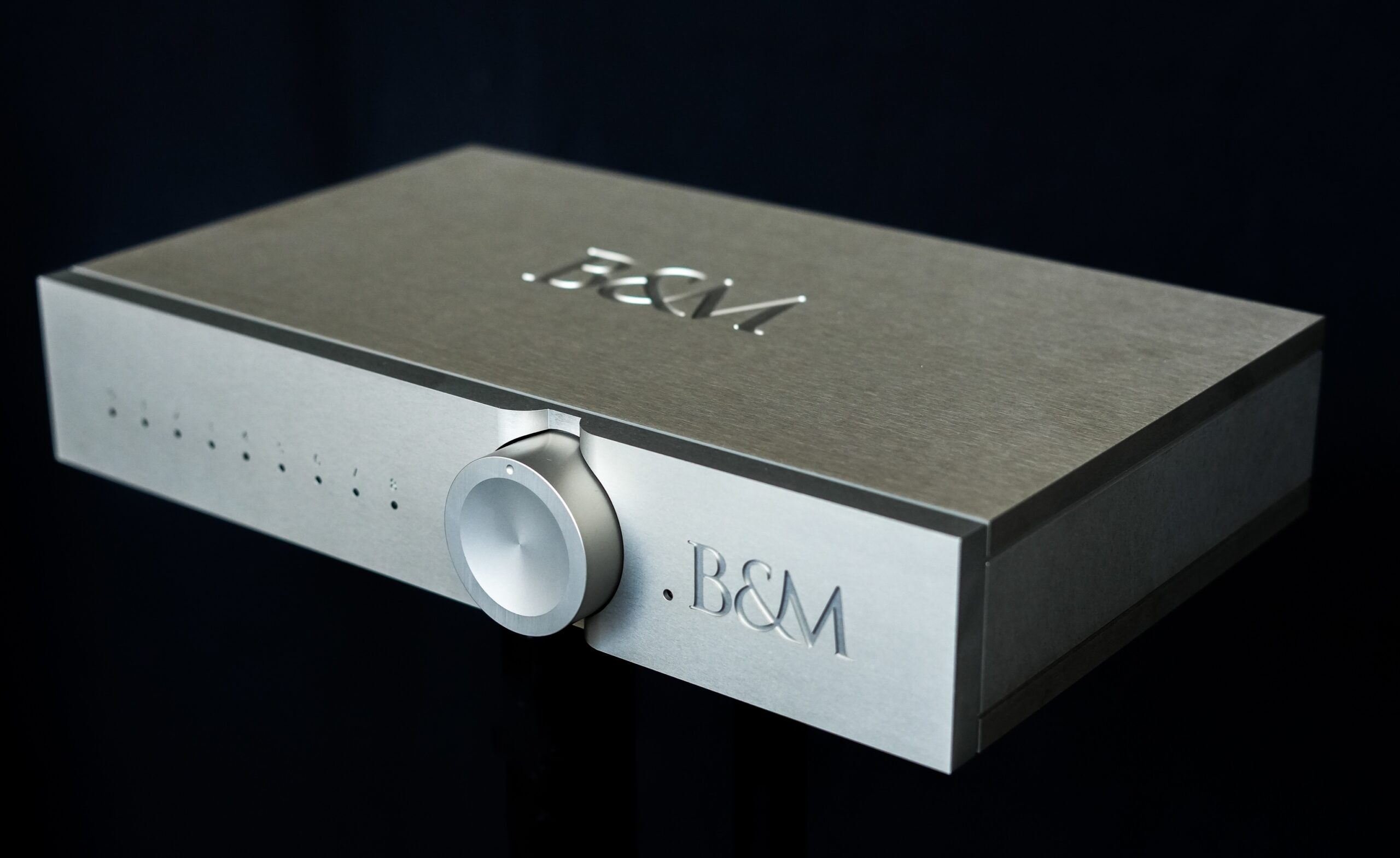
The Backes & Müller ICE 525 is designed to serve as the control center of a system rather than simply as another phono component. Its combination of analog and digital inputs, configurable cartridge support, digital RIAA equalization, and integration with the company’s active loudspeakers gives it an unusually broad role. The most distinctive decision is also likely to be the most debated: after accepting the small analog signal from a cartridge, the ICE 525 performs its phono processing and adjustment digitally. This is not an attempt to reproduce the architecture of a conventional analog phono stage. Instead, Backes & Müller uses digital processing to pursue accurate equalization, low noise, repeatable setup, and flexibility across very different moving-coil and moving-magnet cartridges. With a recommended retail price just under $8,900, the ICE 525 occupies a specialist part of the market, but its appeal lies in consolidating several demanding system functions into one component.
A preamplifier conceived as a system hub
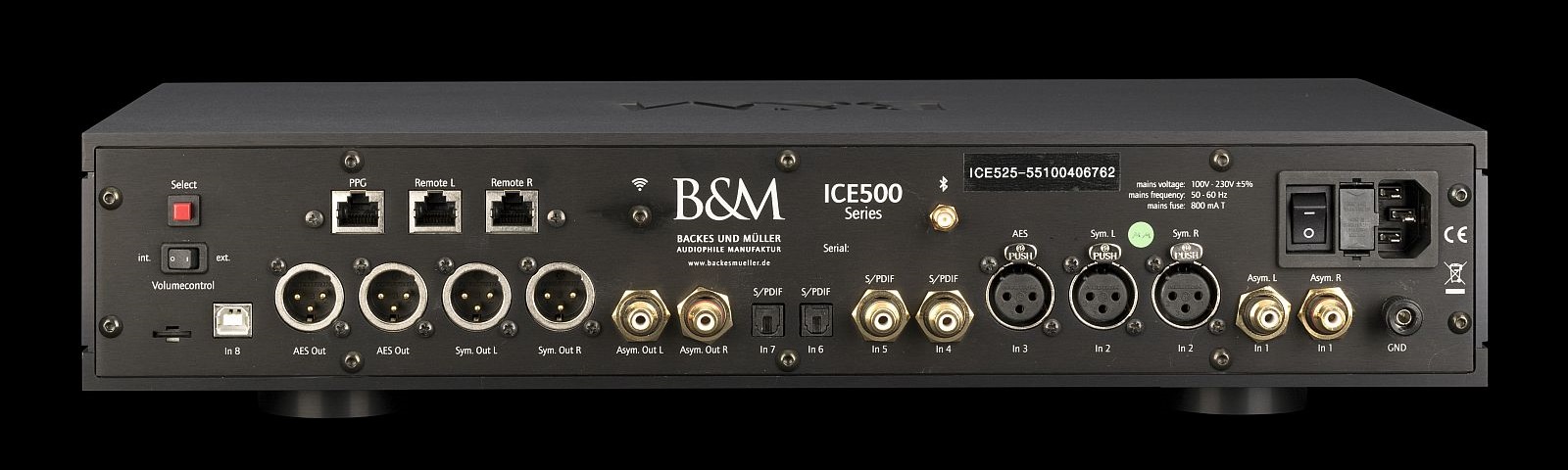
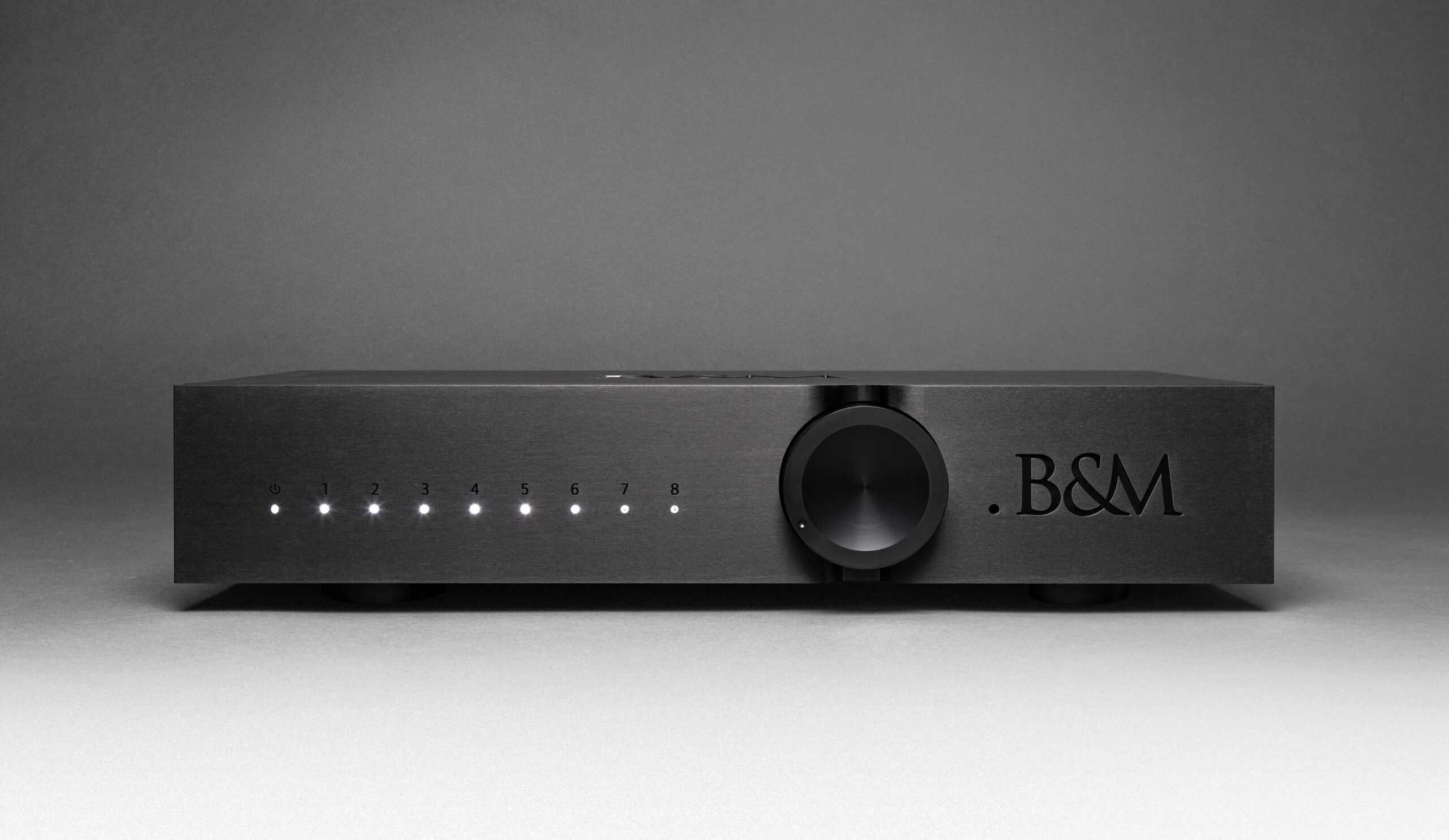
The ICE 525 is first and foremost a digital preamplifier for managing multiple sources. It provides eight inputs and supports RCA, XLR, Toslink, S/PDIF, and AES/EBU connections. A USB port is also included and can be used with a source such as a Roon server. This assortment makes the unit relevant to systems that mix traditional analog equipment with computers, networked music libraries, disc transports, and professional-style digital sources.
That breadth matters because the phono input is not isolated from the rest of the product’s purpose. An owner can connect a turntable alongside contemporary digital hardware while retaining one central component for source management. For a system built around active loudspeakers, this can reduce the need to assemble a separate line preamplifier, phono stage, digital converter, and assortment of switching devices.
The design is therefore less about adding vinyl playback to a conventional digital product and more about giving records equal standing within a digitally organized system. That approach may be especially useful for listeners whose collections and playback habits span both physical and file-based media.
Why the digital phono architecture is distinctive
A cartridge begins by feeding the ICE 525 in the expected analog manner, but the subsequent signal processing and configuration take place in the digital domain. This includes the RIAA equalization required to restore the tonal balance encoded into a vinyl record during cutting. It is a fundamental departure from phono stages that perform gain and equalization entirely with analog circuitry.
Backes & Müller’s rationale is precision and consistency. Digital filters can be defined closely and are not subject to the component tolerances associated with passive or active analog equalization networks. The company says its correction filters were informed by original cutting characteristics, including those associated with Neumann cutting machines. It also claims that this implementation provides phase and timing behavior during equalization that would not be attainable with an analog circuit.
For prospective owners, the practical attraction is not digital processing merely for its own sake. It is the ability to integrate equalization, gain-related matching, and cartridge configuration into a controlled and repeatable platform. Purists who want their record signal to remain analog throughout the system may find the concept unsuitable, but the ICE 525 is clearly intended for listeners willing to judge digital processing by its functional benefits rather than by convention.
Flexible support for moving-coil and moving-magnet cartridges
Cartridge compatibility begins with selectable input impedance settings of 100 ohms for moving-coil cartridges and 47 kilohms for moving-magnet and other suitable high-output designs. These familiar values allow the ICE 525 to accommodate the two principal cartridge categories without requiring an external step-up device or separate phono stage in the documented configurations.
The digital architecture then permits more precise configuration for the output of the connected cartridge. That is important because cartridge signal levels vary substantially. A low-output moving-coil model places very different demands on the phono electronics than a comparatively high-output moving-magnet cartridge intended for robust playback applications. Backes & Müller says the ICE 525 can be matched to both quiet MC designs and much louder MM cartridges.
Configuration data can be saved to a memory card, adding a useful element of repeatability. Settings can also be adjusted manually on a computer when desired. This could be valuable to owners who use more than one cartridge or who want to preserve a known setup before experimenting with another configuration. It also turns cartridge matching into a manageable set of stored parameters rather than a process that must always depend on internal switches or fixed hardware values.
Noise performance aimed at low-output cartridges
Low-output moving-coil cartridges make noise performance particularly important because their small signals require substantial amplification. Backes & Müller specifies a signal-to-noise ratio of 103 dB for an MC cartridge with the input set to 100 ohms. The D/A converter is specified at 123 dB. These are manufacturer figures rather than independent measurements, but they explain why the company sees digital phono processing as more than a convenience feature.
The ICE 525’s internal construction also addresses potential interference by carefully isolating the power supply, data lines, and clock. This is relevant in a component where very low-level analog signals coexist with digital processing and conversion. Keeping those sections appropriately separated is a necessary design consideration, particularly when a sensitive cartridge input shares an enclosure with digital interfaces and clocked circuitry.
For an owner, the significance is straightforward: the phono section has been designed around the demands of low-level cartridges rather than added as a secondary input. The specified performance and internal isolation indicate that vinyl replay is a central part of the ICE 525’s engineering brief.
A natural partner for Backes & Müller active speakers
The ICE 525 is designed to drive Backes & Müller active loudspeakers, which places it within the company’s wider system architecture. Connection to the latest BM Line speakers is available through B&M Easylink over CAT7 cable. Because the loudspeakers contain their own amplification, the ICE 525 can operate as the source and control component without a separate power amplifier.
CAT7 cabling also offers a practical installation benefit. Flat versions can be concealed behind skirting boards, helping reduce the visual impact of cable runs in a living space. This may be particularly welcome in active-speaker systems, where each speaker needs to receive its appropriate connection and equipment placement can otherwise become visually complicated.
Although the preamplifier’s broad input selection is relevant in its own right, its most coherent application is likely to be at the center of a Backes & Müller active system. Easylink provides a purpose-designed connection method, while the integrated phono functionality allows a turntable to join that system without an additional phono box and its associated power supply and interconnects.
Who the ICE 525 is most suitable for
The ICE 525 is best suited to listeners building a high-value, source-diverse system around active loudspeakers, particularly models from Backes & Müller. It should also interest vinyl users who change cartridges, need support for both MC and MM designs, or value the ability to save and edit setup parameters. Its mixture of USB, conventional digital interfaces, balanced and unbalanced connections, and phono capability makes particular sense for owners who do not divide their listening into strictly analog and digital systems.
It is less naturally suited to listeners committed to keeping the vinyl signal in the analog domain from cartridge to amplifier. The digital implementation is a defining feature, not an optional operating mode. Similarly, someone who needs only a simple standalone phono stage may not make full use of the ICE 525’s source-control facilities, connectivity, or active-speaker integration.
Its price also positions it for carefully planned systems rather than casual experimentation. The strongest case for the ICE 525 comes when several of its functions are needed at once: centralized source selection, digital connectivity, adaptable cartridge handling, digitally implemented RIAA equalization, and a direct route into compatible active speakers. In that context, consolidation and configuration flexibility are as important as the phono input itself.
Conclusion
The Backes & Müller ICE 525 stands out through the way it incorporates vinyl into a modern digital control architecture. Its digitally implemented RIAA equalization, selectable MC and MM impedance settings, cartridge-specific configuration, memory-card storage, and manufacturer-specified 103 dB MC signal-to-noise ratio give the phono section a clear technical purpose. At the same time, eight inputs, USB and established digital interfaces allow the component to manage a varied collection of sources. Easylink connectivity makes it especially relevant to owners of Backes & Müller active loudspeakers. The ICE 525 will not appeal to every analog traditionalist, but for listeners comfortable with digital processing and seeking a centralized, configurable front end for both records and digital media, it offers a distinctive and thoughtfully integrated proposition.