

The PSB Alpha AM3 occupies a useful space between conventional desktop speakers and a component-based hi-fi system. It combines a compact two-way speaker design with built-in amplification and an unusually broad selection of wired and wireless connections. That approach allows the AM3 to serve as the center of a small music system without requiring a separate amplifier, phono stage or digital-to-analog converter.
Its appeal is not based on any single headline feature. Instead, the AM3 brings together practical elements that are often divided among several products: aptX Bluetooth for mobile devices, a 3.5 mm analog input, an optical digital connection, USB audio, a dedicated moving-magnet phono input and an output for an optional powered subwoofer. For listeners working with limited space, or anyone who wants to connect both modern and traditional sources, that combination is the product’s defining strength.
An active design that reduces system complexity
The Alpha AM3 is an active speaker system, with two 35-watt amplifiers integrated into the design. Built-in amplification removes the need to choose and accommodate a separate integrated amplifier or receiver. That can make the system easier to place on a desk, shelf or compact media unit, while also reducing the amount of cabling and the number of power-consuming boxes in the room.
This integrated format is particularly useful for people assembling a first hi-fi system or moving from a basic wireless speaker to a stereo pair. The AM3 retains the physical separation of left and right speakers, but packages many of the supporting electronics within the system. It can therefore offer a more conventional stereo arrangement without demanding a full equipment rack.
The internal amplifier specification is stated as 2 x 35 watts. PSB does not require the owner to resolve questions of external amplifier compatibility, which is one of the practical advantages of an active design. The amplification and drive units form a predetermined system, developed and finally tuned under the responsibility of PSB founder and chief engineer Paul Barton.
Connectivity for digital, analog and wireless sources
The AM3’s input panel is central to its versatility. Bluetooth with aptX support provides a convenient route for compatible phones, tablets, computers and stationary players. Wireless playback is useful for casual listening and shared systems because visitors or household members can connect without physically changing cables.
Bluetooth is supplemented by several wired options. A 3.5 mm analog input can accommodate computers, portable players and other sources with line-level output. An optical Toslink input makes it possible to connect compatible televisions, streamers, disc players or other digital components. This is an important inclusion for a speaker system that may be asked to handle both music and television audio in a smaller room.
The micro USB input feeds the AM3’s built-in DAC, allowing a compatible computer or digital source to pass audio to the speakers without relying on its own analog output stage. The published information does not specify supported file formats or maximum digital resolution, but the presence of USB audio still broadens the ways in which the system can be configured.
A separate USB Type-A port is provided for charging a phone. It is a modest but thoughtful convenience for desktop or bedside use, where keeping a mobile device powered may be nearly as important as maintaining an uncluttered installation.
A dedicated input for moving-magnet turntables
One of the AM3’s more distinctive connections is its stereo RCA phono input for moving-magnet cartridges. Many active speakers accept only line-level analog signals, forcing a turntable owner to add an external phono preamplifier unless the record player has one built in. By incorporating an MM phono stage, the AM3 can connect directly to a compatible turntable.
This does not make the speaker universally compatible with every cartridge or turntable configuration: the input is specifically identified for moving-magnet use. Even so, it gives vinyl listeners a more direct route to a compact system and reduces the need for another powered component, another set of interconnects and additional shelf space.
The mixture of phono, analog line, optical, USB and Bluetooth inputs also means owners are not locked into a single source format. A turntable can remain connected alongside a television or computer, while phones and tablets can use Bluetooth. That source flexibility should help the system adapt as listening habits change.
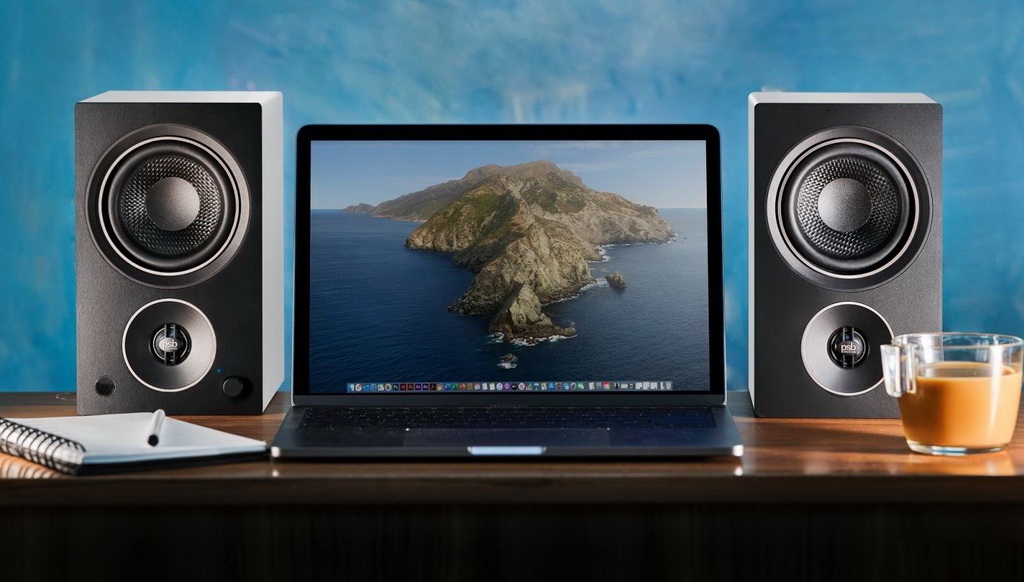
Compact two-way construction
Each AM3 cabinet measures 130 x 220 x 174 mm and weighs 2.25 kg. Those dimensions support placement in locations where a larger bookshelf speaker might be difficult to accommodate, including workspaces and compact shelving. Placement still deserves care because the enclosure uses a bass-reflex, or phase-inverter, design; adequate clearance and stable support remain sensible considerations.
The two-way driver arrangement consists of a 100 mm, or 4-inch, conical woofer with rubber suspension and a 19 mm, or 3/4-inch, aluminum high-frequency driver. The tweeter uses ferrofluid and a neodymium magnet. PSB specifies an overall frequency range of 56 Hz to 20 kHz.
The enclosure is made from MDF and finished in vinyl. Magnetic metal grilles provide driver protection while avoiding visible grille mounting points when removed. Together, these details reflect a design intended to be compact and practical rather than dependent on elaborate external hardware.
Room to extend the low frequencies
Although the AM3 is designed as a self-contained stereo system, PSB includes a dedicated RCA subwoofer output. This gives owners the option to add a compatible powered subwoofer if their room, listening preferences or program material call for greater low-frequency extension than the compact 4-inch woofers are intended to provide.
That output also improves the product’s long-term flexibility. A buyer can begin with the speaker pair alone and expand the system later, rather than having to replace the speakers to create a 2.1-channel arrangement. It may be especially relevant when the AM3 is used for television, games or desktop entertainment, where a separate subwoofer can be accommodated away from the main speakers. The supplied information does not detail crossover controls, so prospective owners should consult PSB’s setup documentation when matching and integrating a subwoofer.
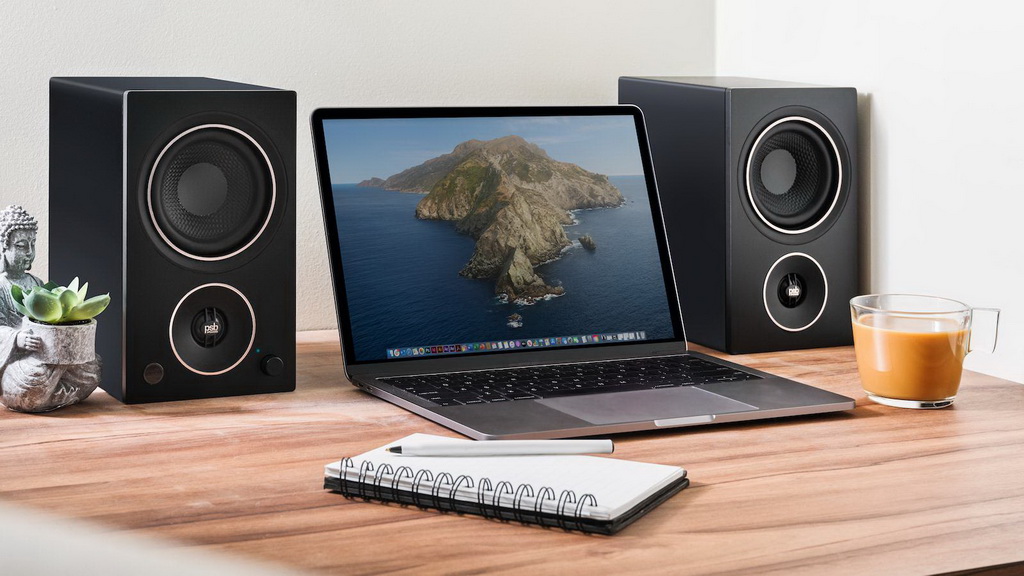
Who the PSB Alpha AM3 is most suitable for
The Alpha AM3 is most naturally suited to listeners who value source flexibility and compact installation. It could anchor a desktop music setup, a small-room stereo system, a turntable station or a television audio system, provided the available inputs match the source equipment. It is also relevant to people who want genuine left-right speaker separation but prefer not to assemble a system from a passive speaker pair, amplifier, DAC and phono preamplifier.
Its moving-magnet phono input makes it particularly attractive to vinyl users seeking a low-box-count arrangement, while aptX Bluetooth and phone charging support everyday mobile use. Computer users can take advantage of USB audio, and the optical input offers another route for compatible digital equipment.
The AM3 may be less appropriate for buyers who specifically want to select or upgrade their amplifier independently, require cartridge support beyond moving magnet, or need documented digital-format capabilities not provided in the published specifications. Its compact cabinet and 56 Hz lower frequency specification should also be considered realistically: listeners seeking substantially deeper bass have the option of using the subwoofer output, but that means adding another component. For professional applications, suitability will depend on the required inputs, monitoring levels, room size and workflow rather than the product’s compact-monitor description alone.
Conclusion
The PSB Alpha AM3’s strongest documented quality is integration. It places two 35-watt amplifiers, Bluetooth with aptX, a USB DAC, optical and analog inputs, a moving-magnet phono stage and phone charging within a compact stereo speaker system. A dedicated subwoofer output leaves room for expansion, while the MDF bass-reflex cabinets, two-way driver configuration and magnetic metal grilles provide a conventional loudspeaker foundation. The result is best suited to listeners who want a space-conscious, low-complexity system capable of accommodating a turntable, computer, television and mobile devices without requiring a collection of separate electronics.