
Vinnie Rossi CANTA Phono Preamplifier Offers Flexible MM and MC Setup
The Vinnie Rossi CANTA is a new phono preamplifier featuring a fully discrete JFET input stage, dual-mono architecture and extensive cartridge adjustment.
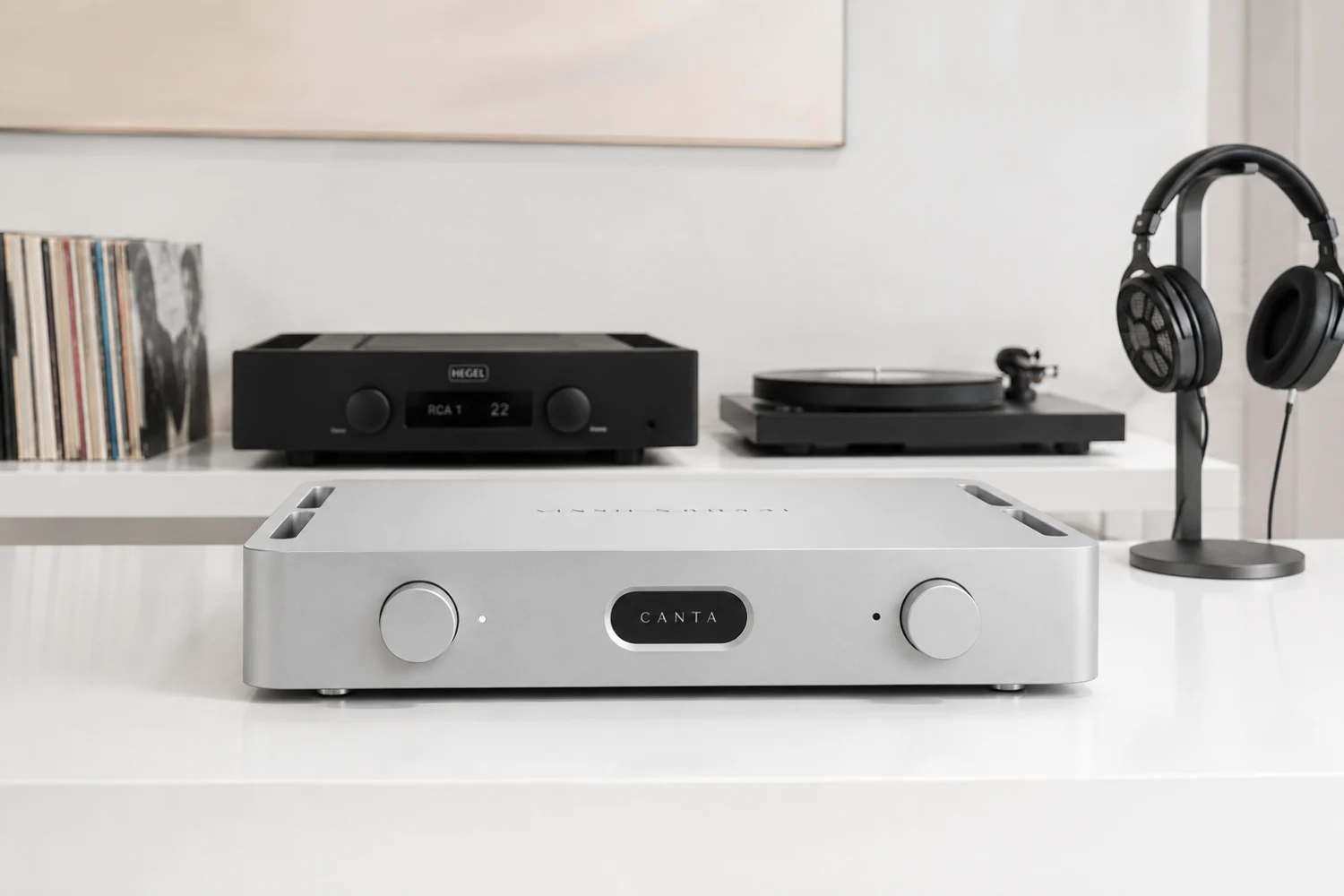
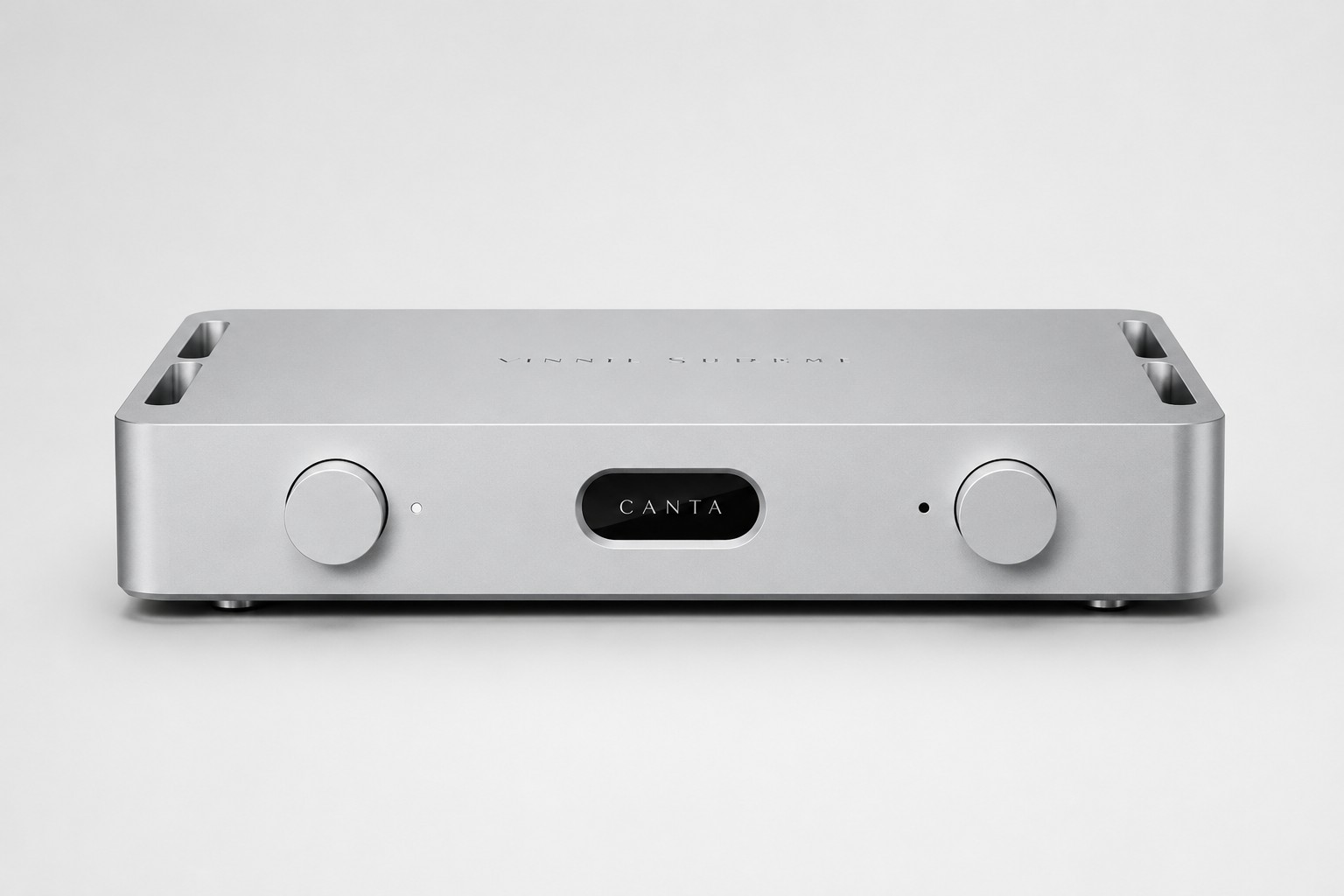
Vinnie Rossi has introduced the CANTA, a phono preamplifier designed to accommodate both moving-magnet and moving-coil cartridges. Its core features include a fully discrete JFET input stage, dual-mono construction, balanced and unbalanced connectivity, and adjustable gain and loading.
Discrete JFET input stage and dual-mono design
At the center of the CANTA is a fully discrete input stage built around JFET devices. This circuit is paired with a dual-mono architecture, giving the left and right channels separate signal paths within the phono preamplifier.
Vinnie Rossi says the design is intended to deliver low noise, wide bandwidth and strong channel separation. These priorities are particularly relevant in a phono stage, which must amplify the relatively small electrical signal produced by a turntable cartridge before it can be passed to the rest of an audio system.
The company also emphasizes the preservation of detail, dynamics and spatial information at lower playback levels. No listening comparisons or measured performance figures have been provided, but the stated design approach places signal integrity and channel separation at the forefront of the CANTA’s positioning.
Four gain settings for moving-magnet cartridges
For moving-magnet cartridges, the CANTA provides four gain choices: 36, 40, 46 and 52 dB. The range gives owners several options for matching the phono stage to the output level of a particular MM cartridge and to the gain structure of the connected amplifier.
Capacitive loading can also be adjusted between 100 and 400 pF. Cartridge manufacturers commonly specify a preferred loading range, so the ability to alter capacitance allows the CANTA to be configured more precisely for different moving-magnet designs.
Together, the selectable gain and capacitance settings make the MM section suitable for systems that may use cartridges with differing electrical requirements. The supplied information does not specify the individual capacitance increments available within the stated range.
Expanded adjustment for moving-coil designs
Moving-coil cartridge support extends the CANTA’s flexibility further. MC gain can be set within a range of 56 to 72 dB, covering cartridges that require substantially more amplification than typical moving-magnet models.
Resistive loading for MC cartridges spans 10 to 1,000 ohms. This broad range is intended to accommodate the varying loading requirements found across moving-coil cartridge designs. Owners can therefore select a resistance that corresponds with the cartridge maker’s recommendations or their chosen system configuration.
The combination of adjustable MC gain and resistance makes cartridge matching a central part of the product’s design. Vinnie Rossi has not detailed the number of available steps within either range, so the announcement establishes the adjustment limits rather than a complete list of settings.
Balanced and unbalanced system connections
The CANTA supports both balanced and unbalanced connections, allowing it to integrate with a wider selection of amplifiers and audio systems. The announcement does not provide a full connector inventory, but the inclusion of both connection formats gives users a choice based on the interfaces available elsewhere in their setup.
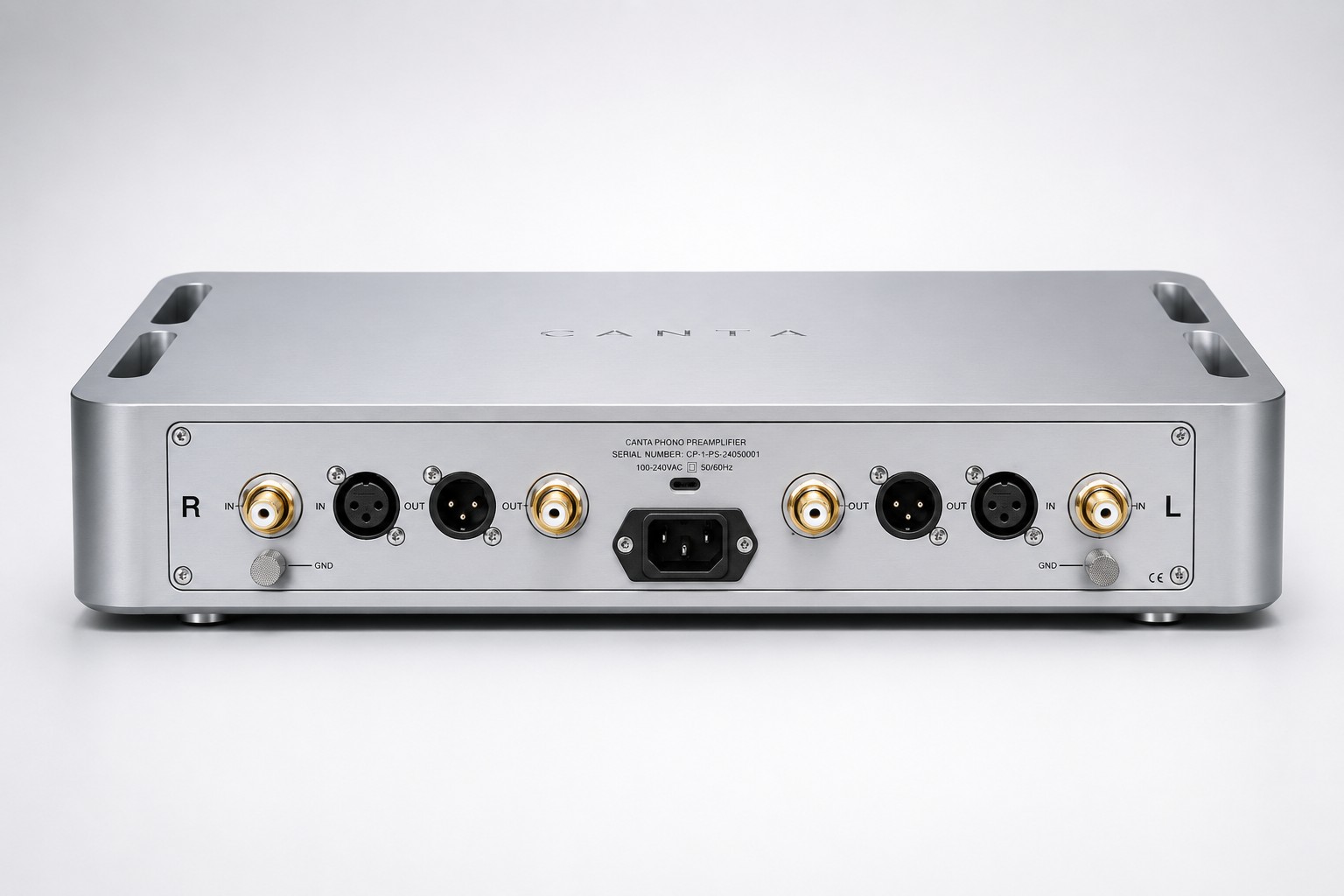
Vinnie Rossi has not supplied pricing or availability details in the provided announcement. The CANTA is positioned as a configurable phono preamplifier for vinyl systems that need compatibility with both major cartridge types, rather than requiring separate phono stages for MM and MC operation.
With its discrete JFET input stage, dual-mono architecture and broad adjustment ranges, the Vinnie Rossi CANTA focuses on flexible cartridge matching. Its selectable MM and MC parameters should make it adaptable to a variety of turntable configurations, while balanced and unbalanced connectivity expands its system-integration options.









 VS
VS VS
VS VS
VS VS
VS VS
VS VS
VS VS
VS VS
VS

Share your thoughts on this 0
Keep it civil, relevant and respectful.