
HeartField R1 Portable R2R DAC/Headphone Amplifier
The HeartField R1 is a compact portable headphone amplifier built around a fully discrete R2R digital-to-analog converter, with Type-C input, 3.5mm and 4.4mm headphone outputs, and a lightweight 19.8g body intended for phones, tablets, computers, and USB audio players.

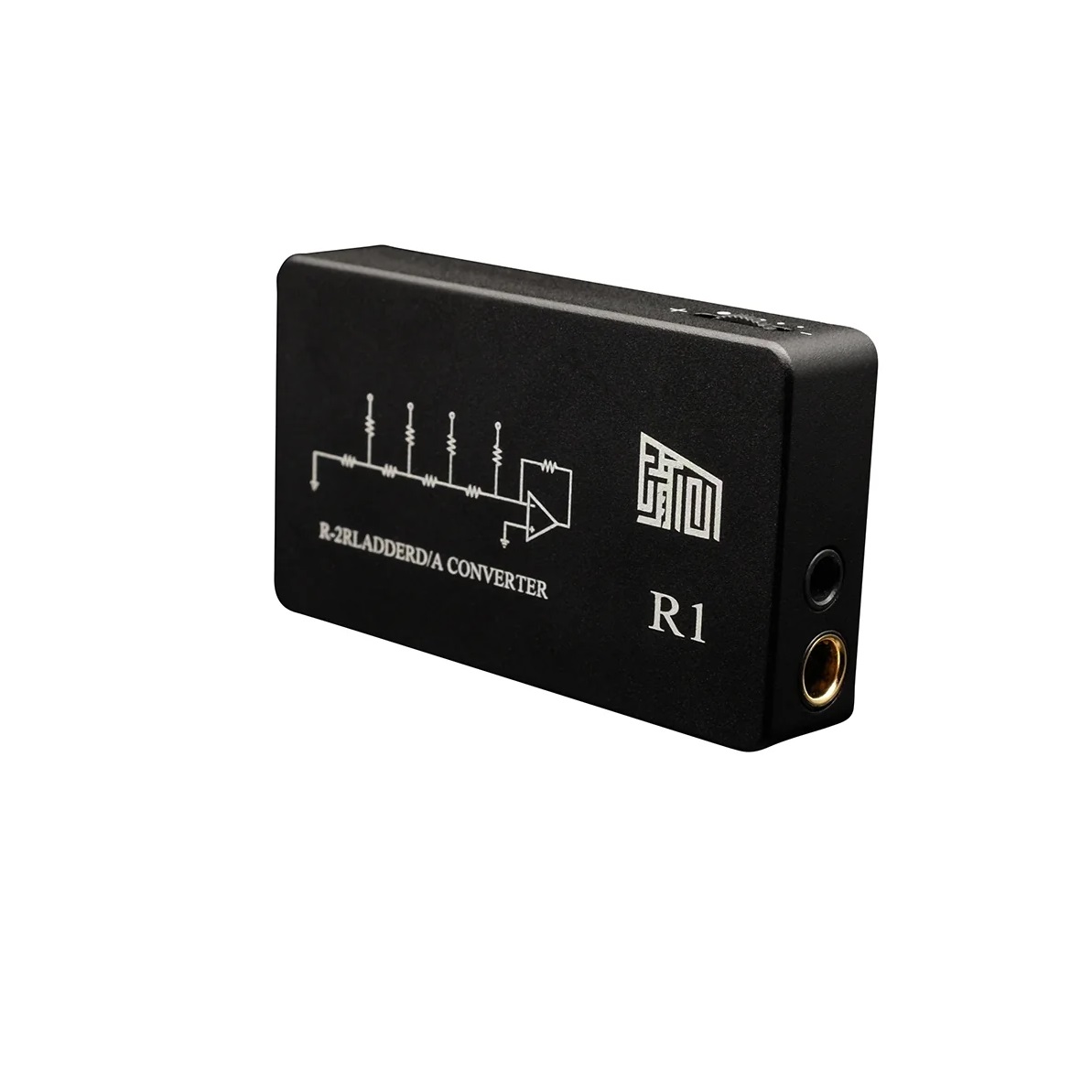
The HeartField R1 is aimed at a familiar modern listening problem: how to get a more purpose-built headphone output from devices that increasingly rely on USB audio. Rather than presenting itself simply as another small dongle-style DAC/amp, the R1’s central point of interest is its converter architecture. HeartField has built the unit around a fully discrete R2R digital-to-analog converter using 32 precision resistors per channel, for a total of 64 resistors. That makes the R1 distinctive among compact portable headphone amplifiers, especially for listeners who are specifically interested in resistor-ladder conversion rather than the more common Delta-Sigma or 1-bit DAC approaches. Its physical design is equally practical: at 19.8g excluding the connecting cable, and measuring 59.2mm x 33.5mm x 11.5mm, it is intended to travel easily with smartphones, tablets, computers, and compatible portable players.
A portable amplifier built around R2R conversion
The defining feature of the HeartField R1 is its R2R DAC. In an R2R converter, digital data is translated into analog form through a resistor network. This differs from Delta-Sigma and 1-bit converter technologies, which create analog signals by modulating digital data. For prospective owners, the attraction is not merely that the topology is different, but that it represents a more hardware-intensive approach to conversion, with the analog output derived from carefully matched resistor values.
HeartField’s implementation is described as fully discrete, with 32 ultra-precise resistors per channel. The total count of 64 resistors is central to the R1’s identity, and each resistor is specified with a 0.1% tolerance. In practical ownership terms, this matters because R2R conversion depends heavily on resistor precision. The closer the resistor values are to their intended values, the more accurately the ladder can perform its conversion task. HeartField’s decision to highlight tolerance and channel resistor count suggests that the R1 is meant to appeal to users who care about the engineering choices behind digital playback, not only the convenience of USB connectivity.
The source material also emphasizes that R2R conversion can reproduce constant-current DC signals and avoids certain errors associated with other conversion methods. Without making listening claims, this helps explain why some enthusiasts remain interested in R2R DACs: the topology has a directness and architectural clarity that can be compelling on paper, especially when implemented with discrete components rather than an integrated off-the-shelf converter solution.
A compact form factor that respects mobile devices
The R1’s portability is not just about being small enough to fit in a pocket. Its 19.8g weight is significant because portable USB DAC/amps are often used while physically hanging from a phone, tablet, or laptop port. Extra mass can place strain on the cable, the connector, and the device being used as the source. HeartField’s choice to keep the R1 extremely light makes it better suited to everyday mobile use, where the amplifier may be connected during commuting, working, travel, or casual listening at a desk.
The dimensions reinforce the same point. At 59.2mm long, 33.5mm wide, and 11.5mm thick, the R1 occupies very little space in a portable system. It is large enough to house its discrete R2R architecture and two headphone output options, yet small enough to remain in the same category of carry-anywhere audio accessories. That balance is important: a portable DAC/amp should not make a simple phone-and-headphones setup feel cumbersome.
This design direction also broadens the R1’s usability. A product that is light and compact is easier to move between devices, keep in a laptop bag, or use with more than one pair of headphones depending on the situation. The R1’s physical design is therefore not only a matter of convenience; it supports the product’s role as a flexible everyday audio interface.
Type-C input for modern source devices
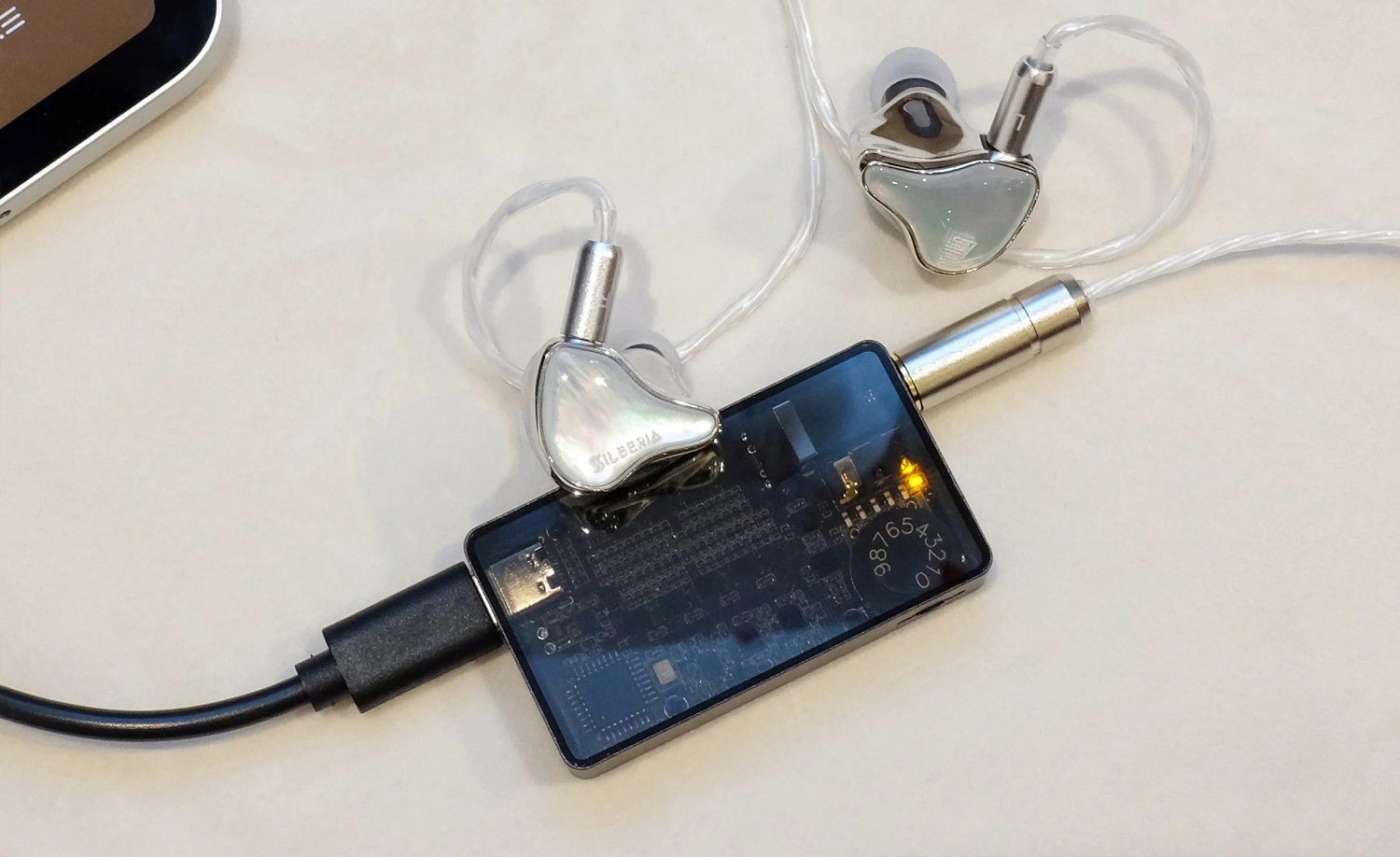
Connectivity on the input side is deliberately straightforward: the HeartField R1 uses a Type-C input. That makes sense for a portable DAC/headphone amplifier designed around current phones, tablets, computers, and portable players with USB audio output. Rather than relying on an analog headphone jack from the source device, the R1 receives digital audio over USB and performs the digital-to-analog conversion itself through its internal R2R DAC.
HeartField lists compatibility with Android smartphones and tablets, iPhone and iPad, Apple Mac and Windows PC, and portable players with USB audio output. That range of intended use is one of the R1’s strongest practical advantages. It is not tied to a single listening location or source category. A user could keep it with a phone for mobile listening, connect it to a laptop while working, or pair it with a portable player that supports USB audio output.
The Type-C input also keeps the product simple. There are no documented wireless features, network functions, desktop power supplies, or app-based controls to consider. The R1 is positioned as a direct digital audio accessory: connect a compatible source, use the appropriate headphone output, and let the device handle conversion and amplification. For many users, that simplicity is part of the appeal.
Two headphone output formats add practical flexibility
On the output side, the R1 provides both 3.5mm and 4.4mm connections. This is a useful pairing because many portable headphones and in-ear monitors still use 3.5mm plugs, while an increasing number of enthusiast headphone cables are available with 4.4mm termination. By including both, HeartField allows the R1 to fit into more than one portable headphone setup without requiring the owner to commit to a single cable format.
The 3.5mm output is especially important for broad compatibility. It remains the most common analog headphone connector for portable audio products, and its inclusion means the R1 can work with a wide range of headphones, earphones, and cables. The 4.4mm output gives the unit additional appeal for users who already own, or plan to use, headphones and cables terminated in that format.
Because the available material does not provide output power figures, impedance recommendations, or gain settings, it is best to view the R1’s headphone matching in terms of connector flexibility rather than specific drive capability. The documented strength here is clear: the product supports two common portable headphone connection standards in a very small chassis.
Tuning as part of the product identity
HeartField places emphasis on tuning, stating that technology alone does not define a hi-fi product. This is worth noting because the R1 could easily be described only by its R2R architecture, resistor count, and compact size. Instead, the company presents the product as the result of both engineering choices and subjective adjustment. That does not tell us how the R1 sounds, and it should not be treated as a substitute for independent listening, but it does reveal how HeartField wants the amplifier to be understood.
For a prospective owner, the relevance is that the R1 is not merely a specification exercise. The documented design language suggests that HeartField sees conversion architecture and tuning as complementary. The R2R ladder provides the technical basis, while tuning is presented as the step that shapes the final musical character. Without making claims about performance, this helps explain why the R1 may appeal to listeners who are drawn to products with a clearly defined design philosophy rather than anonymous USB audio accessories.
Who the HeartField R1 is most suitable for
The HeartField R1 is best suited to listeners who want a compact, wired, USB-based headphone DAC/amplifier and who are specifically intrigued by R2R conversion. It makes the most sense for people who move between devices: Android phones or tablets, iPhone or iPad, Mac or Windows computers, and portable players with USB audio output. Its low weight and small dimensions are particularly relevant for users who do not want a portable audio upgrade to become physically awkward.
It is also a good conceptual match for owners of headphones or in-ear monitors with either 3.5mm or 4.4mm termination, especially those who value a simple connection path and a highly portable form factor. The R1’s appeal is less about feature abundance and more about a focused combination of discrete conversion, compactness, and everyday device compatibility.
It may be less suitable for users who need documented desktop-grade power specifications, multiple digital inputs, wireless streaming, battery information, extensive controls, or detailed matching guidance for demanding headphones. Those elements are not part of the supplied information. The R1 should therefore be considered primarily as a lightweight portable Type-C DAC/headphone amplifier with a distinctive R2R design, rather than an all-purpose desktop hub.
Conclusion
The HeartField R1 stands out for combining a fully discrete R2R DAC architecture with a genuinely portable headphone amplifier format. Its 64-resistor design, 0.1% resistor tolerance, Type-C input, 3.5mm and 4.4mm outputs, and 19.8g chassis give it a clear identity: a compact wired audio interface for listeners who want resistor-ladder conversion in a travel-friendly form. It is most attractive for users who listen across phones, tablets, computers, and compatible portable players, and who value a focused, lightweight DAC/amp over a feature-heavy desktop component.