Soulnote A-0 ver.2: A Purist Integrated Amplifier Built Around Restraint
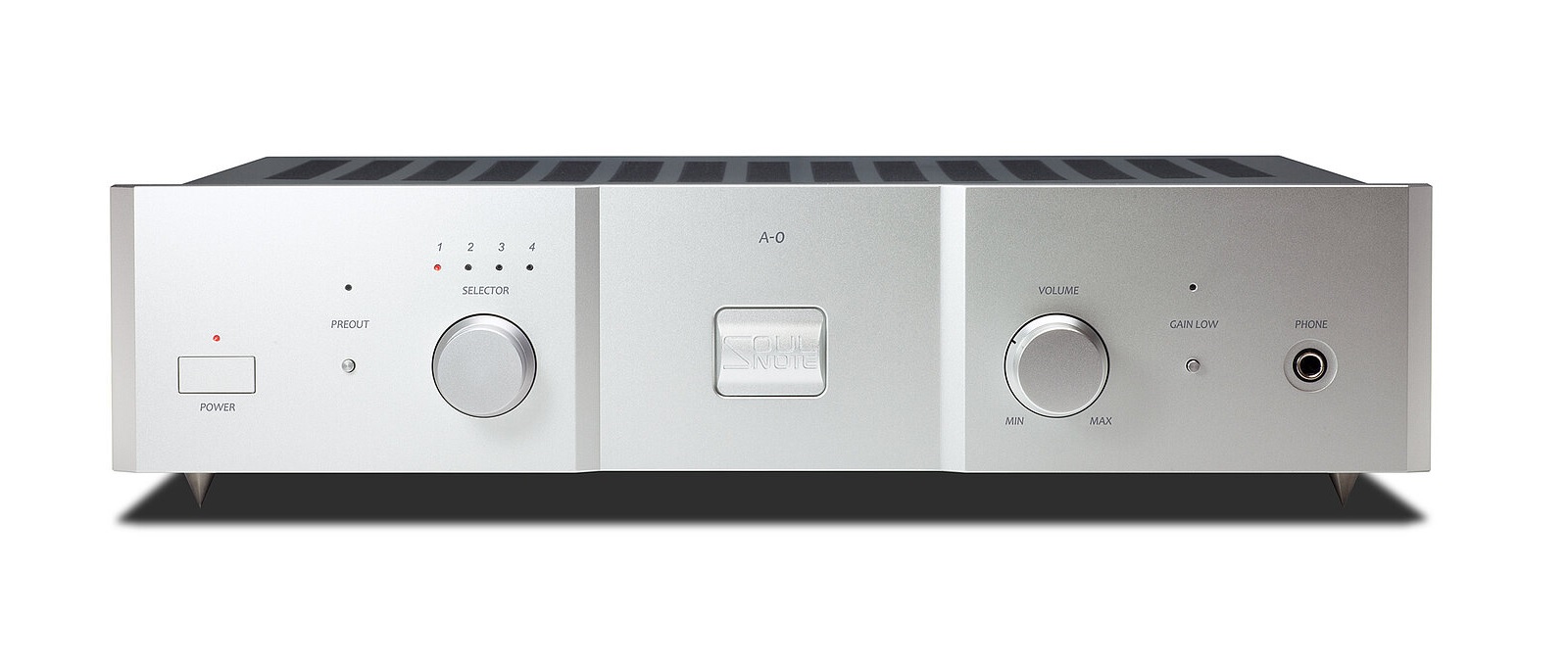
The Soulnote A-0 ver.2 is a compactly powered integrated amplifier with a deliberately minimalist signal path, fully discrete no-negative-feedback circuitry, wide bandwidth, headphone output, and flexible pre-outs for systems built around efficient loudspeakers.

The Soulnote A-0 ver.2 is not an integrated amplifier designed to win attention with a large power figure. Its stated output is 10 watts per channel into 8 ohms, which immediately places it in a different conversation from mainstream high-power integrated amplifiers. Instead, Soulnote’s design brief appears to be centered on reduction: fewer stages, a direct signal route, fully discrete circuitry, and an output stage intended to operate quickly and cleanly within a realistic domestic listening context. For listeners using efficient loudspeakers, especially in moderate-size rooms, that kind of design can be more relevant than a high headline wattage rating. The appeal of the A-0 ver.2 is therefore not excess, but focus.
A deliberately low-power amplifier
The most distinctive fact about the Soulnote A-0 ver.2 is its modest 2 x 10-watt output. In many hi-fi products, amplifier power is treated as a primary selling point, but here Soulnote has taken the opposite route. The amplifier is intended for situations where high sensitivity loudspeakers and sensible listening distances allow relatively low output power to be used effectively. That makes speaker matching more important than it would be with a more powerful integrated amplifier, but it also clarifies the product’s purpose.
This design direction may appeal to listeners who value a precisely defined operating envelope. Rather than carrying large unused power reserves, the A-0 ver.2 is positioned for realistic living-room levels with suitable speakers. Horn loudspeakers and other efficient designs are specifically the kind of partners where 10 watts can be meaningful. In that context, the amplifier’s power rating is not simply a limitation; it is part of the product’s identity and intended use case.
For a prospective owner, the practical question is not whether 10 watts is impressive on paper, but whether the complete system is appropriate. Room size, speaker sensitivity, listening distance, and preferred volume all matter. The A-0 ver.2 is a specialized integrated amplifier, and its appeal is strongest when those conditions are aligned.
A short and purist signal path
Soulnote’s architecture for the A-0 ver.2 emphasizes a streamlined path from input selection and volume control directly into the power amplifier. The idea is to use as few components as possible in the signal path, reducing the number of stages through which the signal must pass. This is a traditional purist principle, but it remains relevant because every additional stage in an amplifier has the potential to influence noise, timing, gain structure, and overall behavior.
For users who build systems around a small number of sources, such a direct architecture can be attractive. It suggests an amplifier made less for feature accumulation and more for preserving the relationship between source, volume control, amplifier, and loudspeaker. The A-0 ver.2 does not present itself as a hub overloaded with processing functions; its design centers on analog amplification and signal simplicity.
That restraint can also make system planning more intentional. A prospective owner is likely to pair the amplifier with source components chosen for their own quality and character, rather than relying on extensive built-in processing or corrective features. The benefit is a clearly defined role in the system: the A-0 ver.2 is there to select, attenuate, and amplify with minimal complication.
Fully discrete, no-negative-feedback circuitry
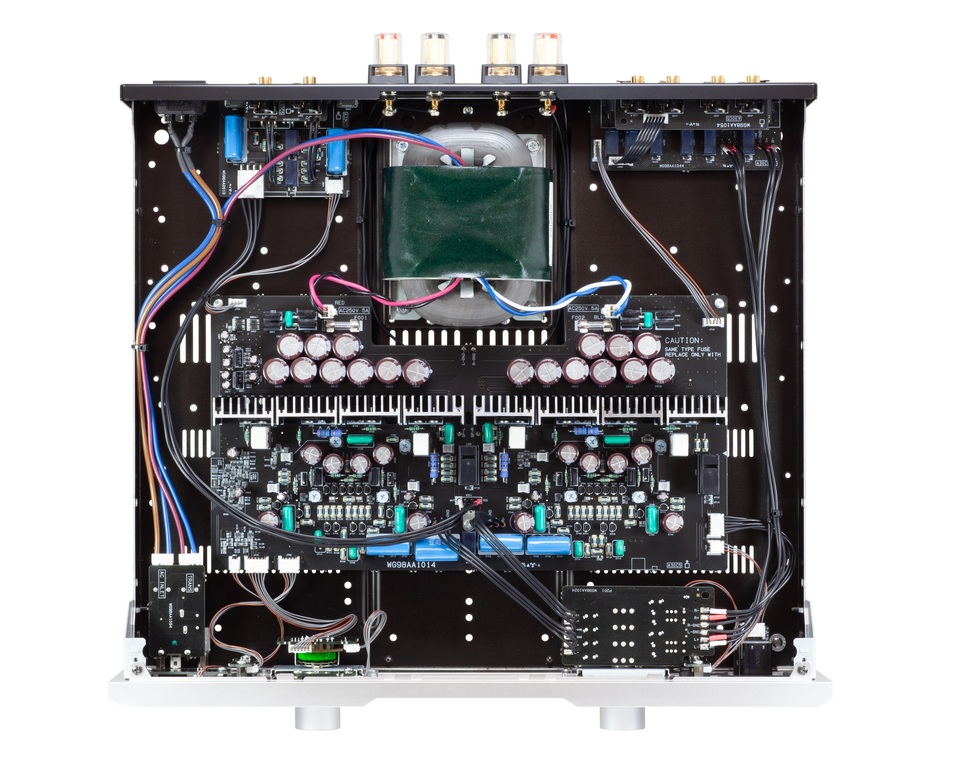
The A-0 ver.2 uses a fully discrete circuit and operates without negative feedback. Negative feedback is commonly used in amplifier design to reduce measured distortion and correct signal errors by feeding part of the output back to an earlier stage. Soulnote’s decision to avoid it reflects a different engineering philosophy, one that prioritizes direct signal transmission and avoids feedback loops as part of the amplifier’s sonic concept.
According to Soulnote, this no-negative-feedback approach is intended to support open transients, preserve micro-detail, and maintain the natural flow of music. Those are manufacturer claims rather than independently verified observations here, but they do explain the design rationale. In practical terms, the amplifier is aimed at listeners who are interested in immediacy, low-level detail, and the handling of subtle dynamic shifts rather than simply maximum power delivery.
The fully discrete implementation is also significant. Instead of relying on integrated amplifier modules for the main circuit, a discrete design allows the manufacturer to choose and configure individual components for the required operating behavior. That can matter in products where circuit layout, part selection, and the interaction between stages are central to the design philosophy.
Fast output devices and very wide bandwidth
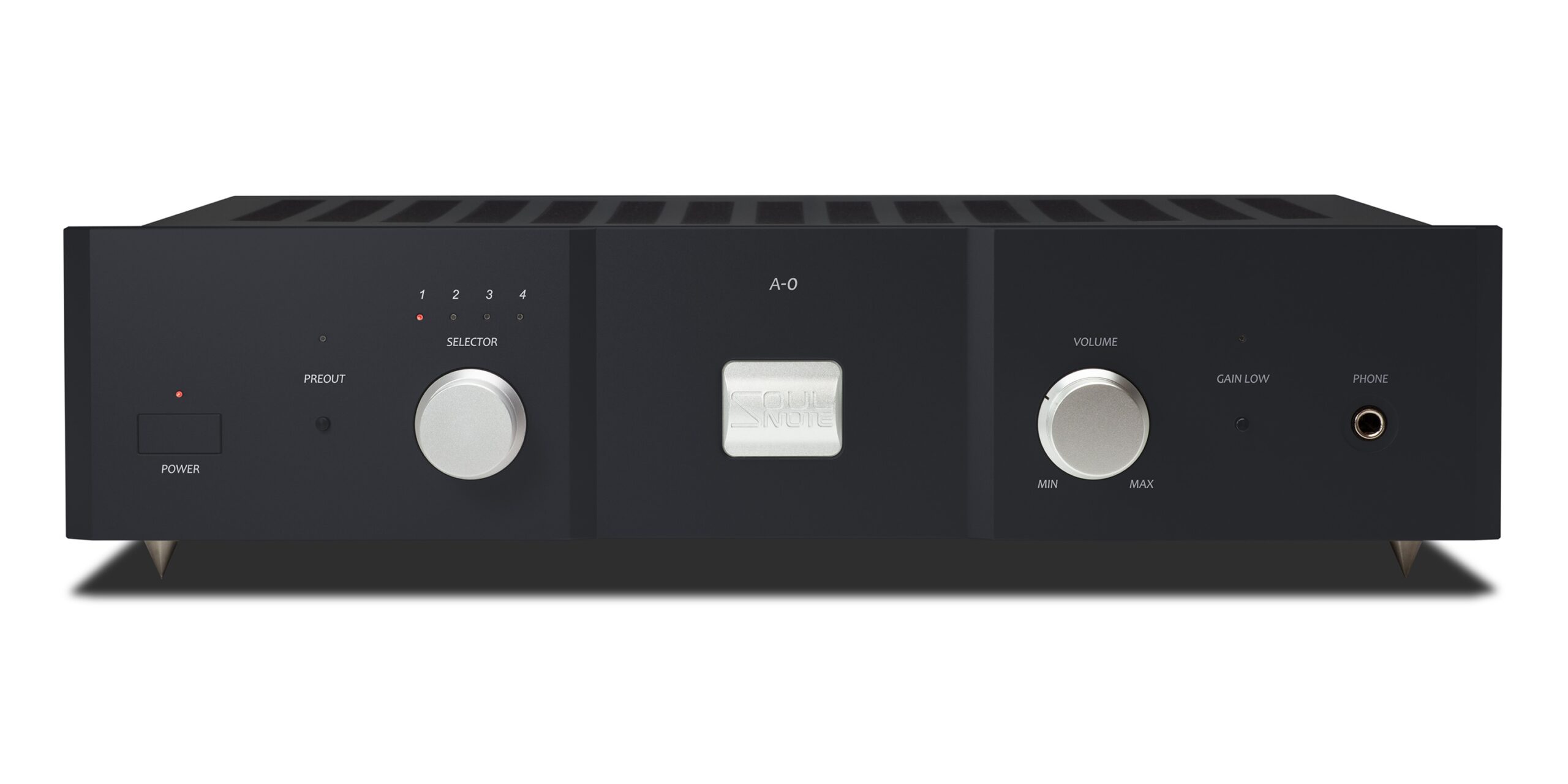
The output stage follows a single push-pull configuration using fast TO-220 transistors. The source material specifies that these transistors have low collector-base capacitance and respond quickly to signal changes. In amplifier design, the speed and behavior of output devices can influence how the circuit handles rapid transitions, especially when paired with a no-feedback topology where the circuit is not relying on feedback correction in the usual way.
The published frequency response figures also underline the wide-bandwidth approach. The speaker output is specified at 5 Hz to 350 kHz at 8 ohms / 1 watt, +0/-1 dB, while the headphone output is specified at 5 Hz to 400 kHz at 32 ohms / 200 mW, +0/-1 dB. These figures extend far beyond the audible range, so their importance is not that listeners hear 350 kHz or 400 kHz directly. Rather, wide bandwidth is often associated with an amplifier’s ability to avoid steep filtering within the audible band and to maintain stable behavior across a broad operating range.
For the listener, the relevance is conceptual and practical: Soulnote has not built the A-0 ver.2 merely as a low-power amplifier, but as a wide-bandwidth, fast-response design. That combination supports the product’s stated focus on timing, transient behavior, and fine detail.
Revised bias circuit for lower noise priorities
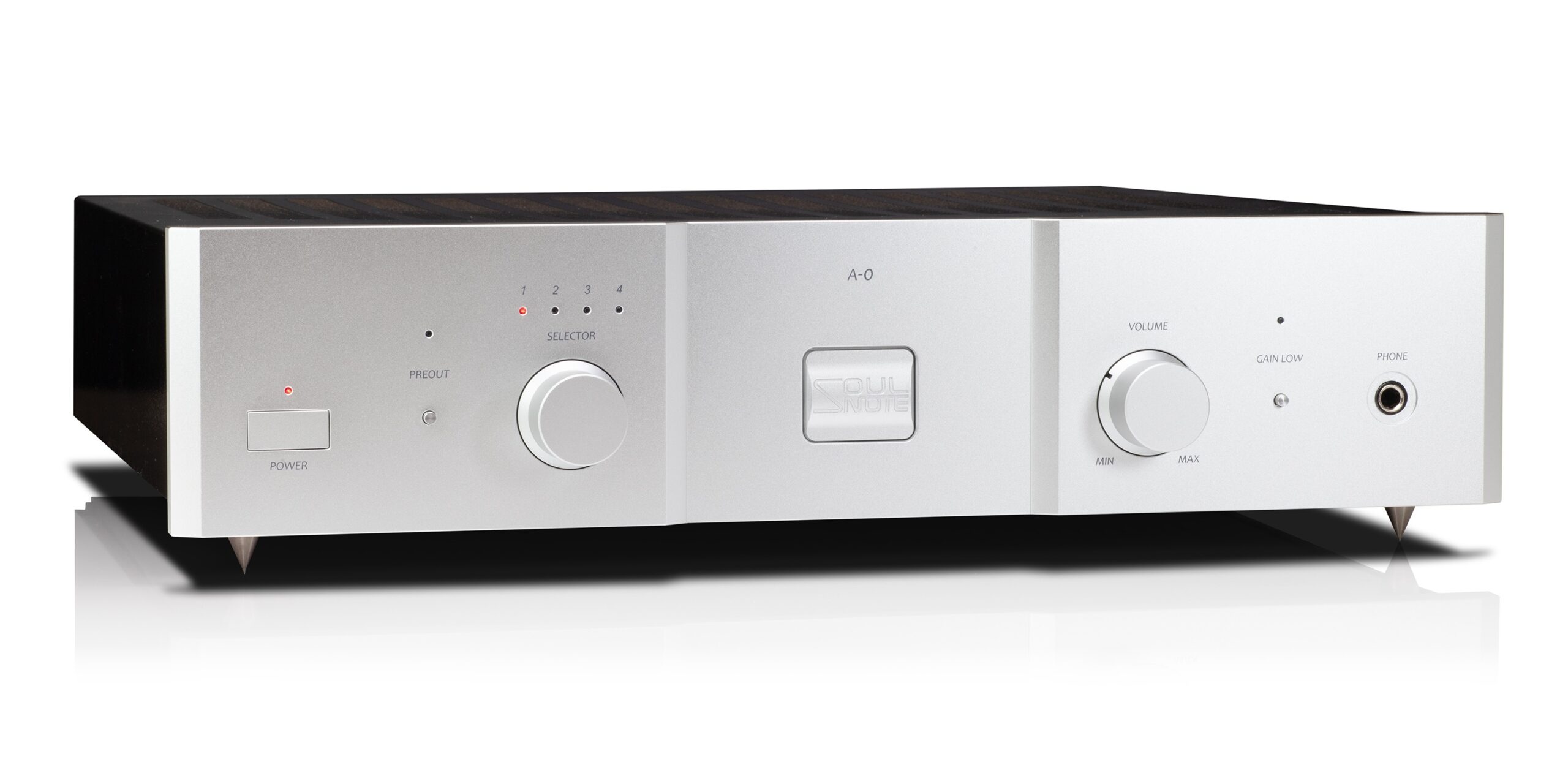
One of the updates in the A-0 ver.2 is a revised bias circuit. Bias refers to the operating state of the power amplifier when no music signal is present. Stable bias behavior is important because it affects how the amplifier transitions into signal reproduction and how quietly it operates at idle. Soulnote associates the revised bias circuit with reduced background noise and improved audibility of subtle nuances.
This is especially relevant in an amplifier designed around efficient speakers. High-sensitivity loudspeakers can reveal residual noise more readily than less efficient models, so a quiet operating platform is not a minor detail. For owners using horns or other sensitive designs, noise management can be central to day-to-day satisfaction. The A-0 ver.2’s updated bias circuit therefore fits naturally with its intended system context.
The specified signal-to-noise ratio is 115 dB, IHF A-weighted. While a single number does not define real-world system noise by itself, it indicates that low noise is part of the engineering package. Combined with the amplifier’s low-power, high-sensitivity-speaker orientation, the revised bias circuit is one of the more meaningful changes in this version.
Integrated headphone capability
The A-0 ver.2 is not limited to loudspeaker use. It includes a headphone amplifier section, specified at 3 watts per channel into 32 ohms. That is a substantial stated power figure for headphone listening, and it expands the amplifier’s usefulness in systems where speakers and headphones share the same main source chain.
The headphone section also carries its own gain specification: 8 dB for headphones, compared with 22 dB for the speaker outputs. This distinction matters because headphone listening typically requires a different gain structure from loudspeaker playback. Too much gain can make volume control less precise with sensitive headphones, while too little can restrict usable output with more demanding models. Soulnote’s separate headphone gain figure shows that the headphone function is not merely described as an afterthought in the specifications.
For a listener who wants a compact purist system without adding a separate headphone amplifier, this feature gives the A-0 ver.2 another practical role. It can support private listening while keeping the main amplification architecture consistent and uncluttered.
Pre-out flexibility for expanded systems
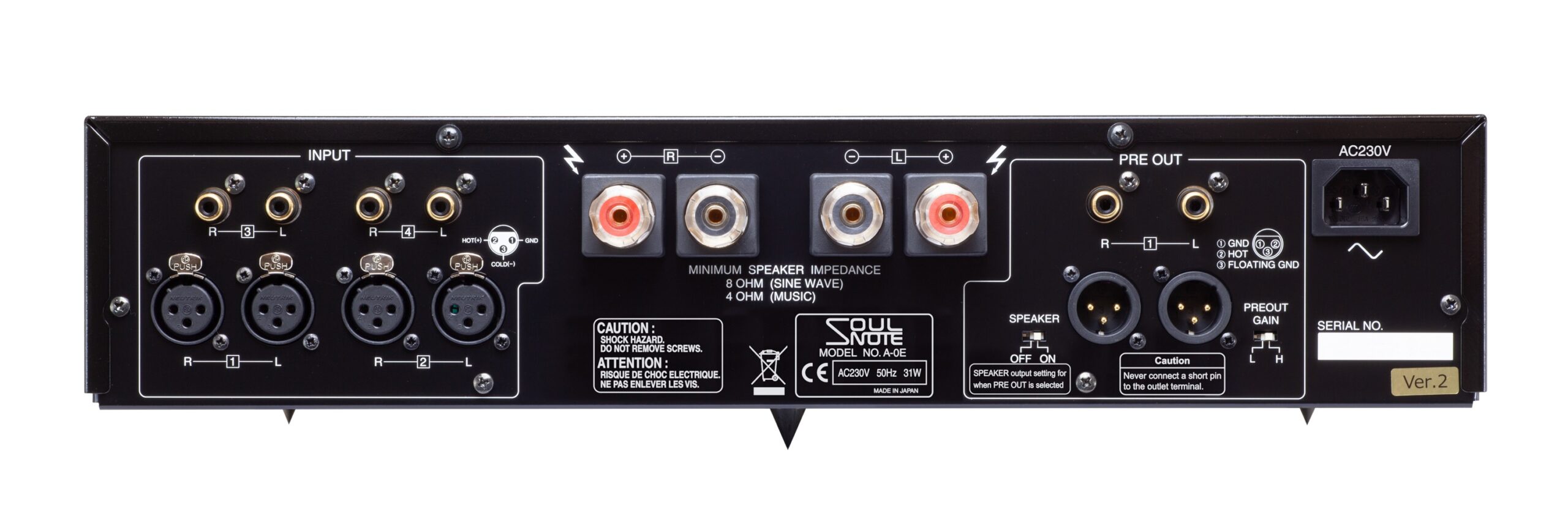
Although the A-0 ver.2 is presented as a purist integrated amplifier, it also offers pre-out functionality. The pre-outs are available via both RCA and XLR connectors, which is notable because it allows the amplifier to interact with a wider range of downstream equipment. Users can connect external power amplifiers, active loudspeakers, or subwoofers, depending on system requirements.
Two level modes are provided for the pre-outs, allowing better adaptation to different connected devices. This is a useful form of flexibility because active speakers, subwoofers, and external power amplifiers can have different input sensitivity requirements. A fixed-output approach would be simpler, but less adaptable. By including level modes, Soulnote gives the A-0 ver.2 a role beyond a conventional low-power integrated amplifier.
This flexibility also helps protect the product’s long-term usefulness. An owner may begin with efficient passive loudspeakers, then later add a subwoofer, try active speakers, or use the A-0 ver.2 primarily as a preamplifier. The availability of both RCA and XLR pre-outs makes those system paths more plausible without abandoning the amplifier’s minimalist core.
Conclusion
The Soulnote A-0 ver.2 is most suitable for listeners who understand the value and limits of a focused low-power amplifier. Its strongest documented qualities are its fully discrete no-negative-feedback circuit, direct signal path, fast single push-pull output stage, revised bias circuit, very wide specified bandwidth, headphone output, and flexible RCA/XLR pre-outs. It is not aimed at owners who need high wattage for insensitive speakers, very large rooms, or consistently high playback levels. Its natural audience is the careful system builder using efficient loudspeakers, realistic listening levels, and a preference for simplicity over feature overload. In that setting, the A-0 ver.2 stands out as a purposeful integrated amplifier built around restraint, adaptability, and attention to low-level signal behavior.