TANCHJIM RITA: A Long-Running Wireless Headphone Built Around Practical Hi-Fi Features
The TANCHJIM RITA brings together hybrid active noise cancellation, LDAC Bluetooth, a beryllium-coated 40mm driver, app-based tuning, wired playback, and unusually long claimed battery life in an over-ear design aimed at everyday hi-fi use.

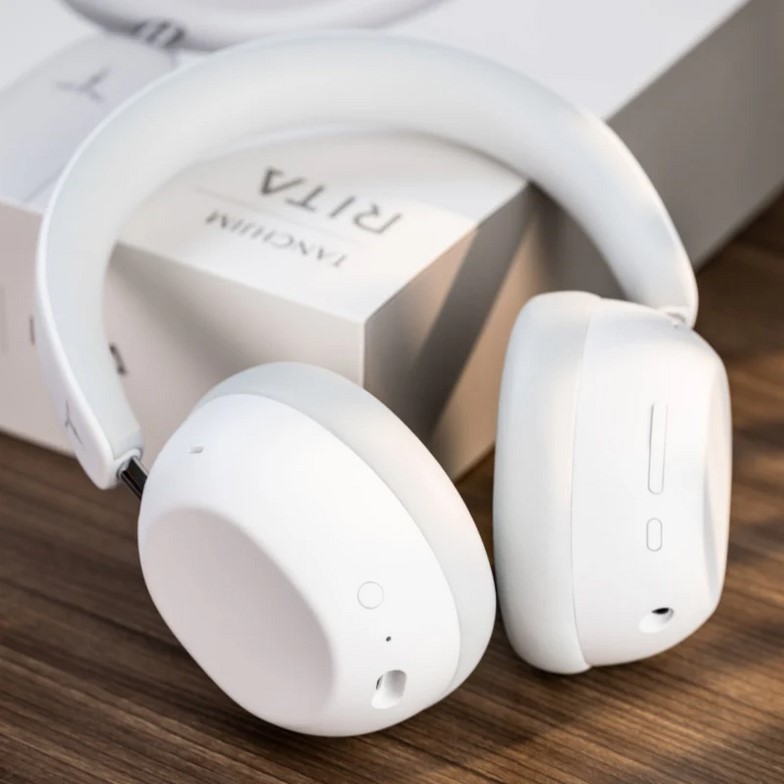
The TANCHJIM RITA is a full-size wireless headphone designed for listeners who want modern convenience without abandoning the priorities normally associated with hi-fi listening. It combines an over-ear closed-back format, hybrid active noise cancellation, high-bitrate Bluetooth support, app-based sound customization, a 3.5mm wired input, and a long-life 650 mAh battery. Rather than presenting itself as a narrowly specialized audiophile headphone or a purely travel-focused noise canceller, the RITA appears intended to sit between those worlds: suitable for home listening, office use, commuting, and longer sessions where battery life and comfort matter as much as codec support and driver design.
A driver design with hi-fi intent
At the center of the TANCHJIM RITA is a 40mm dynamic driver using a PET diaphragm with a beryllium coating. This is one of the more technically interesting choices in the design, because beryllium-coated diaphragms are often used where a manufacturer wants to improve stiffness without adding unnecessary mass. In a headphone driver, that stiffness-to-weight relationship can matter because the diaphragm needs to start and stop quickly while maintaining shape under movement.
TANCHJIM has not positioned the RITA simply as a Bluetooth convenience product. The use of a beryllium-coated 40mm driver suggests an emphasis on control and stability from the transducer itself, rather than relying only on digital processing. The PET base provides the diaphragm structure, while the beryllium coating is intended to improve rigidity. In principle, that kind of construction can help reduce unwanted breakup behavior at higher frequencies and support more predictable driver movement.
The RITA also includes a dedicated rear acoustic chamber behind the driver. This is a useful detail because closed-back wireless headphones can be challenging to tune: the space behind the diaphragm affects airflow, pressure behavior, and resonance control. By giving the driver an independent rear chamber, TANCHJIM is aiming to stabilize the environment in which the diaphragm operates. For a prospective owner, the important point is not a promise of a particular sound signature, but that the headphone’s acoustic system has been treated as part of the design rather than as an afterthought.
Hybrid ANC backed by a four-microphone system
Noise cancellation is a central part of the RITA’s everyday appeal. The headphone uses a hybrid active noise cancellation system with a dual-feedback architecture and a four-microphone array. In practical terms, this means the system monitors sound outside the earcups as well as sound conditions inside the earcups, allowing the noise-cancelling circuit to respond to the listening environment in real time.
TANCHJIM states that the RITA can reduce ambient noise by up to 47 dB. As with all active noise cancellation figures, real-world results will depend on the type of noise, fit, seal, and listening conditions. Even so, the documented figure shows that ANC is not a minor add-on here; it is a major part of the product concept. For office users, public-transport listeners, and anyone who wants lower background noise without raising playback volume, that level of ANC ambition is relevant.
The closed-back construction and earcup seal also contribute passive isolation, so the RITA does not depend entirely on electronics to reduce outside noise. This combination of passive isolation and hybrid ANC is useful because different types of noise are handled in different ways. Physical isolation can reduce some environmental sound before the ANC circuit acts, while active cancellation is particularly helpful with steady low-frequency noise. TANCHJIM also notes an effort to keep ear pressure to a minimum during long sessions, an important consideration for listeners who find some ANC headphones fatiguing over time.

Bluetooth 6.0, LDAC, and wired playback
The RITA’s wireless platform is built around Bluetooth 6.0 and supports SBC, AAC, and LDAC codecs. SBC and AAC provide broad compatibility across common phones, tablets, computers, and portable players, while LDAC is the most notable inclusion for listeners who use compatible Android devices or other LDAC-capable sources. LDAC allows higher-bitrate wireless transmission than standard Bluetooth codecs, making it attractive to users who want a wireless connection that is less limiting than the baseline options.
Codec support is only one part of a wireless headphone, but it can influence how flexible the product feels in daily use. With SBC and AAC, the RITA can operate with mainstream devices. With LDAC, it can take advantage of a higher-bitrate path when the source allows it. This makes the headphone more adaptable across different systems, whether the owner is listening from a smartphone on the move, a laptop at a desk, or a compatible digital audio player.
The inclusion of a standard 3.5mm input is also important. Many wireless headphones now treat wired use as secondary or omit it entirely, but a physical input gives the RITA an extra layer of practicality. Wired playback can be useful when Bluetooth is unavailable, when a user wants to connect to in-flight entertainment or desktop equipment, or when preserving battery power is a priority. It also makes the headphone less dependent on a single operating mode, which is valuable for a product intended for both home and mobile use.
App control and sound customization
The TANCHJIM companion app adds another dimension to the RITA’s usability. Through the app, users can access EQ settings, DSP sound profiles, and other customization options. This matters because wireless headphones are often used in more varied situations than traditional home headphones: one listener may want a different balance for commuting than for quiet evening listening, and another may prefer a different presentation for podcasts, films, or music.
App-based EQ and DSP profiles do not replace the importance of the driver and acoustic design, but they do give the owner more control. For listeners who like to fine-tune tonal balance rather than accept a single factory tuning, the RITA’s app support makes the product more flexible. It also gives TANCHJIM a way to integrate software-side usability with the headphone’s hardware platform.
The key advantage is adjustability. A closed-back wireless headphone with ANC is often expected to handle many roles, and no single setting is likely to satisfy every listener in every environment. The ability to select profiles or apply EQ can make the RITA easier to integrate into daily routines without requiring separate headphones for different listening situations.
Battery life suited to long daily use
Battery performance is one of the RITA’s strongest documented features. TANCHJIM claims up to 92 hours of playback with ANC switched off and around 51.5 hours with ANC active. Those figures, supported by the built-in 650 mAh battery, position the headphone as a strong candidate for listeners who do not want to think about charging every day.
The difference between ANC-off and ANC-on runtime is also useful to understand. When noise cancellation is active, the headphone’s microphones and processing circuitry draw additional power, reducing battery life. Even so, a claimed 51.5 hours with ANC enabled is substantial for extended commuting, office use, travel, or multi-day listening between charges. For users who mainly listen at home or in quieter places with ANC disabled, the claimed 92-hour figure provides an even larger margin.
Charging is handled by USB-C, which is now the most practical standard for portable audio products. This improves day-to-day convenience because the same cable type may already be used for phones, tablets, laptops, or other accessories. Combined with the long claimed runtime, USB-C charging supports the RITA’s role as a low-maintenance everyday headphone rather than a device that needs constant battery attention.
Comfort-oriented construction and fit flexibility
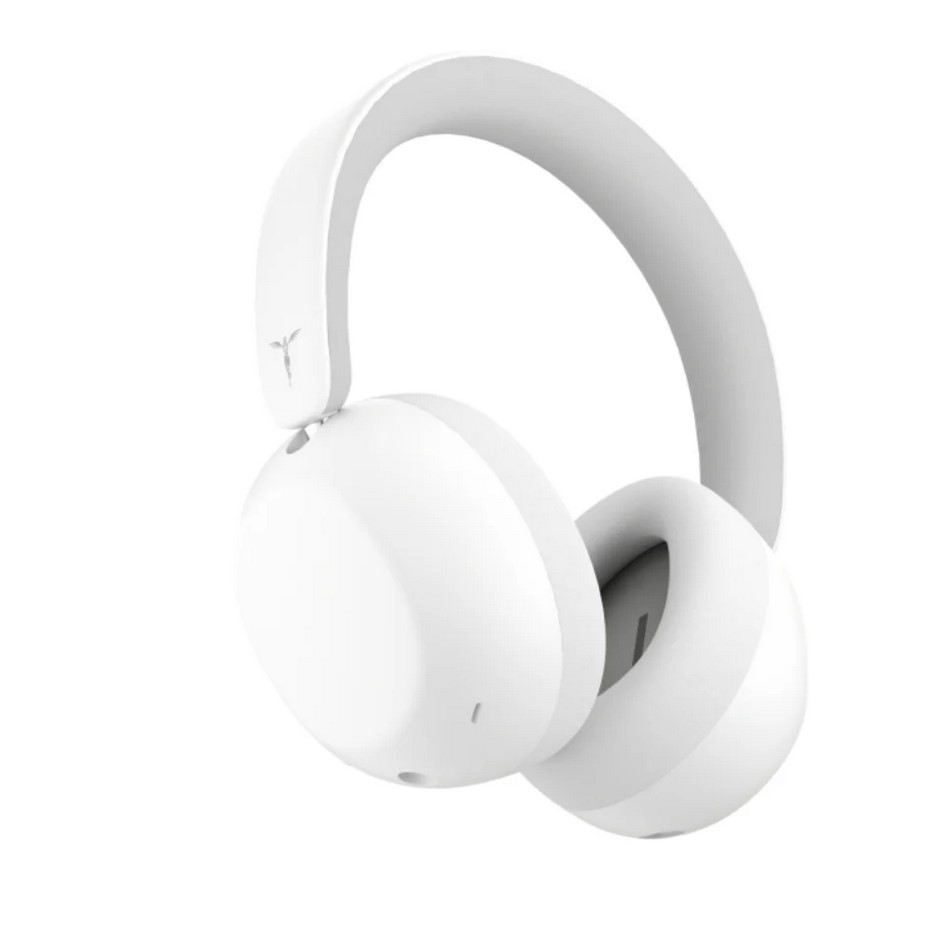
The RITA is built as an over-ear headphone with soft synthetic leather earpads and dense foam. This design is intended to create a comfortable seal around the ears, which is important both for passive isolation and for consistent acoustic performance. A good seal can also help the active noise cancellation system work more effectively, since leaks around the pad can reduce isolation and change the way the earcup behaves.
TANCHJIM uses a metal headband and a multi-motion hinge structure. The metal headband suggests attention to durability, while the hinge system is meant to improve fit across different head shapes. Fit is not a minor detail with an ANC headphone: comfort, isolation, bass consistency, and long-session wearability all depend heavily on how well the earcups sit around the ears.
The design emphasis here is practical rather than decorative. Synthetic leather pads, dense foam, a closed-back shell, and a flexible hinge mechanism are all choices that support daily use. For listeners wearing headphones at a desk, during travel, or across long listening sessions, these ergonomic details may matter as much as headline codec or driver specifications.
Who the TANCHJIM RITA is most suitable for
The RITA is best suited to listeners who want one wireless over-ear headphone to cover several roles. Its feature set makes sense for someone who needs active noise cancellation for commuting or office work, LDAC support for higher-bitrate wireless listening with compatible devices, and enough battery life to avoid frequent charging. The 3.5mm input also makes it appealing to users who still value wired compatibility alongside Bluetooth convenience.
It may also suit listeners who enjoy tailoring a headphone’s behavior through software. The companion app’s EQ and DSP options give users a degree of control that can be useful when switching between music, spoken-word content, travel, and home listening. The RITA’s combination of hardware design and app-based adjustment makes it particularly relevant for people who prefer flexibility over a fixed-use product.
The RITA may be less suitable for buyers looking for a purely passive wired headphone, an open-back home-listening design, or a product with a deliberately minimal feature set. Its identity is built around the combination of wireless operation, ANC, app control, long battery life, and closed-back portability. Those who do not need noise cancellation or Bluetooth may not use much of what makes it distinctive.
Conclusion
The TANCHJIM RITA stands out on paper through a well-rounded combination of documented features: a beryllium-coated 40mm dynamic driver, an independent rear acoustic chamber, hybrid ANC with a four-microphone system, Bluetooth 6.0 with LDAC support, app-based EQ and DSP profiles, USB-C charging, a 3.5mm wired input, and long claimed battery life of up to 92 hours with ANC off or 51.5 hours with ANC on. Its strongest appeal is not any single specification, but the way these elements work together to support everyday hi-fi-minded listening across home, office, and mobile use. For listeners who want a closed-back wireless headphone with noise cancellation, flexible connectivity, customization options, and extended runtime, the RITA is a thoughtfully equipped entrant in the full-size wireless category.