SVS 1000 Pro Series Subwoofers: App Control Meets Serious Low-Frequency Engineering
The SVS 1000 Pro series updates the brand’s entry subwoofer platform with a stronger amplifier architecture, advanced DSP, a newly designed long-excursion driver, and Bluetooth app-based tuning.

The SVS 1000 Pro series is built around a clear idea: make subwoofer setup and low-frequency control more sophisticated without turning everyday ownership into a technical exercise. SVS positions the range as a major update over earlier versions, with changes to the driver, amplifier, cabinet, and user experience. Those are not cosmetic areas. In a subwoofer, the way the amplifier controls the driver, the way the driver moves air, and the way the user can adjust the final result all have direct consequences for system matching and day-to-day usability. The 1000 Pro models bring several technologies associated with more advanced subwoofer platforms into a more accessible part of the SVS range, most notably Bluetooth app control and a DSP-based amplifier input stage.
A modern subwoofer built around control
The most important design theme in the SVS 1000 Pro series is control. Low bass is difficult to integrate well because the subwoofer, the room, and the main speakers all interact. Placement, crossover settings, phase, level, and room gain can change the perceived balance dramatically. A subwoofer that offers only basic rear-panel adjustments can still work well, but it often requires repeated trips between listening position and cabinet, plus a willingness to accept broad rather than precise adjustment.
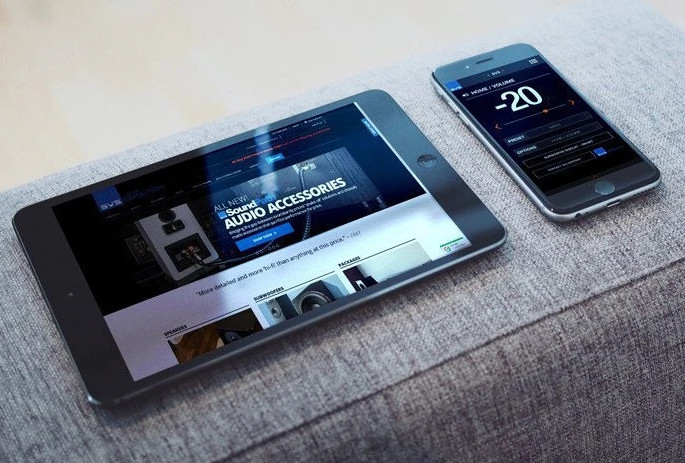
SVS addresses that ownership problem by giving the 1000 Pro series Bluetooth-based mobile app tuning. The ability to fine-tune the subwoofer from a downloadable app matters because the listening position is where bass integration has to be judged. Instead of making an adjustment behind the subwoofer, returning to the sofa, and repeating the process, the user can make changes remotely. That is especially useful in living rooms, theater rooms, and multi-use spaces where the subwoofer may be tucked near a wall, behind furniture, or in a corner.
The app-control approach also reflects a broader shift in subwoofer design. Performance is not only about producing deep bass; it is also about helping owners adapt that bass to real rooms and real systems. For many prospective buyers, this may be one of the most attractive aspects of the 1000 Pro concept: the hardware is supported by a more flexible setup experience.
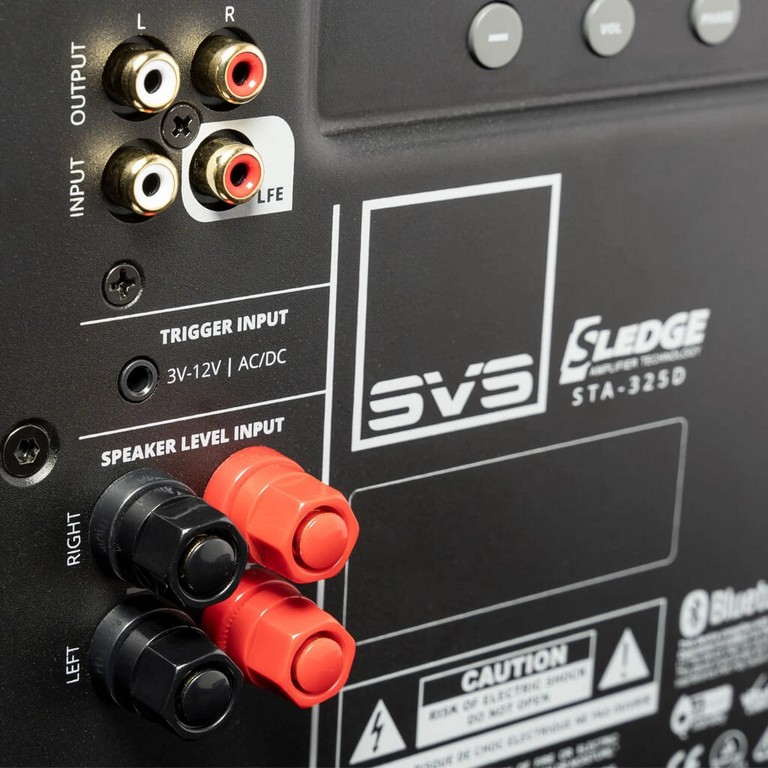
Sledge STA-325D amplification with efficient power delivery
At the heart of the 1000 Pro series is the Sledge STA-325D amplifier. SVS specifies this amplifier at 325 watts RMS and more than 820 watts peak power. Just as significant is the amplifier topology: it combines the high output current associated with discrete MOSFETs with the efficiency advantages of Class D operation. In practical system-design terms, this is a sensible pairing for a powered subwoofer, where the amplifier must deliver substantial current to control a driver over demanding low-frequency passages while remaining efficient enough for a compact, self-contained cabinet.
The published specification also emphasizes low distortion and precise driver control. In a subwoofer, driver control is central because the cone must start, stop, and sustain movement under high load. The amplifier is not simply a power source; it is part of the motor system. When a manufacturer discusses current delivery, efficiency, and control together, it points to a design intended to manage excursion rather than merely chase peak output figures.
This amplifier platform also gives the 1000 Pro series a useful position in a modern hi-fi or home-theater system. It is self-powered, so it does not ask anything from the main amplifier except a subwoofer signal feed. That makes the models relevant for AV receivers, stereo preamplifiers with subwoofer outputs, integrated amplifiers with suitable bass-management options, and other systems where low-frequency reinforcement is desired without replacing the main loudspeakers.
DSP processing as a core design element
The input stage of the Sledge amplifier uses an Analog Devices 50 MHz, 56-bit filtered audio processor. This is one of the more technically significant details in the 1000 Pro series because digital signal processing is where many modern subwoofers manage their operating behavior. DSP can be used to shape response, apply filtering, support user adjustments, and help maintain predictable performance from the driver and amplifier system.
The presence of a high-resolution DSP platform is especially relevant when combined with app-based control. A mobile interface is only useful if the subwoofer has the internal processing depth to respond meaningfully to adjustments. The 1000 Pro design connects the user-facing side of setup with the signal-processing side of the product, rather than treating the app as a superficial convenience.
SVS describes the series as having precise frequency response. For prospective owners, the important takeaway is not that the subwoofer will remove the need for careful setup, but that it has been designed with the tools necessary for more deliberate integration. Bass performance is strongly affected by room placement and system configuration, so precision in the electronics and processing provides a better foundation for final adjustment.
A newly designed driver for long-excursion bass
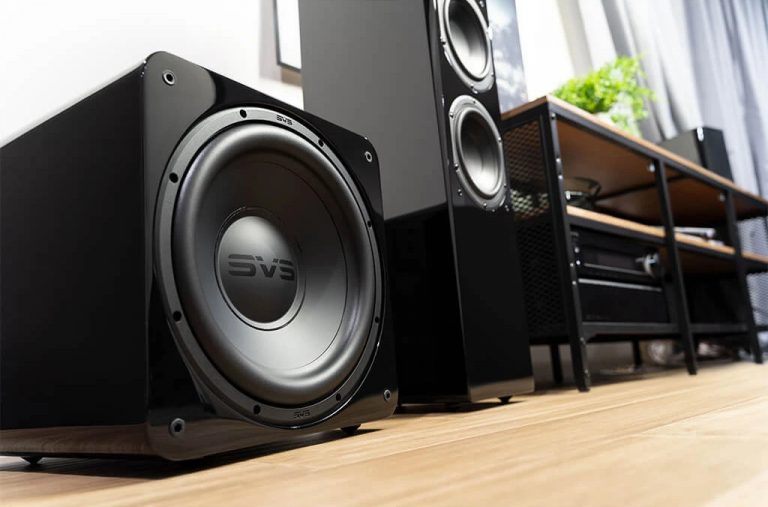
The driver in the SVS 1000 Pro series is also new, and its construction shows attention to the physical demands of low-frequency reproduction. SVS specifies a double ferrite magnet system and a long-travel parabolic suspension designed to support extreme excursions. Excursion is fundamental to subwoofer output: low frequencies require the driver to move significant air, and that means the cone must travel farther than a typical midrange or woofer in a main speaker.
The suspension design matters because it influences how the driver behaves at the limits of movement. A long-travel suspension is intended to allow greater movement while maintaining mechanical control. Paired with the amplifier’s emphasis on current delivery and driver control, this suggests that the 1000 Pro series was engineered as an amplifier-driver system rather than as a collection of unrelated parts.
The cone assembly is described as a light and rigid aluminum ventilated diffuser with a composite fiber dust cap. Lightness and rigidity are important design goals because a subwoofer cone must resist flexing while moving under load. Ventilation can also play a role in managing mechanical and thermal behavior around the driver assembly. The source details do not provide a full engineering breakdown, but the published construction choices point to a driver intended to balance strength, movement, and control.
Cabinet and user-experience upgrades
SVS identifies the cabinet as one of the areas improved in the 1000 Pro series. While the available details do not specify cabinet dimensions, finishes, or internal construction, it is still worth noting why cabinet development is important in a subwoofer. The cabinet has to contain the energy generated by the driver while minimizing unwanted resonance and maintaining the intended acoustic loading. In other words, the enclosure is not simply a box; it is part of the acoustic system.
The broader user-experience upgrade is easier to see through the Bluetooth app support. Subwoofers are often the most under-optimized component in a system because the setup process can be inconvenient. By placing key adjustments in a mobile app, SVS reduces friction for owners who want to make careful changes but do not want the process to feel like a workshop exercise. That can encourage better setup, especially in rooms where bass is uneven or where the main speakers need careful blending with the subwoofer.
This approach also helps the 1000 Pro series serve both two-channel and home-theater users. In a stereo system, the priority may be seamless extension below the main speakers. In a theater system, the subwoofer may be asked to handle dedicated low-frequency effects as well as bass management from multiple channels. The documented control, amplification, and driver updates make the series relevant to both use cases without requiring the owner to treat it as a specialist-only product.
Who the SVS 1000 Pro series is most suitable for
The SVS 1000 Pro series is most suitable for listeners who want a powered subwoofer with meaningful adjustment options, modern control, and a more advanced amplifier and driver package than a basic add-on sub. It will likely appeal to home-theater owners who want controlled low-frequency output from a compact, self-powered platform, as well as stereo listeners who want to extend the bandwidth of standmount or floorstanding speakers while retaining the ability to fine-tune integration from the listening seat.
It is also a sensible match for users who are willing to spend time setting up a subwoofer properly. The Bluetooth app, DSP platform, and amplifier control are most valuable when the owner uses them to adapt the subwoofer to the room and main speakers. Someone who simply wants to plug in a subwoofer, set one level knob, and never revisit the setup may still benefit from the underlying engineering, but may not take full advantage of what distinguishes the 1000 Pro series.
The line is less about novelty for its own sake and more about practical flexibility. The strongest case for the 1000 Pro models is for systems where bass integration matters: apartments or living rooms where placement options are limited, media rooms where the subwoofer is not easily accessible, and mixed music/movie systems where different content can place different demands on the low end.
Conclusion
The SVS 1000 Pro series stands out for its combination of a Sledge STA-325D amplifier, 325 watts RMS and more than 820 watts peak power, advanced Analog Devices DSP, a newly designed long-excursion driver, and Bluetooth app-based tuning. Its most attractive quality is not any single specification, but the way those elements support a more controllable and user-friendly subwoofer experience. For prospective owners who want serious low-frequency capability with flexible setup from the listening position, the 1000 Pro series is a well-documented step forward in SVS’s subwoofer lineup.