Alsyvox Michelangelo: A Monumental Ribbon Loudspeaker Built Around Symmetry
The Alsyvox Michelangelo is a flagship ribbon loudspeaker system from Spain, built as a three-panel, fully symmetrical design with wide low-frequency ribbons, multiple mid and high-frequency emitters, first-order crossovers, and imposing physical scale.
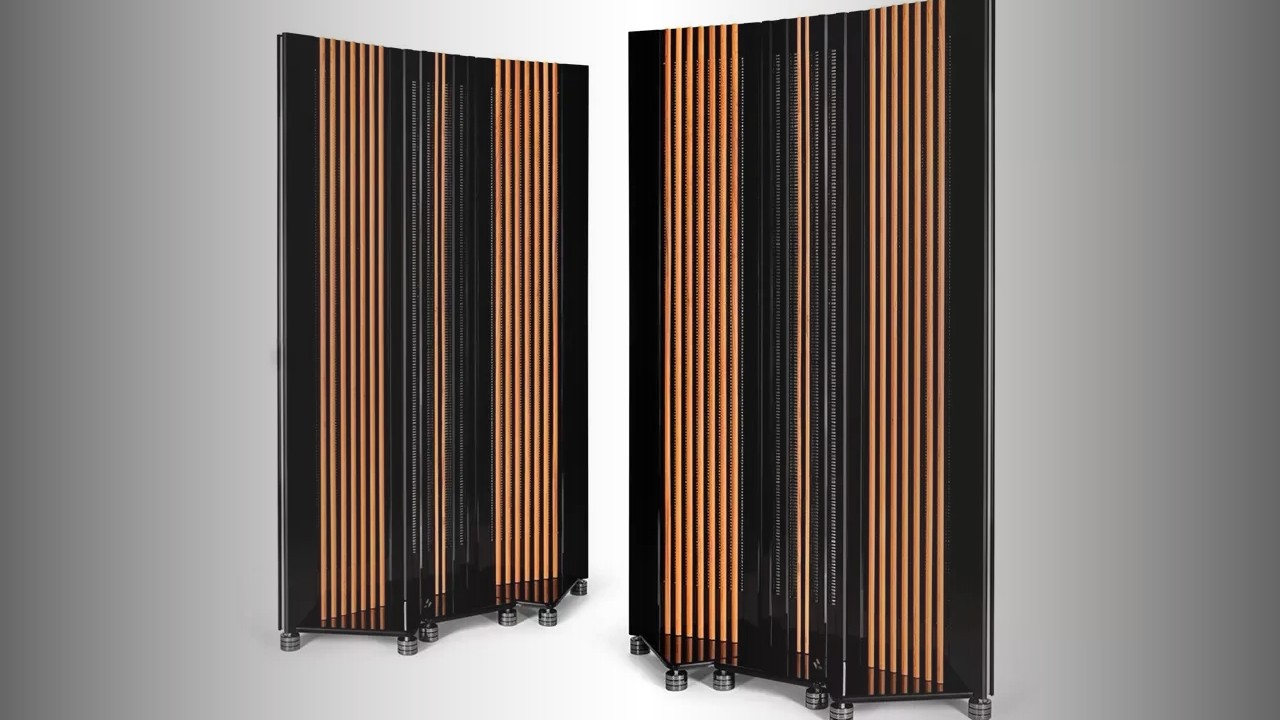
The Alsyvox Michelangelo is not a loudspeaker designed to disappear quietly into a room. It is a large-format, flagship acoustic system from Spanish manufacturer Alsyvox Audio Design, a company focused on ribbon emitter-based loudspeakers. What makes the Michelangelo especially interesting is not only its scale, but the way that scale is organized: each speaker system is built from three panels in a completely symmetrical arrangement, with dedicated ribbon elements for low, mid, high, and super-high frequencies. For prospective owners of ambitious two-channel systems, the Michelangelo presents a clear design proposition. It aims to combine the speed and radiating characteristics associated with ribbon technology with wide bandwidth, high sensitivity, and a physically expansive architecture intended for serious listening spaces. Its appeal lies in the coherence of the concept: a speaker that does not merely use a ribbon tweeter, but extends the ribbon principle across the whole frequency range.
A flagship built around ribbon architecture
Many loudspeakers use a ribbon or ribbon-like driver only for treble duties. The Michelangelo is different in that its identity is based on ribbon emitters throughout the system. Each speaker consists of three panels, and the low-frequency section uses two flat ribbon bass drivers, each 320 mm wide. That choice is central to the product’s character as a design object and as an engineering statement. Instead of relying on conventional cone woofers for the foundation, Alsyvox has pursued a more unified ribbon-based approach.
For a prospective owner, this matters because it reflects a particular philosophy of loudspeaker design. A system built around a consistent transducer family can be attractive to listeners who value the idea of shared driver behavior across frequency bands, even though actual performance always depends on implementation, room setup, and matching electronics. The Michelangelo’s architecture is also visually legible: its broad panels and vertical arrangement make clear that this is a purpose-built acoustic system rather than a conventional box speaker with exotic parts added to it.
Symmetry as a design principle
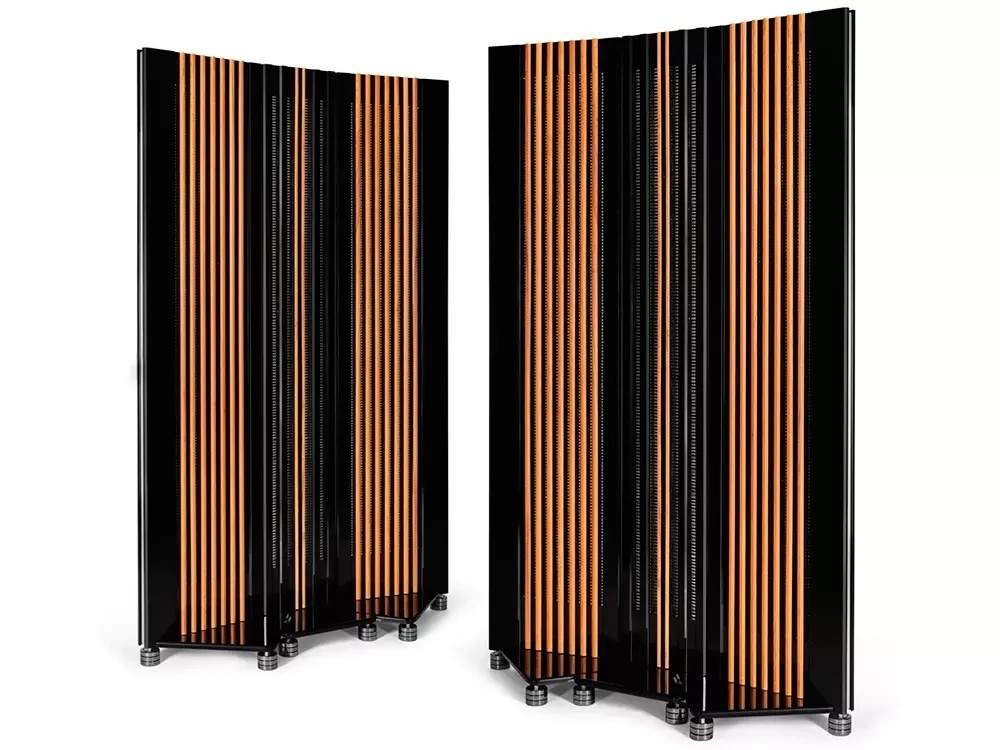
One of the most distinctive documented aspects of the Michelangelo is its completely symmetrical construction. The two 320 mm-wide low-frequency ribbons are positioned as part of a three-panel system, while the central section contains five additional ribbons. On the sides of this central component are two 45 mm-wide mid-range emitters. Moving inward, there are two 25 mm-wide high-frequency emitters, similar to those used in the Alsyvox Raffaello model. At the center sits a 9 mm-wide super high-frequency emitter.
This layout gives the Michelangelo a strong sense of order. Symmetry in a loudspeaker is not only an aesthetic decision; it can also be part of how a designer manages radiation, driver integration, and the relationship between frequency bands. Without making assumptions about measured behavior, the physical logic is easy to appreciate. The mid, high, and super-high elements are arranged around a central axis, while the bass ribbons are doubled within the system. The result is a product whose appearance closely follows its acoustic architecture.
Scale with a purpose
The Michelangelo is physically substantial. Each speaker measures 1,260 mm wide and 2,030 mm high, matching the height and width figures associated with Alsyvox’s Caravaggio and Raffaello models. Each speaker weighs 270 kg, and the crossover adds a further 70 kg. These numbers place the Michelangelo firmly in the category of loudspeakers that require planning, space, and commitment. This is not equipment that can be casually moved around or installed without thought.
That scale is part of the product’s appeal for the right user. Large panel loudspeakers can provide the surface area needed for ambitious full-range reproduction, and the Michelangelo’s design clearly prioritizes radiating area and structural presence. At the same time, the size has practical implications. Owners would need an appropriate listening room, a stable installation plan, and enough space to position the speakers correctly. The crossover’s separate 70 kg mass also signals that the system is conceived as a serious installation rather than a compact domestic convenience product.
Wide bandwidth and high documented sensitivity
The Michelangelo’s stated frequency response extends from 18 Hz to 40 kHz. On paper, that is a very wide operating range, reaching well into deep bass and extending beyond the upper limit of conventional human hearing. For a listener building a high-end system, wide bandwidth can be attractive because it suggests that the loudspeaker has been designed to operate as a full-range system without depending by default on additional bass reinforcement. The 18 Hz lower figure is particularly notable for a ribbon-based panel loudspeaker design.
The documented sensitivity ranges from 96 to 98 dB, depending on crossover settings. High sensitivity can be useful in system planning because it generally means a speaker requires less amplifier power to achieve a given sound pressure level than a lower-sensitivity design, although amplifier compatibility also depends on impedance behavior and other electrical factors not specified here. In practical terms, the Michelangelo’s sensitivity figure broadens the conversation around suitable amplification, but it does not remove the need for careful matching. A loudspeaker of this scale and ambition deserves electronics chosen for stability, quality, and compatibility, not power rating alone.
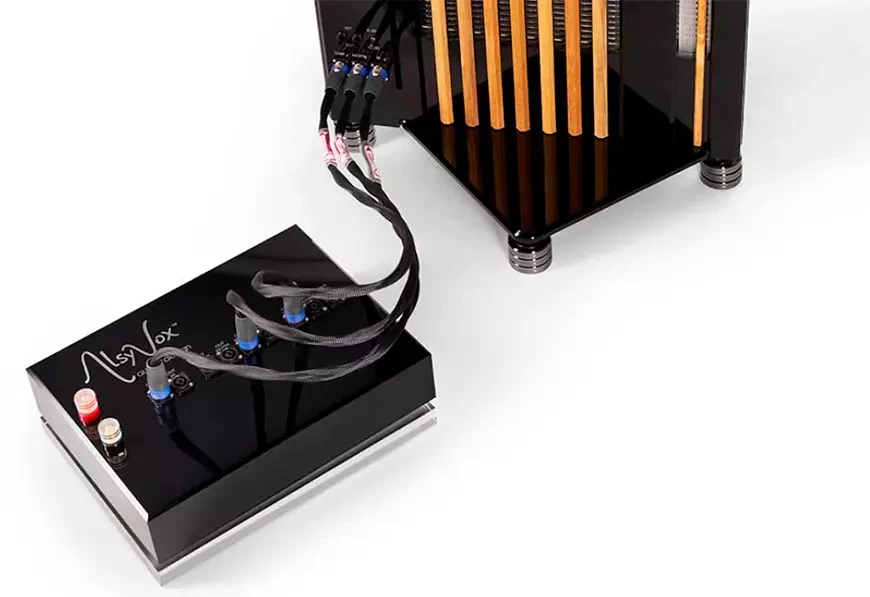
First-order crossover choices
The Michelangelo uses crossover frequencies at 500 Hz, 1.5 kHz, and 4.8 kHz, with first-order filters. This is a notable design choice because first-order filtering is often associated with gradual slopes and an emphasis on phase behavior, though successful use depends heavily on driver capability and system integration. In the Michelangelo, the crossover network must coordinate low-frequency ribbons, mid-range ribbons, high-frequency ribbons, and the central super high-frequency emitter across a broad operating range.
The presence of a separate crossover weighing 70 kg also underlines the seriousness of the implementation. Even without additional internal details, that mass suggests a physically substantial crossover assembly rather than a minimal accessory. For prospective owners, this affects both performance expectations and installation logistics. The crossover is part of the loudspeaker system and must be accommodated accordingly, with attention to placement, cabling, access, and the overall layout of the listening room.
Relationship to the Alsyvox range
The Michelangelo is described as a design related to Alsyvox’s Caravaggio concept, effectively conceived as a double Caravaggio speaker. Its overall height and width are consistent with the Caravaggio and Raffaello models, while its driver complement and symmetrical three-panel execution define its position as a more ambitious flagship. The documented result is approximately 3 dB higher sensitivity, dynamics, and resolution compared with the referenced design basis.
This relationship matters because it gives context to the Michelangelo’s place in the Alsyvox lineup. It is not merely a larger cabinet or a cosmetic variation. The speaker’s identity is tied to an expanded ribbon architecture and a more complex driver arrangement. For an owner already interested in the Alsyvox approach, the Michelangelo represents the more maximal expression of that approach: greater scale, doubled low-frequency ribbon area, and a central array that incorporates mid, high, and super-high frequency elements in a carefully ordered format.
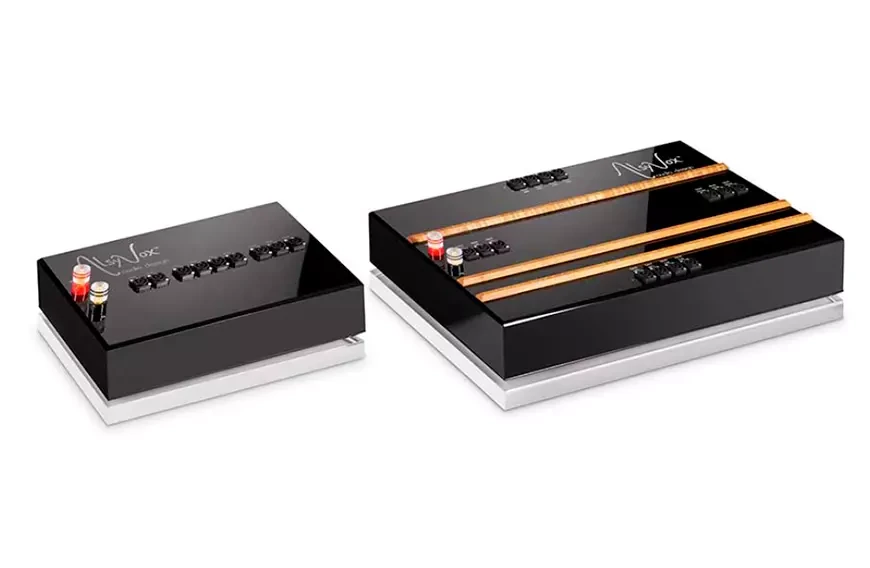
Who the Michelangelo is most suitable for
The Alsyvox Michelangelo is best suited to listeners and system builders who are already committed to a dedicated high-end listening environment. Its dimensions, weight, and separate crossover make it appropriate for a room where the loudspeakers can be treated as permanent or semi-permanent installations. It is also likely to appeal to those who are specifically drawn to ribbon-based loudspeaker design and who want that principle applied across the system rather than only in the treble range.
It is less suitable for owners seeking compactness, easy relocation, or a conventional box-speaker form factor. The Michelangelo asks for space, careful setup, and an overall system built with equal seriousness. Its high sensitivity may be useful when considering amplification, but the absence of published impedance details in the provided information means buyers should still approach matching thoughtfully. The ideal audience is not simply someone looking for a large loudspeaker; it is someone who values a highly specialized ribbon architecture, is prepared for the practical demands of a very substantial product, and has the room and system context to support it.
Conclusion
The Alsyvox Michelangelo stands out through its scale, symmetry, and commitment to ribbon emitter technology across the frequency spectrum. Its three-panel construction, dual 320 mm low-frequency ribbons, five-element central ribbon array, first-order crossover network, 18 Hz to 40 kHz stated frequency response, and 96 to 98 dB documented sensitivity all point to a loudspeaker conceived for ambitious full-range systems. Its strongest qualities are not convenience or understatement, but architectural clarity, specialist engineering, and a flagship-level interpretation of Alsyvox’s ribbon philosophy. For listeners with the space, installation planning, and system ambition to accommodate it, the Michelangelo is a distinctive high-end loudspeaker built for a serious dedicated environment.