Moonriver Audio SPDIF DAC Module: A Focused Digital Upgrade for the 404 Series
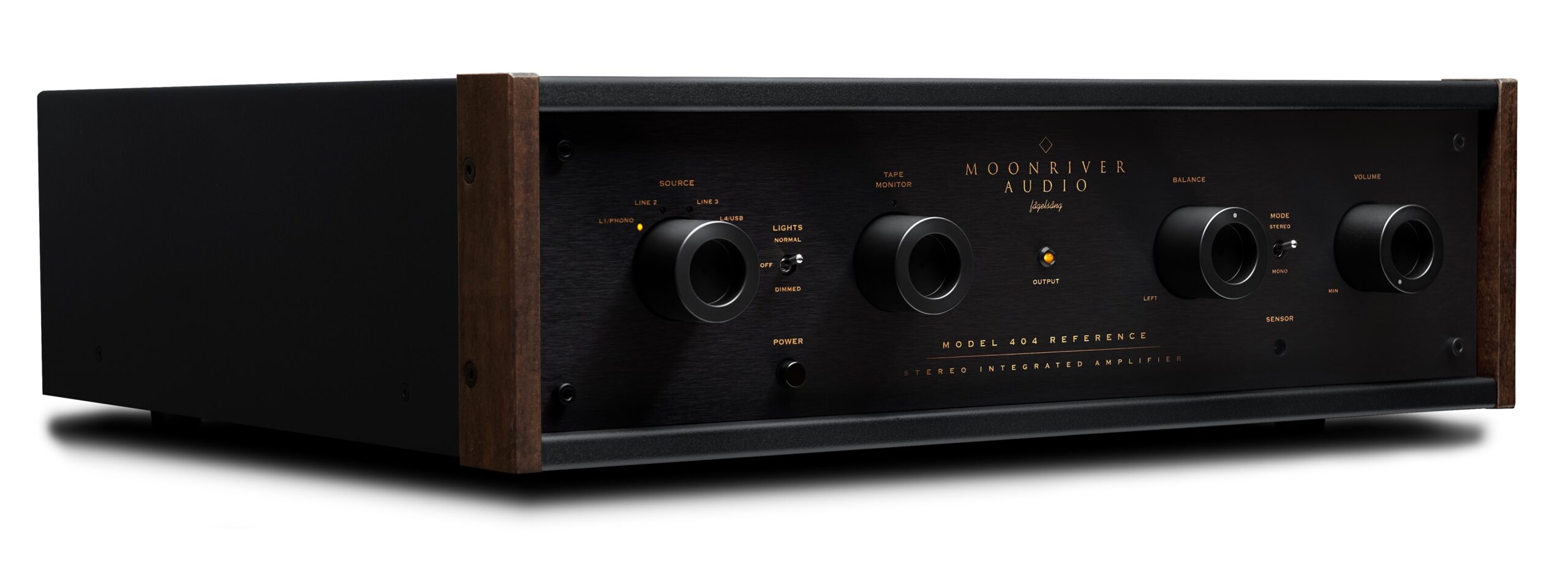
Designed for Moonriver Audio’s Model 404 and Model 404 Reference integrated amplifiers, the SPDIF DAC module adds a purpose-built coaxial digital input while preserving the amplifier-first character of the 404 platform.

Moonriver Audio’s SPDIF DAC module is a deliberately focused addition to the company’s Model 404 and Model 404 Reference integrated amplifiers. Rather than presenting itself as a universal digital hub, the module is designed as an internal upgrade for owners who want a clean, integrated route from a coaxial digital source into their 404-series amplifier. Its appeal lies in that specificity: one digital input format, a known amplifier platform, an ESS Sabre DAC chip from the 9000 series, and power-supply arrangements intended to support the conversion and analogue output stages inside the amplifier chassis.
A Digital Option Built Specifically for the 404 Platform
The most important thing to understand about this module is that it is not a stand-alone DAC and not a generic add-on intended for a broad range of amplifiers. It is made for installation in Moonriver Audio’s Model 404 and Model 404 Reference integrated amplifiers. That gives the design a clear role: to extend those amplifiers with a built-in S/PDIF digital input while keeping the system compact and visually uncluttered.
For a prospective owner of a Model 404 amplifier, that can be a meaningful advantage. Adding digital capability often means introducing another box, another power cable, another set of interconnects, and another place where system matching becomes a consideration. An internal module reduces that complexity. It places the digital-to-analogue conversion inside the amplifier ecosystem for which it was designed, turning the 404 into a more flexible control center without changing the core identity of the amplifier.
This approach also reflects a modular philosophy. Instead of forcing every 404-series buyer into the same feature set, Moonriver allows the amplifier to be configured around the user’s sources. Owners who rely entirely on analogue playback may not need the DAC option. Those with a digital transport, streamer with coaxial output, or other S/PDIF-equipped source can add the function in a way that is purpose-built for the amplifier.

One Coaxial S/PDIF Input, Clearly Defined
The module provides one coaxial Cinch connection for S/PDIF input. That single-input layout is simple, but it is also easy to understand. This is not a feature-stacked digital board with multiple socket types competing for space and attention. It is aimed at users who need one solid coaxial digital entry point into the amplifier.
Coaxial S/PDIF remains a common output format on many digital audio components, including CD transports, network streamers, and certain media players. For listeners with a source that already offers this output, the module creates a direct path into the Moonriver amplifier without requiring an external DAC between the two. That is especially useful in systems where the owner wants to preserve a tidy installation or reduce the number of separate components on the rack.
The supported signal format is PCM up to 24-bit/192 kHz, which Moonriver ties to the limitations of the coaxial S/PDIF specification. For many music libraries and digital sources, that ceiling covers a wide range of conventional high-resolution PCM playback. The module’s role is therefore not to chase every possible digital format, but to provide a capable and clearly specified S/PDIF input for the 404 series.

ESS Sabre Conversion at the Core
At the heart of the SPDIF DAC module is an ESS Sabre DAC chip from the 9000 series. The source material does not identify the exact chip model, so it would be inappropriate to infer additional specifications. What can be said is that Moonriver has chosen an established DAC-chip family for the conversion stage, placing the digital processing inside a module developed for its own amplifier architecture.
For a buyer, the significance is less about the chip name alone and more about how the module is implemented around it. A DAC chip is only one part of a complete digital-to-analogue circuit. Power supply, analogue output stage, board layout, and integration with the host amplifier all affect the final product design. Moonriver’s published information emphasizes those surrounding elements, suggesting that the module was conceived as a complete circuit rather than simply a digital input board attached to an amplifier.
This is particularly relevant in an integrated amplifier. Once the digital signal is converted, it must enter the analogue domain of the amplifier cleanly and in a manner consistent with the rest of the design. The use of an internal DAC module makes that handoff part of the amplifier’s own architecture rather than a cable-connected relationship between two separate products.

Power-Supply Attention Beyond the DAC Chip
Moonriver specifies three separate power supplies with low-noise circuits for the module. Two are used for the ESS DAC board, while a separate supply serves the analogue circuit. That separation is a practical design choice in digital audio, where different sections of a circuit can have different electrical demands and sensitivities. Keeping the analogue output stage supplied independently from the digital conversion board can help the designer manage noise and operating conditions more carefully.
The company also points to the amplifier’s substantial capacitor bank, citing 42,000 uF in the case of the Model 404 Reference power amplifier supply. Without adding unsupported claims about measured performance, this detail indicates that Moonriver is paying attention to how the module draws on the host amplifier’s power architecture. In an internal DAC module, power supply is not an afterthought; it is part of the reason the module can be more than a convenience feature.
For prospective owners, this matters because digital inputs built into amplifiers can vary widely in seriousness. Some are added mainly for utility. Moonriver’s description of separate low-noise supplies and analogue-stage power treatment suggests that the company wants the DAC section to be integrated with care rather than treated as a minor accessory.
Analogue Output Stage Tuned for the Moonriver Character
Moonriver states that special care has been taken with the intonation of the analogue output stage so it matches the dynamic and natural character associated with the brand’s amplifiers. Stereoindex has not tested or auditioned the module, so this should be understood as a design intention rather than an independent listening conclusion. Still, the point is important: after the ESS conversion stage, the analogue output section is where the module interfaces directly with the amplifier’s core signal path.
That makes the analogue output stage a key part of the product’s identity. A digital module installed inside an integrated amplifier should not merely pass signal; it needs to behave like a coherent part of the amplifier. By focusing on the output stage, Moonriver is addressing the transition from digital source to analogue amplification, which is one of the most consequential parts of any DAC implementation.
This also helps explain why an internal DAC module can be attractive even to users who already own digital sources. The module is not just about adding a socket. It is about creating a direct, amplifier-matched digital input route that avoids the extra variables of an external converter, external analogue interconnects, and another enclosure.
System Simplicity Without Abandoning Separates Thinking
The SPDIF DAC module occupies an interesting middle ground. It gives the Model 404 and Model 404 Reference some of the convenience associated with all-in-one amplifiers, but it does so through a dedicated optional module rather than a broad built-in feature bundle. That should appeal to listeners who value a traditional integrated amplifier but also want a neat way to connect one digital source.
This can be especially useful in systems centered on a CD transport or a network streamer with a coaxial output. Instead of routing that source through a separate DAC, the user can feed the digital signal directly to the amplifier’s internal module. The result is a system that remains physically simpler while still using the amplifier as the main analogue hub.
At the same time, the module’s simplicity defines its limits. It is not presented as a multi-input digital platform, and the documented connection is coaxial S/PDIF only. Users who need USB audio, optical input, HDMI, network streaming, or support for formats beyond the stated PCM capability would need to consider other equipment. The attraction here is precision of purpose rather than maximum connectivity.
Who It Is Most Suitable For
The Moonriver SPDIF DAC module is most suitable for existing or prospective Model 404 and Model 404 Reference owners who have a single coaxial S/PDIF digital source and want to integrate it neatly into the amplifier. It makes particular sense for listeners who prefer fewer boxes, fewer cables, and a digital input designed specifically around the Moonriver amplifier platform.
It is also a good conceptual fit for users who prioritize a curated system over a constantly expanding feature list. If the system is built around one high-quality digital transport or streamer with coaxial output, the module offers a direct and tidy route into the amplifier. The presence of an ESS Sabre 9000-series DAC chip, separate low-noise supplies, and an analogue output stage tuned for the amplifier family all support its role as more than a convenience input.
It will be less suitable for users who require multiple digital inputs, computer-audio connectivity via USB, or a stand-alone DAC that can be moved between systems. Because it is intended for installation in specific Moonriver amplifiers, its usefulness is tied directly to ownership of the Model 404 platform. That specificity is both its limitation and its strength.
Conclusion
Moonriver Audio’s SPDIF DAC module is attractive because it is tightly focused: it adds one coaxial S/PDIF digital input to the Model 404 and Model 404 Reference, supports PCM up to 24-bit/192 kHz, uses an ESS Sabre DAC chip from the 9000 series, and incorporates separate low-noise power supplies for the DAC and analogue circuitry. Its strongest documented qualities are integration, simplicity, and attention to the analogue output stage within the Moonriver amplifier environment. For 404-series owners who want a clean, internal digital input for a coaxial source without adding another component, it is a purposeful and well-defined upgrade path.