Noble Audio Onyx: A Flagship IEM Built on Driver Specialization
Noble Audio Onyx is a flagship in-ear monitor that combines dynamic, balanced armature, electrostatic, and bone-conduction driver technologies in a CNC-machined aluminum shell, supplied with an Eletech Courage 4.4mm cable.
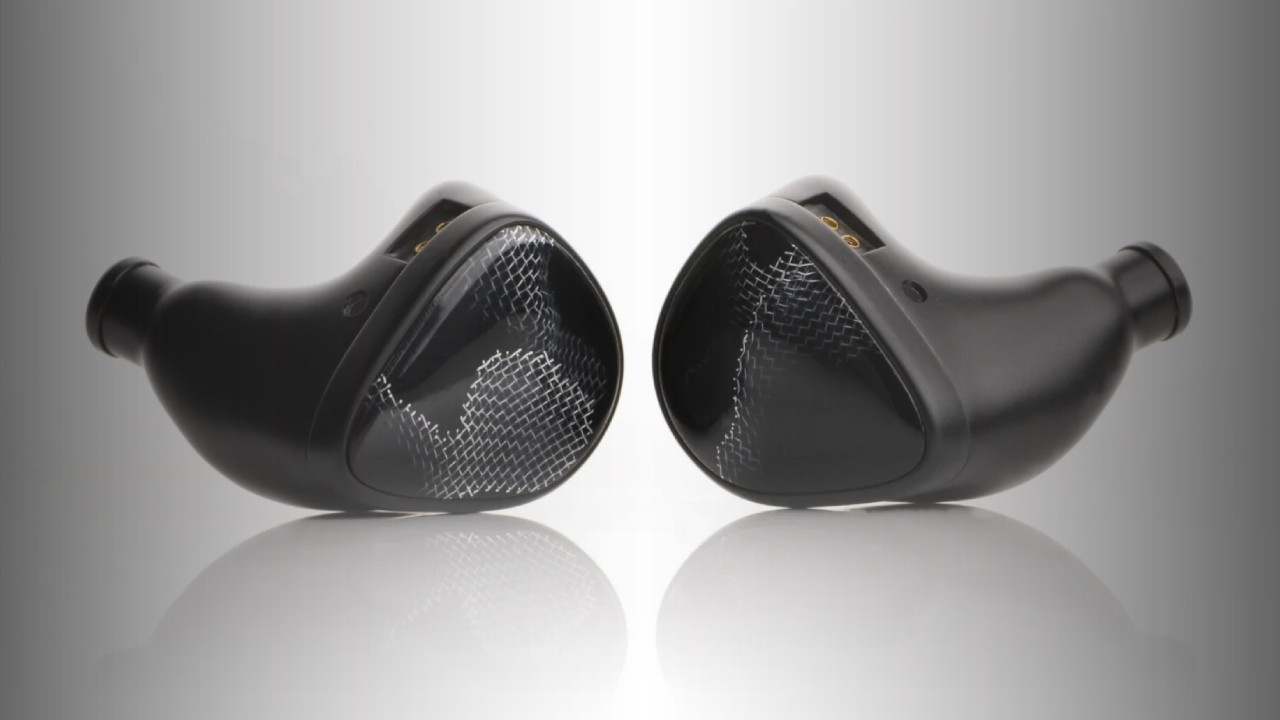
Noble Audio Onyx sits in the rarefied end of the in-ear monitor market, where design is less about adding features for their own sake and more about dividing musical duties among carefully chosen technologies. Its headline specification is an eight-driver configuration using four different driver types: a 10mm dynamic driver, four Knowles balanced armature drivers, dual Sonion electrostatic drivers, and a PZT bone-conduction driver. That combination makes Onyx distinctive not simply because of the driver count, but because each technology is being used for a specific role within the earphone’s overall architecture. At $3200, Onyx is clearly positioned as a flagship product for listeners who already take portable audio seriously and who are likely to pair their IEMs with capable balanced-output players, DAC/amps, or desktop headphone systems.
A multi-technology driver layout with clear division of labor
The most interesting aspect of Noble Audio Onyx is its use of several driver technologies in a single in-ear monitor. A hybrid design is not unusual in high-end IEMs, but Onyx goes further by combining dynamic, balanced armature, electrostatic, and bone-conduction elements. This gives Noble Audio more than one tool for shaping the performance envelope, rather than asking a single driver type to handle the entire frequency range and presentation on its own.
The 10mm dynamic driver is assigned to bass reproduction. Dynamic drivers remain widely used for low frequencies because their diaphragm movement and air displacement can be well suited to bass output. In Onyx, Noble Audio also specifies a front-chamber design as part of the bass system. For a prospective owner, that matters because bass performance in an IEM is not only determined by driver size; it is also influenced by enclosure design, chamber geometry, venting strategy, and how the driver is integrated with the rest of the array.
The midrange and treble are handled by four Knowles balanced armature drivers. Balanced armatures are compact and can be tuned for specific frequency bands, which is one reason they are common in multi-driver IEMs. Their inclusion here suggests a design that separates the core vocal and instrumental region from the bass driver’s workload, allowing the dynamic driver, balanced armatures, electrostats, and bone conductor to contribute within their intended areas.
Electrostatic and bone-conduction elements add to the flagship brief
The dual Sonion electrostatic drivers and PZT bone-conduction driver are what push Onyx beyond a conventional dynamic-plus-BA hybrid. Electrostatic drivers in IEMs are typically used to extend and refine the upper-frequency region, while bone-conduction technology introduces another pathway for energy transfer. Noble Audio describes these elements as contributing to the sense of space and immersion, and their presence gives Onyx a more ambitious technical architecture than a simpler multi-BA or two-way hybrid design.
For listeners evaluating products at this level, the appeal is not just numerical. Eight drivers can sound like a specification designed for attention, but the more relevant point is the diversity of those drivers. Onyx uses four different transducer approaches, each with different physical behavior. That can give the designer more freedom in assigning frequency bands and shaping the total response. It also places greater importance on integration, because a multi-technology IEM must make those different components behave as a coherent system.
The published frequency range of 20 Hz to 70000 Hz indicates that Onyx is specified for very wide bandwidth. Such figures should not be read as a guarantee of audible performance, especially because human hearing does not extend to the top of that range. Still, the specification aligns with the inclusion of electrostatic drivers and indicates that wide extension is part of the design intent.
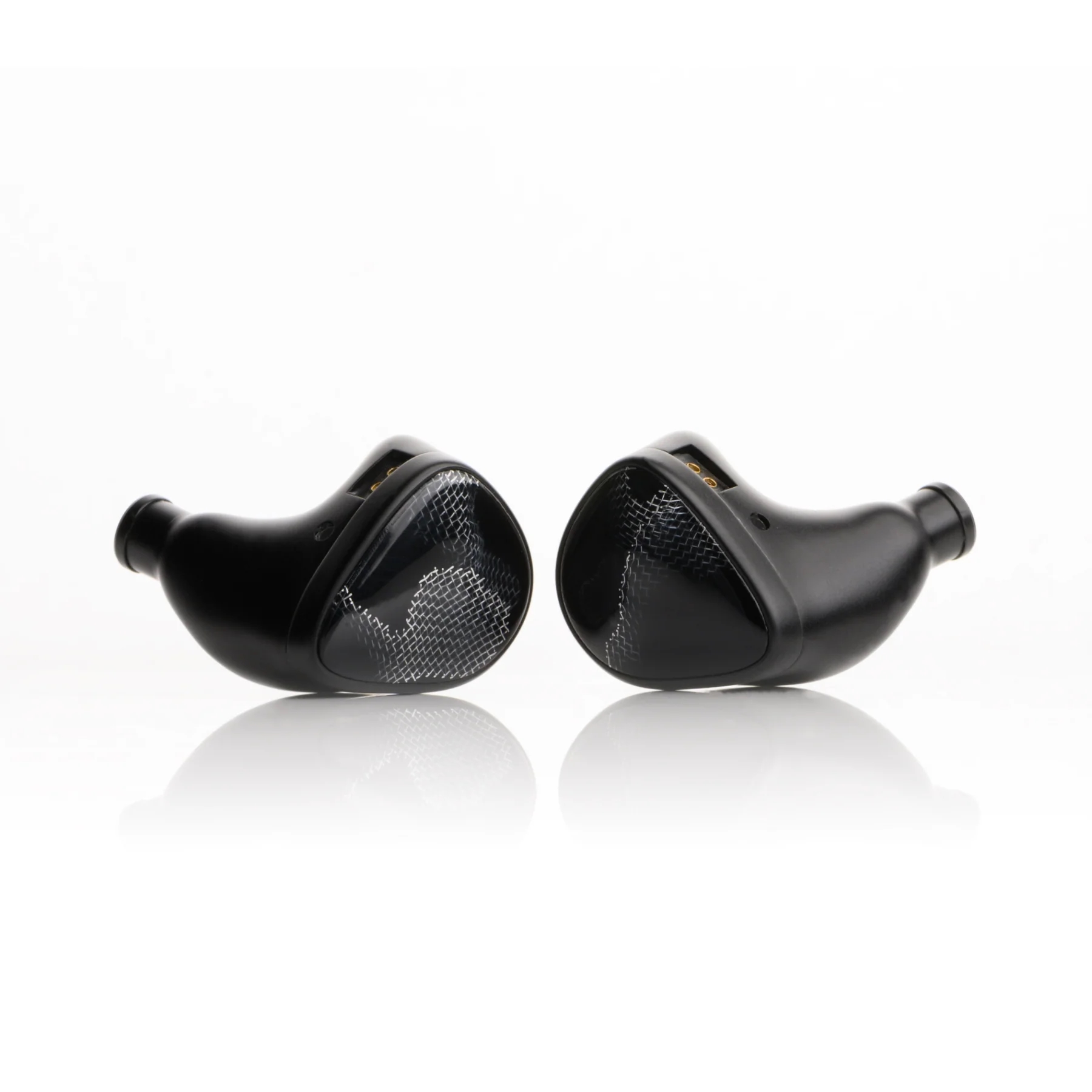
A shell designed for rigidity and visual identity
Onyx is built around a CNC-machined aluminum body. In a premium IEM, shell material matters for several reasons: durability, dimensional consistency, weight management, and the ability to maintain a rigid structure around the drivers and acoustic chambers. CNC machining also suggests a controlled manufacturing approach, useful when an earphone must house eight drivers and a complex internal acoustic layout.
The exterior is not purely utilitarian. Noble Audio adds a Raffir composite bezel and a stainless steel skid plate, giving Onyx a more distinctive visual and tactile identity. The Raffir composite element provides contrast against the aluminum body, while the stainless steel skid plate adds another material to the construction. These choices make the product feel less like a generic universal IEM shell and more like a designed object intended to sit at the top of a brand’s range.
For owners, this kind of construction is relevant because high-end IEMs are frequently used outside a conventional listening room. They may travel between home, office, studio, and commute setups, often carried with portable sources and cables. A rigid metal body and reinforced material choices are therefore not merely aesthetic decisions; they support the idea of an IEM built for repeated handling and long-term ownership.
The supplied Eletech Courage cable strengthens system readiness
Onyx ships with an Eletech Courage cable, specified as a four-core, cryogenically treated, flawless OCC silver-plated copper cable with 4.4mm termination. The inclusion of a named premium cable is significant because cable quality and termination are practical ownership details in the high-end IEM market. A buyer at this level may otherwise expect to budget for an aftermarket cable immediately, particularly if their preferred source uses balanced output.
The 4.4mm connector is especially relevant. Many current digital audio players, portable DAC/amps, and headphone amplifiers provide 4.4mm balanced outputs, and Onyx is supplied ready for that ecosystem. This does mean that users relying on a standard 3.5mm single-ended output would need a different cable or appropriate adapter, but for listeners already invested in balanced portable audio, the supplied termination is convenient.
At the earphone end, Onyx uses a 2-pin connector. That is a familiar standard in the IEM world and supports cable replacement or cable matching if the owner later wants a different termination, length, or ergonomic feel. The combination of a 2-pin interface and supplied 4.4mm Eletech cable gives the product both a premium out-of-box configuration and a degree of long-term flexibility.
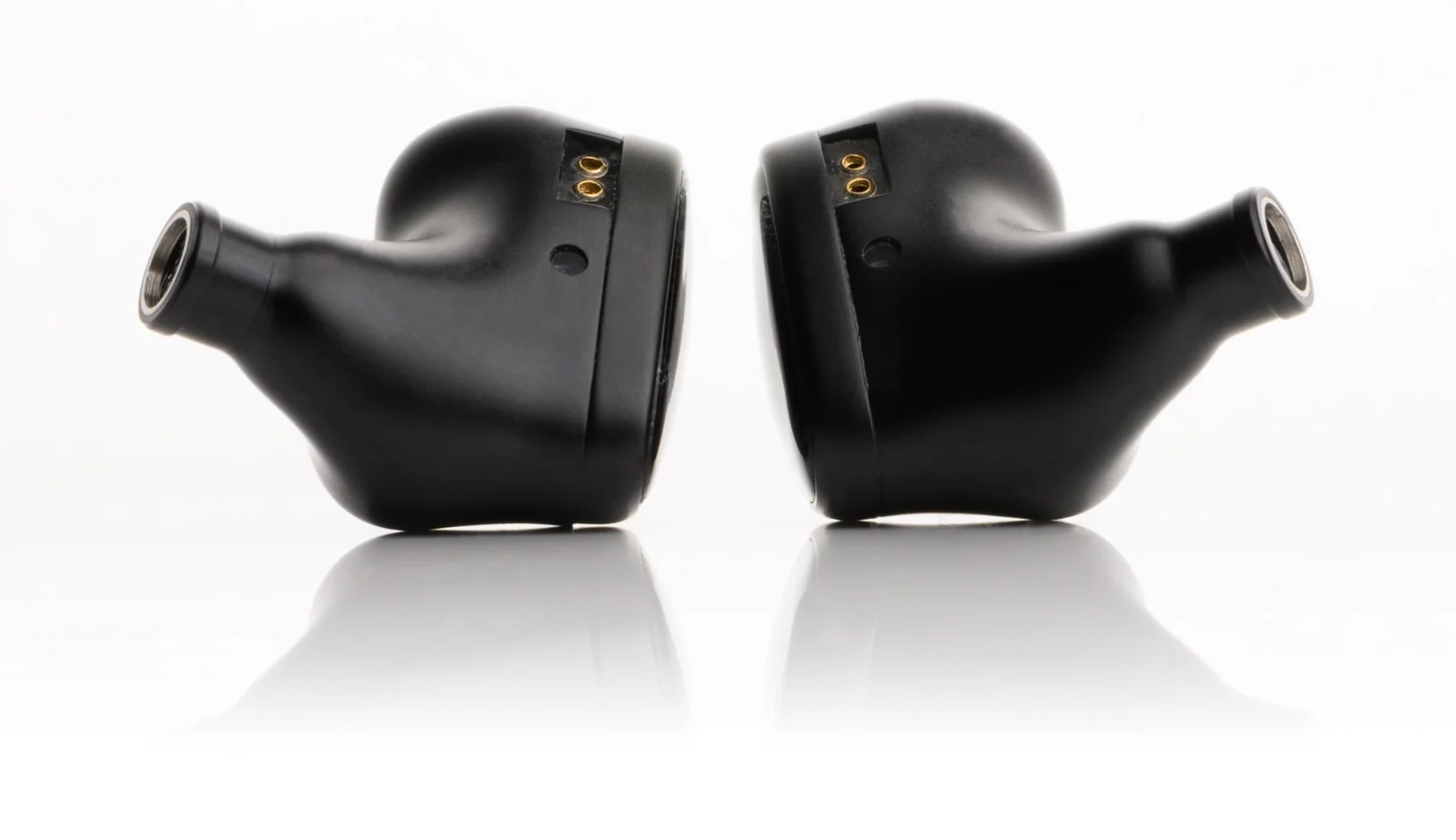
Electrical specifications and pairing considerations
Noble Audio lists Onyx with 108 dB sensitivity and 14-ohm resistance. These figures suggest an IEM that is not intended to be difficult to drive in the way some full-size planar magnetic headphones can be, but they also point toward the importance of source quality. Low-impedance, high-sensitivity IEMs can expose noise or output behavior from poorly matched devices, so pairing with a clean, well-controlled source remains sensible.
The 4.4mm supplied cable further indicates the type of system Noble Audio expects many owners to use: a source with balanced headphone output and enough refinement to justify a flagship IEM. That might include a dedicated portable player, a USB DAC/amp with balanced output, or a desktop headphone amplifier that supports IEMs. The product’s value proposition is strongest when it is treated as part of a serious personal audio chain rather than as a casual phone accessory.
Because the specifications include a 20 Hz to 70000 Hz frequency range, 108 dB sensitivity, 14-ohm resistance, 2-pin cable connection, and 4.4mm plug, prospective owners get a reasonably clear picture of where Onyx fits electrically and practically. The important takeaway is that Noble Audio has combined a complex internal driver array with modern balanced connectivity, making system matching a central part of the ownership experience.

Who the Noble Audio Onyx is most suitable for
Onyx is best suited to experienced IEM users who want a flagship-level product with an ambitious driver architecture and who already own, or plan to use, a source with 4.4mm balanced output. Its design will likely appeal to listeners who value technical variety in transducer design, premium construction, and the practicality of a detachable 2-pin cable system.
It is also a strong fit for owners who want a universal IEM that feels purpose-built rather than minimal. The CNC-machined aluminum body, Raffir composite bezel, stainless steel skid plate, and supplied Eletech cable all point toward a product designed as a complete premium package. For someone who appreciates the physical design and system aspect of high-end portable audio, those details may be as meaningful as the driver count.
On the other hand, Onyx is probably not aimed at casual listeners seeking a simple everyday earphone, nor at users who only need basic wired listening from a single-ended 3.5mm device. Its $3200 price, complex driver configuration, and balanced cable make the most sense for an audience already comfortable with high-end IEM ownership and careful source pairing.
Conclusion
Noble Audio Onyx stands out for its documented combination of eight drivers across four technologies, a rigid CNC-machined aluminum body, distinctive Raffir and stainless steel exterior details, and a supplied Eletech Courage cable with 4.4mm balanced termination. Its strongest qualities are the deliberate division of driver roles, premium material execution, and readiness for modern balanced portable audio systems. It is most appropriate for serious IEM users who want a flagship design built around technical flexibility, robust construction, and high-end system integration.