

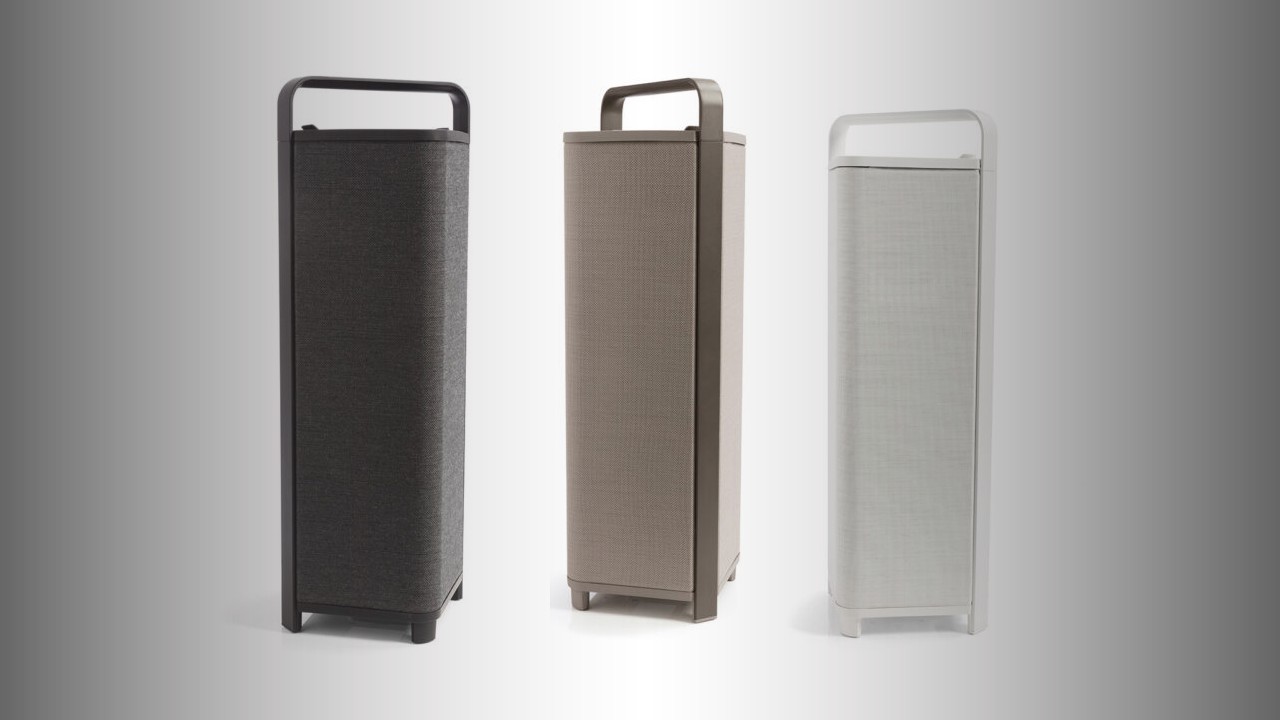
The Sonoro Escape range is a compact family of wireless speaker systems designed for listeners who want fewer cable constraints without giving up the structure of a hi-fi product line. Rather than offering a single all-purpose speaker, the range is split into three models: the larger P9, the P6 BT and the P6 Air. Each has a distinct emphasis. The P9 focuses on extended portable playback, a circular radiation pattern and physical connection options. The P6 BT reduces the format and keeps the emphasis on Bluetooth convenience. The P6 Air uses the same physical class as the P6 BT but adds a more streaming-oriented feature set, including Apple AirPlay, Spotify Connect, Google Chromecast and Roon certification.
A wireless range with three clear personalities
The most useful aspect of the Escape family is that Sonoro has not treated wireless audio as a single use case. The P9, P6 BT and P6 Air appear to be aimed at different kinds of owners, all under the same portable-speaker concept. That gives the range a practical structure: one model for a larger, battery-powered installation, one for straightforward Bluetooth playback, and one for users who rely more heavily on network streaming platforms.
For prospective owners, that separation matters because wireless speakers can be frustrating when they try to satisfy every requirement at once. A listener who mainly wants to send audio from a phone may not need a long list of streaming services. Another owner may care more about AirPlay, Chromecast, Spotify Connect or Roon integration than about using a basic Bluetooth connection. The Escape line’s model split makes those priorities easier to identify.
P9: the larger portable option
The P9 is the most physically substantial model in the documented Escape lineup. It measures 731 x 220 x 220 mm and weighs 12.3 kg, so it is portable in the sense of being self-contained and battery-powered rather than pocketable or ultra-light. That size may be part of its appeal for users looking for a wireless speaker that can serve as a more purposeful audio object in a room, on a terrace or in a flexible living space.
Its built-in battery is specified for 16 hours of continuous playback. Battery life is one of the defining practical features of any portable speaker, and a stated 16-hour figure gives the P9 a useful role for longer listening sessions away from a mains socket. For households that move music between rooms, or for spaces where running power and signal cables is inconvenient, that built-in endurance is central to the product’s identity.
Sonoro equips the P9 with four speakers and describes it as using a circular radiation pattern. Without making assumptions about its sonic character, that design choice is notable because it suggests an emphasis on distributing sound more broadly than a conventional forward-firing layout. In real-world placement terms, a speaker with that kind of documented radiation concept may be easier to position in social spaces where listeners are not all seated directly in front of the cabinet.
Connectivity that does not rely on wireless alone
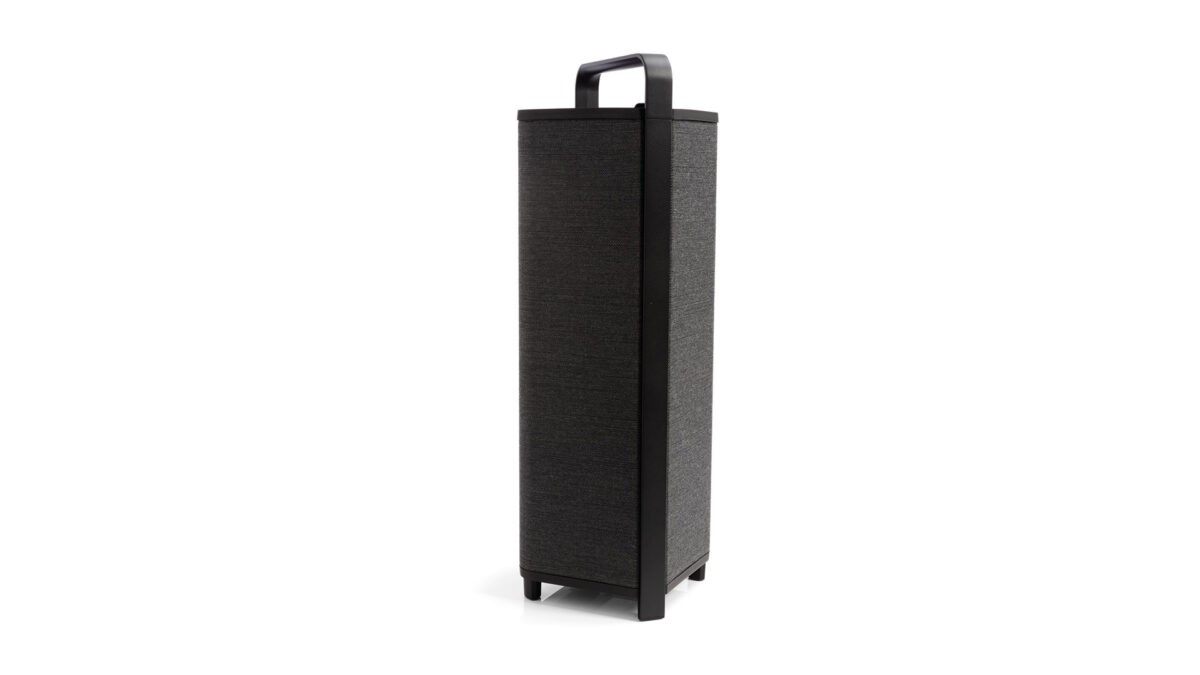
Although the Escape concept is built around freedom from cables, the P9 is not limited to wireless input. It includes Bluetooth 4.2 for wireless connection, plus AUX and USB ports for direct attachment to audio sources. That mixture is valuable because portable speakers often end up serving multiple roles over time: phone speaker one day, desktop companion another, or a simple playback device for a source that does not support the preferred wireless standard.
The inclusion of AUX and USB also makes the P9 less dependent on a particular phone, app or network condition. Bluetooth is convenient, but wired inputs remain useful in shared households, temporary setups and situations where a guest or source component needs a quick, predictable connection. The practical strength here is not novelty; it is resilience. A speaker that offers more than one way in can remain useful across more systems and more listening habits.
Sonoro also lists an optional M1 Air Wi-Fi module for the P9. Because it is described as optional, it should be viewed as an expansion path rather than a standard feature. Even so, the availability of a Wi-Fi module is significant for owners who may begin with Bluetooth and later want to build a setup around Wi-Fi-based playback.
Twin Mode for a wider stereo setup
Both the P9 and P6 BT are documented as supporting pairing with another unit for stereo playback. Sonoro calls this Twin Mode on the P9, allowing two P9 speakers to be paired for stereo sound. The P6 BT can also be paired with another unit for stereo audio. This is an important feature for listeners who want the convenience of a single wireless speaker but do not want to rule out a more traditional left-right arrangement later.
Stereo pairing can be especially attractive in multipurpose rooms. A single speaker is simpler and easier to move, while a paired system can provide a more deliberate two-speaker layout when the space and budget allow. The key point is flexibility: the Escape models do not force the owner to decide permanently between one-box convenience and a stereo configuration.
P6 BT: smaller, simpler and still stereo-capable
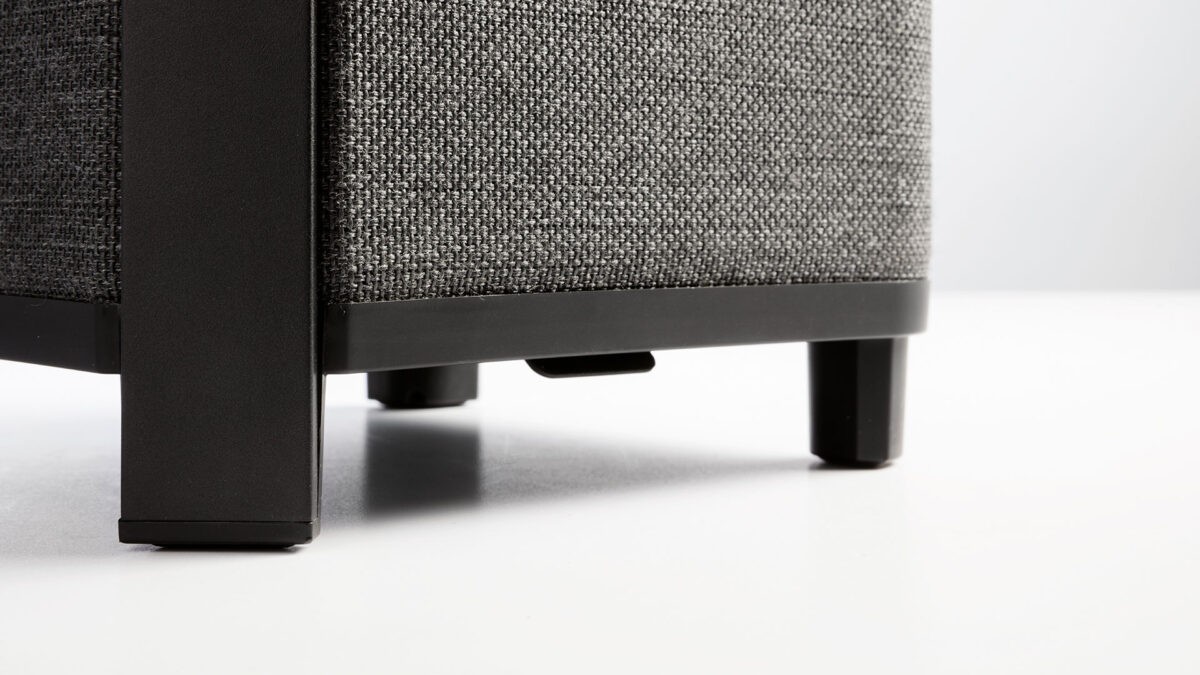
The P6 BT is the lighter model in the range at 7.5 kg. That makes it more manageable than the P9 while still positioning it as a substantial wireless speaker rather than a tiny portable device. Its documented driver arrangement uses two drivers positioned to project sound upwards, a design choice that distinguishes it from the P9’s four-speaker circular-radiation approach.
For users who mainly want a cleaner, simpler wireless speaker without the P9’s larger format, the P6 BT is the more direct option. Its ability to pair with another P6 BT for stereo audio also means it is not limited to single-speaker use. That could make it appealing for someone who wants to start with one unit in a kitchen, study or bedroom and later add a second for a more expanded setup.
P6 Air: the streaming-focused member of the family
The P6 Air shares the P6 BT’s weight and dimensions, but its appeal is centered on streaming support. It is documented as supporting Apple AirPlay, Spotify Connect and Google Chromecast, and it is also Roon certified. Those features place it in a different usage category from a Bluetooth-only wireless speaker. Instead of relying solely on direct device-to-speaker Bluetooth playback, it is designed for listeners already invested in app-based and networked listening ecosystems.
This matters because modern hi-fi ownership is often defined by services and platforms as much as by hardware. AirPlay is relevant for Apple users, Spotify Connect for listeners who use Spotify as a primary service, Chromecast for Google-oriented setups, and Roon certification for owners who organize listening through Roon. The P6 Air’s documented compatibility gives it broader integration potential within a networked audio environment, while preserving the same physical class as the P6 BT.
Who the Sonoro Escape range is most suitable for
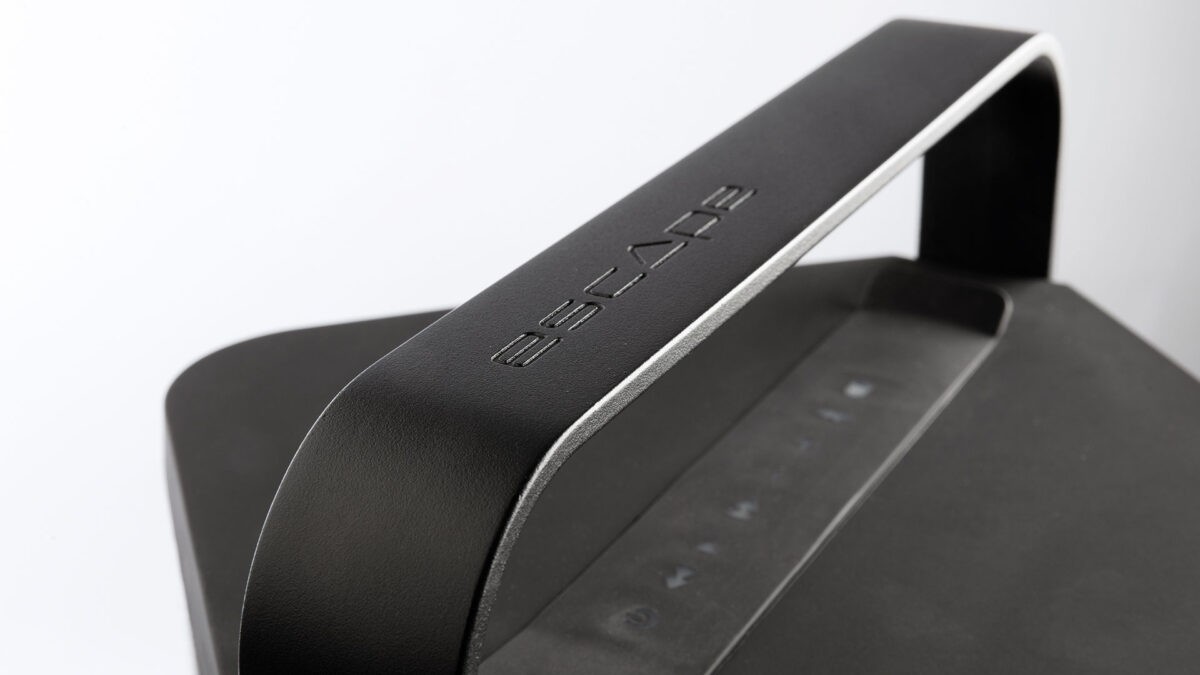
The Escape speakers are best suited to listeners who want a self-contained wireless speaker system with a more hi-fi-oriented feature set than a basic portable Bluetooth unit. The P9 is the most appropriate choice for those who value longer battery playback, a larger format, multiple input options and the ability to add Wi-Fi functionality through an optional module. It also suits users who may want to build a two-speaker stereo arrangement later.
The P6 BT is likely the cleaner fit for buyers who prioritize a lighter speaker and straightforward wireless use, while still keeping the option of stereo pairing. The P6 Air is the strongest match for owners whose listening already revolves around streaming platforms, especially those using AirPlay, Spotify Connect, Chromecast or Roon.
The range may be less suitable for someone looking for an ultra-compact travel speaker, since even the lighter P6 models are specified at 7.5 kg and the P9 is substantially heavier. It is also not the right choice for readers seeking a conventional passive loudspeaker, as the Escape concept is built around integrated wireless speaker systems rather than separate amplification and source components.
Conclusion
The Sonoro Escape range is attractive because it treats portable wireless audio as a flexible system rather than a single fixed product. The P9 combines a 16-hour battery, four-speaker architecture, circular radiation concept, Bluetooth, AUX, USB and optional Wi-Fi expansion. The P6 BT offers a lighter format with upward-firing drivers and stereo pairing, while the P6 Air adds broad streaming support with AirPlay, Spotify Connect, Chromecast and Roon certification. For listeners who want a self-contained speaker that can adapt to different rooms, sources and usage habits, the Escape lineup presents a thoughtful set of documented options.


Join the discussion
Share your thoughts, listening impressions or product experience.